
The smartphone market has reached a crossroads. On one side, you have Apple’s latest flagship—the iPhone 15 Pro—representing polished refinement, industry-leading build quality, and seamless integration within the iOS ecosystem. On the other, Samsung’s Galaxy Z Flip 6 brings bold innovation with its foldable form factor, compact portability, and futuristic appeal. But beyond the buzz, which device truly makes sense for your lifestyle? Is the flip phone revolution practical, or just a flashy phase? Let’s break down the realities behind both devices to help you decide whether to embrace change or stay loyal to Apple.
Design & Portability: Form Meets Function
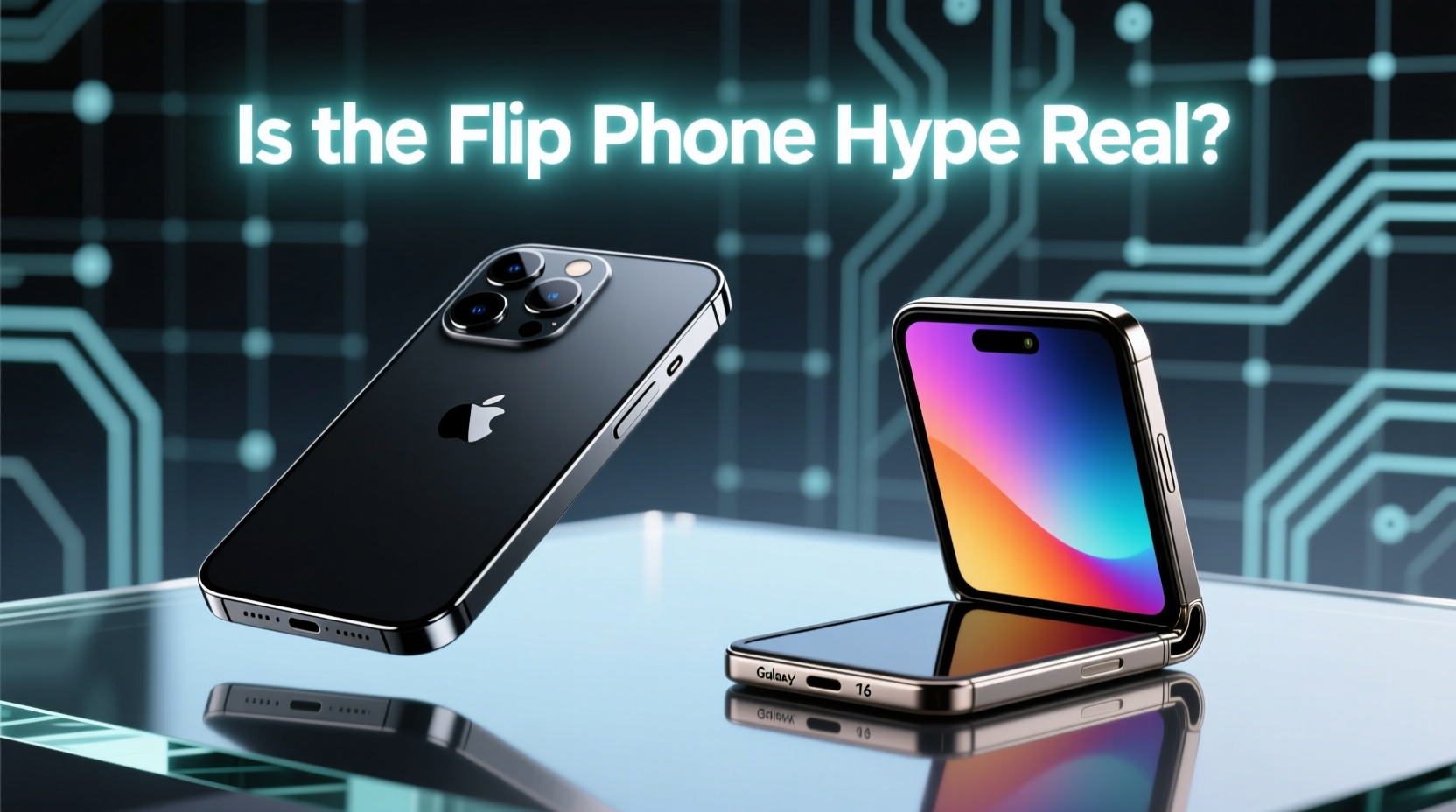
The most obvious difference between these two phones lies in their physical design. The iPhone 15 Pro continues Apple’s tradition of minimalist elegance—sleek titanium frame, flat edges, and a single slab of glass that fits naturally in hand. It’s built for durability and familiarity, weighing in at 187 grams with a 6.1-inch display. While not small by today’s standards, it remains manageable for one-handed use.
In contrast, the Galaxy Z Flip 6 reimagines what a smartphone can be. When folded, it’s barely larger than a credit card—measuring just over 3 inches wide—and slips effortlessly into pockets or small bags. Unfolded, it reveals a 6.7-inch Dynamic AMOLED display, offering a full-screen experience in a fraction of the footprint. This duality makes it ideal for urban commuters, fashion-conscious users, or anyone who values minimalism without sacrificing screen size.
Tip: If pocket space is limited, the Flip 6 offers unmatched convenience. But if you prioritize drop resistance and long-term hinge durability, the iPhone 15 Pro may be safer.Samsung claims improved hinge durability this year, with dust resistance rated IPX8 (same as iPhone), but real-world longevity remains to be seen. Foldables still carry inherent mechanical risk—something Apple avoids entirely with its rigid design.
Performance & Software: Power vs. Flexibility
Under the hood, both phones are powerhouses. The iPhone 15 Pro runs on Apple’s A17 Pro chip—still unmatched in single-core performance and app optimization. Whether editing 4K video or running intensive AR apps, iOS feels snappy and consistent. The operating system itself is refined, secure, and benefits from years of developer support, ensuring smooth updates for five to six years.
The Galaxy Z Flip 6 uses Qualcomm’s Snapdragon 8 Gen 3 (for Galaxy), which excels in multi-core tasks and AI processing. However, Android’s fragmentation means update timelines vary. Samsung promises seven years of OS and security updates—a major improvement—but third-party app optimization for the vertical foldable format is still inconsistent. Some apps stretch awkwardly; others don’t adapt at all.
“Foldables aren’t just about hardware—they require a software mindset shift. Most users still treat them like regular phones.” — Linus Lee, Mobile UX Researcher at TechInsight Labs
iOS offers fewer customization options but delivers reliability. Android on the Flip 6 allows split-screen multitasking, external cover screen shortcuts, and Samsung DeX-like features, but requires more user setup to unlock its full potential.
Camera Comparison: Consistency vs. Creativity
Apple has long led in computational photography, and the iPhone 15 Pro reinforces that dominance. Its triple-camera system includes a 48MP main sensor, 5x tetraprism telephoto lens, and advanced HDR processing. Video recording supports ProRes 4K, making it a favorite among mobile filmmakers.
The Galaxy Z Flip 6 takes a different approach. It features a dual 50MP main + 10MP ultrawide setup—solid specs on paper—but lacks optical zoom. Instead, it leans into creative flexibility: hands-free selfies using the foldable hinge, quick launch of camera via outer screen, and AI-powered portrait enhancements. For social media creators who love vlogging or spontaneous content, the Flip 6’s form enables unique shooting angles impossible on traditional phones.
| Feature | iPhone 15 Pro | Galaxy Z Flip 6 |
|---|---|---|
| Main Camera | 48MP, f/1.78, sensor-shift OIS | 50MP, f/1.8, OIS |
| Telephoto | 12MP, 5x optical zoom | None |
| Front Camera | 12MP, dynamic perspective | 10MP (inner), 10MP (outer) |
| Video Recording | ProRes 4K, Log encoding | 4K@60fps, AI stabilization |
| Unique Feature | Action Mode video stabilization | Hands-free Flex mode selfies |
If professional-grade photo and video output matter most, the iPhone wins. But if you value fun, flexible shooting styles and instant sharing, the Flip 6 carves its own niche.
Real-World Use Case: Who Actually Benefits From a Flip Phone?
Consider Sarah, a 29-year-old marketing consultant based in Seoul. She switched from an iPhone 14 Pro to the Galaxy Z Flip 5 last year and upgraded to the Flip 6 at launch. “I used to carry a clutch because my phone didn’t fit,” she says. “Now I can toss it in any bag—or even my jacket pocket.” Her workflow relies heavily on Instagram and TikTok; she uses the Flip’s stand mode daily for unattended reels and live Q&As. “It replaced my mini tripod,” she adds.
But when traveling through rural Japan, she noticed gaps: some local apps crashed on the foldable screen, and battery life dropped faster than expected due to constant unfolding. Back home, her husband stuck with his iPhone 15 Pro. “He edits videos during lunch breaks,” she notes. “His phone never lags. Mine stutters on heavy files.”
This illustrates a broader truth: the Flip 6 shines in lifestyle and social contexts but falters under professional productivity loads. The iPhone 15 Pro may lack novelty, but it rarely disappoints in core functionality.
Battery Life & Charging: Efficiency vs. Compromise
The iPhone 15 Pro packs a 3,274mAh battery—modest by Android standards—but Apple’s efficiency tuning delivers up to 23 hours of mixed usage. With USB-C now standard, charging is faster and more universal, though peak speeds cap at around 20W.
The Flip 6 splits its battery across two halves (2x 2,000mAh), totaling 4,000mAh. In theory, that should mean longer endurance. In practice, the secondary screen, frequent hinge movements, and OLED brightness eat power quickly. Most users report needing a recharge by late afternoon, especially with heavy app switching.
Tip: Enable “Fast Pair” and “Good Vibes” AI modes on the Flip 6 to reduce background drain. For iPhone users, disable Background App Refresh for non-essential apps to extend battery.Wireless charging works on both, but only the iPhone supports reverse charging (for AirPods). Neither offers ultra-fast wired charging compared to Chinese rivals, but Apple’s consistency across devices remains a plus.
FAQ
Can the Galaxy Z Flip 6 replace an iPhone completely?
For most everyday tasks—messaging, browsing, social media, calls—it can. However, if you rely on iMessage, FaceTime, or deep Apple ecosystem integration (Mac, iPad, Apple Watch), switching creates friction. iMessage absence on Android is still a major hurdle.
Is the flip phone durable enough for daily use?
Samsung has improved durability significantly, but the hinge and inner screen remain vulnerable. Dropping a folded Flip 6 risks crease damage. The iPhone 15 Pro, while not indestructible, avoids moving parts altogether, giving it an edge in long-term resilience.
Which phone holds resale value better?
Historically, iPhones retain value far better. After one year, an iPhone 15 Pro might keep 70–75% of its value. Foldables like the Flip 6 typically drop to 50–55%, partly due to perceived fragility and rapid model turnover.
Final Verdict: Hype or Worth It?
The Galaxy Z Flip 6 isn’t just a phone—it’s a statement. It appeals to those who want something different, compact, and visually striking. If you’re tired of pulling out a brick-sized device at dinner or value discreet notifications on a tiny outer screen, the Flip 6 delivers genuine lifestyle advantages.
But the iPhone 15 Pro remains the benchmark for reliability, camera excellence, and ecosystem cohesion. It doesn’t wow with gimmicks, but it performs flawlessly where it counts. For professionals, creatives, or Apple loyalists, there’s little reason to leave.
The flip phone hype is real—but it’s also narrow. It works brilliantly for specific users in specific scenarios. For everyone else, the iPhone 15 Pro continues to offer the safest, most complete smartphone experience available.
💬 Are you team foldable or team classic flagship? Share your thoughts—have you made the switch, or do you plan to? Your experience could help others navigate this evolving choice.








