The smartphone market has reached a pivotal moment. For years, Apple’s iPhone dominated with refined design, consistent software updates, and unmatched ecosystem integration. But now, Samsung’s Galaxy Z Fold 3 represents a bold shift—offering a foldable screen, multitasking capabilities, and a futuristic form factor. The question isn’t just about specs; it’s about lifestyle, longevity, and whether innovation outweighs reliability. So, when comparing the iPhone 13 Pro and the Galaxy Z Fold 3, is the foldable phone worth the leap, or should you stay loyal to Apple?
Design and Build: Innovation vs. Proven Durability
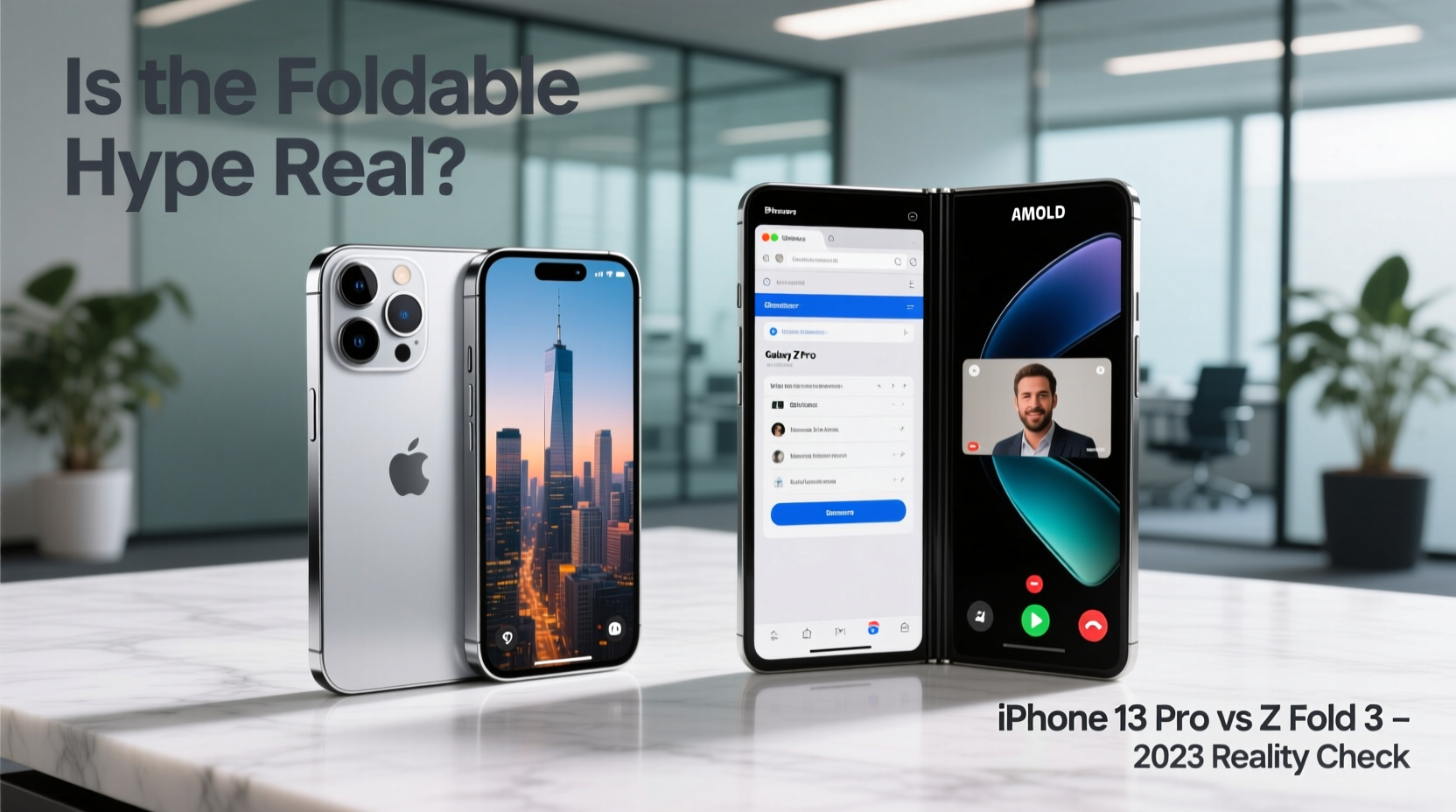
The iPhone 13 Pro follows Apple’s minimalist philosophy—compact, sturdy, and built for one-handed use. Its surgical-grade stainless steel frame and Ceramic Shield front deliver excellent drop resistance. At 6.1 inches, it fits comfortably in pockets and provides reliable daily usability without drawing undue attention.
In contrast, the Galaxy Z Fold 3 unfolds from a conventional phone into a 7.6-inch tablet-like display. This dual-state design allows for productivity on the go but introduces complexity. The hinge mechanism, while improved over previous models, remains a point of concern. Dust, moisture, and repeated folding can wear down internal components. Samsung rates the Fold 3 with IPX8 water resistance, but only when closed—leaving the crease vulnerable when open.
Tip: If you frequently travel or work in rugged environments, the iPhone 13 Pro’s proven durability may outweigh the Fold 3’s novelty.Display and Usability: Screen Real Estate vs. Simplicity
The Fold 3’s dynamic AMOLED inner display offers an immersive experience for media consumption, document editing, and split-screen apps. You can watch a video on one side while replying to emails on the other—a feature absent from iOS. However, the crease down the center is noticeable under certain lighting, and prolonged use may lead to eye strain due to inconsistent brightness across the fold.
The iPhone 13 Pro features a Super Retina XDR OLED display with ProMotion technology (120Hz adaptive refresh rate), delivering buttery-smooth scrolling and precise color accuracy. While smaller, it’s optimized for app responsiveness and HDR content. Apple’s ecosystem ensures all apps are fully compatible, whereas many Android apps still don’t take full advantage of the Fold 3’s large screen.
“Foldables offer exciting potential, but they’re still catching up in software maturity. Most users aren’t leveraging the multi-active window features consistently.” — David Kim, Mobile UX Analyst at TechInsight Labs
Performance and Software: iOS Stability vs. Android Flexibility
Under the hood, both devices are powerhouses. The iPhone 13 Pro runs on Apple’s A15 Bionic chip—one of the fastest mobile processors ever made. It excels in single-core tasks, gaming, and machine learning operations. Combined with iOS 16 (and ongoing support through iOS 19+), it guarantees five years of updates, security patches, and seamless integration with Macs, iPads, and AirPods.
The Fold 3 uses Qualcomm’s Snapdragon 888, which performs well but runs hotter and less efficiently than the A15. It launched with Android 11 and One UI 3.5, receiving promised updates until Android 14. While Samsung promises four OS upgrades, real-world support often lags behind Apple’s consistency. Additionally, background app management on foldables can be erratic—apps sometimes reload after being minimized across screens.
| Feature | iPhone 13 Pro | Galaxy Z Fold 3 |
|---|---|---|
| Processor | Apple A15 Bionic | Snapdragon 888 |
| OS Support Timeline | ~5 years (iOS 15 to iOS 19) | ~4 years (Android 11 to Android 15) |
| Multitasking | Slide Over, Picture in Picture | Split-screen, Multi-Active, Drag & Drop |
| Ecosystem Integration | iCloud, AirDrop, Handoff, Continuity | Samsung DeX, SmartThings, Quick Share |
Battery Life and Charging: Practical Endurance vs. Compromised Capacity
The iPhone 13 Pro packs a 3,095mAh battery. Despite its smaller size, iOS optimization allows for solid all-day use—typically lasting 10–12 hours of mixed usage. It supports 20W wired fast charging and 15W MagSafe wireless charging, though neither is class-leading.
The Fold 3 spreads its 4,400mAh battery across two cells (one in each panel). In theory, this supports longer runtime, but the larger screen and inefficient chipset reduce gains. Heavy multitasking drains the battery in under 8 hours. It supports 25W fast charging but lacks official wireless charging on certain regional models and doesn’t support reverse charging reliably.
Tip: If you rely on your phone throughout long workdays without access to charging, the iPhone 13 Pro’s efficiency gives it an edge.Camera Comparison: Consistency vs. Versatility
The iPhone 13 Pro features a triple-lens system: 12MP wide, ultra-wide, and telephoto with 3x optical zoom. Its computational photography—especially Night mode, Deep Fusion, and Cinematic Mode—delivers reliable results in varied conditions. Video recording tops out at 4K/60fps with ProRes support, making it a favorite among mobile creators.
The Fold 3 also has a triple rear setup (12MP wide, ultra-wide, telephoto with 10x space zoom), but image processing lacks Apple’s refinement. Low-light photos show more noise, and autofocus can hesitate. However, the cover screen and inner display allow for unique selfie angles using the rear cameras—something the iPhone can’t match without accessories.
“We tested both devices in low-light urban environments. The iPhone produced more consistent exposures, while the Fold 3 required manual tweaking to avoid blown-out highlights.” — Lena Park, Senior Reviewer at MobileImage Lab
Real-World Example: Who Actually Benefits from a Foldable?
Consider Mark, a freelance consultant who travels weekly. He bought the Fold 3 hoping to replace his iPad during flights. Initially impressed by the ability to view spreadsheets alongside email, he soon noticed issues: the screen picked up fingerprints constantly, the device felt bulky in his jacket pocket, and the battery didn’t last through a transatlantic flight. After six months, he switched back to his iPhone 13 Pro paired with an iPad mini—finding that combination more practical.
Conversely, Sofia, a digital marketer, uses the Fold 3 daily. She edits social media content, previews ads, and manages campaigns using split-screen tools. For her, the productivity boost justified the trade-offs in size and fragility.
Checklist: Should You Choose the Fold 3 Over the iPhone 13 Pro?
- ✅ Need tablet-like screen space for editing or presentations?
- ✅ Comfortable with Android and Samsung’s ecosystem (DeX, S Pen support)?
- ✅ Willing to accept shorter battery life for multitasking gains?
- ✅ Have insurance or warranty coverage for accidental damage?
- ✅ Prioritize cutting-edge tech over long-term reliability?
If most answers are “yes,” the Fold 3 could be a worthwhile experiment. If not, the iPhone 13 Pro remains a safer, more polished choice.
Frequently Asked Questions
Is the Galaxy Z Fold 3 durable enough for daily use?
It’s more durable than earlier foldables, with Gorilla Glass Victus and water resistance, but the hinge and crease remain weak points. Dropping it on the folded edge can cause irreversible damage. Use a protective case and screen protector.
Can the iPhone 13 Pro compete with the Fold 3’s multitasking?
Not directly. The iPhone supports Slide Over and Picture in Picture, but true split-screen with two full apps isn’t available. However, most users don’t need advanced multitasking daily, and iOS streamlines task switching efficiently.
Which phone holds value better over time?
The iPhone 13 Pro retains resale value significantly better. After 18 months, it typically keeps 60–70% of its original price, while the Fold 3 drops to 40–50%, partly due to perceived fragility and rapid iteration in the foldable category.
Conclusion: Hype or Practical Choice?
The Galaxy Z Fold 3 is a remarkable engineering achievement—it proves foldable phones are viable. But viability doesn’t equal superiority. For most users, the iPhone 13 Pro offers a more balanced, dependable, and integrated experience. It lasts longer, receives updates for years, and fits naturally into everyday life.
The Fold 3 shines for niche professionals who need on-the-go productivity and are willing to manage its limitations. But unless your workflow demands a large, flexible screen, the current foldable hype outpaces real-world utility. Innovation is exciting, but reliability still rules.
🚀 Ready to make your move? Assess your daily needs—not just the specs. If simplicity, longevity, and ecosystem matter most, stick with Apple. If you're eager to pioneer new tech, the Fold 3 awaits. Share your thoughts: would you switch to a foldable, or stay loyal to the iPhone?








