
When Apple released the iPhone 12 after the well-received iPhone 11 Pro Max, many long-time users faced a familiar dilemma: should they upgrade? The 11 Pro Max was already a powerhouse—excellent camera, long battery life, and top-tier build quality. So when the iPhone 12 arrived with promises of 5G, a new design, and better efficiency, consumers naturally asked: is this upgrade truly worthwhile?
To answer that question honestly, we’ve compiled real-world feedback from users who made the switch, analyzed key differences between the two models, and evaluated whether the improvements justify the cost—especially for those still satisfied with their 11 Pro Max.
Design and Build: A Shift in Aesthetics
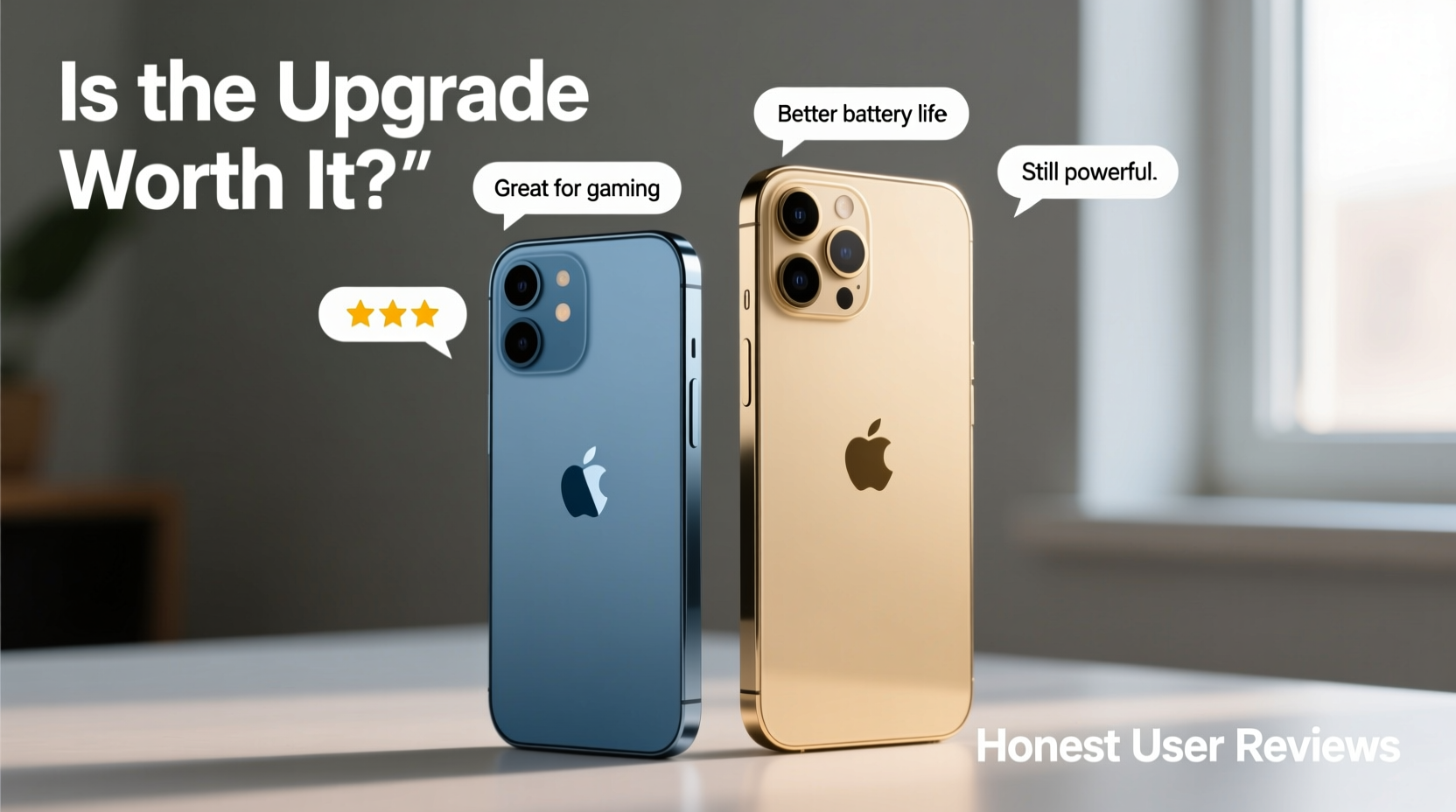
The most immediate change between the iPhone 11 Pro Max and the iPhone 12 is the design language. Apple returned to flat-edged aluminum frames with the iPhone 12, reminiscent of the iPhone 5 era, replacing the curved edges of the 11 series. This gives the iPhone 12 a more modern, minimalist look and makes it slightly easier to grip despite being marginally lighter (164g vs 208g).
The materials also shifted. While both phones feature stainless steel frames and glass backs, the iPhone 12 introduced Ceramic Shield on the front—a technology Apple claims offers four times better drop performance. In practice, multiple users report fewer screen cracks after accidental drops, though the back glass remains vulnerable without a case.
Tip: If you're upgrading from the 11 Pro Max, consider a rugged case—the flat edges of the iPhone 12 can make it more prone to slipping out of hands.Display and Brightness: Subtle but Meaningful Gains
The iPhone 11 Pro Max features a 6.5-inch Super Retina XDR OLED display, as does the iPhone 12. However, the newer model boasts higher peak brightness (up to 1,200 nits for HDR content versus 800 nits). This difference is noticeable outdoors or in direct sunlight, where the iPhone 12 maintains better visibility.
While resolution and color accuracy remain nearly identical, the iPhone 12’s improved contrast ratio and HDR support enhance streaming experiences, especially on platforms like Netflix or Apple TV+. Users upgrading from the 11 Pro Max often note that videos “pop” more, though casual viewers may not perceive a dramatic shift.
Performance: Speed vs Sufficiency
Under the hood, the iPhone 12 runs on the A14 Bionic chip, the first smartphone processor built on a 5nm process. Compared to the A13 in the 11 Pro Max, the A14 delivers about 16% faster CPU performance and 8% better GPU efficiency.
In real-world use, this translates to smoother multitasking, quicker app launches, and improved AR functionality. Gamers notice reduced lag in titles like Genshin Impact or Madden NFL Mobile, and video editors using apps like LumaFusion report faster rendering times.
“Even though the A13 was great, the A14 feels more future-proof. Apps just open instantly now.” — Daniel R., iOS developer and early iPhone 12 adopter
However, for everyday tasks—browsing, messaging, social media—the performance gap is minimal. Most 11 Pro Max owners won’t feel “slowed down” by their current device.
Camera Comparison: Evolution, Not Revolution
Both phones feature dual (iPhone 12) and triple (11 Pro Max) rear cameras with 12MP sensors. The 11 Pro Max has an edge with its telephoto lens (offering 2x optical zoom), while the iPhone 12 improves low-light photography through Night mode on all lenses and the introduction of Deep Fusion across more scenarios.
Photos from both devices are excellent in daylight, but in dim conditions, the iPhone 12 produces cleaner images with less noise and better dynamic range. Video quality also sees a boost: the iPhone 12 supports Dolby Vision HDR recording up to 4K at 60fps, a feature absent in the 11 series.
One user noted: “I shoot family videos in mixed lighting, and the iPhone 12 captures so much more detail in shadows. It’s subtle, but once you see it, you don’t want to go back.”
Camera Features at a Glance
| Feature | iPhone 11 Pro Max | iPhone 12 |
|---|---|---|
| Low-Light Mode | Rear camera only | All cameras |
| Dolby Vision Video | No | Yes, up to 4K/60fps |
| Telephoto Lens | Yes (2x optical zoom) | No |
| Deep Fusion | Limited scenes | Enabled by default |
5G Connectivity: The Big New Feature
The most significant addition in the iPhone 12 is 5G support. This enables faster download speeds, smoother streaming, and lower latency for online gaming. However, its real-world value depends heavily on location and carrier.
In urban areas with mmWave coverage (like parts of New York or Los Angeles), users report downloading large apps in seconds and buffering-free 4K video. But in suburban or rural zones, 5G often defaults to LTE speeds, making the benefit negligible.
Additionally, 5G drains the battery faster. Several reviewers observed a 10–15% reduction in battery life when 5G is enabled constantly. Apple includes Smart Data mode to mitigate this, switching to LTE when 5G isn’t needed—but it requires trust in the system’s judgment.
Tip: Enable 5G Auto mode in Settings > Cellular > Cellular Data Options to balance speed and battery life.Battery Life and Charging: Slight Step Back
Despite advancements elsewhere, the iPhone 12 has slightly worse battery life than the 11 Pro Max. Apple rated the 11 Pro Max for up to 20 hours of video playback; the iPhone 12 manages around 17 hours. Real-world usage confirms this—users report needing to charge earlier in the day, especially with 5G and high-brightness settings.
On the upside, the iPhone 12 introduces MagSafe, enabling magnetic wireless charging and accessories. While convenient, MagSafe charging is slower than wired and generates more heat, potentially affecting long-term battery health.
Mini Case Study: Sarah’s Upgrade Decision
Sarah, a freelance photographer in Seattle, used her iPhone 11 Pro Max for over two years. She considered upgrading when her local Apple Store offered a $100 trade-in credit toward the iPhone 12.
After testing both devices side-by-side, she noticed better low-light photos and loved the Dolby Vision video feature for client reels. However, she missed the telephoto lens and found the smaller battery limiting during long shoots.
Ultimately, she decided against upgrading. “The improvements are nice, but not essential,” she said. “For my workflow, the 11 Pro Max still delivers. I’ll wait for the next iteration.”
Checklist: Should You Upgrade?
- ✅ Want access to 5G in your area?
- ✅ Prioritize better low-light camera performance?
- ✅ Interested in Dolby Vision video recording?
- ✅ Prefer a lighter, flatter design?
- ✅ Need future-proofing for upcoming iOS features?
- ❌ Still satisfied with your 11 Pro Max’s performance?
- ❌ Rely heavily on optical zoom?
- ❌ Value maximum battery endurance?
If three or more checkmarks align with the “✅” items, the upgrade may be justified. If more apply to the “❌” list, staying put is likely the smarter choice.
Frequently Asked Questions
Is the iPhone 12 faster than the 11 Pro Max?
Yes, the iPhone 12’s A14 Bionic chip is technically faster, but for everyday tasks, the difference is barely noticeable. Heavy gamers and professionals will benefit most.
Does the iPhone 12 camera beat the 11 Pro Max?
In low light and video quality, yes. The iPhone 12 adds Night mode to all lenses and supports Dolby Vision. However, the 11 Pro Max retains a telephoto lens for better zoom, giving it an advantage in versatility.
Is 5G worth it on the iPhone 12?
It depends on your location and usage. If you live in a city with strong 5G coverage and frequently stream or download large files, it’s beneficial. Otherwise, it may drain your battery without delivering consistent gains.
Final Verdict: Is the Upgrade Worth It?
The iPhone 12 is a solid evolution—not a revolution. It brings meaningful upgrades in display brightness, low-light photography, 5G connectivity, and design refinement. However, the iPhone 11 Pro Max remains a capable flagship even years after release.
For users frustrated with slow charging, outdated design, or poor night photography, the iPhone 12 offers tangible benefits. But if you’re already happy with your 11 Pro Max, the upgrade may not deliver enough value to justify the cost—especially when considering trade-in options or waiting for newer models.
Technology moves fast, but smart upgrades move with purpose. Evaluate your needs, test the devices if possible, and upgrade only when the improvements align with how you actually use your phone.
💬 Have you upgraded from the 11 Pro Max to the iPhone 12? Share your experience in the comments and help others decide whether the jump is worth it.








