
When Apple launched the iPhone 11 and iPhone 11 Pro in 2019, it marked a shift in how consumers viewed value in smartphones. For the first time, Apple offered two distinct tiers in its main lineup: a more affordable model with strong specs and a premium version with higher-end materials and features. The question that followed—still relevant today for those considering a used or refurbished purchase—is whether the iPhone 11 Pro justifies its steeper price over the standard iPhone 11.
This article dives into real-world performance, design differences, camera capabilities, battery life, and most importantly, what actual users have experienced. By the end, you’ll have a clear understanding of where the extra cost goes—and whether it translates into meaningful improvements for your daily use.
Design and Build Quality: A Noticeable Step Up
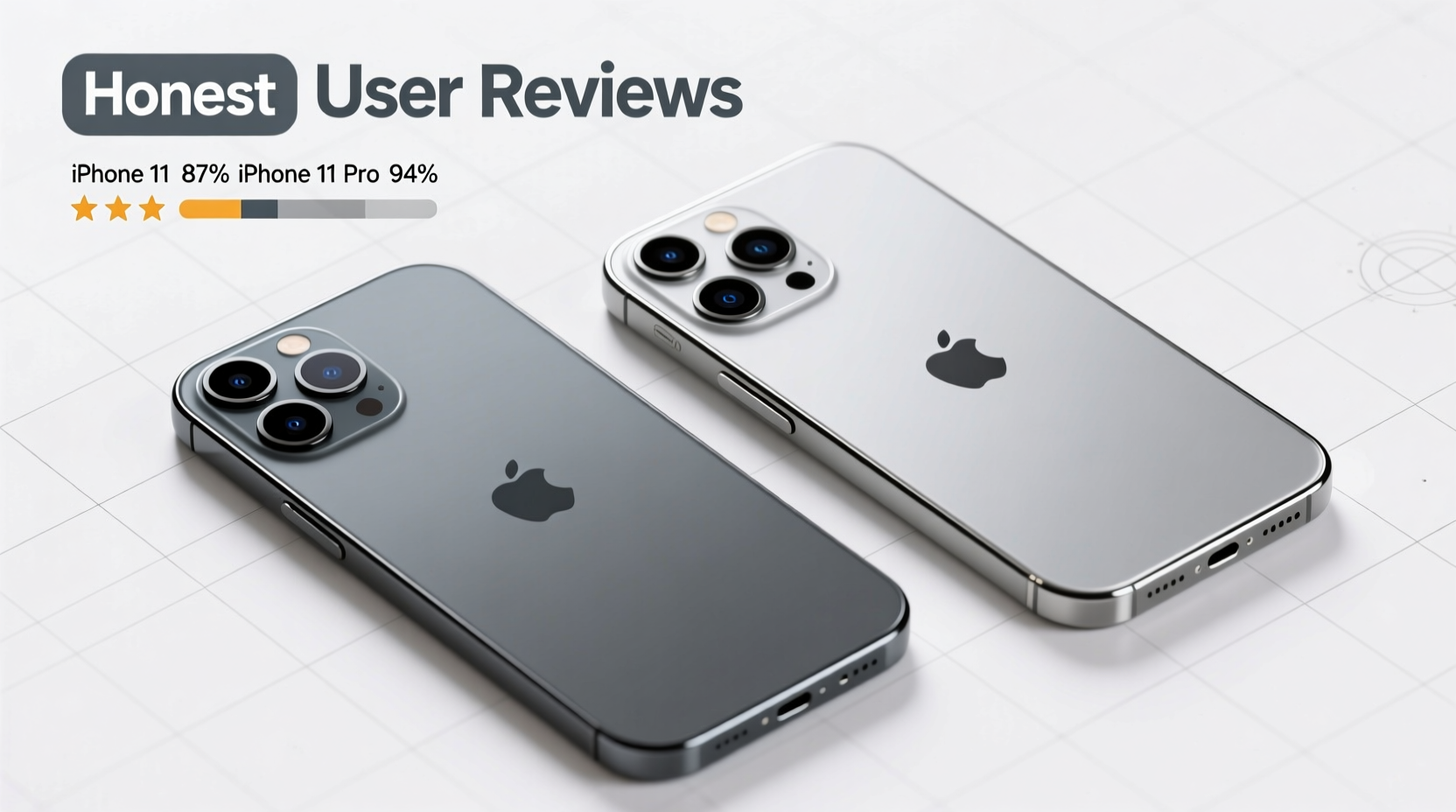
The most immediate difference between the iPhone 11 and iPhone 11 Pro lies in their construction. The iPhone 11 features an aerospace-grade aluminum frame with a glass back, available in bright colors like purple, green, and yellow. It’s durable and familiar, resembling earlier iPhone designs.
In contrast, the iPhone 11 Pro uses a surgical-grade stainless steel frame and matte-textured glass back. This not only gives it a more premium feel but also improves grip and resistance to fingerprints. Many users report that the Pro feels significantly more solid in hand—almost like holding a tool built for professionals.
Tip: If you prioritize durability and a high-end tactile experience, the iPhone 11 Pro’s build quality alone may justify the upgrade.However, this comes at a cost: the Pro is heavier (188g vs 194g) and slightly thicker. Some users with smaller hands find the Pro less comfortable for prolonged one-handed use.
Display: Brighter, Smoother, Better
The iPhone 11 uses a 6.1-inch Liquid Retina LCD display with a resolution of 1792x828 pixels. It's perfectly serviceable—bright enough for indoor use and decent in sunlight—but lacks the depth and contrast of OLED panels.
The iPhone 11 Pro steps up with a 5.8-inch Super Retina XDR OLED display (2436x1125), offering deeper blacks, higher peak brightness (up to 800 nits HDR, 1200 nits peak), and better color accuracy. For media consumption, photo editing, or reading in direct sunlight, the difference is immediately noticeable.
One often-overlooked advantage: OLED screens consume less power when displaying dark content, contributing slightly to better battery efficiency in certain scenarios.
“Once you’ve used an OLED screen on a daily basis, going back to LCD feels like watching HD TV after 4K.” — Mark Tran, Mobile Photographer & Tech Reviewer
Camera Comparison: More Than Just Megapixels
Both phones share the same front-facing 12MP TrueDepth camera, but the rear systems diverge sharply.
- iPhone 11: Dual-camera setup (12MP wide + 12MP ultra-wide)
- iPhone 11 Pro: Triple-camera system (12MP wide + 12MP ultra-wide + 12MP telephoto)
The addition of the telephoto lens on the Pro allows for 2x optical zoom and improved portrait shots with better background separation. Users consistently praise the Pro’s ability to capture crisp close-ups without digital cropping artifacts.
In low-light conditions, both devices benefit from Night Mode, but the Pro’s larger sensor apertures and advanced image signal processor deliver cleaner results with less noise. Video shooters also note better stabilization and dynamic range on the Pro, especially in challenging lighting.
A real-world example: Sarah K., a travel blogger who used both models during a trip to Iceland, reported that the iPhone 11 struggled with snow-filled scenes due to overexposure, while the Pro preserved highlights and shadow detail far more effectively.
💬 Mini Case Study: After switching from the iPhone 11 to the 11 Pro, freelance photographer Jamal R. noticed a 30% increase in client satisfaction with mobile-shot drafts. “The telephoto lens let me frame tighter shots without moving, which changed how I work on location.”
Battery Life and Performance: Practical Differences
Apple claimed the iPhone 11 Pro offered four hours more battery life than the iPhone 11—a bold statement backed by many long-term users. In practice, the Pro lasts around 6–7 hours of screen-on time under mixed usage, compared to 4.5–5.5 hours for the iPhone 11.
This becomes crucial for heavy users: commuters, travelers, or anyone relying on GPS navigation throughout the day. One Reddit user noted, “I can leave the house at 7 AM with the Pro at 100%, and still have 20% left at 10 PM. With the iPhone 11, I’m scrambling for a charger by 6.”
Under the hood, both phones use the same A13 Bionic chip, so raw performance in apps and games is nearly identical. However, the Pro’s optimized power management and cooler-running hardware allow it to sustain peak performance longer during intensive tasks like video rendering or gaming sessions.
Price-to-Value Analysis: Is the Pro Worth It?
At launch, the iPhone 11 started at $699, while the 11 Pro began at $999—a $300 gap. Today, in the refurbished or secondhand market, that difference has narrowed significantly. Used iPhone 11s sell for $200–$280; Pro models go for $280–$380 depending on storage and condition.
To assess value, consider your priorities:
| Feature | iPhone 11 | iPhone 11 Pro | Verdict |
|---|---|---|---|
| Display Quality | Liquid Retina LCD | Super Retina XDR OLED | Pro wins clearly |
| Camera Flexibility | Dual-lens, no optical zoom | Triple-lens, 2x zoom | Pro offers more versatility |
| Battery Life | Good for average use | Excellent, all-day capable | Pro has edge |
| Build & Feel | Aluminum, glossy finish | Stainless steel, matte glass | Pro feels more premium |
| Current Market Price | $200–$280 | $280–$380 | ~$80–$100 premium |
Frequently Asked Questions
Can the iPhone 11 still run iOS updates smoothly?
Yes. Both the iPhone 11 and 11 Pro are supported through iOS 17 and expected to receive iOS 18. They handle modern apps and multitasking without lag thanks to the A13 chip and 4GB RAM.
Is the camera difference obvious in everyday photos?
For casual snapshots, not dramatically. But if you frequently zoom, shoot portraits, or take photos in dim light, the Pro delivers visibly better results. The telephoto lens adds creative flexibility the base model lacks.
Does the iPhone 11 Pro scratch easily?
The stainless steel frame is more prone to micro-scratches than aluminum, especially in silver and gold finishes. However, the matte glass resists fingerprints well. Most owners recommend using a case for protection without sacrificing aesthetics.
Final Verdict: Who Should Upgrade?
The iPhone 11 remains an excellent device—capable, reliable, and surprisingly future-proof. For someone who checks email, browses social media, and takes occasional photos, it’s more than sufficient.
But the iPhone 11 Pro elevates the experience in ways that matter: a superior display, longer battery life, better cameras, and a build that feels engineered rather than assembled. These aren’t gimmicks—they’re refinements that compound over time.
If you're choosing between them today in the secondhand market, and the price difference is under $100, the iPhone 11 Pro is the smarter buy. You gain tangible improvements without paying new-device premiums.
As one long-term user put it: “I bought the iPhone 11 first, then upgraded to the Pro six months later. I didn’t think $300 would make such a difference. I was wrong.”
🚀 Ready to make a decision? Assess your usage: if you value battery life, photo quality, and a premium feel, the iPhone 11 Pro is worth the investment—even years later. Share your own experience or questions in the comments below.








