Cats are natural hunters with sharp instincts honed over millennia. Even the most pampered indoor feline carries the genetic drive to stalk, pounce, and capture prey. When this instinct goes unmet, boredom sets in—leading to destructive behavior, obesity, or anxiety. Mental stimulation is as crucial to a cat’s well-being as food and shelter. Two of the most popular tools for engaging a cat’s mind are interactive cat toys and laser pointers. But which one truly delivers deeper, more satisfying cognitive engagement? The answer isn’t always straightforward, but understanding how each tool works—and where they fall short—can help pet owners make informed decisions.
The Science Behind Feline Mental Stimulation
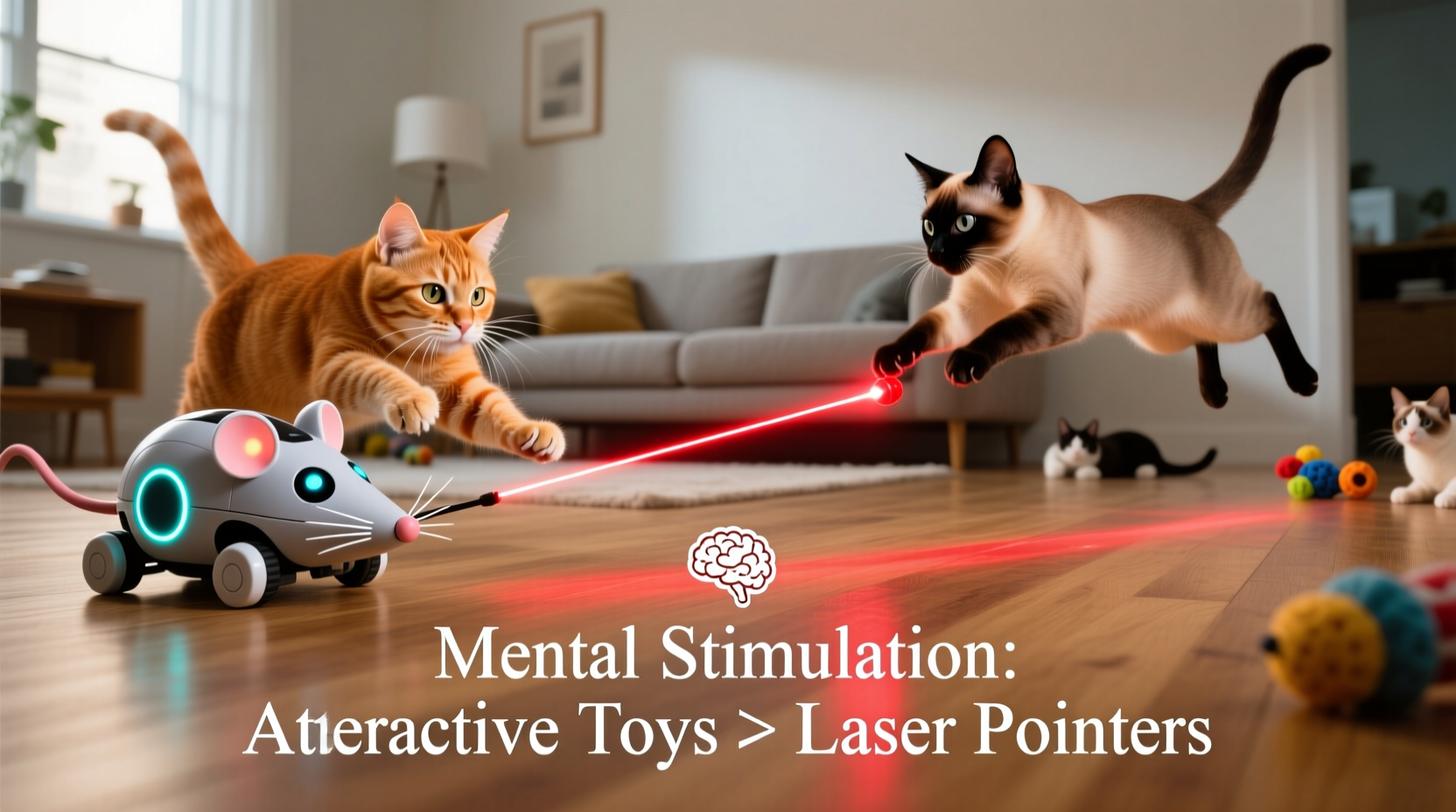
Cats thrive on routine yet crave novelty. Their brains respond best to activities that mimic the hunt: spotting movement, tracking a target, chasing, and finally, capturing. This sequence is essential not just for physical exercise but for psychological fulfillment. When any part of the cycle is missing—especially the “capture” phase—cats can experience frustration, even if they appear engaged during play.
Dr. Sarah Ellis, co-author of *The Trainable Cat*, emphasizes that “the completion of the predatory sequence is critical for reducing stress and promoting emotional well-being in domestic cats.” Without closure, repetitive play can become compulsive rather than enriching.
“Mental stimulation isn’t just about keeping cats busy—it’s about fulfilling their innate behavioral needs.” — Dr. Karen Overall, Veterinary Behaviorist
This principle becomes especially relevant when comparing interactive physical toys with laser pointers, which often omit the final stage of the hunt.
Interactive Cat Toys: Engagement Through Physical Interaction
Interactive cat toys come in many forms: motorized mice, feather wands, treat-dispensing puzzles, robotic balls, and automated tunnels. What unites them is direct physical interaction—either between cat and owner or cat and machine. These toys simulate real prey by offering resistance, unpredictability, and tangible outcomes.
For example, a motorized mouse darting under furniture triggers a full hunting response. The cat sees it, chases it, pins it down, and may even carry it away—a complete behavioral loop. Treat puzzles add another layer by requiring problem-solving: manipulating levers, sliding panels, or pawing compartments to access food.
Tip: Rotate interactive toys weekly to maintain novelty and prevent habituation.Benefits of Interactive Toys
- Completes the predatory sequence: Cats can catch, bite, and “kill” the toy, providing psychological satisfaction.
- Encourages problem-solving: Puzzle feeders challenge cognitive function and slow down eating.
- Promotes sustained attention: Mechanical unpredictability keeps cats mentally alert.
- Supports solo and social play: Many toys work without human involvement, ideal for owners with busy schedules.
Limitations
- Some require batteries or charging.
- Higher initial cost compared to basic toys.
- May need supervision to prevent chewing or ingestion of parts.
Laser Pointers: The Allure of the Elusive Dot
Laser pointers have long been a favorite among cat owners due to their simplicity and ability to trigger intense bursts of activity. The erratic red dot mimics fast-moving prey, sparking immediate chase responses. Cats leap, skid, and zigzag across rooms with remarkable agility—all driven by the pursuit of an invisible beam.
However, the very thing that makes lasers exciting—their elusiveness—also undermines their value as a mental enrichment tool. The dot cannot be caught. No matter how fast or clever the cat, the reward is never attainable.
Behavioral experts warn that this can lead to learned frustration. Over time, some cats exhibit signs of stress: excessive meowing after play, redirected aggression, or obsessive scanning of floors and walls for non-existent dots.
Tip: Always end a laser session by guiding the dot onto a physical toy so your cat can “catch” something.When Laser Pointers Work Well
- Short sessions (5–10 minutes) used occasionally.
- Paired with a tangible conclusion (e.g., letting the cat pounce on a plush toy at the end).
- Used with older or less mobile cats who enjoy tracking without exertion.
Risks of Overuse
- Frustration from unfulfilled hunting drive.
- Obsessive behaviors around light reflections or shadows.
- Reduced trust in play if consistently denied closure.
Comparative Analysis: Interactive Toys vs Laser Pointers
| Feature | Interactive Cat Toys | Laser Pointers |
|---|---|---|
| Completes Predatory Sequence | ✅ Yes – allows capture and “kill” phase | ❌ No – target is intangible |
| Cognitive Challenge | ✅ High – especially puzzle and motion-based toys | ⚠️ Low – purely visual tracking |
| Physical Exercise | ✅ Moderate to high, depending on toy type | ✅ High – encourages sprinting and jumping |
| Mental Satisfaction | ✅ High – provides closure | ⚠️ Low to moderate – risk of frustration |
| Owner Involvement Needed | ⚠️ Varies – some automatic, others require interaction | ✅ Required during use |
| Safety | ✅ Generally safe with supervision | ⚠️ Risk of eye exposure; avoid shining near eyes |
| Best For | Daily enrichment, long-term mental health | Bursts of energy release, occasional use |
Real-World Example: Bella the Apartment Cat
Bella, a 3-year-old tabby living in a small city apartment, had developed a habit of waking her owner at 4 a.m. to demand playtime. She would swat at curtains, knock items off shelves, and vocalize persistently. Her owner initially relied on a laser pointer to tire her out at night, but noticed Bella became increasingly agitated—even attempting to bite the reflection in mirrors.
After consulting a veterinary behaviorist, Bella’s owner introduced a rotation of interactive toys: a motorized feather teaser, a treat-dispensing ball, and a crinkle tunnel with hidden mice. Laser play was limited to two minutes twice a week, always ending with Bella catching a stuffed toy.
Within three weeks, Bella’s nighttime outbursts decreased by 80%. She began napping after morning play sessions and showed interest in solving new puzzles. Her owner noted, “She seems calmer, like she’s finally getting what she needs.”
“When cats act out, it’s rarely mischief—it’s unmet instinct.” — Dr. Mikel Delgado, Feline Behavior Scientist
Step-by-Step Guide to Maximizing Mental Stimulation
To ensure your cat receives balanced, effective mental enrichment, follow this practical timeline:
- Assess Your Cat’s Play Style (Day 1): Observe whether your cat prefers stalking, batting, climbing, or solving puzzles. Note what excites them most.
- Introduce One Interactive Toy (Day 2): Start with a simple motion toy or wand. Engage for 5–10 minutes, mimicking bird or rodent movements.
- Add a Puzzle Feeder (Day 4): Replace 25% of one meal with a treat-dispensing toy. Supervise first uses.
- Incorporate Solo-Play Devices (Day 7): Set up an automated toy on a timer for midday stimulation if you’re away.
- Limited Laser Use (Day 10): Use the laser only after other play, guide the dot to a plush toy, and let your cat “capture” it.
- Rotate Weekly (Ongoing): Swap out toys every 5–7 days to maintain novelty. Store unused ones out of sight.
- Monitor Behavior (Monthly): Watch for signs of overstimulation, disinterest, or obsession. Adjust accordingly.
Action Checklist: Building a Balanced Play Routine
Checklist: Optimize Your Cat’s Mental Enrichment- ✅ Use interactive toys daily (at least 10–15 minutes)
- ✅ Include at least one puzzle feeder per week
- ✅ Limit laser pointer use to 2x/week, max 5 minutes
- ✅ Always end laser play by transferring focus to a catchable toy
- ✅ Rotate toys weekly to prevent boredom
- ✅ Observe your cat’s body language during and after play
- ✅ Avoid using lasers around kittens under 6 months—they may develop fixation issues
Frequently Asked Questions
Can laser pointers cause psychological harm to cats?
While occasional use is generally safe, frequent or prolonged laser play without a tangible reward can lead to frustration and compulsive behaviors. Cats may begin obsessively chasing lights, shadows, or reflections. To minimize risk, always conclude laser sessions by guiding the dot onto a physical toy so your cat can “catch” something.
Are automated toys as effective as owner-led play?
Automated toys provide valuable solo enrichment, especially for cats left alone during the day. However, they should complement—not replace—interactive play with humans. Social bonding through shared play strengthens trust and emotional security. Use both types for a balanced approach.
How much playtime does my cat really need?
Most adult cats benefit from 15–30 minutes of active play per day, broken into multiple short sessions. Kittens and high-energy breeds may require more. Focus on quality over quantity: mimic real prey with varied speeds and hiding patterns. End each session with a “kill” and, optionally, a small treat to simulate a post-hunt meal.
Conclusion: Prioritizing Fulfillment Over Fun
Both interactive cat toys and laser pointers have a place in feline enrichment—but their roles differ significantly. Interactive toys offer comprehensive mental stimulation by honoring the full arc of a cat’s natural hunting behavior. They engage problem-solving skills, provide tactile feedback, and deliver emotional closure. Laser pointers, while exciting in the moment, risk leaving cats mentally unsatisfied if used in isolation.
The goal isn’t merely to tire a cat out, but to fulfill its instinctual needs in a healthy, sustainable way. By prioritizing toys that allow capture, incorporating variety, and using lasers responsibly, owners can transform playtime from a fleeting distraction into a cornerstone of feline well-being.
💬 What’s your cat’s favorite toy? Share your experiences or ask questions in the comments—your insights could help another cat owner build a better play routine today.








