Cats are creatures of comfort, curiosity, and climbing. Whether they're leaping onto a high shelf or peering out a sunlit window, their behaviors are deeply rooted in instinct. As indoor living becomes the norm for pet cats, providing enriching environments is essential for their mental and physical well-being. Two popular solutions—cat trees and window perches—serve distinct purposes, but which one do cats truly prefer? The answer isn't always straightforward, as it depends on individual personality, age, environment, and natural tendencies.
Understanding feline behavior is key to making informed decisions about enrichment tools. While some cats may spend hours scaling a multi-level cat tree, others might be glued to a window perch, watching birds and squirrels with intense focus. This article explores both options in depth, compares their benefits, and offers practical guidance backed by animal behavior experts to help you create an ideal indoor habitat for your cat.
The Psychology Behind Feline Preferences
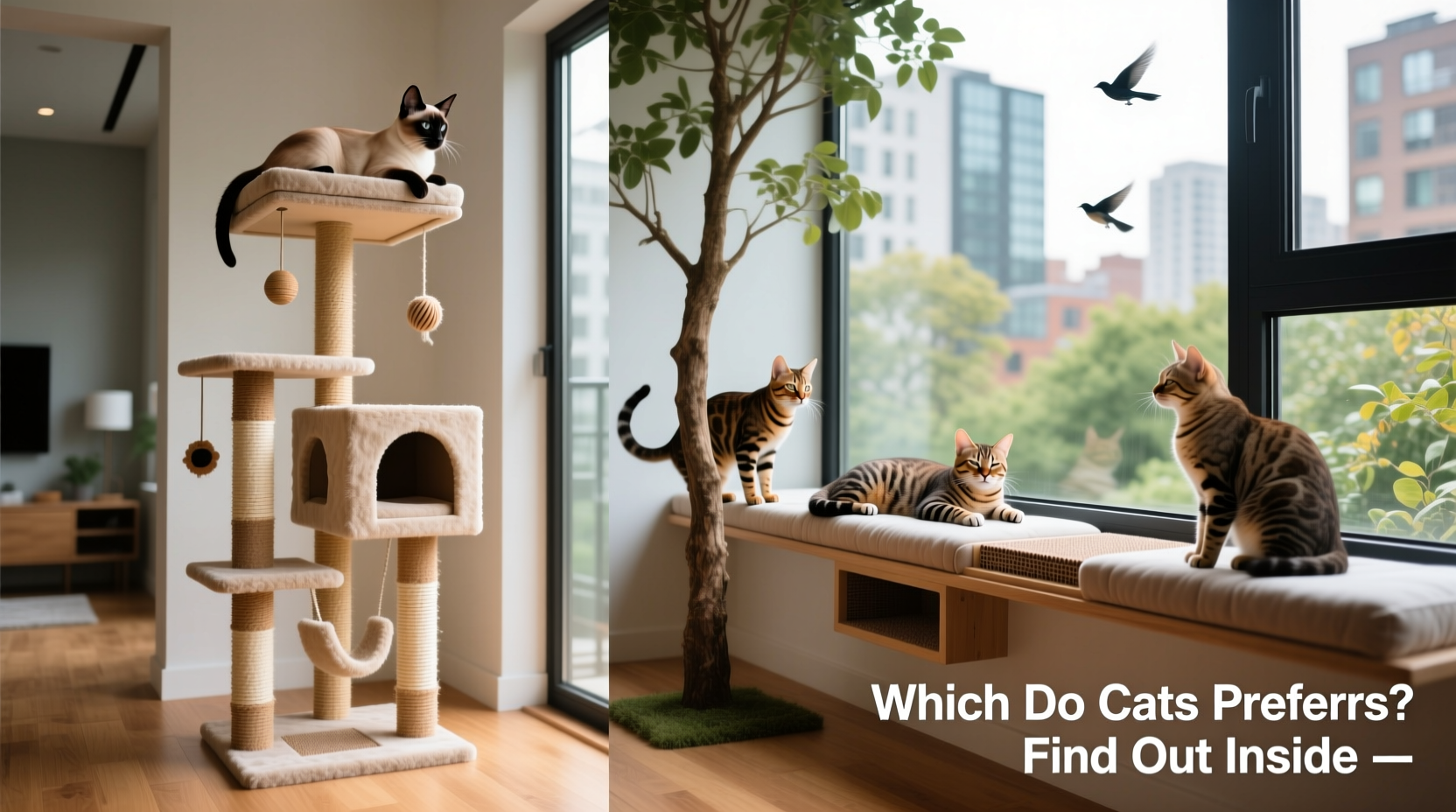
Cats are territorial animals with a strong need for security and observation. In the wild, elevated positions offer safety from predators and a vantage point to survey territory. This instinct persists in domestic cats, even when they live in safe, climate-controlled homes. Vertical space allows them to feel dominant and in control, reducing stress and anxiety.
Similarly, visual stimulation plays a crucial role in a cat’s daily routine. Watching outdoor activity—birds, leaves rustling, passing cars—provides mental engagement that mimics hunting behaviors. A lack of environmental enrichment can lead to boredom, over-grooming, or destructive habits.
So when comparing cat trees and window perches, we’re essentially weighing two core needs: vertical exploration versus observational entertainment. Both fulfill vital roles, but not all cats prioritize them equally.
“Cats don’t just climb for fun—they climb for survival. Even indoors, access to height is a psychological necessity.” — Dr. Sarah Thompson, Feline Behavior Specialist, American Association of Feline Practitioners
Indoor Cat Trees: Benefits and Considerations
Indoor cat trees are multi-functional structures designed to satisfy a cat’s urge to climb, scratch, hide, and nap. They typically include platforms, sisal-wrapped posts, tunnels, and sometimes enclosed condos. Their primary advantages include:
- Vertical Space Utilization: Maximizes floor space while giving cats multiple levels to explore.
- Scratching Outlets: Integrated scratching surfaces help preserve furniture and support claw health.
- Exercise Opportunities: Encourages jumping, stretching, and muscle development.
- Social Hierarchy Support: In multi-cat households, separate levels allow each cat to claim its own zone.
- Hiding Spots: Enclosed areas provide retreats for anxious or shy cats.
However, not all cat trees are created equal. Stability, material quality, and design significantly impact usage. A wobbly tower or poorly placed platform may deter even the most adventurous climber.
Tip: Place your cat tree near a window if possible—this combines climbing with visual stimulation, increasing overall appeal.When Cat Trees Work Best
Cat trees tend to be most effective for:
- Kittens and young adult cats with high energy levels
- Cats in homes with limited window access
- Multi-cat households needing defined territories
- Felines who enjoy hiding or napping in enclosed spaces
Window Perches: Why Cats Love Them
Window perches—also called cat shelves, window hammocks, or suction-mounted beds—are minimalist platforms attached directly to windows. They capitalize on a cat’s innate fascination with movement outside. Unlike cat trees, they don’t encourage climbing, but they excel at delivering mental stimulation.
Key benefits include:
- Natural Sunlight Exposure: Provides warmth and helps regulate circadian rhythms.
- Visual Enrichment: Offers hours of bird-watching, leaf-chasing, and people-watching entertainment.
- Low Physical Demand: Ideal for older or arthritic cats who can’t jump high.
- Space-Saving Design: Doesn’t occupy floor space and blends into room decor.
- Stress Reduction: Watching nature has been shown to lower cortisol levels in cats.
One major limitation is dependency on external views. A window facing a brick wall or dark alley won’t hold a cat’s interest long. Ideally, the perch should overlook a yard, garden, or active street scene.
“Some cats will wait by the window every morning like clockwork, anticipating the arrival of ‘their’ robin. That kind of routine shows how emotionally invested they become in outdoor activity.” — James Reed, Certified Cat Behavior Consultant, IAABC
When Window Perches Shine
These are especially beneficial for:
- Sedentary or senior cats
- Cats with mobility issues
- Single-cat homes where social play is limited
- Urban apartments with few climbing opportunities
Comparative Analysis: Cat Trees vs Window Perches
| Feature | Cat Trees | Window Perches |
|---|---|---|
| Physical Activity Level | High – promotes climbing, jumping, scratching | Low – mostly passive sitting |
| Mental Stimulation | Moderate – based on novelty and layout changes | High – dynamic outdoor visuals |
| Space Required | Large footprint; needs stable placement | Minimal – uses existing window space |
| Ideal For | Active, playful, or multi-cat households | Observant, older, or low-mobility cats |
| Lifespan & Durability | Varies – depends on materials and use | Long if suction mounts are maintained |
| Installation Effort | Assembly required; anchoring recommended | Easy – often tool-free setup |
| Cost Range | $50–$300+ | $20–$80 |
Real-World Example: How One Household Balanced Both Options
In Portland, Oregon, Maria Lopez adopted two cats: Milo, a sprightly 2-year-old tabby, and Luna, a 10-year-old Persian mix with mild arthritis. Initially, she installed only a large cat tree in the living room. Milo used it constantly, leaping between levels and napping atop the highest platform. Luna, however, avoided it entirely—she struggled to jump more than 18 inches and showed no interest in climbing.
After consulting her vet, Maria added a sturdy suction-mounted window perch overlooking her backyard bird feeder. Within days, Luna began spending several hours a day there, tracking chickadees and dozing in the afternoon sun. She rarely left the perch during daylight hours.
Milo still preferred the cat tree, but he also started using the window seat when Luna wasn’t around, especially during rainstorms when outdoor activity peaked. Over time, Maria realized both pieces served different—but equally important—roles. “It wasn’t about choosing one over the other,” she said. “It was about understanding what each cat needed.”
How to Choose Based on Your Cat’s Personality
Rather than assuming one product fits all, observe your cat’s daily habits. Ask yourself:
- Does my cat seek high places regularly?
- Do they stare out windows for extended periods?
- Are they playful and energetic, or calm and observant?
- Do they have any physical limitations?
Based on these observations, consider the following checklist before purchasing:
Enrichment Selection Checklist
- ✅ Assess your cat’s age, mobility, and energy level.
- ✅ Evaluate available space and sunlight exposure in your home.
- ✅ Identify existing high spots your cat already uses (e.g., bookshelves, counters).
- ✅ Determine whether your windows offer engaging outdoor views.
- ✅ Prioritize stability and non-toxic materials in any product.
- ✅ Consider combining both options if budget and space allow.
Can You Have Both? The Case for Complementary Use
The most enriching indoor environments don’t rely on a single solution. Many experts advocate for combining cat trees and window perches to cover all aspects of feline well-being. For example:
- A cat tree placed beside a large window merges climbing with viewing pleasure.
- A window perch installed above a lower cat tree creates a continuous vertical pathway.
- Different cats in the same household can use different zones without conflict.
This layered approach mirrors how cats interact with natural environments—using trees, rocks, and ledges to move through space while scanning for prey or threats.
Moreover, rotating or modifying setups periodically prevents habituation. Adding a new platform, changing the orientation, or introducing dangling toys can renew interest in older equipment.
Frequently Asked Questions
Do cats really need either a cat tree or a window perch?
While neither is strictly “necessary” for survival, both contribute significantly to mental health and behavioral balance. Cats deprived of vertical space or visual stimulation are more prone to stress, obesity, and destructive scratching. Providing at least one form of enrichment is strongly recommended.
Are window perches safe? Can they fall?
Most high-quality window perches use industrial-strength suction cups tested to hold 20+ pounds. However, they must be installed on clean, smooth glass and checked monthly for seal integrity. Avoid placing them on painted, textured, or dirty surfaces. For extra security, some models include safety tethers.
My cat ignores both—what should I do?
If your cat avoids new additions, give it time. Try placing familiar blankets or toys on the structure, using silver vine or valerian root spray, or feeding nearby to create positive associations. Some cats take weeks to warm up to new objects. If avoidance persists, reevaluate placement—proximity to social areas or heat sources often increases usage.
Final Thoughts: Preference Is Personal, But Enrichment Is Essential
There is no universal answer to whether cats prefer indoor cat trees or window perches. Some thrive on the challenge of ascending three feet into the air; others find bliss in silently observing a sparrow hop across the lawn. What matters most is recognizing your cat as an individual with unique preferences and needs.
Instead of treating this as an either/or decision, think holistically. A well-rounded indoor environment includes opportunities for climbing, resting, hiding, scratching, and watching. By offering both cat trees and window perches—or integrating elements of both—you create a habitat that respects your cat’s instincts and enhances their quality of life.
🚀 Start observing your cat today. Note where they naturally go when relaxed or alert. Then, introduce one enrichment option at a time. Small changes can lead to big improvements in happiness and health. Share your experience—what does your cat love most?








