Cats don’t speak in words, but they are far from silent. Every flick, twitch, and puff of their tail sends a message—sometimes subtle, sometimes unmistakable. Understanding your cat’s tail language is one of the most powerful tools you can develop as a pet owner. It deepens your bond, prevents misunderstandings, and helps you respond appropriately to your cat’s emotional state. Unlike dogs, whose tails often signal excitement or friendliness when wagging, cats use their tails in more nuanced ways. A swish might mean irritation, while a high-held tail could be an invitation to connect. By learning these signals, you’re not just reading behavior—you’re listening.
The Tail as a Communication Tool
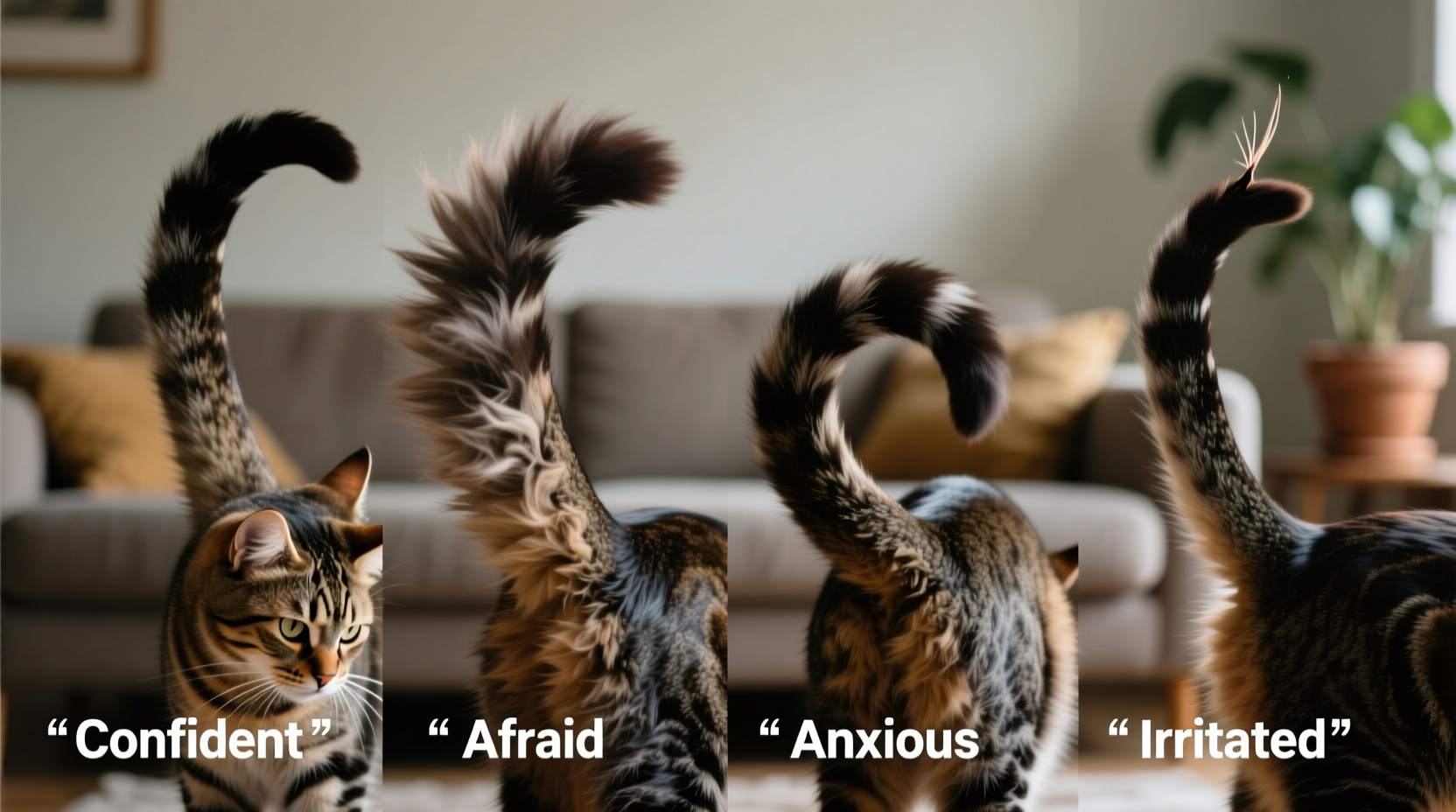
A cat’s tail is an extension of its spine, packed with nerves and muscles that allow for precise control. This makes it ideal for expressing mood, intention, and physical condition. While facial expressions and ear positioning contribute to feline communication, the tail is often the most visible and dynamic part of the display. Because cats rely heavily on nonverbal cues—especially in the wild where silence can mean survival—their bodies have evolved to convey complex messages without sound.
In multi-cat households, tail positions help establish social hierarchy and avoid conflict. A dominant cat may carry its tail high, while a submissive one tucks it low. Even outdoor encounters between unfamiliar cats are often resolved through posturing, with tail height and movement playing a central role. For indoor companions, this same language applies—but now it’s directed at you.
Tip: Always observe your cat’s tail in context—combine it with ear position, vocalizations, and overall posture for accurate interpretation.Common Tail Positions and What They Mean
Each tail position conveys a distinct emotional state. Recognizing these signs allows you to anticipate your cat’s needs and reactions before they escalate into stress or aggression.
- Upright tail with a slight curve at the tip (like a question mark): Friendly and approachable. Your cat is in a good mood and may be seeking attention or play.
- Low-hanging or tucked tail: Fear, anxiety, or submission. The cat feels threatened or unsure and is protecting its vulnerable underbelly.
- Puffed-up tail (bottlebrush effect): Fear or surprise. The cat is trying to appear larger to deter a perceived threat. Often seen during sudden loud noises or confrontations.
- Slow side-to-side sway: Focus or mild irritation. Common when a cat is watching birds or toys. If prolonged, it may precede a bite or swipe.
- Rapid thrashing or lashing: Agitation or anger. Do not attempt to pet or intervene abruptly. This is a clear warning sign.
- Tail wrapped around another cat or human: Affection and trust. Similar to how people might put an arm around someone they care about.
- Quivering or vibrating tail (especially when upright): High excitement or greeting. Some cats do this when happy to see their owner, though unneutered males may also spray after quivering.
“Cats are masters of micro-expression. Their tail is like a mood ring—it changes in real time based on environment, emotion, and social dynamics.” — Dr. Lena Pruitt, Feline Behavior Specialist
Decoding Tail Movements in Context
Interpreting tail language isn’t just about memorizing positions—it’s about understanding context. A quivering tail near a window might indicate excitement at seeing prey, while the same motion at the vet’s office could signal stress. Similarly, a slow swish while lying down differs significantly from one while crouched and staring at a toy.
For example, a cat lying on its side with a gently twitching tail tip may simply be tracking movement, not showing annoyance. But if you reach to pet it and the swishing intensifies, that’s feedback: your touch is unwelcome. Ignoring such cues often leads to bites or scratches—not out of malice, but because the cat felt unheard.
Another key factor is duration. Brief tail movements are often neutral or exploratory. Prolonged agitation signals deeper discomfort. If your cat’s tail remains low or lashing for extended periods, especially in certain rooms or around specific people, it may indicate chronic stress or fear.
| Tail Behavior | Emotional State | Recommended Response |
|---|---|---|
| High, upright tail | Confident, friendly | Approach gently; offer pets if welcomed |
| Puffed tail | Fearful, startled | Give space; remove stressor if possible |
| Low or tucked tail | Anxious, submissive | Avoid direct interaction; create safe zones |
| Fast tail lashing | Irritated, angry | Back off; do not force contact |
| Curved tip (question mark) | Playful, curious | Engage with toys or gentle interaction |
Mini Case Study: Reading Mia’s Mood Swings
Mia, a three-year-old tabby, lived with her owner Sarah in a small apartment. Sarah often complained that Mia would suddenly bite her while being petted. Confused and hurt, she considered taking Mia to a behaviorist. Instead, she began observing Mia’s tail closely.
She noticed a pattern: when Mia’s tail started twitching slowly at first, then escalated into sharp back-and-forth movements, the bites followed within seconds. Before this, Sarah had assumed petting was always welcome if Mia didn’t walk away. But the tail told a different story. Once Sarah learned to stop petting at the first sign of tail movement, the biting stopped entirely.
This case highlights a common misunderstanding: cats often tolerate petting beyond their comfort zone before signaling distress. The tail is usually the first honest indicator. By respecting those signals, owners can prevent negative behaviors rooted in miscommunication.
Step-by-Step Guide to Interpreting Your Cat’s Tail Language
Becoming fluent in tail signals takes practice, but following a structured approach accelerates learning. Use this five-step process daily to build awareness:
- Observe baseline behavior: Note how your cat holds its tail when relaxed—eating, grooming, or napping. This becomes your reference point.
- Track changes in real time: When your cat reacts to stimuli (doorbell, other pets, etc.), watch how the tail shifts. Does it rise? Drop? Fluff up?
- Combine with other body cues: Check ears (forward = calm, flattened = scared), eyes (dilated pupils = stress), and posture (crouched vs. stretched).
- Test responses carefully: If the tail is upright and curled, try calling your cat. If it approaches, the signal was positive. If it lashes, retreat and reassess.
- Record patterns over time: Keep a simple log for a week: “7 PM – Tail puffed when dog barked,” “9 AM – Upright tail, rubbed against leg.” Patterns will emerge.
Checklist: Is Your Cat Stressed or Content?
Use this quick-reference checklist to assess your cat’s well-being based on tail and body language:
- ✅ Tail held high with relaxed sway – feeling secure
- ✅ Tail wrapped around you or another pet – showing affection
- ✅ Tail still or gently moving while resting – calm and comfortable
- ❌ Tail puffed or bristled – fearful or startled
- ❌ Rapid tail lashing while sitting – irritated or overstimulated
- ❌ Tail tucked tightly under body – anxious or unwell
- ❌ Tail thumping rhythmically while lying down – displeased, even if not moving away
If multiple “❌” signs appear regularly, consider environmental adjustments: reduce noise, add vertical space, provide hiding spots, or consult a veterinarian to rule out pain-related causes.
FAQ
Why does my cat wag its tail while lying down?
Unlike dogs, cats don’t wag tails out of happiness. A slow twitch often means focus—your cat is watching something intently. Faster movements suggest irritation. If you’re petting them, stop and observe: continued wagging means they’ve had enough.
Is a quivering tail a cause for concern?
Not always. Many cats quiver their tails when excited to see their owners, especially at greeting. However, unneutered males may quiver before spraying. Spayed/neutered cats rarely mark, so quivering is usually harmless enthusiasm.
Can medical issues affect tail behavior?
Yes. Injuries, arthritis, nerve damage, or urinary tract problems can alter how a cat holds or moves its tail. A sudden change—such as inability to lift the tail or constant drooping—should prompt a vet visit.
Expert Insight: Beyond the Tail
While the tail is a vital signal, experts emphasize a holistic approach. Dr. Elena Torres, a veterinary ethologist, explains:
“You can’t read a cat by its tail alone. The whole body tells the story. A high tail with flattened ears means mixed emotions. A still tail with dilated pupils suggests suppressed fear. True understanding comes from integrating all cues—not isolating one.” — Dr. Elena Torres, Animal Behavior Researcher
This systems-based view prevents misinterpretation. For instance, a cat with a slightly raised tail but hunched shoulders isn’t confident—it may be attempting brave posturing despite fear. Observing the full picture ensures compassionate, accurate responses.
Conclusion
Your cat speaks constantly—not in syllables, but in gestures. The tail is one of its loudest voices. By learning to interpret its positions, rhythms, and combinations with other body language, you move from guessing to understanding. You stop seeing bites as random and start recognizing them as inevitable outcomes of ignored warnings. You begin to see affection not just in purrs, but in the elegant curl of a tail tip.
Mastery of cat tail language doesn’t happen overnight. But every observation brings you closer to a deeper, more empathetic relationship. Start today: sit quietly, watch, and listen with your eyes. Your cat is already telling you how it feels—you just need to learn the dialect.
💬 What has your cat’s tail taught you? Share your observations, questions, or breakthrough moments in the comments—help fellow cat lovers decode their feline friends!








