
Most people start the year—or any self-improvement journey—with enthusiasm, only to fade within weeks. The problem isn’t motivation; it’s design. Lasting change doesn’t come from willpower alone but from understanding how the mind works. By applying principles of behavioral psychology, you can engineer your environment, routines, and mindset to make good habits automatic and bad ones easier to break.
Habits are mental shortcuts. The brain loves efficiency, so it turns repeated behaviors into unconscious routines. The key is not to rely on discipline every single day, but to create conditions where the right behavior becomes the default. This article explores the psychological mechanisms behind habit formation and provides practical tools to help you build habits that endure.
The Science Behind Habit Formation
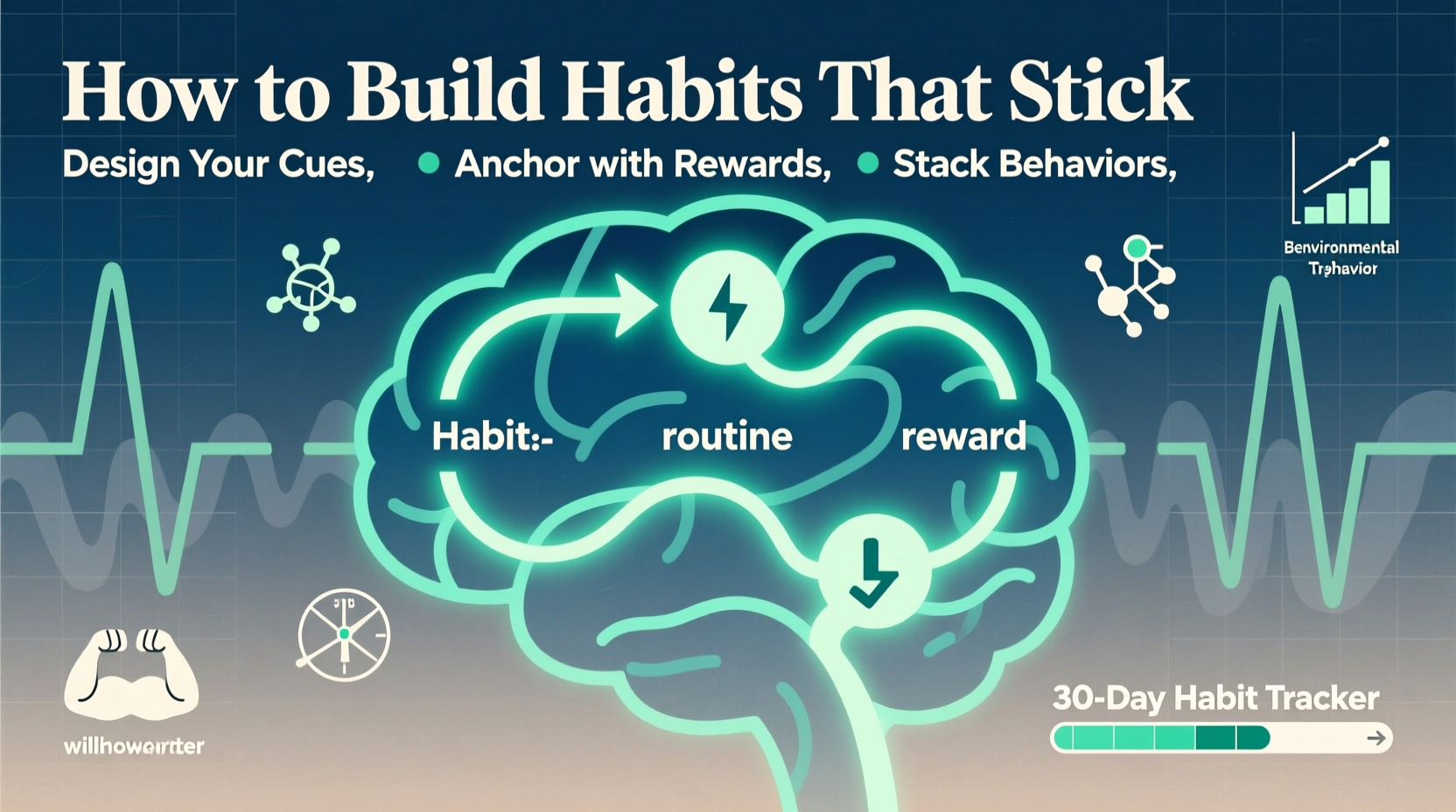
At the core of every habit is a neurological loop known as the \"habit cycle,\" identified by researchers at MIT and popularized by Charles Duhigg in The Power of Habit. This loop consists of three parts: cue, routine, and reward.
- Cue: A trigger that tells your brain to go into automatic mode (e.g., feeling stressed).
- Routine: The behavior itself (e.g., eating a snack).
- Reward: The benefit your brain gains (e.g., temporary relief or pleasure).
Over time, this loop becomes more automatic. The brain begins to anticipate the reward upon seeing the cue, creating a craving that drives the behavior. That’s why trying to stop a habit with willpower often fails—the subconscious system is already primed to act.
To build new habits, you must work with this system, not against it. Instead of resisting cues, reshape them. Replace unhelpful routines with better ones that deliver similar rewards. For example, if stress triggers snacking, replace it with a five-minute breathing exercise that also reduces tension.
Tip: Identify one existing habit loop today—what triggers the behavior, what you do, and what you gain from it. Awareness is the first step to change.Design Your Environment for Success
Your surroundings shape your behavior more than you realize. Willpower is a limited resource, but environmental design is a force multiplier. If you want to read more, place a book on your pillow each morning. If you want to reduce screen time, charge your phone outside the bedroom.
Psychologist B.J. Fogg emphasizes that behavior happens when motivation, ability, and prompt converge. Of these, ability—how easy the action is—is often the most controllable. Make desired habits easier and undesired ones harder.
Consider the “friction” in your daily choices. Want to drink more water? Fill a large bottle the night before and leave it on your desk. Trying to eat healthier? Chop vegetables after grocery shopping and store them at eye level in the fridge.
| Habit Goal | Increase Friction for Bad Habits | Reduce Friction for Good Habits |
|---|---|---|
| Exercise regularly | Leave workout clothes in the basement | Lay out gym clothes the night before |
| Reduce social media use | Log out of apps daily, delete from home screen | Use grayscale mode on your phone |
| Eat more fruit | Don’t buy junk food | Pre-cut apples and berries; keep visible |
“We underestimate how much our environment controls us. Design your space to make the right choice the easy choice.” — Dr. Wendy Wood, psychologist and author of Good Habits, Bad Habits
Start Small: The Power of Tiny Habits
One of the biggest mistakes people make is aiming too high too soon. You don’t need to run 5 miles on day one to become a runner. You need to put on your running shoes and walk to the end of the driveway.
B.J. Fogg’s “Tiny Habits” method is based on the idea that small wins create momentum. When a behavior is so easy it feels trivial, resistance disappears. Success builds confidence, which fuels consistency.
The formula is simple: After [current habit], I will [new tiny habit]. Then celebrate immediately. Celebration releases dopamine, reinforcing the behavior in your brain.
Examples:
- After I brush my teeth, I will floss one tooth.
- After I pour my coffee, I will write one sentence in my journal.
- After I sit on the couch, I will do two push-ups.
These actions seem laughably small—but they’re not about immediate impact. They’re about identity reinforcement. Each time you follow through, you become someone who flosses, journals, or exercises.
Tip: If you skip a day, don’t judge yourself. Just restart the next day. Self-compassion increases long-term adherence.Build Identity-Based Habits
James Clear, author of Atomic Habits, argues that lasting change comes not from focusing on outcomes, but on identity. You don’t want to lose weight; you want to become someone who eats healthy and stays active.
Every action is a vote for the type of person you wish to be. When you choose a salad over fast food, you’re not just eating—you’re affirming, “I am someone who values health.”
This shift changes the emotional framework of habit-building. Instead of asking, “What do I want to achieve?” ask, “Who do I want to become?” Then act in alignment with that identity—even in small ways.
For example:
- Instead of “I need to write a book,” think: “I am a writer.” So you write 100 words daily, even if no one reads it.
- Instead of “I should meditate,” think: “I am mindful.” So you pause and breathe deeply when stressed.
Over time, consistent actions reshape self-perception. And once your identity shifts, maintaining the habit becomes natural because it’s no longer something you do—it’s who you are.
Use Implementation Intentions and Temptation Bundling
Even with motivation, life gets busy. That’s where implementation intentions come in—a strategy backed by decades of research. An implementation intention is a specific plan: “When X happens, I will do Y.”
Studies show people who use this technique are significantly more likely to follow through. For instance, in one study, 91% of participants who formed an implementation intention (“I will exercise at 7 a.m. in my living room”) exercised at least once a week, compared to only 35% in the control group.
Combine this with temptation bundling—pairing something you *want* to do with something you *should* do. The concept, developed by behavioral economist Katy Milkman, leverages instant gratification to fuel long-term goals.
Example: Only listen to your favorite podcast while jogging. Or only watch Netflix while folding laundry.
This creates a positive association and makes the effort feel less like a chore.
Step-by-Step Guide: Building a Psychology-Backed Habit Plan
- Choose one habit you want to build. Keep it narrow and specific (e.g., “drink a glass of water after waking up”).
- Attach it to an existing routine using “after [current habit], I will [new habit].” (e.g., “After I turn off my alarm, I will drink a glass of water.”)
- Make it easy—keep a glass filled overnight on your nightstand.
- Add a celebration—say “Yes!” or give yourself a thumbs-up to reinforce the behavior.
- Track your streak on a calendar or app, but focus more on consistency than perfection.
- Review weekly: What worked? What caused slip-ups? Adjust the plan accordingly.
- Is it tied to a clear cue (time, location, existing habit)?
- Is the action small enough to do even on a bad day?
- Have you reduced friction (made it easy) and increased barriers to alternatives?
- Does it align with the identity you want to build?
- Have you planned a way to celebrate success?
Real Example: How Sarah Built a Daily Writing Habit
Sarah wanted to write a novel but struggled to find time. She tried setting a goal of 1,000 words a day, but missed days led to guilt and abandonment.
She revised her approach using psychology:
- Started small: Committed to writing just one sentence after breakfast.
- Used implementation intention: “After I finish my morning coffee, I will open my document and write one sentence.”
- Reduced friction: Left her laptop open on the kitchen table with the document ready.
- Temptation bundled: Allowed herself to check Instagram only after writing.
- Celebrated: Gave herself a checkmark and said, “I’m a writer,” each day.
Within two weeks, she was writing paragraphs without effort. Six months later, she completed her first draft. The habit stuck not because she was disciplined, but because she designed it to be sustainable.
Frequently Asked Questions
How long does it take to form a habit?
There’s no universal timeline. Research shows it can take anywhere from 18 to 254 days, depending on the person and behavior. The “21-day myth” is outdated. Focus on consistency, not speed. Missing one day doesn’t reset progress—just resume as soon as possible.
What if I keep failing at the same habit?
If a habit repeatedly fails, the design is flawed—not your character. Ask: Was the cue clear? Was the action too big? Was the reward satisfying? Often, scaling down the behavior or changing the environment resolves the issue. Failure is feedback, not fate.
Can I build multiple habits at once?
You can, but stacking too many at once increases cognitive load and reduces success rates. It’s better to anchor new habits to existing ones and layer them gradually. Master one small habit before adding another.
Conclusion: Make Psychology Work for You
Building habits that last isn’t about pushing harder. It’s about working smarter—using insights from psychology to align your actions with how the human mind naturally operates. By understanding cues, reducing friction, starting small, and shaping your identity, you transform struggle into sustainability.
The most effective habits aren’t the ones that demand willpower—they’re the ones you don’t have to think about. They fit seamlessly into your life because they’ve been designed that way. You don’t rise early to work out because you’re “disciplined”; you do it because your clothes are laid out, your playlist is ready, and you see yourself as someone who moves their body every day.
🚀 Start today: Pick one tiny habit, attach it to a daily routine, and do it tomorrow. One small action, repeated with intention, is the beginning of lasting change. Share your commitment in the comments—what’s one habit you’ll design using psychology?








