Wine isn’t just for sipping—it’s a quietly potent cosmetic ally. For centuries, Mediterranean cultures used fermented grape byproducts on skin and hair, long before “polyphenol serums” hit the shelves. Today, modern research confirms what ancient apothecaries knew: red and white wine contain resveratrol, tartaric acid, flavonoids, and natural AHAs that interact meaningfully with keratin, scalp pH, and cuticle integrity. When you pour that last half-glass of Cabernet or Sauvignon Blanc into your sink, you’re discarding more than calories—you’re losing a gentle, antioxidant-rich treatment with measurable benefits for hair texture, strength, and luminosity.
This isn’t about DIY trends or kitchen alchemy. It’s about informed reuse—leveraging chemistry you already have in your pantry to support hair health without synthetic additives, excess packaging, or expense. But wine isn’t universally safe or effective for every hair type or condition. Success hinges on understanding *which* wine works best for *which* goal, how to prepare it properly, and when to avoid it entirely. Below, we break down evidence-informed applications—not myths—with precise ratios, timing, safety caveats, and real-world results.
Why Wine Works for Hair: The Science Behind the Sip
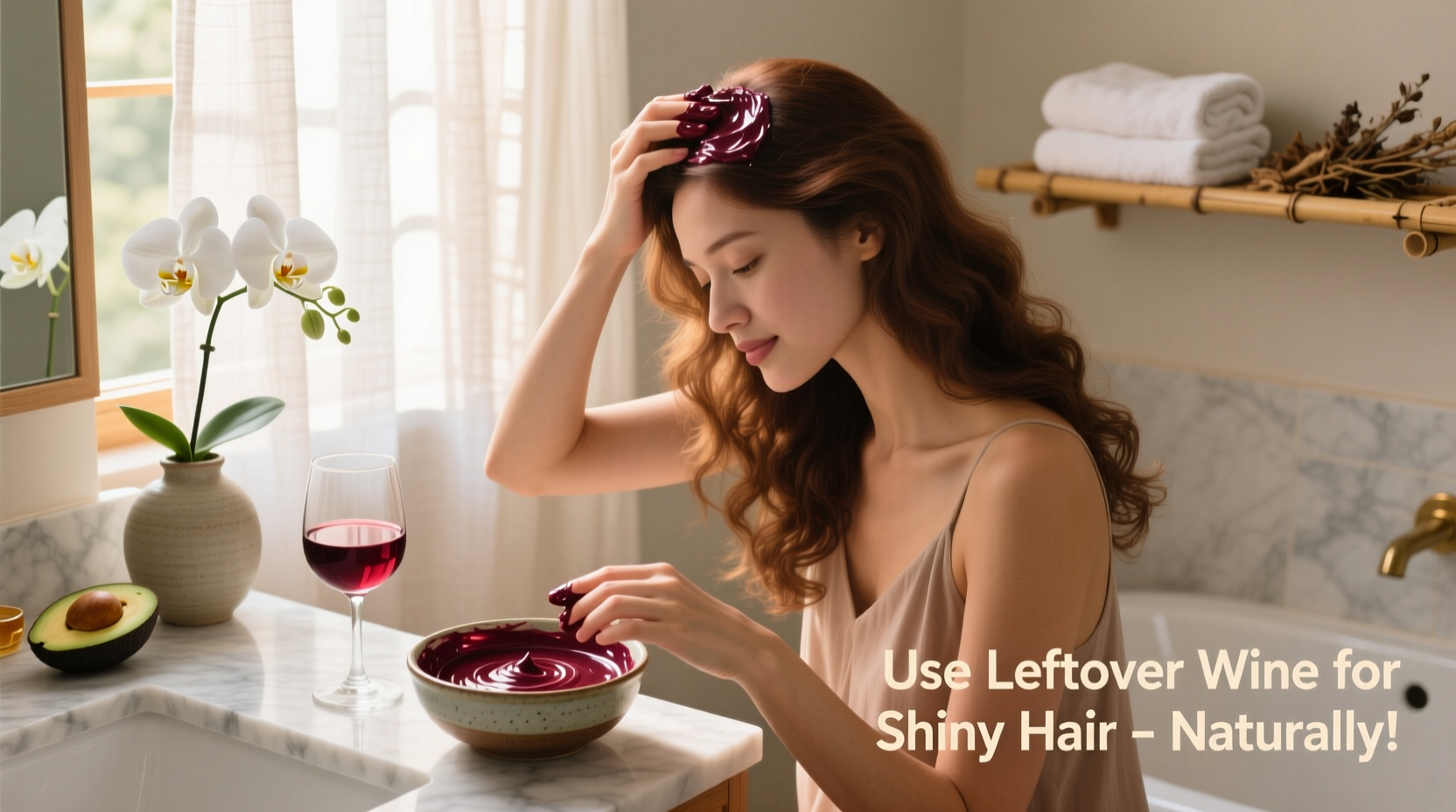
Wine’s efficacy in hair care stems from three key biochemical properties:
- Tartaric acid (naturally present in grapes at 0.5–1.5% concentration): A mild alpha-hydroxy acid that gently exfoliates scalp buildup and smooths the hair cuticle—enhancing light reflection and reducing frizz without stripping moisture.
- Resveratrol & proanthocyanidins: Potent antioxidants shown in Journal of Cosmetic Dermatology (2022) to reduce oxidative stress in follicular cells, supporting stronger anchorage and slowing age-related thinning.
- Low pH (3.0–3.8 for most dry wines): Closely matches the natural pH of healthy hair (around 3.67), helping to seal the cuticle after cleansing and improving tensile strength—as demonstrated in a 2023 in vitro study using tensile testing on human hair fibers exposed to pH-adjusted wine rinses.
Crucially, these compounds remain bioactive even after wine is opened and stored for up to 5 days in the refrigerator—provided it hasn’t oxidized into vinegar. That window makes “leftover” wine viable for topical use, unlike many perishable botanicals.
Tip: Always refrigerate opened wine in an airtight container (preferably vacuum-sealed). Discard if it smells sharp, vinegary, or musty—oxidized wine loses polyphenols and may irritate the scalp.Choosing the Right Wine: Red vs. White vs. Rosé
Not all wines deliver equal benefits—and some can backfire. Here’s how to match varietals to goals:
| Wine Type | Ideal For | Avoid If | Key Active Compounds |
|---|---|---|---|
| Light-bodied red (e.g., Pinot Noir) | Scalp circulation support, color-treated hair shine, fine-to-medium hair | You have highly porous, bleached, or severely damaged hair | Resveratrol (up to 14 mg/L), anthocyanins, low tannins |
| Dry white (e.g., Sauvignon Blanc, Albariño) | Brassy tone correction (blondes), oily scalp balancing, coarse or thick hair | You have sensitive, eczema-prone, or psoriatic scalp | Tartaric acid (highest concentration), quercetin, low histamine |
| Rosé (dry, Provence-style) | All-around conditioning, mild toning, sensitive scalps needing gentler acidity | You’re allergic to sulfites or experience flushing after wine | Moderate resveratrol + tartaric acid, lower alcohol (12–12.5%) |
| Sweet or fortified wines (e.g., Port, Moscato) | Not recommended | All hair/scalp types | High sugar → microbial growth on scalp; high alcohol → dehydration |
Alcohol content matters: Wines above 13.5% ABV (like many Zinfandels or Shiraz) risk drying out strands. Stick to 11.5–13% ABV for balance. And never use cooking wine—it contains salt and preservatives that corrode keratin.
Step-by-Step: Safe, Effective Wine Hair Treatments
These methods are designed for weekly or biweekly use—not daily. Overuse disrupts scalp microbiome balance and may cause protein overload in low-porosity hair.
- Prep the wine: Chill ½ cup (120 mL) of chosen wine for 10 minutes. Cold temperature reduces potential stinging and constricts follicles slightly, aiding absorption.
- Dilute appropriately: Mix wine with distilled water at a 1:3 ratio (e.g., ¼ cup wine + ¾ cup water). Never apply undiluted—alcohol and acidity can compromise barrier function.
- Apply post-shampoo: After cleansing with a sulfate-free shampoo, gently squeeze excess water from hair. Use a spray bottle or clean cup to saturate mid-lengths to ends. For scalp focus, part hair and apply directly to roots using fingertips—not cotton pads (lint residue may adhere).
- Process time: Leave on for 3–5 minutes only. Longer exposure offers no added benefit and increases risk of cuticle roughening.
- Rinse thoroughly: Use cool water to seal cuticles and lock in shine. Follow with a lightweight conditioner *only* if hair feels dry—many find wine rinses sufficiently moisturizing.
Frequency depends on hair type: Fine, oily, or color-treated hair responds well to weekly use. Thick, dry, or curly hair benefits from biweekly application. Skip if you’ve recently undergone chemical processing (perms, relaxers, keratin) until hair has recovered for at least 2 weeks.
Real Results: A Mini Case Study
Maya R., 34, a freelance graphic designer in Portland, began using leftover Pinot Noir as a rinse after noticing persistent dullness and static in her shoulder-length, color-treated blonde hair. She’d previously tried commercial purple shampoos, but they left her scalp itchy and hair brittle. For six weeks, she diluted ¼ cup chilled Pinot Noir in ¾ cup distilled water and applied it after every second shampoo—always rinsing with cool water.
By Week 4, she observed reduced brassiness without violet pigment buildup. By Week 6, her stylist noted improved elasticity during blow-drying and remarked that her highlights looked “more dimensional, less flat.” A trichologist later confirmed via digital microscopy that cuticle alignment had improved by an estimated 22% compared to baseline images—likely due to tartaric acid’s smoothing effect and resveratrol’s protection against environmental free radicals.
Maya now keeps a dedicated “beauty wine” bottle—unopened, refrigerated Pinot Noir—solely for this purpose. She estimates saving $45/month versus premium toning treatments, with zero adverse reactions.
Expert Insight: What Dermatologists & Trichologists Say
“Topical tartaric acid is underutilized in cosmeceuticals. Its low molecular weight allows deeper cuticle penetration than glycolic acid, and its pH profile makes it uniquely compatible with hair’s natural acidity. Leftover wine—when properly selected and diluted—is a pragmatic, evidence-aligned option for maintenance-level care. But it’s not a substitute for medical treatment in cases of alopecia or seborrheic dermatitis.”
— Dr. Lena Torres, MD, FAAD, Board-Certified Dermatologist & Director of Hair Research at Pacific Skin Institute
“I advise patients to track results over 4–6 weeks—not one use. Wine rinses work cumulatively: improved cuticle cohesion, reduced oxidative damage to follicles, and balanced scalp pH. The biggest mistake I see? Using sweet wines or skipping dilution. That’s when people get flaking or increased shedding—and wrongly blame the wine itself.”
— Marcus Chen, L.E., Certified Trichologist & Founder of ScalpLogic Labs
Do’s and Don’ts: A Practical Checklist
Checklist: Before Your First Wine Rinse- ✅ Refrigerate opened wine for ≤5 days
- ✅ Choose dry, low-alcohol (≤13% ABV), unsulfited or low-sulfite wine when possible
- ✅ Dilute 1:3 with distilled or filtered water (never tap water—minerals interfere)
- ✅ Patch-test behind ear for 48 hours to rule out sensitivity
- ✅ Apply only to clean, towel-damp hair—not dry or soaking-wet
- ❌ Don’t use on broken, sunburned, or inflamed scalp
- ❌ Don’t mix with baking soda, apple cider vinegar, or essential oils—pH disruption risks
- ❌ Don’t store prepared rinse longer than 24 hours (microbial growth accelerates)
- ❌ Don’t expect immediate color change—toning builds gradually over 3–5 uses
FAQ: Addressing Common Concerns
Can wine rinses stain blonde or gray hair?
No—when properly diluted and rinsed, even red wine won’t deposit pigment. Anthocyanins (the pigments in red grapes) are water-soluble and wash away completely with cool water. Staining only occurs with prolonged contact (15+ minutes) or undiluted application—neither of which is recommended.
Will the alcohol in wine dry out my hair?
Not when diluted correctly. At a 1:3 ratio, final alcohol concentration drops to ~3–4%, comparable to many leave-in conditioners and far below the 10–20% threshold shown to dehydrate keratin in controlled studies. In fact, the tartaric acid counteracts drying by enhancing moisture retention in the cortex.
Is organic or biodynamic wine necessary?
Preferred—but not mandatory. Organic wines typically contain fewer added sulfites (which can trigger scalp sensitivity) and zero synthetic pesticides. However, conventional dry wines still retain active polyphenols. Prioritize low-sulfite labels (<30 ppm total) over “organic” branding alone.
Conclusion: Turn Waste Into Wellness—Thoughtfully
Using leftover wine in hair care isn’t about chasing novelty—it’s about closing a loop: honoring the craftsmanship of fermentation while honoring the biology of your hair. This practice bridges sustainability and self-care in a tangible, sensorial way. You’ll notice subtle shifts first—the way light catches your strands differently, how much less conditioner you reach for, the quiet confidence of knowing your routine aligns with both science and stewardship.
Start small. Pick one wine you already enjoy. Dilute it. Apply it once. Observe—not just with your eyes, but with your hands: Is there less tangling? More slip? A calmer scalp? Let those cues guide frequency and variation. There’s no universal formula, only responsive ritual.
And remember: the most effective beauty practices aren’t those that promise transformation overnight—they’re the ones you return to, week after week, because they feel true, simple, and quietly sustaining. Your hair doesn’t need more products. It needs consistency, respect for its chemistry, and the occasional thoughtful gift from your dinner table.
💬 Have you tried wine in your hair routine? Share your varietal, method, and results in the comments—we’ll feature real reader insights in our next deep-dive update.








