Discarded spirit bottles—whether a sleek bourbon decanter, an ornate gin vessel, or a minimalist vodka flask—carry more than residual aroma. They hold structural integrity, optical clarity, aesthetic character, and unexpected potential. Rather than recycling them as generic glass waste, thousands of makers, urban gardeners, and sustainability-conscious designers are transforming these vessels into self-contained micro-ecosystems: terrariums. Unlike mass-produced glass globes, spirit bottles offer unique silhouettes, thick-walled durability, built-in stoppers or corks, and often subtle tints or embossed details that add narrative depth. This isn’t just upcycling—it’s intentional design with ecological intelligence. What follows is a field-tested, botanically grounded methodology for converting these bottles into thriving, expressive terrariums—not as novelties, but as living objects with longevity, personality, and purpose.
Why Spirit Bottles Excel Over Standard Terrarium Vessels
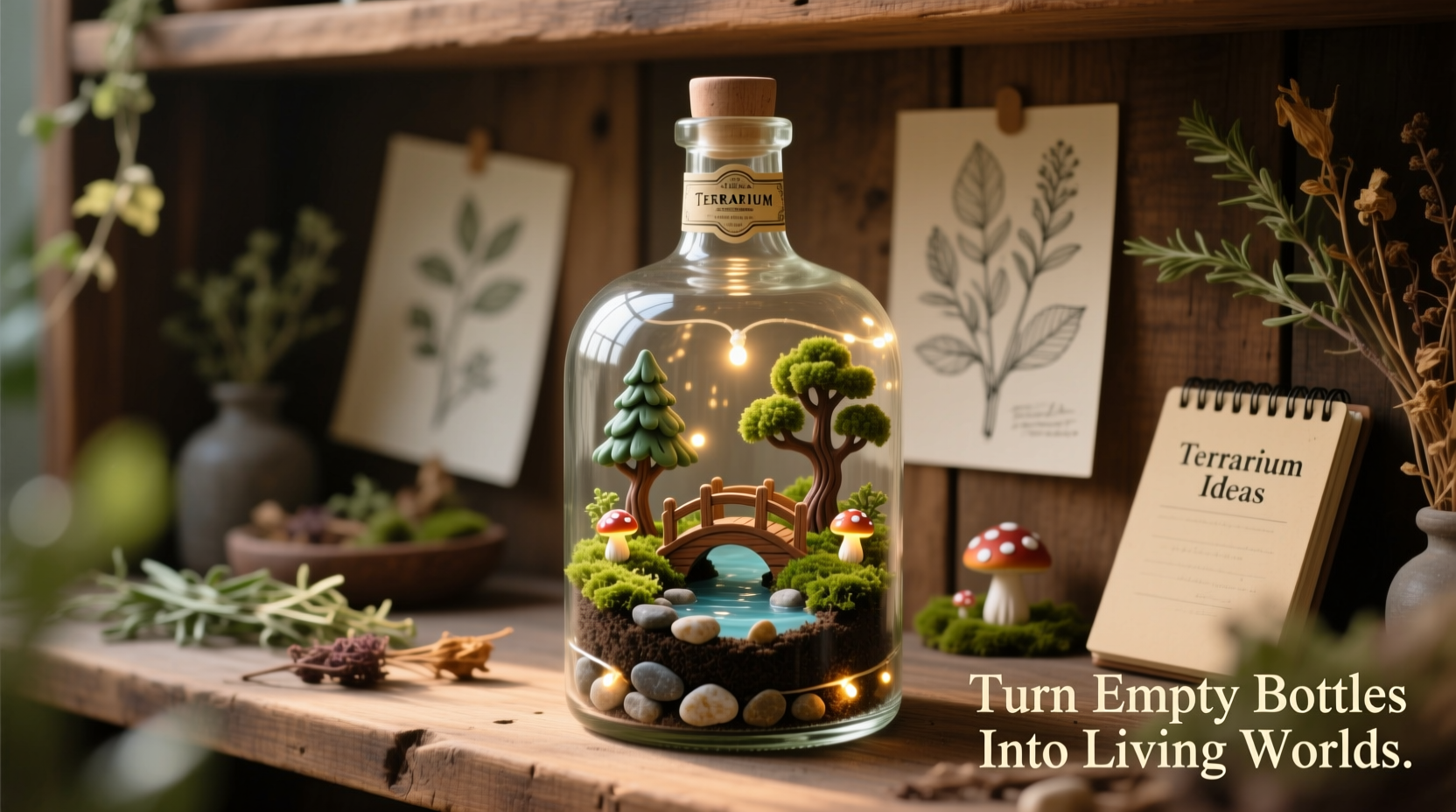
Spirit bottles possess inherent advantages most commercial terrarium containers lack. Their walls are typically thicker (2–4 mm) than decorative glass globes, offering superior thermal stability and resistance to condensation-induced fogging. Many feature tapered necks or narrow openings—ideal for controlled moisture retention in closed systems. Corks, rubber stoppers, or screw caps provide natural, airtight seals without requiring silicone or custom fittings. The glass itself is often annealed for impact resistance, and the base curvature offers stable footing on shelves or desks. Crucially, their irregular shapes—bulbous bellies, angular shoulders, elongated necks—invite compositional experimentation impossible in symmetrical spheres.
Tip: Prioritize bottles with intact, clean labels removed using warm soapy water and a plastic scraper—never steel wool, which scratches glass. Residual adhesive dissolves with rubbing alcohol applied on a lint-free cloth.Essential Preparation & Safety Protocol
Before planting, safety and hygiene are non-negotiable. Spirits contain ethanol, which leaves behind microscopic residues that inhibit root development and encourage mold. A three-stage cleaning process ensures biological readiness:
- Rinse immediately after emptying: Fill the bottle ¼ full with lukewarm water, swirl vigorously for 30 seconds, and discard. Repeat twice.
- Vinegar soak: Fill ¾ full with equal parts white vinegar and warm water. Seal and let sit for 24 hours. Vinegar neutralizes alkaline ethanol residues and dissolves mineral deposits.
- Baking soda scrub: After rinsing out vinegar, add 2 tbsp baking soda + ½ cup warm water. Use a long-handled bottle brush (or a DIY version: cotton swab wrapped tightly around chopstick, secured with rubber band) to scrub interior surfaces. Rinse thoroughly until water runs completely clear.
Always wear cut-resistant gloves when handling bottles with sharp edges (e.g., broken necks or chipped bases). If repurposing a bottle with a metal cap ring, inspect for rust—sand lightly with 220-grit paper and wipe with mineral oil to prevent leaching into substrate.
Botanical Selection: Matching Plants to Bottle Constraints
The success of any terrarium hinges on plant compatibility—not just with light or humidity, but with physical confinement. Spirit bottles impose strict spatial limits: limited root space, restricted airflow, and variable light penetration depending on glass thickness and tint. Avoid fleshy succulents (they rot in high humidity) and fast-growing vines (they overwhelm interiors in weeks). Instead, prioritize slow-growing, shade-tolerant, humidity-loving species with compact root systems.
| Plant Species | Max Height in Bottle | Light Needs | Key Advantage |
|---|---|---|---|
| Ficus pumila ‘Nana’ (Dwarf Creeping Fig) | 4–6 cm | Low to medium indirect | Adheres to glass; tolerates pruning; minimal root spread |
| Pellaea rotundifolia (Button Fern) | 5–7 cm | Low indirect | Drought-tolerant rhizomes; thrives in tight quarters |
| Soleirolia soleirolii (Baby’s Tears) | 2–3 cm | Medium indirect | Forms dense, moisture-retentive mat; suppresses algae |
| Asplenium nidus ‘Crispy Wave’ (Mini Bird’s Nest Fern) | 8–10 cm | Low indirect | Vertical presence without invasive roots; elegant texture |
| Peperomia obtusifolia (Baby Rubber Plant) | 6–8 cm | Medium indirect | Waxy leaves resist mold; shallow root system |
Never use soil from gardens or potting mixes containing fertilizers, perlite, or moisture-retaining polymers—these degrade in sealed environments and foster anaerobic bacteria. Use only terrarium-specific substrate: 60% coco coir (pre-rinsed), 30% fine sphagnum moss (not peat moss), and 10% activated charcoal (food-grade, crushed to rice-grain size).
Step-by-Step Assembly: From Empty Bottle to Living Ecosystem
This sequence prioritizes root health, drainage integrity, and long-term microbial balance. Deviation risks stagnation, mold, or plant collapse within 4–6 weeks.
- Layer 1 – Drainage Base (1.5 cm): Add rinsed aquarium gravel or lava rock. Avoid sand—it compacts and blocks water flow.
- Layer 2 – Charcoal Barrier (0.5 cm): Spread activated charcoal evenly. This absorbs tannins, neutralizes odors, and inhibits fungal spores.
- Layer 3 – Moss Filter (0.3 cm): Press a thin sheet of dry sphagnum moss over charcoal to prevent substrate migration.
- Layer 4 – Substrate (4–5 cm): Moisten coco-coir mix until it holds shape when squeezed—but yields no drip. Gently tamp with a spoon handle to eliminate air pockets.
- Planting: Use stainless steel tweezers (not plastic—static attracts debris) to position roots. For narrow-necked bottles, thread plants through with fishing line tied loosely around stems, then snip after placement. Always leave 1–2 cm between foliage and glass to prevent rot.
- Closing: Insert cork or stopper *loosely* for first 72 hours to allow acclimation. Then seal fully. Monitor condensation: heavy fogging daily = overwatered; none for >48 hours = under-humidified.
“Terrariums aren’t sealed time capsules—they’re dynamic microclimates. The bottle doesn’t dictate the rules; it reveals them. Your job is to listen to the condensation patterns, leaf sheen, and root color—not force a rigid schedule.” — Dr. Lena Torres, Urban Botanical Ecologist, Brooklyn Botanic Garden
Real-World Creative Adaptations: Beyond the Basic Bottle
In Portland, Oregon, ceramicist Maya Chen transformed 12 empty Japanese shōchū bottles—each with hand-blown asymmetry and faint blue-green tint—into a “Rainforest Canopy Series” displayed at the Pacific Northwest Craft Biennial. She drilled 3-mm holes near the base of each bottle using a diamond-tipped glass bit and a cordless rotary tool set to 400 RPM (with constant water drip cooling). Through these apertures, she inserted live Fittonia albivenis cuttings, allowing roots to grow outward into a shared, suspended hydroponic reservoir beneath the display shelf. The result was a living wall where foliage emerged organically from glass, blurring boundaries between container and environment. No glue, no soil visible—just emergent life framed by reclaimed spirit vessels.
Similarly, London-based educator Tom Rafferty uses vintage Scotch bottles with intact wax seals to create “time-capsule terrariums” for school workshops. He layers substrate, adds dwarf ferns, seals with original wax, and dates the bottle. Students observe growth rates over semesters—learning that even sealed systems evolve, albeit slowly. One 2019 bottle, stored in north-facing classroom light, sustained healthy Pellaea for 47 months before requiring gentle refreshment—a testament to thoughtful bottling and species selection.
Creative Enhancement Techniques
Once planted and sealed, aesthetics deepen through intentional detail. These techniques elevate function into artistry without compromising biology:
- Textural contrast: Embed smooth river stones or fossil fragments into substrate for visual weight and thermal mass.
- Light modulation: Wrap bottle base with matte black washi tape to reduce glare and highlight internal greenery.
- Structural framing: Mount bottles horizontally on walnut cradles with brass pins—ideal for wide-bodied rum or brandy flasks.
- Seasonal layering: In open-top bottles (e.g., tequila reposado jars), add seasonal accents: dried lotus pods in autumn, preserved eucalyptus in winter, moss balls in spring.
- Acoustic integration: Suspend small, hollow bamboo segments inside tall-necked bottles to create gentle wind-chime resonance when air circulates.
Maintenance Essentials: The 90-Day Rhythm
Terrariums thrive on consistency—not intervention. Follow this quarterly rhythm:
Tip: Keep a terrarium journal: note date, condensation level (none/light/heavy), leaf color shift, and any visible algae. Patterns emerge over 3–4 cycles—and inform your next build.- Days 1–14: Observe daily. Heavy condensation? Wipe interior glass with dry microfiber. None? Mist substrate lightly (not foliage) with distilled water.
- Days 15–60: Rotate bottle 45° every 3 days to ensure even light exposure. Prune yellowing leaves with sterilized snips—never pull.
- Day 90: Perform “micro-refresh”: Unseal, remove surface algae with damp cotton swab, replace top 0.5 cm substrate, reseal. Do not disturb roots or charcoal layer.
FAQ
Can I use a bottle that held flavored liqueur?
Yes—but extend the vinegar soak to 48 hours and rinse 5 times. Flavored liqueurs contain glycerin, sugars, and citric acid that leave sticky biofilms promoting mold. Test readiness by sniffing the interior after final rinse: zero aroma should remain.
What if my bottle has a metal pour spout?
Remove it entirely. Metal corrodes in humid environments and leaches ions toxic to mosses and ferns. If removal damages the neck, seal the opening with food-grade silicone *only* around the metal base—not covering the interior glass. Let cure 72 hours before planting.
How do I know if my terrarium is failing?
Three red flags: (1) Persistent milky film on inner glass (not condensation), indicating bacterial bloom; (2) Foliage turning translucent or slimy at the base; (3) Charcoal layer turning grey-black and emitting sour odor. When observed, disassemble fully, sterilize bottle with 10% bleach solution (rinse 7x), and restart with fresh substrate and new plants.
Conclusion
Turning an empty spirit bottle into a terrarium is never just about reuse—it’s about recalibrating your relationship with consumption, containment, and care. That bourbon decanter wasn’t merely packaging; it was a vessel shaped by craft, intention, and time. By honoring its form while inviting life into its hollow, you participate in a quiet act of ecological reciprocity. You learn patience from condensation cycles, precision from root placement, and humility from the slow, unassuming resilience of a fern unfurling in glass. There’s no finish line here—only observation, adjustment, and the quiet satisfaction of sustaining something delicate yet enduring. Start with one bottle. Choose a plant that speaks to your light conditions and attention rhythm. Follow the layers, respect the seal, and watch what emerges—not just in the glass, but in your own sense of possibility.
💬 Share your first spirit-bottle terrarium journey. Describe the bottle, your plant choice, and one surprise you discovered along the way—we’ll feature authentic stories in our monthly Terrarium Diaries newsletter.








