Puppies jump. It's natural—they’re excited, full of energy, and trying to reach faces they can’t yet see. But while a 10-pound pup bouncing up might seem harmless, the behavior quickly becomes problematic as they grow. Worse, scolding or yelling only amplifies their excitement or creates fear, undermining trust and training progress. The good news is that you can teach your puppy to greet people politely—calmly and confidently—without raising your voice. With patience, consistency, and science-backed methods, you can replace jumping with calm greetings that reflect the well-mannered dog you want to raise.
Why Puppies Jump—and Why Yelling Doesn’t Work
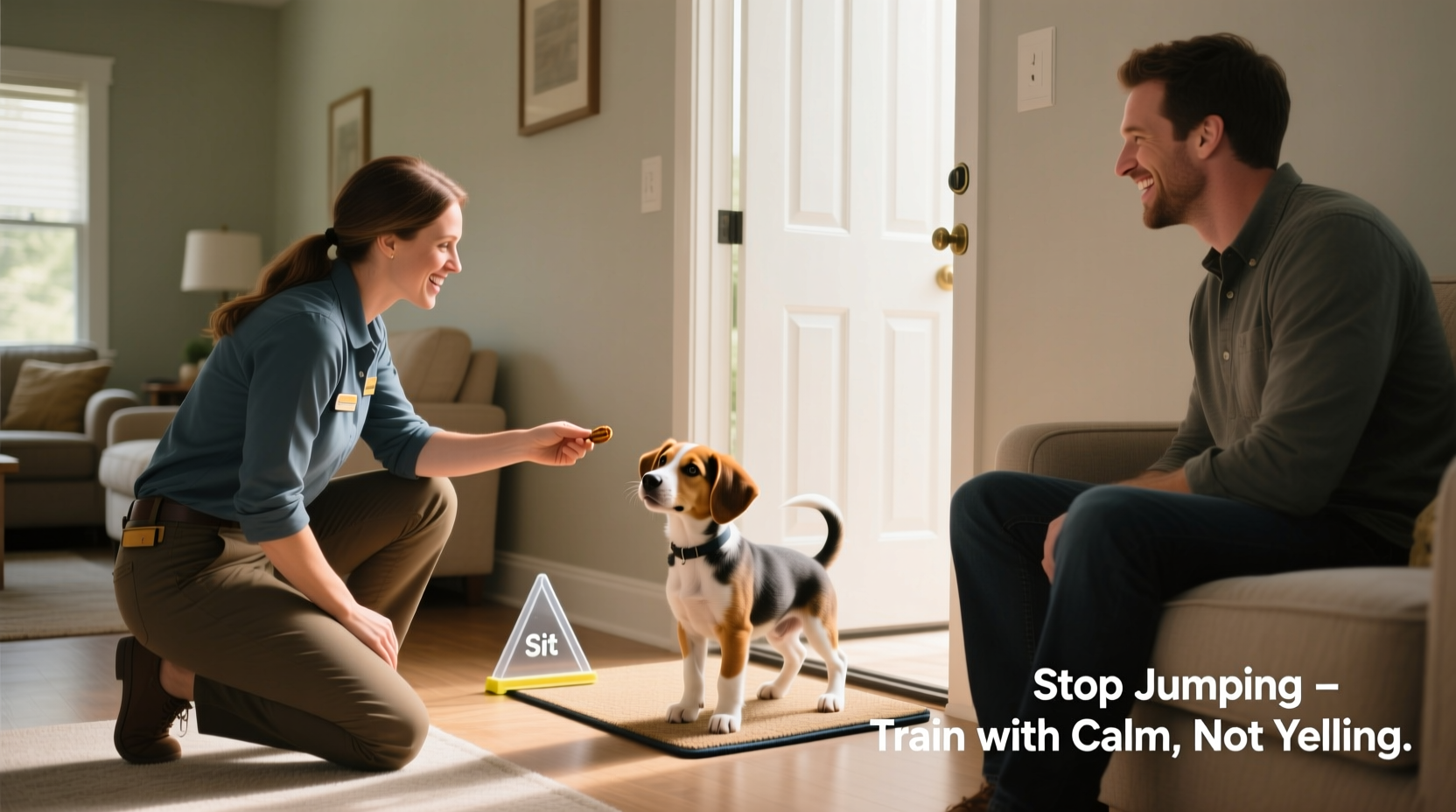
Jumping is not defiance; it’s communication. Puppies jump because they’re seeking attention, expressing excitement, or attempting to initiate social contact. In dog language, leaping toward another’s face mimics how puppies greet adult dogs by nuzzling around the muzzle. When your puppy jumps on a guest, they’re essentially saying, “Hello! I’m happy to see you!” Unfortunately, humans don’t interpret this gesture kindly—especially when muddy paws meet clean shirts.
Many owners instinctively yell “No!” or push the puppy away. But these reactions often backfire. Yelling raises arousal levels, making the puppy more excited. Physical corrections can create fear-based associations with guests or greetings. Worse, even negative attention reinforces the behavior—your puppy learns that jumping gets a reaction, which is better than no reaction at all.
“Puppies don’t misbehave out of spite. They behave based on what works. If jumping gets attention—even scolding—they’ll keep doing it.” — Dr. Sophia Yin, DVM, Applied Animal Behaviorist
Step-by-Step: Teaching Calm Greetings Without Yelling
Training your puppy to stay calm during greetings isn’t about suppression—it’s about redirection. You're not just stopping a behavior; you're teaching an alternative. Here’s a proven, humane method broken into clear steps:
- Manage the Environment First
Prevent rehearsal of unwanted behavior. Use baby gates, leashes, or crates when guests arrive until your puppy is ready to engage calmly. Training happens best when the puppy isn’t already overstimulated. - Teach an Incompatible Behavior
Choose a behavior that can't happen at the same time as jumping—like sitting or standing quietly. Begin practicing in low-distraction environments using high-value treats (e.g., small pieces of chicken or cheese). - Use Positive Reinforcement
Every time your puppy sits or keeps four paws on the floor, mark the moment with a clicker or verbal cue like “Yes!” and reward immediately. Timing is critical—the reward must follow within half a second of the desired behavior. - Simulate Greetings Gradually
Start with someone standing still outside the door. Let your puppy see them while remaining calm. Reward calmness. Progress slowly: open the door, have the guest enter but ignore the puppy, and only give attention when all paws are on the ground. - Practice with Controlled Visitors
Ask friends to help with training sessions. Instruct them to turn away silently if the puppy jumps, then face and reward when all paws are down. Consistency across people is essential. - Phase Out Treats Gradually
Once your puppy reliably sits for guests, begin fading treats. Switch to intermittent rewards and praise. This prevents dependency and strengthens long-term reliability.
Do’s and Don’ts of Puppy Greeting Training
| Do | Don’t |
|---|---|
| Reward calm behavior immediately | Yell, shove, or knee your puppy |
| Use a leash to gently guide focus | Allow inconsistent reactions from family members |
| Practice daily in short sessions | Let guests pet the puppy while jumping |
| Ignore jumping by turning away | Use retractable leashes during training |
| Gradually increase distractions | Train only during real-life greetings—practice first |
A Real Example: Turning Chaos into Calm
Sophie, a first-time owner of a 5-month-old Labrador mix named Milo, struggled every time someone came to her apartment. Milo would bark, leap, and knock over shoes in his excitement. Guests laughed nervously, but Sophie felt embarrassed and frustrated. She tried saying “No!” firmly, but Milo only jumped higher.
After consulting a certified dog trainer, she changed her approach. For two weeks, she practiced “sit-stay” near the front door using treats. She asked neighbors to help with short, controlled visits. At first, Milo still jumped—but the moment he sat, even briefly, Sophie marked it with a “Yes!” and gave a treat. Guests were instructed to stand still and only make eye contact when Milo had all four paws down.
Within three weeks, Milo began sitting automatically when the doorbell rang. By week six, he greeted visitors calmly, earning pets and praise only after staying seated. No yelling. No force. Just consistency and clarity.
Tip: Practice the “doorbell game” without actual guests. Ring the bell, ask your puppy to sit, reward, and repeat. This builds the habit before real distractions arrive.Essential Training Checklist
Use this checklist to ensure you’re setting up effective, sustainable training:
- ✅ Choose a quiet area for initial training sessions
- ✅ Gather high-value treats your puppy loves
- ✅ Use a clicker or consistent verbal marker (“Yes!”)
- ✅ Practice “sit” and “stay” for 5 minutes daily
- ✅ Leash your puppy during greeting simulations
- ✅ Enlist helpers who will follow instructions (no petting while jumping!)
- ✅ Keep sessions short (3–5 minutes) to maintain focus
- ✅ End each session on a positive note
- ✅ Gradually introduce distractions (doorbell, knocking, multiple people)
- ✅ Celebrate small improvements—progress matters more than perfection
When to Seek Professional Help
Most puppies learn to greet calmly within 4–8 weeks of consistent training. However, if your puppy shows signs of fear, aggression, or extreme hyperactivity during greetings, professional guidance is recommended. A certified professional dog trainer (CPDT-KA) or veterinary behaviorist can assess underlying causes such as anxiety, lack of socialization, or over-arousal disorders.
Also consider professional help if household members can’t agree on training methods. Mixed signals—like one person ignoring jumping while another pets the puppy—will stall progress. Unity in rules is non-negotiable.
“Behavior problems aren’t failures—they’re information. A jumping puppy is telling you they need clearer boundaries and better alternatives.” — Jean Donaldson, Founder of The Academy for Dog Trainers
Frequently Asked Questions
What if my puppy only behaves for some people?
This usually means consistency is lacking. Different people may have different thresholds for allowing jumping or may reward the behavior unintentionally. Train everyone in the household—and frequent visitors—to follow the same protocol. Uniformity accelerates learning.
Can older dogs be trained not to jump?
Absolutely. While puppies are easier to shape due to their malleability, adult dogs can unlearn jumping with the same principles: management, redirection, and positive reinforcement. It may take longer, especially if the behavior has been reinforced for years, but change is possible at any age.
Is it okay to use a training aid like a head halter?
Yes, tools like a Gentle Leader or Snoot Loop can help manage arousal and guide attention without pain. These are not punishment devices—they’re steering aids. Pair them with positive reinforcement for best results, and always introduce them gradually to avoid stress.
Building a Calmer, More Confident Companion
Stopping your puppy from jumping isn’t just about protecting clothes or avoiding scratches—it’s about building a relationship based on mutual respect and understanding. When you choose calm, consistent training over yelling, you’re not just teaching manners; you’re nurturing confidence, self-control, and emotional regulation. These skills form the foundation of a well-adjusted adult dog.
Remember, every interaction is a learning opportunity. Your puppy isn’t trying to annoy you—they’re responding to what they’ve learned works. By changing the consequences of jumping (removing attention) and rewarding calmness (with treats, praise, and affection), you shift the balance naturally and humanely.
The journey from chaos to calm doesn’t require dominance or intimidation. It requires leadership through clarity, kindness, and repetition. Over time, your puppy will learn that four paws on the floor earns far more rewards than jumping ever did.
💬 Start today: Pick one strategy from this guide and practice it consistently for one week. Share your progress in the comments—your experience could inspire another pet parent on the same journey.








