
Parrots are among the most intelligent birds in the animal kingdom, capable of mimicking human speech with surprising clarity and emotional nuance. Yet many owners struggle when trying to teach their parrots to talk, often becoming discouraged by slow progress or behavioral setbacks. The key isn’t repetition alone—it’s understanding your bird’s psychology, building trust, and creating a learning environment that feels safe and rewarding.
Training a parrot to speak doesn’t require special tools or expensive courses. What it does demand is patience, consistency, and an awareness of your bird’s natural instincts. Done right, vocal training can deepen the bond between you and your parrot while enriching its mental stimulation. This guide outlines proven strategies to help your parrot learn words—and enjoy the process—without stress or frustration.
Understanding Parrot Communication
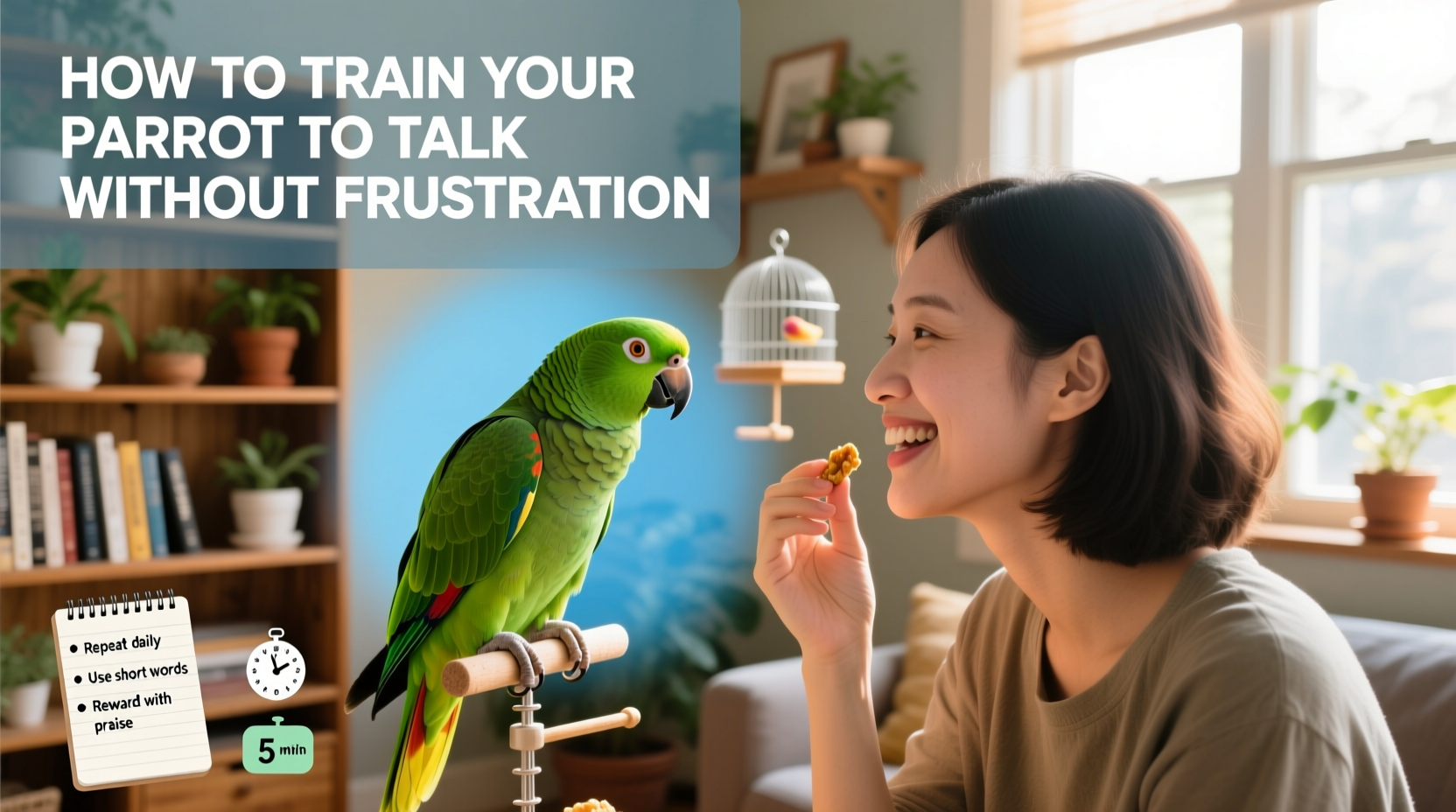
Before diving into training techniques, it’s essential to understand why parrots mimic sounds at all. In the wild, parrots use vocalizations to maintain flock cohesion, signal danger, or establish territory. Their ability to imitate isn’t just mimicry for entertainment—it’s a social survival mechanism. When your parrot repeats your words, it’s attempting to integrate into its perceived “flock,” which includes you.
Not all parrots will talk, and species vary significantly in their vocal potential. African Greys, Amazon parrots, and some Macaws are renowned for their speaking abilities, while smaller species like Budgies can learn hundreds of words but with less clarity. Even within highly vocal breeds, individual personalities matter: some birds are naturally more curious and vocal; others are shy or indifferent.
It’s also important to recognize that talking is not the same as understanding. While some parrots demonstrate contextual use of words (e.g., saying “hello” when someone enters), most are repeating sounds associated with positive outcomes. Your goal should be to make speech a fun, rewarding activity—not a forced performance.
“Parrots don’t speak because they want to impress us—they speak because they want to belong.” — Dr. Irene Pepperberg, Avian Cognition Researcher
Creating the Right Environment for Learning
A stressed or anxious parrot won’t engage in vocal learning. Before introducing words, ensure your bird’s environment supports mental well-being. A parrot that feels secure is far more likely to experiment with new sounds.
Start by placing the cage in a busy but calm area of the home—near family activity but away from loud noises or sudden movements. Parrots learn best through observation, so being near daily conversations gives them exposure to human speech patterns. However, avoid overwhelming them with constant noise or background TV.
Daily interaction is non-negotiable. Spend at least 30–60 minutes outside the cage engaging with your parrot. Use this time not just for training, but for bonding—grooming, gentle play, or shared meals. Birds that trust their humans are more willing to imitate them.
Tip: Speak clearly and slowly around your parrot, especially during routine activities like feeding or cleaning. Use short, meaningful phrases such as “Good morning!” or “Want a snack?”Step-by-Step Training Process
Effective speech training follows a structured yet flexible approach. Below is a timeline-based method designed to minimize frustration and maximize retention.
- Week 1–2: Build Trust & Routine
Focus on hand-taming if needed, consistent feeding times, and verbal interaction. Say simple greetings each time you enter or leave the room. Avoid pushing for responses—just create a language-rich atmosphere. - Week 3–4: Introduce Target Words
Choose one or two high-reward words like “hello” or your parrot’s name. Say the word clearly and enthusiastically three to five times per day during positive moments (e.g., offering food or affection). Immediately follow with a treat or praise. - Week 5–8: Reinforce & Repeat
Once your parrot makes any sound resembling the target word—even a faint approximation—reward instantly. Use a clicker or verbal marker like “Yes!” to pinpoint the correct behavior. Gradually reduce treats as the word becomes consistent. - Month 3+: Expand Vocabulary
After mastering one word, introduce another using the same method. Limit new words to one every two weeks to prevent confusion. Rotate words based on context: “Bye-bye” when leaving, “Night-night” at bedtime.
Keep sessions short—five minutes maximum—to match your parrot’s attention span. End on a positive note, even if no progress was made. Never punish or express disappointment; negative reactions can shut down vocal experimentation permanently.
Common Mistakes That Cause Frustration
Many well-intentioned owners unknowingly sabotage their training efforts. Recognizing these pitfalls can save months of stalled progress.
| Mistake | Why It’s Harmful | Better Approach |
|---|---|---|
| Expecting quick results | Leads to impatience and pressure, which stresses the bird | Treat training as long-term enrichment, not a race |
| Using loud or excited tones | Can scare sensitive birds or encourage screaming | Speak in a calm, clear, moderate tone |
| Overloading with too many words | Confuses the bird and dilutes focus | Teach one word at a time, master it, then move on |
| Ignoring body language | Missing signs of stress leads to burnout | Stop if the bird turns away, fluffs feathers, or bites |
| Relying on recordings | Parrots learn socially—they need live interaction | Use recordings only as background, never as primary teaching |
Real Example: Training Milo the Congo African Grey
Milo, a two-year-old Congo African Grey, showed little interest in speaking despite months of exposure to human voices. His owner, Sarah, played recordings of phrases and repeated “Milo, say hello!” multiple times a day, growing increasingly frustrated when he remained silent.
After consulting an avian behaviorist, Sarah shifted her approach. She stopped using recordings and instead began narrating her actions in a calm voice: “Now I’m opening your food,” “Let’s clean your perch,” “Good boy!” She also introduced clicker training, marking any vocalization—chirps, whistles, even sneezes—with a click and a sunflower seed.
Within six weeks, Milo began associating sounds with rewards. One day, after hearing Sarah say “hello” upon entering, he emitted a hoarse “heh.” She clicked and rewarded immediately. Over the next month, with consistent reinforcement, “heh” evolved into a clear “hello.” Today, Milo says four words and uses “hello” consistently when guests arrive.
The breakthrough wasn’t more repetition—it was shifting from demand to invitation. Milo wasn’t refusing to talk; he hadn’t realized speech could be part of his social toolkit.
Actionable Tips for Daily Practice
Tip: Pair words with predictable actions. For example, say “Up!” every time you lift your parrot onto your hand. Context helps memory. Tip: Record your parrot’s vocalizations monthly. Subtle changes are hard to notice day-to-day, but audio comparisons reveal progress. Tip: If your parrot starts whistling a tune, try adding lyrics. Some birds transition more easily from melody to syllables than from silence to speech.Checklist: Daily Habits for Successful Speech Training
- ✅ Spend at least 30 minutes of interactive out-of-cage time
- ✅ Use 1–2 target words consistently during routines
- ✅ Reward any vocal attempt with praise or a small treat
- ✅ Speak slowly and clearly, avoiding baby talk or exaggerated tones
- ✅ Observe body language and end sessions before signs of fatigue
- ✅ Avoid yelling, scolding, or forcing interactions
- ✅ Keep the environment enriched with toys, perches, and safe chewables
Frequently Asked Questions
How long does it take for a parrot to start talking?
There’s no fixed timeline. Some parrots begin mimicking within a few months of acquisition; others take over a year. Age matters—young birds (under 1 year) typically learn faster, but older parrots can still acquire speech with consistent training. Species also plays a role: African Greys often start between 6–12 months, while larger Macaws may not begin until 18 months or later.
My parrot only whistles or makes strange noises—can it still learn to talk?
Absolutely. Whistling is often a precursor to speech. Many parrots go through a “sound experimentation” phase where they test different vocalizations. If you reinforce attempts that resemble human sounds—even slightly—you can shape those into words over time. Focus on rewarding effort, not perfection.
Should I use a clicker for training?
Yes, a clicker can be highly effective. It provides precise feedback, helping your parrot connect the exact sound it made with the reward. To start, “charge” the clicker by clicking and treating repeatedly until your parrot associates the click with something good. Then use it to mark desirable vocalizations. If you prefer not to use a device, a consistent verbal marker like “Yes!” works too, as long as it’s always delivered at the same volume and tone.
Conclusion: Patience Is the Real Teacher
Training a parrot to talk isn’t about forcing compliance—it’s about fostering communication. The most successful trainers aren’t the ones who repeat words the most, but those who listen closely, respond kindly, and celebrate tiny victories. Your parrot doesn’t need to perform; it needs to feel safe enough to try.
Every parrot has its own pace. Some will surprise you with rapid progress; others may take months to utter a single word. What matters is the relationship you’re building along the way. By removing pressure, staying consistent, and honoring your bird’s personality, you create the conditions where speech can emerge naturally.
💬 Have a story about teaching your parrot to talk? Share your experience below. Whether it’s a first word, a funny phrase, or a training challenge, your journey can inspire others on the same path.








