
Parrots are intelligent, social birds capable of forming deep bonds with their human companions. But their natural vocalizations—often loud and persistent—can become overwhelming, especially when they scream for hours on end. Many owners instinctively yell back in frustration, hoping to silence their bird. This reaction only worsens the behavior. Screaming is rarely a sign of defiance; it’s usually a cry for attention, an expression of fear, or a learned response. The key to reducing excessive noise lies not in punishment, but in understanding, consistency, and positive reinforcement.
With patience and the right strategies, you can teach your parrot quieter ways to communicate. This guide provides science-backed, humane methods used by avian behaviorists and experienced trainers to address screaming without escalating tension.
Understanding Why Parrots Scream
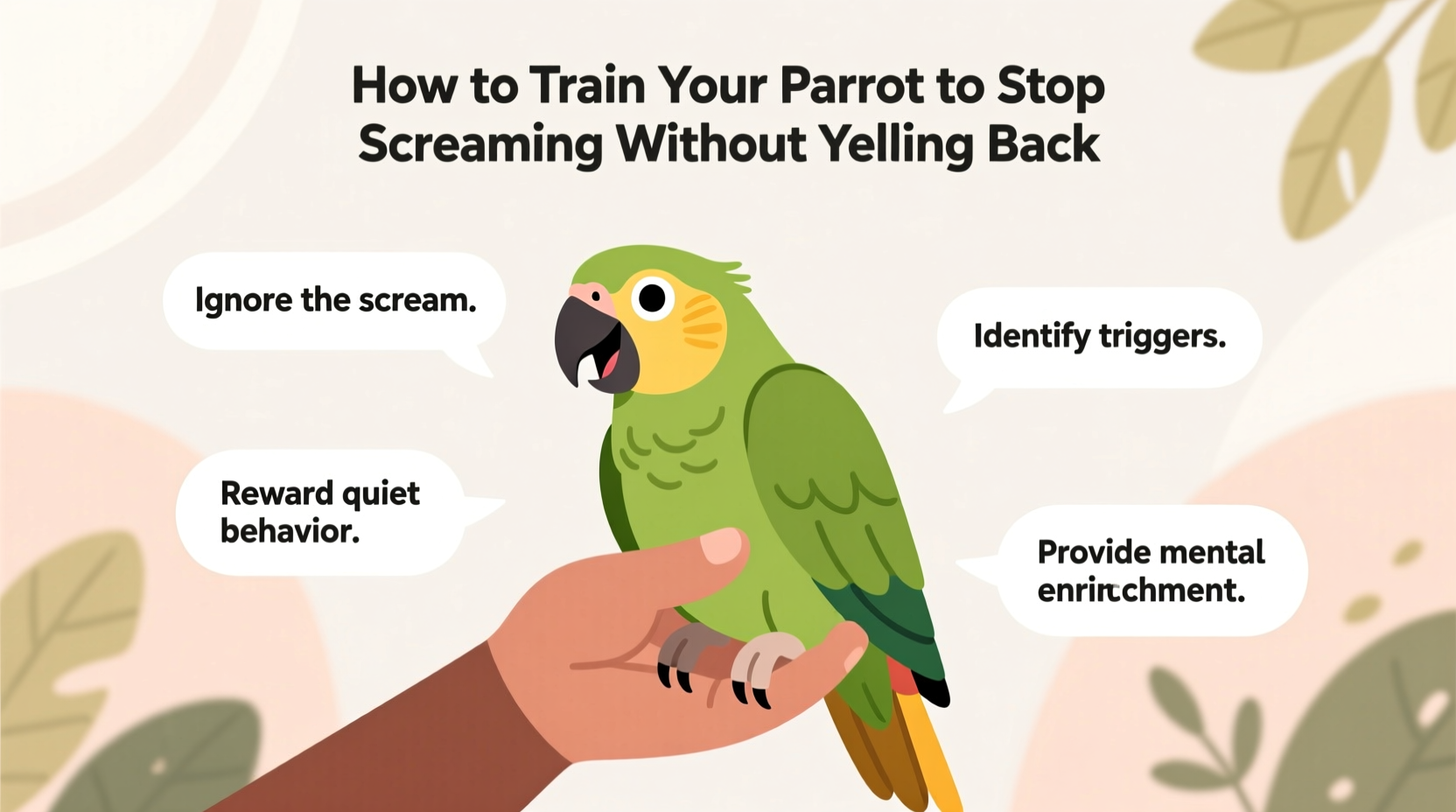
Before addressing the behavior, it’s essential to understand its roots. In the wild, parrots use loud calls to maintain contact with flock members across long distances. These vocalizations help them locate each other, signal danger, or assert territory. When kept as pets, this instinct doesn’t disappear—it adapts.
A captive parrot may scream for several reasons:
- Attention-seeking: If screaming has previously resulted in interaction (even negative), the bird learns it's effective.
- Boredom or lack of stimulation: Parrots require mental engagement. Without toys, interaction, or routine, they may vocalize out of frustration.
- Fear or anxiety: Sudden noises, unfamiliar people, or changes in environment can trigger distress calls.
- Dawn and dusk calling: Many parrots naturally call at sunrise and sunset, mimicking flock communication in the wild.
- Pain or illness: Persistent, unusual screaming can indicate physical discomfort and should be evaluated by a vet.
“Screaming isn’t misbehavior—it’s communication. Our job is to interpret it and respond constructively.” — Dr. Irene Pepperberg, Avian Cognition Researcher
Recognizing the cause allows you to tailor your training approach. Reacting with anger or volume only reinforces the idea that loudness equals results.
The Problem with Yelling Back
It’s tempting to shout “Quiet!” when your parrot shrieks at full volume. But from the bird’s perspective, you’re simply joining the chorus. Parrots don’t process tone the way humans do—they hear volume and reaction. When you yell, you inadvertently reward the screaming by providing immediate attention.
Worse, repeated yelling creates a cycle of stress. The bird feels anxious, screams more, receives louder responses, and becomes increasingly agitated. Over time, this erodes trust and can lead to aggression or withdrawal.
Tip: Never use spray bottles, sudden movements, or loud noises to punish screaming. These methods increase fear and damage your bond.Step-by-Step Guide to Reducing Screaming
Training a parrot to be quieter requires consistency, timing, and emotional control. Follow this structured approach over several weeks for best results.
- Observe and record patterns. For three to five days, note when and how long your parrot screams. Identify triggers: Is it during specific times (e.g., morning)? Does it happen when you’re on the phone? Tracking helps isolate causes.
- Meet basic needs proactively. Ensure your bird gets 10–12 hours of sleep, a balanced diet, daily out-of-cage time, and enrichment (toys, foraging). A well-rested, stimulated parrot is less likely to scream from frustration.
- Reinforce quiet behavior. Wait for moments of calm—even brief ones—and immediately reward with praise, a treat, or gentle interaction. Say “Good quiet” in a soft voice. This teaches that silence gets better results than noise.
- Ignore attention-seeking screams. If the bird screams for interaction, avoid eye contact, speech, or movement. Turn your back if needed. Once the bird is quiet for 5–10 seconds, offer attention. Be consistent—any accidental reinforcement will delay progress.
- Teach an alternative behavior. Train a replacement vocalization like a soft whistle or word. Use clicker training or verbal markers to shape the desired sound. Reward softly spoken cues generously.
- Desensitize to triggers. If your parrot screams when you leave the room, practice short exits and returns while remaining calm. Gradually increase duration. Pair departures with a favorite toy or treat to create positive associations.
- Establish a predictable routine. Parrots thrive on consistency. Feed, play, and cover the cage at the same times daily. Predictability reduces anxiety-driven vocalizations.
Sample Daily Training Schedule
| Time | Activity | Goal |
|---|---|---|
| 7:00 AM | Uncover cage, offer fresh food/water | Routine start, prevent dawn scream escalation |
| 8:00 AM | Out-of-cage playtime with soft interaction | Reinforce calm behavior early |
| 12:00 PM | Foraging toy introduced | Prevent boredom-related screaming |
| 5:00 PM | Short training session (quiet word practice) | Build alternative communication |
| 7:00 PM | Calm interaction, then cover cage | Wind down, ensure proper sleep |
Do’s and Don’ts of Parrot Noise Management
| Do’s | Don’ts |
|---|---|
| Respond promptly to genuine distress | Yell or mimic the bird’s scream |
| Use positive reinforcement consistently | Use punishment-based tools (spray bottles, hoods) |
| Provide mental stimulation daily | Leave the bird alone for 8+ hours without enrichment |
| Train during calm periods, not mid-scream | Attempt training when either of you is stressed |
| Consult an avian vet if screaming is sudden or severe | Assume all screaming is behavioral—rule out pain first |
Real Example: Turning Around a Chronic Screamer
Sarah adopted a 5-year-old green-cheeked conure named Milo who screamed for up to three hours every morning. Previous owners had yelled at him to be quiet, worsening the habit. After consulting an avian trainer, Sarah began tracking Milo’s behavior and discovered his screaming peaked between 7:30 and 8:00 AM—right after she left for work.
She implemented a new routine: waking 30 minutes earlier to spend quiet time with Milo before leaving. She taught him to step onto a playstand near her bag and rewarded calm behavior with a sunflower seed. She also left a foraging toy filled with treats and played calming classical music softly.
Within two weeks, Milo’s morning screams dropped from three hours to under 20 minutes. By week six, he chirped softly when she prepared to leave. Sarah never yelled again. Instead, she focused on building trust through predictability and positive rewards.
“The fastest way to stop a screaming parrot is not to react—but to prepare.” — Brian Speer, Diplomate ABVP (Avian Practice)
Checklist: How to Respond to Screaming the Right Way
- ✅ Stay calm and composed—even if the noise is unbearable.
- ✅ Assess whether the scream indicates distress (e.g., injury, predator nearby).
- ✅ If attention-seeking, withhold all reaction until the bird is quiet for at least 5 seconds.
- ✅ Immediately reward quiet behavior with praise or a small treat.
- ✅ Avoid eye contact, talking, or moving when ignoring screams.
- ✅ Increase daytime enrichment to reduce frustration.
- ✅ Stick to the same response every time—consistency is critical.
Frequently Asked Questions
How long does it take to stop a parrot from screaming?
Results vary by bird and owner consistency. Some see improvement in 2–3 weeks; others may need 2–3 months. Factors include the bird’s age, history, and how often screaming was previously reinforced. Patience and daily effort are essential.
Can older parrots learn to stop screaming?
Yes. While younger birds may adapt faster, even decade-old parrots can change behavior with consistent training. It may take longer due to deeply ingrained habits, but motivation and repetition make transformation possible at any age.
Is it normal for parrots to scream at certain times of day?
Yes. Many parrots vocalize heavily at dawn and dusk as part of natural flock communication. This is normal and shouldn’t be fully suppressed. The goal is to reduce excessive duration or volume and prevent it from spreading throughout the day.
Final Thoughts and Call to Action
Training your parrot to stop screaming without yelling back isn’t just about peace and quiet—it’s about building a healthier, more trusting relationship. Your parrot looks to you for safety, structure, and affection. When you respond with calm consistency instead of frustration, you show leadership through empathy, not dominance.
Start today: observe one screaming episode without reacting. Note the trigger. Tomorrow, introduce one new enrichment item. Over time, these small actions compound into lasting change. Share your journey with fellow bird owners, ask questions, and celebrate progress—no matter how small.
💬 Have a parrot with a loud voice? Share your success story or challenge in the comments—your experience could help another owner find peace.








