
Dinner should be a time of relaxation and connection, not a cacophony of squawks echoing through the house. Yet for many parrot owners, the evening meal often coincides with a dramatic escalation in vocal behavior. Parrots are intelligent, social creatures, and their screaming is rarely out of spite—it’s a form of communication. When your bird screams during dinner, it may be expressing loneliness, frustration, or a desire for attention. The good news is that with consistency, empathy, and structured training, you can teach your parrot to remain calm during meals—without sacrificing their well-being or your peace.
Understanding Why Parrots Scream at Dinner Time
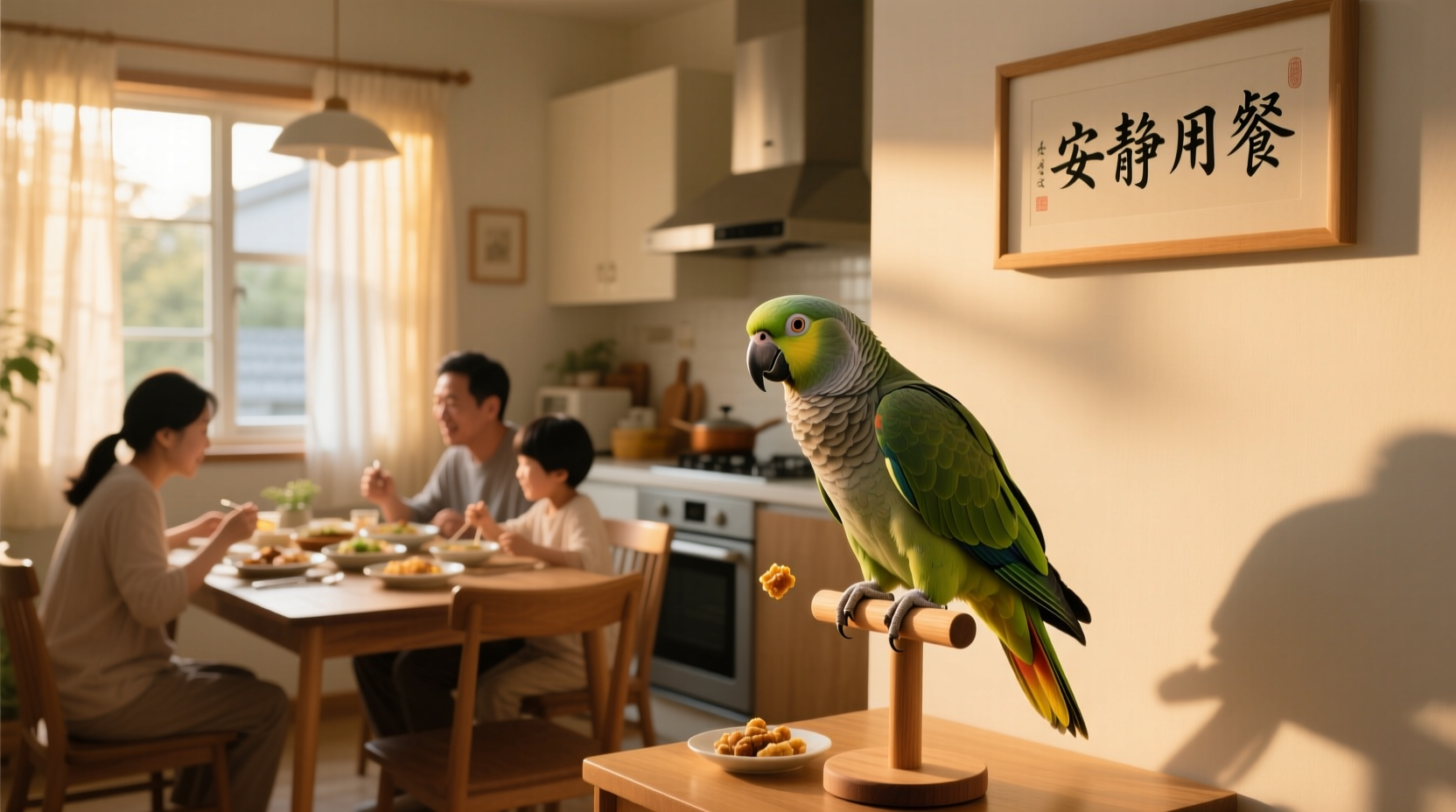
Before addressing the behavior, it's essential to understand its root causes. Parrots are flock animals by nature. In the wild, they rely on vocalizations to maintain contact with their group, signal danger, or establish territory. When kept as pets, they consider their human family part of their flock. If they feel isolated during dinner—a time when everyone is together but not interacting with them—they may scream to reestablish connection.
Common triggers include:
- Attention-seeking: Your parrot notices that screaming gets a reaction, even if it’s negative.
- Environmental changes: Dinner routines may involve noise, movement, or lighting changes that unsettle your bird.
- Hunger or thirst: If your parrot hasn’t been fed or watered before dinner, discomfort can lead to distress calls.
- Boredom: Lack of stimulation during peak activity hours (often late afternoon) leads to pent-up energy.
- Mimicry: Some parrots learn that screaming during certain times is “normal” because it happens regularly.
“Parrots don’t misbehave; they communicate. What we interpret as noise is often a cry for inclusion.” — Dr. Irene Pepperberg, Avian Cognition ResearcherTip: Observe your parrot for 3–5 days without intervening. Note when screaming starts, what precedes it, and how you respond. Patterns will reveal the underlying cause.
Step-by-Step Training Plan to Reduce Screaming
Changing your parrot’s behavior requires patience and a clear strategy. Below is a six-week timeline designed to gradually shift your bird’s expectations and responses during dinner.
Week 1: Establish Predictable Pre-Dinner Routine
Create a consistent 15-minute window before dinner where you interact positively with your parrot. Offer a treat, engage in simple training (like step-up commands), or play soft music together. This signals that dinner time doesn’t mean isolation—it’s part of a shared rhythm.
Week 2: Introduce Calm Alternatives
Teach your parrot a quiet behavior that earns reinforcement. For example, place a favorite toy near the dinner table (but out of reach) and reward any interaction with it using a clicker or verbal praise like “good quiet.” Start with short durations—even five seconds of silence—and build from there.
Week 3: Desensitize to Dinner Noise
Simulate dinner conditions without eating. Sit at the table, clink utensils, turn on ambient sounds (TV, conversation), and observe your parrot. If they remain calm, offer a treat. If they scream, calmly say “quiet” and wait 10 seconds. Only reward silence. Repeat daily.
Week 4: Practice Short Dinner Sessions
Eat an actual meal while maintaining calm. Keep sessions short (10–15 minutes). Have a designated “parrot-safe” perch nearby so they can see you. Reward calm behavior every few minutes initially, then gradually increase intervals.
Week 5: Extend Duration and Reduce Reinforcement
Gradually lengthen dinner to normal duration. Use intermittent rewards—sometimes giving a treat after two minutes of quiet, other times after five. This prevents dependency on constant reinforcement while maintaining motivation.
Week 6: Maintain and Troubleshoot
By now, your parrot should associate dinner time with calmness and occasional positive outcomes. Continue reinforcing quiet behavior weekly. If setbacks occur, return to Week 3 exercises until stability returns.
Do’s and Don’ts During Training
| Do | Don't |
|---|---|
| Reward calm behavior immediately and consistently | Yell “no” or react loudly to screaming |
| Provide enrichment (toys, puzzles) before dinner | Leave your parrot unattended without stimulation |
| Use a consistent cue word like “quiet” or “easy” | Give attention during screaming, even to scold |
| Keep the environment predictable | Change routines abruptly or inconsistently |
| Involve all household members in training | Allow some people to reinforce screaming unintentionally |
A Real-Life Example: Mia and Her African Grey, Jasper
Mia, a teacher from Portland, struggled nightly with Jasper, her 7-year-old African Grey. Every evening at 6:30 PM, as soon as she sat down to eat, Jasper would shriek relentlessly for 20 minutes. Guests were startled, and Mia felt embarrassed and helpless.
After consulting an avian behaviorist, she began tracking Jasper’s behavior. She noticed he screamed most intensely when she turned on the kitchen light—an abrupt change from dim afternoon lighting. She also realized she hadn’t been feeding him dinner until after hers, leaving him hungry during her meal.
Mia adjusted his schedule: she fed Jasper at 5:45 PM, added a foraging toy filled with nuts to his cage, and installed a dimmer switch to transition lighting gently. She also started sitting with him for 10 minutes before her own dinner, offering praise and head scratches. Within three weeks, Jasper’s screaming dropped by 80%. By week six, he only chirped softly during meals—sometimes even mimicking the sound of cutlery clicking, which made Mia laugh instead of cringe.
This case illustrates that screaming isn’t inevitable—it’s often a symptom of mismatched needs and routines.
Essential Checklist for Peaceful Dinner Training
Use this checklist weekly to stay on track:
- ✅ Feed your parrot before or alongside your dinner to prevent hunger-related stress.
- ✅ Provide mental stimulation (foraging toys, puzzles) 30 minutes before dinner.
- ✅ Establish a pre-dinner bonding ritual (5–10 minutes of positive interaction).
- ✅ Place your parrot in a visible, secure area near the dining space.
- ✅ Use a consistent verbal cue (“quiet,” “calm”) when transitioning to mealtime.
- ✅ Reward silent or soft vocalizations with treats or praise—do not wait for perfection.
- ✅ Ensure all family members follow the same rules—no mixed messages.
- ✅ Monitor progress and adjust strategies if no improvement occurs after two weeks.
Frequently Asked Questions
How long does it take to stop a parrot from screaming during dinner?
Most parrots show noticeable improvement within 2–4 weeks when training is consistent. Full behavioral change typically takes 6–8 weeks. Factors like species (e.g., cockatoos tend to be louder), age, and prior reinforcement history affect speed. Patience and daily practice are key.
Should I let my parrot sit at the dinner table?
Only if safety and diet allow. Many human foods are toxic to birds (e.g., avocado, chocolate, onions). If you include your parrot, provide a separate, safe plate with bird-friendly items like steamed veggies or millet sprays. Supervise closely and remove them if they become overstimulated.
What if my parrot never stops screaming despite training?
Persistent screaming may indicate underlying issues such as illness, chronic stress, or past trauma. Consult an avian veterinarian to rule out medical causes like pain or hormonal imbalances. A certified bird behavior consultant can assess environmental enrichment and suggest advanced techniques like target training or noise desensitization protocols.
Final Thoughts: Building Harmony Through Understanding
Training your parrot to stop screaming during dinner isn’t about silencing them—it’s about teaching them a new way to coexist peacefully in your shared home. Birds thrive on routine, clarity, and connection. When you replace screaming with calm engagement, you’re not just gaining quieter evenings; you’re deepening the bond between you and your feathered companion.
The journey requires consistency, empathy, and a willingness to see the world from your parrot’s perspective. Small shifts in timing, environment, and reinforcement can yield profound results. Remember, progress may be gradual, but each moment of quiet is a victory worth celebrating.
💬 Have success stories or challenges with your parrot’s dinner-time behavior? Share your experience in the comments—your insight could help another owner find peace at the table.








