
Training a parrot to step up onto your hand should be a calm, cooperative act—not a battle of wills ending in bites and frustration. Many parrot owners struggle with resistance, fear-based aggression, or outright refusal when asking their bird to step up. The key isn’t force or repetition; it’s trust. Parrots are intelligent, sensitive creatures that thrive on consistency, safety, and mutual respect. When training is approached with empathy and structure, stepping up becomes not just possible, but a natural extension of the bond between bird and caregiver.
This guide walks you through the foundational principles of teaching your parrot to step up gently—without fear, coercion, or biting. From understanding body language to implementing positive reinforcement, every stage emphasizes emotional safety and long-term relationship building.
Understanding Why Parrots Resist Stepping Up
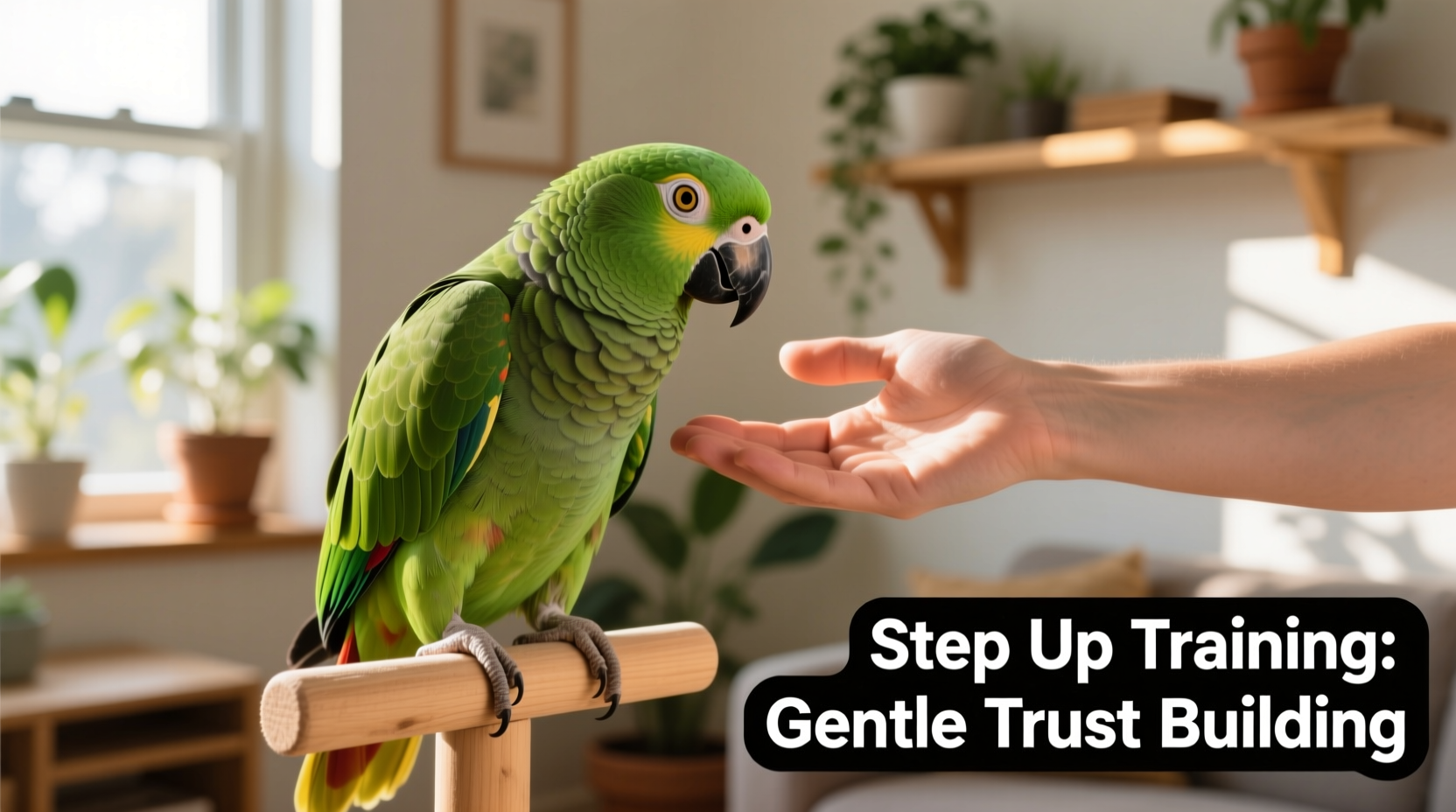
Before addressing technique, it's essential to understand why a parrot might refuse to step up. Unlike dogs or cats, parrots are prey animals by instinct. Their survival depends on vigilance and control over movement. Being asked to leave a secure perch and climb onto a large, unpredictable hand can feel inherently risky.
Common reasons for resistance include:
- Fear or past trauma: A previous negative experience (e.g., being grabbed or restrained) can create lasting distrust.
- Lack of bonding: If the bird doesn’t yet see you as a trusted ally, cooperation is unlikely.
- Environmental stress: Loud noises, sudden movements, or an unstable cage setup can heighten anxiety.
- Poor timing: Asking during molting, illness, or hormonal periods reduces compliance.
- Unclear communication: Inconsistent cues or mixed signals confuse the bird.
“Parrots don’t resist because they’re ‘bad’—they resist because they don’t feel safe. Your job isn’t to dominate, but to prove you’re worth following.” — Dr. Irene Pepperberg, Avian Cognition Researcher
The Foundation: Building Trust Before Training
You cannot skip trust and expect obedience. A parrot trained through fear may comply temporarily but will likely develop behavioral issues like screaming, feather plucking, or chronic biting. True cooperation grows from a sense of security.
Begin with low-pressure interactions:
- Sit near the cage daily without making demands. Read aloud or talk softly so the bird associates your presence with calm.
- Offer favorite treats through the cage bars using feeding tweezers or chopsticks—never your fingers at first.
- Observe body language closely. Pinned eyes, flared tail, or raised feathers signal discomfort. Retreat calmly if these appear.
- Respect boundaries. If the bird turns away or retreats, do not pursue.
Trust develops over weeks, sometimes months. Rushing leads to setbacks. Only when your parrot willingly approaches the front of the cage, watches you without tension, and takes food from nearby should you consider initiating step-up training.
Step-by-Step Guide to Teaching Step Up Without Biting
Once trust is established, introduce the step-up behavior gradually. Use this five-phase method to ensure clarity and comfort.
- Phase 1: Introduce the Target Stick
Use a wooden dowel or unpolished stick about ½ inch thick. Let the bird investigate it. Tap it lightly against their lower chest (where legs meet body) and immediately reward with a treat. Repeat 3–5 times per session, once or twice daily. Goal: The bird learns that contact with the stick predicts a reward. - Phase 2: Shape the Movement
Gently press the stick against the bird’s lower chest and say “step up” in a calm tone. If they shift weight or lift one foot, mark the moment with a clicker or verbal cue (“good!”) and offer a treat. Do not force. End sessions after 2–3 successful approximations. - Phase 3: Transfer to Hand
Once consistent with the stick, replace it with a flat, motionless hand held at perch level. Use the same verbal cue. If the bird hesitates, go back to the stick for reinforcement, then try again. Never push or shove. Reward any forward lean or foot movement. - Phase 4: Full Transfer and Release
When the bird places both feet on your hand, praise and offer a treat. Then, present a perch (or the cage door) and say “step down.” Reinforce dismounting too. This teaches the behavior has a beginning and end. - Phase 5: Generalize the Behavior
Practice stepping up from different perches, rooms, and with different family members (if appropriate). Maintain high rewards initially, then fade treats gradually as reliability increases.
Each session should last no more than 5–7 minutes. Keep energy calm and expectations realistic. Some days will progress faster than others—this is normal.
Do’s and Don’ts During Step-Up Training
| Do’s | Don’ts |
|---|---|
| Use a consistent verbal cue like “step up” | Yell, grab, or force the bird onto your hand |
| Keep sessions short and positive | Train when the bird is tired, molting, or aggressive |
| Reward even small attempts forward | Repeat commands multiple times in frustration |
| Approach from the side, not above (less threatening) | Hover your hand over the bird’s head like a predator |
| Wear a thick gardening glove initially if fearful of bites | Retaliate or punish after a bite—this destroys trust |
Real Example: Rebuilding Trust After a Biting Incident
Sarah adopted a rescued green-cheeked conure named Milo who would lunge and bite whenever she reached into his cage. He had lived in a shelter after being surrendered due to aggression. Instead of forcing interaction, Sarah began sitting beside the cage each evening while reading. She used a feeding stick to pass millet sprays, never reaching toward him directly.
After three weeks, Milo started watching her intently. She introduced a target stick, tapping it gently against his chest and rewarding with a sunflower seed. Within ten days, he lifted his foot voluntarily. Two weeks later, he stepped onto her gloved hand. Today, Milo steps up calmly and even climbs onto her shoulder—on his terms.
The turning point wasn’t technique alone—it was time, predictability, and respect for Milo’s pace.
Preventing and Managing Bites During Training
Biting is a communication tool for parrots, not defiance. It usually means “I’m scared,” “I need space,” or “I don’t understand.” Responding with anger escalates fear. Instead:
- Recognize early warning signs: pinned eyes, flattened crest (in some species), tail fanning, backing away.
- If a bite occurs, remain calm. Say “no step up” firmly but quietly, return the bird to its perch, and end the session.
- Reflect on what triggered it: Was your hand too fast? Did you ignore body language?
- Rebuild the next day with lower demands—perhaps just targeting with the stick again.
Checklist: Preparing for Successful Step-Up Training
- ☑ Assess your parrot’s current stress level and health
- ☑ Choose a quiet, familiar environment with minimal distractions
- ☑ Gather high-value treats (e.g., nuts, fruit bits, millet)
- ☑ Use a target stick for initial shaping
- ☑ Schedule short sessions (5 min) at consistent times daily
- ☑ Wear neutral clothing and avoid sudden movements
- ☑ Observe body language before, during, and after each session
- ☑ Record progress in a journal (helps identify patterns)
FAQ: Common Questions About Step-Up Training
How long does it take to train a parrot to step up without biting?
It varies widely. A well-socialized young bird may learn in a week. A rescued or fearful parrot may take several months. Progress isn’t linear—some birds regress during hormonal seasons. Focus on consistency, not speed.
What if my parrot bites every time I ask them to step up?
Stop asking. Return to trust-building phase. Forcing compliance worsens fear. Instead, work on proximity, targeting, and positive associations. Consider consulting an avian behaviorist if aggression persists.
Can I use clicker training for step-up?
Yes, effectively. The click marks the exact moment the bird lifts its foot or touches your hand. Pair it immediately with a treat. Over time, the bird learns which action earns reinforcement, accelerating learning.
Conclusion: Patience Is the Most Powerful Tool
Teaching a parrot to step up without biting isn’t about mastering a trick—it’s about deepening a relationship rooted in mutual respect. Every successful step-up is a testament to the safety you’ve created, the consistency you’ve shown, and the patience you’ve exercised.
Gentle training doesn’t just prevent bites; it transforms your parrot from a wary captive into a willing companion. The behaviors you build today lay the foundation for years of joyful interaction, better vet visits, and deeper connection.
🚀 Start today: Sit quietly near your parrot, observe their body language, and offer a treat without expectation. Small moments of peace build the trust that makes all training possible. Share your journey in the comments—we’d love to hear your story.








