Dogs possess up to 300 million olfactory receptors—roughly 50 times more than humans—and can detect volatile organic compounds at concentrations as low as one part per trillion. Alcohol vapors—especially from ethanol in beer, wine, spirits, and even hand sanitizer—emit strong, novel, and often highly stimulating odors that trigger intense curiosity, investigative behavior, or stress responses in dogs. Left unaddressed, this can lead to accidental ingestion (a veterinary emergency), resource guarding of bottles or glasses, or heightened reactivity in social settings where alcohol is present. Unlike general obedience training, managing alcohol-related stimuli requires a layered approach: odor discrimination, impulse control, environmental management, and owner awareness. This article synthesizes veterinary behavior science, certified professional dog trainer protocols, and real-world case outcomes to deliver actionable, ethical, and sustainable strategies.
Why Alcohol Smells Pose Unique Risks for Dogs
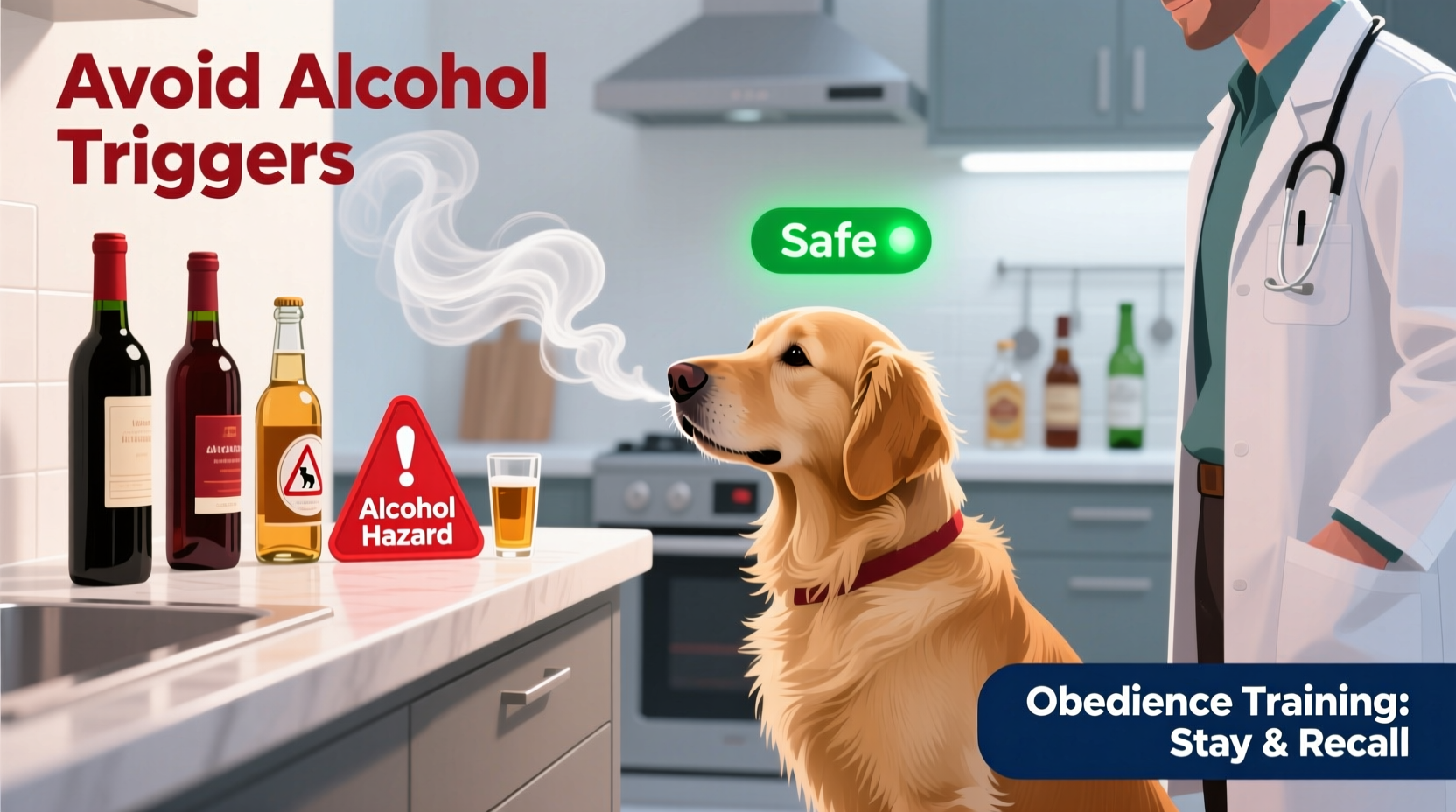
Alcohol isn’t merely “another scent” to a dog—it’s neurologically salient. Ethanol vapor activates the olfactory bulb’s mitral cells with unusual intensity, often triggering dopamine release associated with novelty-seeking or reward anticipation. This explains why dogs may fixate on spilled wine, lick cocktail glasses, or nose into unattended purses containing hand sanitizer. More critically, dogs lack the metabolic capacity to process ethanol efficiently: their liver enzyme alcohol dehydrogenase works at only ~10% the human rate. As little as 0.5 ml/kg of 40% ethanol (e.g., one standard shot) can induce lethargy, vomiting, ataxia, or respiratory depression in a 10 kg dog. Even non-beverage sources—hand sanitizers (60–95% ethanol), cooking extracts, mouthwash, and fermented foods—pose acute toxicity risks. Compounding the danger is the fact that many dogs associate the smell with positive experiences: shared meals, attention during parties, or treats offered near bar areas. This unintentional reinforcement makes extinction-based training ineffective without deliberate counterconditioning.
Tip: Never assume your dog “knows better.” A single exposure to spilled liquor or unsupervised access to a hand sanitizer bottle has led to over 12,000 canine ethanol toxicosis cases reported to the ASPCA Animal Poison Control Center since 2020.A Step-by-Step Desensitization & Counterconditioning Protocol
This 5-phase protocol is grounded in classical conditioning principles validated by the American College of Veterinary Behaviorists. It prioritizes safety, gradual progression, and measurable thresholds—never pushing past your dog’s stress signals (lip licking, whale eye, avoidance, or sudden stillness). Complete each phase before advancing; most dogs require 7–14 days per phase, depending on baseline sensitivity.
- Baseline Assessment: Observe your dog near sealed, unopened alcohol-containing items (e.g., a closed wine bottle on a high shelf). Note distance at which they first orient, duration of fixation, and presence of arousal signs. Record this as your “neutral threshold.”
- Odor Introduction (No Visual Access): Place a cotton ball lightly dampened with 1 drop of diluted vodka (1:10 in water) inside a sealed glass jar. Present the jar at 3x your neutral threshold distance. Pair with high-value treats (e.g., freeze-dried liver) *only while the jar is present*. Repeat 5x/day for 3 days. Discontinue if your dog shows tension or refusal to eat.
- Controlled Visual + Odor Exposure: Use the same jar but place it on the floor at your neutral threshold distance. Sit with your dog on leash. Reward calm attention (soft gaze, relaxed posture) every 3 seconds. If they move toward the jar, gently redirect with a treat tossed *away* from it—not toward you. Never punish movement; instead, make proximity to the jar predict *nothing*, while distance predicts rewards.
- Distraction Integration: Introduce a low-level distraction (e.g., tossing a toy 3 feet away) while the jar remains visible at threshold distance. Reward focus on *you* or the toy—not the jar. Gradually increase distraction complexity (e.g., clinking glasses, soft conversation) over 5 sessions.
- Real-World Generalization: Practice near actual—but secured—sources: a corked wine bottle on a countertop, a hand sanitizer dispenser behind a closed cabinet door, or a sealed cocktail shaker on a bar cart. Always maintain physical barriers and supervise rigorously. End each session with a known, rewarding cue like “find it” for a hidden treat elsewhere—reinforcing that *other* smells are more valuable.
Do’s and Don’ts: Managing Alcohol Environments Safely
Training alone isn’t enough. Environmental design prevents rehearsal of unwanted behaviors and protects against lapses in vigilance. The table below reflects best practices endorsed by the Certification Council for Professional Dog Trainers (CCPDT) and reviewed by board-certified veterinary toxicologists.
| Scenario | Do | Don’t |
|---|---|---|
| At Home Parties | Use baby gates to restrict access to bar areas; store open drinks on high, stable surfaces *outside* your dog’s jump reach; assign a quiet room with enrichment toys for downtime. | Leave glasses on coffee tables or countertops within nose range; use scented candles near alcohol (masks warning cues); assume “he’s never gone after drinks before” means he won’t start tonight. |
| Kitchen & Dining Areas | Wipe spills immediately with vinegar-water (neutralizes ethanol odor); store cooking wine and extracts in opaque, latched cabinets; use motion-activated pet deterrents near high-risk zones. | Rely on “just one sip” logic—even small amounts of wine vinegar or vanilla extract can cause GI upset; leave empty bottles on counters (residual scent lingers for hours). |
| Travel & Social Settings | Carry a portable “scent-free zone” kit: unscented wipes, a folded blanket sprayed with dog-safe lavender hydrosol (not oil), and a hands-free leash for controlled walks near patios. | Bring your dog to breweries or wine tastings “to get used to it”—this floods their system with unprocessed stimuli and erodes trust in your leadership. |
Real-World Case Study: Luna, a 3-Year-Old Labrador Retriever
Luna began fixating on her owner’s wine glass during evening relaxation—a behavior that escalated to nudging the glass off the coffee table twice within one month. After the second incident (which resulted in a 20-minute emergency vet visit for mild ethanol-induced ataxia), her owner consulted a veterinary behaviorist. Assessment revealed Luna had been rewarded for “glass-gazing” with affectionate petting and occasional sips of water from the owner’s glass—unintentionally pairing the alcohol scent with positive interaction. The behaviorist implemented Phase 2–4 of the protocol above, adding one critical adjustment: replacing all wine glasses with opaque, weighted tumblers that minimized vapor release. Within 10 days, Luna stopped orienting toward the tumbler when placed on the table. By Day 21, she consistently chose to rest on her mat when her owner poured wine—cued by a new “settle” hand signal paired with a chew bone. Crucially, her owner also adopted a strict “no food/drink sharing” policy and installed a magnetic cabinet lock for the liquor cabinet. Six months later, Luna accompanies her owner to outdoor cafes without incident—her default response to the scent of alcohol is now a relaxed glance away, followed by checking in for direction.
“Dogs don’t generalize odors the way we assume. Training around alcohol isn’t about teaching ‘don’t drink’—it’s about teaching ‘this smell means I look to my person for guidance, and that choice always pays off.’ That cognitive shift transforms risk into reliability.” — Dr. Lena Torres, DACVB, Veterinary Behaviorist and Lead Researcher, UC Davis Animal Behavior Clinic
Essential Obedience Cues for Alcohol-Safe Living
Three foundational cues form the behavioral backbone for alcohol safety. These must be trained *separately* from alcohol contexts first—then proofed *with* low-intensity alcohol stimuli only after fluency is achieved (defined as 95% success across 3 locations, 2 handlers, and 5 distractions).
- “Leave it” (Impulse Control): Not just a command—it’s a conditioned emotional response. Train using non-alcohol items first (e.g., kibble under a cup), then progress to sealed alcohol containers. The cue must mean “disengage completely and check in with me,” not just “stop sniffing.” Reward the *turn-away* motion—not compliance after prolonged fixation.
- “Mat” (Place/Stay): A designated resting zone that becomes a sanctuary during high-scent environments. Use a distinct texture (e.g., woven rug) and reinforce *only* calm, down-position stays—not standing or sitting. When guests arrive with drinks, send Luna to her mat *before* the door opens—not after she’s already alert.
- “Check in” (Voluntary Attention): A silent cue where your dog glances at your face and holds eye contact for 1 second. Reinforce with treats delivered *at your waist level*—never on the floor near potential hazards. In a party setting, this cue lets you redirect attention before fixation begins.
FAQ: Addressing Common Concerns
My dog only reacts to beer—does that mean other alcohols are safe?
No. Beer contains hops, carbonation, and malt aromas that may be more stimulating than wine or spirits, but ethanol is ethanol. A dog attracted to beer’s yeasty scent may still ingest hand sanitizer or mouthwash out of curiosity or stress. All ethanol sources require equal management rigor.
Can I use bitter apple spray on bottles to deter licking?
Avoid it. Bitter sprays create negative associations with the *container*, not the *smell*, and may increase anxiety or cause redirected aggression. Worse, some dogs learn to lick *around* the spray or develop taste aversion to other safe items sprayed accidentally. Positive reinforcement of alternative behaviors is safer and more durable.
What if my dog has already ingested alcohol?
Act immediately: Call your veterinarian or the ASPCA Animal Poison Control Center (888-426-4435) *before* symptoms appear. Do not induce vomiting unless instructed—ethanol rapidly absorbs and can cause aspiration pneumonia. Keep your dog warm, quiet, and hydrated (offer water if conscious and not vomiting), and transport to emergency care. Prognosis is excellent with prompt intervention, but delays increase risk of metabolic acidosis and neurological damage.
Conclusion: Building Trust, One Scent at a Time
Training your dog around alcohol smells isn’t about eliminating curiosity—it’s about cultivating partnership. Every time you calmly redirect their attention from a wine glass to a chew toy, every time you secure a hand sanitizer bottle before your dog investigates, every time you reward a quiet “check in” instead of waiting for fixation—you’re reinforcing a profound truth: *you are their safest source of information in an overwhelming world.* This work deepens mutual understanding far beyond odor management. It reshapes how your dog navigates novelty, processes uncertainty, and chooses cooperation over compulsion. Start today—not with perfection, but with observation. Notice where your dog pauses, where their nose lifts, where their body tenses. Meet those moments with patience, precision, and kindness. The goal isn’t a dog who ignores alcohol, but one who trusts you enough to walk away from it—confidently, calmly, and completely.
💬 Your experience matters. Have you successfully trained your dog around alcohol smells? Share your most effective cue, a hard-won insight, or a question for fellow readers in the comments—we’re building a community grounded in empathy, evidence, and everyday excellence.








