
Training a kitten can be one of the most rewarding experiences for a pet owner—but when your kitten seems uninterested, easily distracted, or outright defiant, it’s easy to feel discouraged. Many assume that cats are too independent to train, but the truth is quite the opposite. With the right tools, especially positive reinforcement and clicker training, even the most stubborn kittens can learn desirable behaviors. These science-backed methods rely on timing, consistency, and rewards, not punishment, making them both humane and highly effective.
The key lies in understanding feline psychology. Unlike dogs, cats don’t respond well to coercion or repetition without motivation. They operate on a cost-benefit analysis: “What’s in it for me?” That’s where positive reinforcement shines. By pairing desired actions with immediate rewards, you create a clear link between behavior and outcome. Add a clicker—a small handheld device that makes a distinct “click” sound—and you have a precise communication tool that marks the exact moment a kitten does something right.
Why Positive Reinforcement Works for Kittens
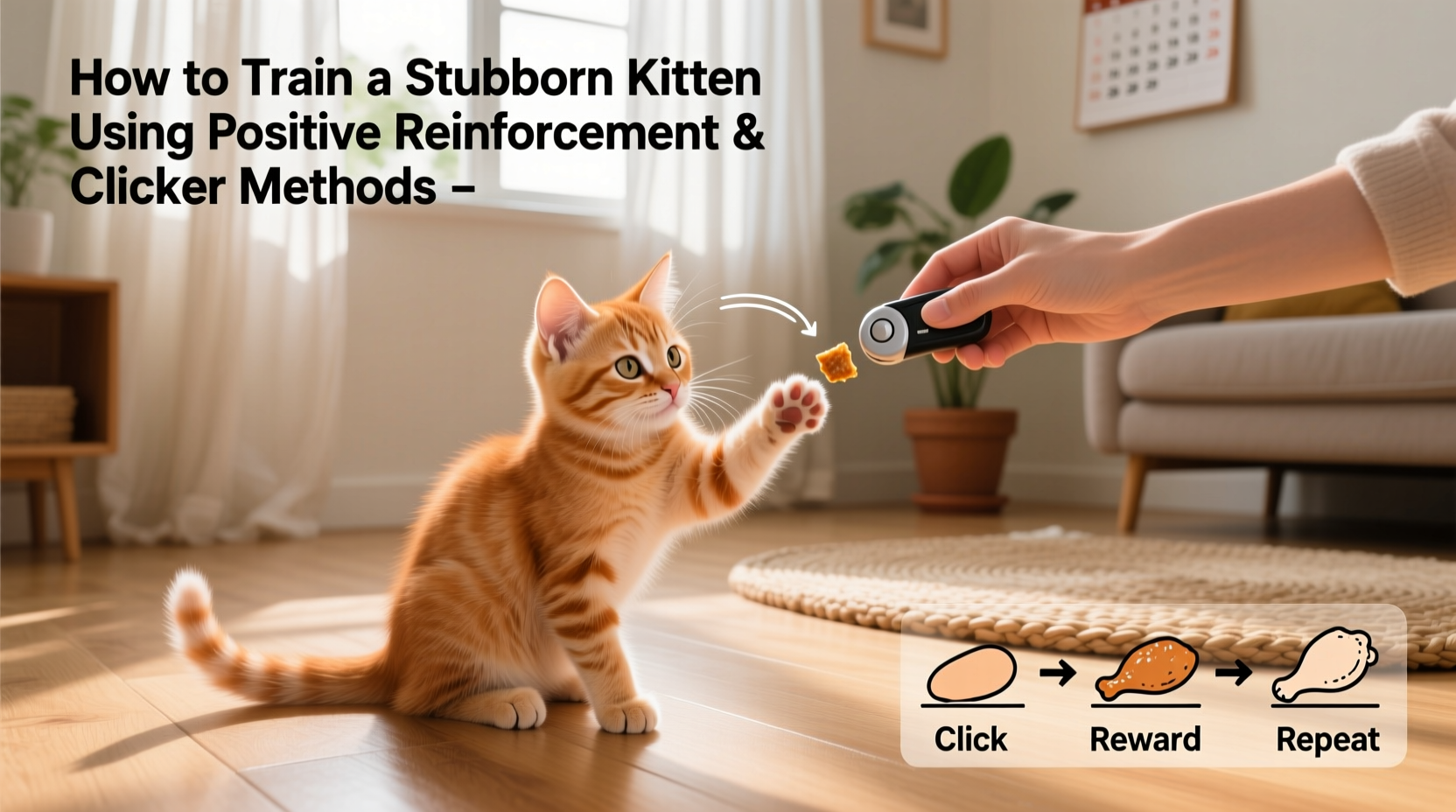
Kittens are naturally curious and quick learners, but their attention spans are short, and they’re easily overwhelmed by stress or confusion. Traditional correction-based training often backfires because it creates fear or avoidance, damaging trust. In contrast, positive reinforcement strengthens the bond between you and your kitten while encouraging repeatable behavior.
When a kitten performs a desired action—like sitting on command or using a scratching post—and immediately receives a treat or affection, the brain releases dopamine, reinforcing the behavior. Over time, this builds a pattern of expectation: good behavior = reward. The more consistent the association, the faster learning occurs.
This method is especially crucial for stubborn kittens—those who ignore commands, refuse litter box use, or scratch furniture despite correction. These behaviors aren’t defiance; they’re expressions of unmet needs or lack of proper guidance. Positive reinforcement redirects energy constructively, turning problem behaviors into opportunities for learning.
Tip: Always use high-value treats like freeze-dried chicken or tuna flakes—something your kitten rarely gets and truly loves.How Clicker Training Enhances Learning
The clicker acts as a bridge between action and reward. Because timing is critical in training, the click provides an instant, consistent signal that tells the kitten, “Yes! That’s exactly what I wanted.” Without it, verbal praise may come too late, causing confusion about which behavior earned the treat.
Start by “charging” the clicker. Sit quietly with your kitten and click once, then immediately give a treat. Repeat 10–15 times in a session. After just a few sessions, your kitten will associate the click with a reward. This process is called classical conditioning and forms the foundation of all further training.
Once your kitten understands the click-treat connection, you can begin shaping behaviors. For example, if you want your kitten to touch a target stick with its nose, wait for the natural movement toward it, click at the exact moment contact occurs, then deliver the treat. Over successive sessions, you can raise the criteria—only clicking when the kitten intentionally approaches the stick.
“Clicker training taps into a cat’s natural problem-solving instincts. It turns learning into a game they want to play.” — Dr. Sarah Ellis, Feline Behavior Scientist, University of Lincoln
Step-by-Step Guide to Training a Stubborn Kitten
Follow this structured timeline to build reliable behaviors over 4–6 weeks. Each session should last 3–5 minutes, conducted 2–3 times daily. Short, frequent sessions prevent frustration and maintain engagement.
- Week 1: Build the Click-Treat Association
Conduct three daily sessions of 10 clicks followed by treats. Do this in a quiet room with minimal distractions. Goal: Your kitten looks expectantly for a treat after each click. - Week 2: Introduce Simple Behaviors (e.g., Sit)
Wait for your kitten to sit naturally. The moment its bottom touches the floor, click and treat. After 5–6 successful clicks, add a verbal cue like “sit” just before the action occurs. Gradually phase in the cue so it precedes the behavior. - Week 3: Shape Target Touching
Use a stick or spoon with a soft tip. Click and treat when your kitten looks at it, then only when it moves toward it, then only when it touches it with its nose. This teaches precision and focus. - Week 4: Chain Behaviors and Increase Duration
Combine two actions—e.g., touch target, then sit. Click and treat for completing the sequence. Also practice “stay” by clicking for longer pauses after sitting. - Weeks 5–6: Generalize in New Environments
Practice trained behaviors in different rooms or with mild distractions (e.g., low music). Keep rewards high-value to maintain motivation.
Common Challenges and How to Overcome Them
Even with the best approach, setbacks happen. Here’s how to troubleshoot common issues with stubborn kittens:
- Lack of interest in treats: Try warming up wet food or offering catnip as a secondary reinforcer. Ensure your kitten isn’t overfed before sessions.
- Distractibility: Train in a quiet space first. Gradually introduce distractions only after mastery in calm settings.
- Aggression or fear: Never force interaction. If your kitten growls or bites, end the session calmly. Reassess environment, noise levels, or potential pain (consult a vet if needed).
- Inconsistent responses: You may be unintentionally reinforcing unwanted behavior. For example, giving attention when the kitten meows excessively teaches that meowing works—even if it’s negative attention.
Do’s and Don’ts of Kitten Training
| Do’s | Don’ts |
|---|---|
| Use tiny treats (pea-sized) to avoid overfeeding | Withhold food as punishment |
| Train when your kitten is alert but calm | Train during hyperactive periods (e.g., nighttime zoomies) |
| Click *before* delivering the treat | Click after the behavior has ended |
| Gradually fade treats once behavior is reliable | Stop all rewards abruptly |
| Praise softly—loud voices may scare kittens | Yell, grab, or physically correct |
Real Example: Turning Around a Stubborn Scratcher
Milo, a 12-week-old tabby, was destroying the living room couch despite multiple deterrents. His owner tried sprays, double-sided tape, and scolding—all ineffective. Frustrated, she turned to positive reinforcement.
She placed a sturdy scratching post next to the couch and began clicker training. Every time Milo sniffed or approached the post, she clicked and gave a treat. Within days, he started swatting it with his paws. She increased the reward for full-body scratches. After two weeks, Milo used the post consistently. The old couch was replaced with a less tempting fabric, and the original post was moved to a sunlit corner—Milo’s favorite lounging spot.
No punishment was used. Instead, the undesirable behavior faded naturally because the alternative was more rewarding. Today, Milo ignores the furniture and runs to his post when he feels the urge to scratch.
Essential Training Checklist
Keep this checklist handy for every training phase:
- ☐ Choose a quiet, distraction-free training area
- ☐ Prepare high-value, bite-sized treats
- ☐ Charge the clicker before introducing behaviors
- ☐ Limit sessions to 3–5 minutes, 2–3 times daily
- ☐ Click *exactly* when the desired behavior occurs
- ☐ Always follow the click with a treat (even if accidental)
- ☐ End on a positive note—success builds confidence
- ☐ Record progress weekly (e.g., duration, distractions)
- ☐ Consult a veterinarian if sudden behavioral changes occur
- ☐ Be patient—consistency beats speed
Frequently Asked Questions
Can very young kittens be clicker trained?
Yes. Kittens as young as 8 weeks can begin clicker training. Their brains are highly receptive to learning, but sessions must be extremely short (1–2 minutes) and playful. Focus on simple behaviors like coming when called or touching a target.
What if my kitten doesn’t respond to the clicker at all?
Some kittens are startled by the sound. Try muffled clicks (wrap the clicker in cloth) or substitute a verbal marker like “yes” or a tongue click. Ensure the reward is enticing enough to outweigh any hesitation.
Is it possible to train a kitten without treats?
Treats are the fastest way to establish learning, but other rewards—like playtime with a favorite wand toy or gentle petting—can work for some kittens. However, food is usually the most reliable motivator, especially in early stages.
Conclusion: Patience, Consistency, and Kindness Win
Training a stubborn kitten isn’t about dominance or control—it’s about communication. Positive reinforcement and clicker methods transform frustrating moments into bonding opportunities. What appears as defiance is often confusion or instinctual behavior lacking direction. With clear signals, timely rewards, and empathy, even the most headstrong kitten can learn to cooperate willingly.
Progress may be slow, and setbacks inevitable. But each small success builds momentum. Celebrate the tiny victories: the first voluntary sit, the first ignored curtain pull, the first confident tap on the target stick. These moments form the foundation of a well-mannered, confident adult cat.
💬 Ready to start training your kitten? Grab a clicker, pick a high-value treat, and begin today. Share your progress or challenges in the comments—your journey could inspire another pet parent facing the same struggles.








