
Teaching your parrot to step up—moving from a perch or surface onto your hand—is one of the most fundamental skills in bird ownership. Yet for many caregivers, this simple request becomes a source of stress, fear, and even injury when met with biting or resistance. The good news is that aggression during handling is rarely about dominance or defiance—it's usually a sign of fear, confusion, or past negative experiences. With patience, consistency, and the right approach, you can teach your parrot to step up calmly and confidently, without force or frustration.
The key lies not in overpowering your bird, but in building trust through clear communication and positive reinforcement. This guide outlines a humane, effective method rooted in behavioral science and real-world success with companion parrots of all species—from budgies to macaws.
Understanding Why Parrots Bite During Handling
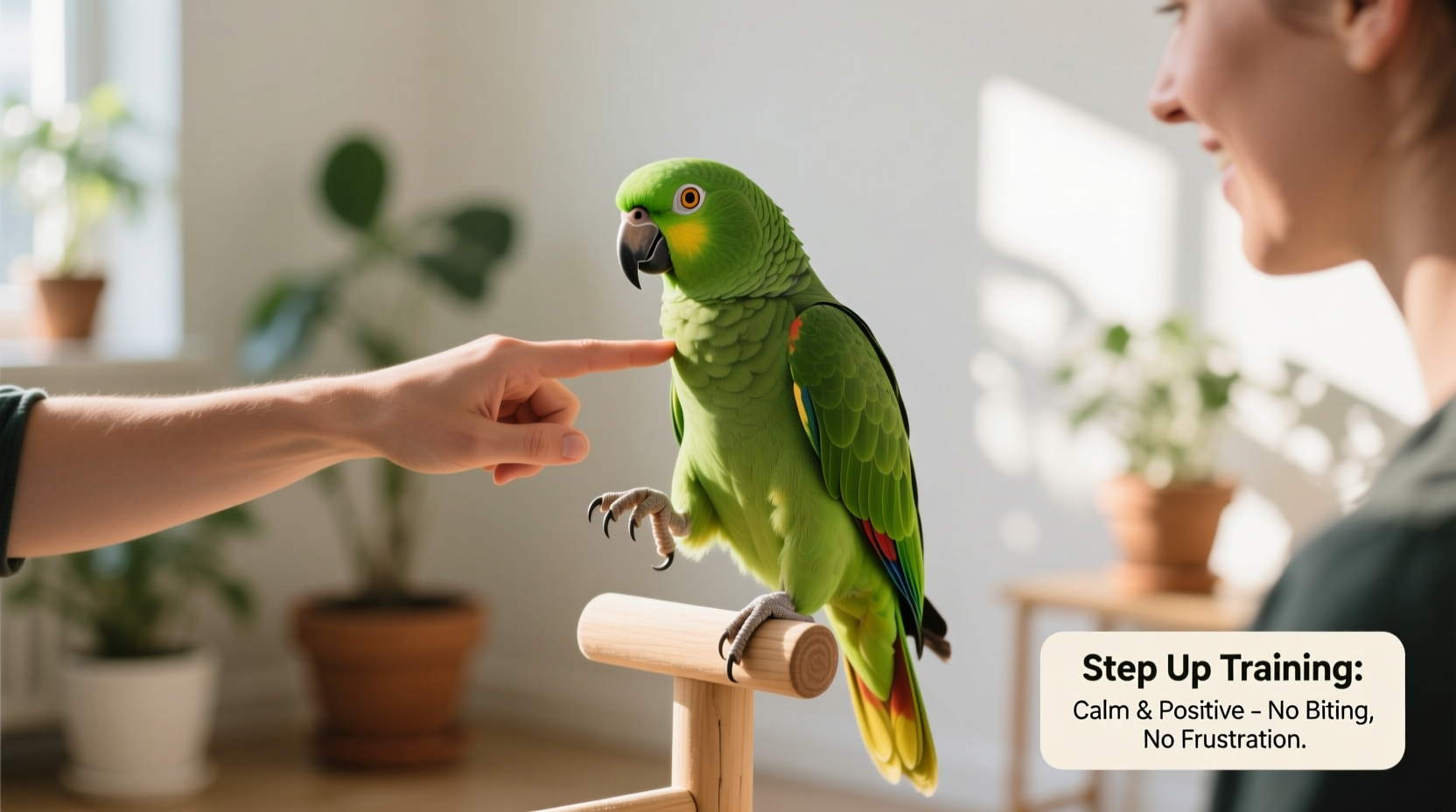
Before teaching any new behavior, it’s essential to understand why your parrot might resist stepping up. Biting is a defensive behavior, not an act of malice. Birds are prey animals by instinct, and being asked to leave a secure perch and climb onto a large, moving object (your hand) can feel inherently risky.
Common reasons for biting during step-up attempts include:
- Fear of falling: If the hand approaches too quickly or hovers unpredictably, the bird may panic.
- Lack of trust: A history of forced handling or restraint erodes confidence.
- Poor timing: Asking when the bird is preening, eating, or sleeping increases resistance.
- Inconsistent cues: Using different words, hand positions, or tones confuses the bird.
- Overstimulation: Loud environments or sudden movements heighten anxiety.
Recognizing these triggers allows you to create a training environment where your parrot feels safe and empowered to cooperate.
Tip: Always observe your parrot’s body language before attempting a step-up. Fluffed feathers, pinned eyes, or backing away signal discomfort—wait until the bird appears relaxed.A Step-by-Step Guide to Teaching Step-Up Without Force
This method uses positive reinforcement and gradual desensitization to help your parrot associate stepping up with safety and reward. Follow these steps consistently over days or weeks, depending on your bird’s temperament.
- Start with Target Training
Introduce a target stick (a chopstick or wand with a ball at the end). Hold it near your parrot and reward any interaction—looking at it, leaning toward it, or touching it—with a small treat. Repeat until your bird consistently touches the target on cue. - Shape Movement Toward Your Hand
Once your parrot reliably touches the target, use it to guide short movements. Move the target a few inches and reward completion. Gradually increase distance, always ending on a positive note. - Introduce the Hand as a Neutral Object
Place your open hand near the perch—without asking for movement. Let your bird investigate. Reward calm behavior. Do not attempt to push your hand under the bird’s chest yet. - Pair the Cue Word with Gentle Pressure
Choose a consistent verbal cue like “step up.” Say it once, then gently offer your index finger just behind the bird’s lower chest (between the legs). Apply light upward pressure—just enough to encourage balance shift. If the bird lifts a foot, immediately reward. - Reward Success Instantly
The moment your parrot places one foot on your hand, deliver a high-value treat (e.g., sunflower seed, nut, or fruit piece). Praise warmly. Return the bird to the perch calmly. - Practice in Short Sessions
Train 3–5 times daily for no more than 2–3 minutes each. End on a success, even if it’s just tolerating your hand nearby. - Generalize the Behavior
Once reliable on one perch, practice on others. Then try stepping up from your arm, a table, or the floor. Consistency across environments strengthens learning.
Never force your parrot onto your hand. If biting occurs, calmly return the bird to its perch and end the session. Wait 15 minutes before trying again, or resume the next day with simpler tasks.
Do’s and Don’ts of Step-Up Training
| Do’s | Don’ts |
|---|---|
| Use a consistent cue word like “step up” every time. | Use multiple phrases (“up,” “come here,” “onto hand”)—this confuses the bird. |
| Keep nails trimmed so they don’t catch on fabric. | Approach with long nails that could snag clothing or skin. |
| Offer high-value treats immediately after compliance. | Delay rewards or give them randomly—timing is critical. |
| Approach from slightly below the bird’s level. | Hover your hand from above like a predator. |
| Respect your bird’s mood—skip sessions if stressed. | Force interaction when the bird is fluffed, hissing, or retreating. |
Real Example: From Fearful to Confident – Luna the Sun Conure
Luna, a 3-year-old sun conure, was adopted after living in a noisy pet store for two years. Her new caregiver reported frequent biting when attempting to handle her. Initial observations showed Luna would back away from hands, flatten her head, and lunge when approached.
Instead of forcing compliance, the owner began with target training using a purple pom-pom on a stick. Within five days, Luna was touching the target voluntarily. Over the next two weeks, the trainer used the target to guide her toward a stationary hand placed beside her perch. No pressure was applied.
On day 18, the owner introduced the “step up” cue with gentle fingertip pressure behind Luna’s legs. The first attempt failed—Luna bit and retreated. The session ended immediately. The next day, she received a treat just for looking at the hand. By day 22, she lifted one foot onto the finger. By day 30, she stepped up fully and received a cashew. Today, Luna steps up willingly from three different perches and enjoys short out-of-cage time on her caregiver’s shoulder.
This transformation wasn’t due to willpower or dominance—it resulted from respecting Luna’s emotional limits and reinforcing progress at her pace.
“Parrots don’t resist because they’re stubborn—they resist because they don’t understand or don’t feel safe. Replace force with clarity and kindness, and cooperation follows.” — Dr. Irene Pepperberg, Avian Cognition Researcher
Essential Tips for Long-Term Success
Even after your parrot learns to step up, continued care ensures the behavior remains reliable and stress-free.
Tip: Always return your parrot to a safe perch or cage after handling. Being left on shoulders or tables unsupervised can lead to accidents and erode trust. Tip: Rotate treats to maintain motivation. Use seeds sparingly—opt for cooked quinoa, millet, or fresh fruit pieces to avoid obesity. Tip: Practice “step down” training too. Teach your bird to move from your hand to a perch on cue, giving them control over transitions.Checklist: Frustration-Free Step-Up Training Plan
- □ Choose a quiet, distraction-free area for training
- □ Gather high-value treats (small, soft, quick to eat)
- □ Select a consistent verbal cue: “step up”
- □ Begin with target training (optional but highly effective)
- □ Practice hand neutrality—let the bird approach first
- □ Apply gentle pressure behind the legs, not under the chest
- □ Reward immediately after foot contact
- □ Limit sessions to 2–3 minutes, 3–5 times daily
- □ End on a positive note—even small progress counts
- □ Monitor body language and pause if signs of stress appear
Frequently Asked Questions
What if my parrot bites every time I ask to step up?
If biting is consistent, stop making the request for a few days. Focus on rebuilding trust through feeding, talking, and non-demand interactions. Reintroduce the hand as a neutral object without expecting action. Consider using a target stick to redirect focus and create positive associations before reintroducing the step-up cue.
How long does it take to teach a parrot to step up without biting?
It varies widely. Some birds learn in a week; others, especially those with trauma histories, may take several months. Progress isn’t linear—expect setbacks. The goal is not speed, but sustainable trust. Daily consistency matters more than duration.
Can older or rescued parrots learn this method?
Absolutely. Age and past experiences don’t prevent learning—they may only require more patience. Rescue birds often respond exceptionally well to predictable, force-free training because it restores their sense of control. Many previously “hopeless” cases have become confident, cooperative companions through this approach.
Conclusion: Building Trust One Step at a Time
Teaching your parrot to step up without biting isn’t about mastering a trick—it’s about deepening a relationship. When you replace coercion with compassion, you transform moments of tension into opportunities for connection. Your parrot isn’t refusing to obey; they’re asking for understanding. Answer with patience, clarity, and respect, and you’ll earn not just compliance, but confidence.
Every successful step-up is a testament to the bond you’ve built. Celebrate small victories, honor your bird’s boundaries, and keep showing up with kindness. Over time, what once felt like a struggle will become a seamless part of your daily routine—a quiet gesture of trust between you and your feathered companion.
💬 Have a success story or challenge with step-up training? Share your experience in the comments—your journey could inspire another parrot caregiver to keep going.








