
Dogs are naturally curious and opportunistic, which makes counter surfing — the act of jumping onto kitchen counters or tables to steal food — a common but frustrating behavior for pet owners. Left unchecked, this habit can escalate into bolder thefts, pose health risks if toxic foods are consumed, and damage trust between you and your dog. The good news is that counter surfing can be prevented and corrected using consistent, humane, and science-backed training techniques. This guide outlines practical, effective strategies grounded in animal behavior principles to help you reclaim your kitchen and teach your dog better habits.
Understanding Why Dogs Counter Surf
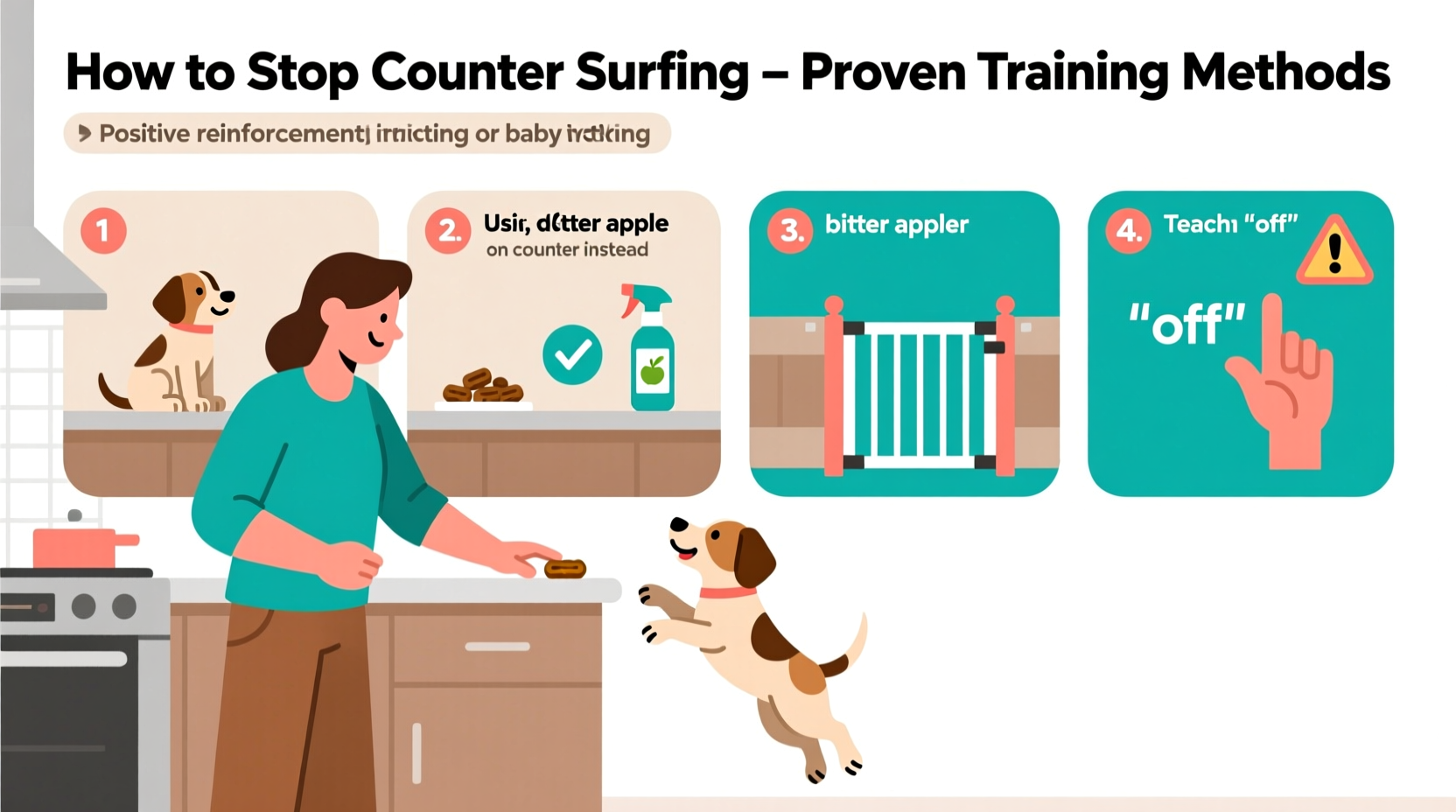
Before addressing the behavior, it's essential to understand what drives it. Dogs don’t counter surf out of spite or malice; they do it because the behavior has been rewarded — even unintentionally. Whether it’s finding a dropped piece of chicken or being chased (which some dogs interpret as play), every successful raid reinforces the action.
Common motivators include:
- Hunger or underfeeding: A dog not receiving enough food may scavenge.
- Boredom or lack of stimulation: Idle dogs seek entertainment, and countertops often hold interesting smells and items.
- Poor management: Leaving food unattended invites temptation.
- Reinforcement history: Even one successful theft can create a lasting habit.
Addressing counter surfing isn't just about punishment — it's about changing the environment, managing opportunities, and teaching alternative behaviors that yield better outcomes for both dog and owner.
Tip: Never leave food unattended on counters, even for “just a minute.” Dogs learn quickly from single events.Step-by-Step Training Plan to Eliminate Counter Surfing
Effective training requires consistency, timing, and patience. Follow this structured timeline to reshape your dog’s behavior over 4–6 weeks.
- Week 1: Management and Prevention
Start by eliminating access. Use baby gates, close kitchen doors, or install motion-activated deterrents (like an air canister). Your goal is to prevent any reinforcement during training. If the dog never succeeds, the behavior loses its appeal.
- Week 2: Teach “Leave It” on Command
Begin training the “leave it” command using low-value items (like a toy), then progress to food on the floor, and eventually on elevated surfaces. Reward compliance with high-value treats delivered from your hand.
- Week 3: Introduce Controlled Temptation
Place a treat on the counter while you supervise. When your dog approaches, say “leave it.” If they obey, reward immediately. If they attempt to take it, calmly remove them and restart. Repeat daily in short sessions.
- Week 4: Add Distractions and Duration
Practice with real food items and introduce distractions (e.g., cooking noises). Gradually increase the time your dog must wait before earning a reward. Build impulse control through delayed gratification.
- Weeks 5–6: Proof the Behavior
Test in real-life scenarios — cooking dinner, setting the table — while maintaining supervision. Use verbal cues and redirect to acceptable activities (like lying on a mat). Fade treats gradually, replacing them with life rewards (e.g., praise, play).
Consistency across all household members is critical. Everyone must respond the same way to prevent mixed signals.
Essential Training Techniques That Work
Several evidence-based methods have been shown to reduce or eliminate counter surfing when applied correctly.
1. Positive Reinforcement of Alternative Behaviors
Reward your dog for being where you want them — such as lying on a mat or staying in another room during meal prep. Use high-value treats initially, then phase in verbal praise and petting. Over time, the dog learns that staying away from the counter leads to better outcomes than sneaking.
2. Environmental Management
Prevention is more effective than correction. Keep counters spotless, store food in cabinets or behind closed doors, and use barriers when unsupervised. Consider automatic deterrents like the Ssscat spray device, which emits a harmless burst of air when triggered by motion.
3. Redirection and Engagement
Give your dog something better to do. Provide puzzle toys, chew bones, or frozen Kongs during times when counter surfing is likely (e.g., dinnertime). Mental stimulation reduces the urge to explore forbidden zones.
4. Negative Punishment (Removal of Reward)
This technique involves removing the incentive without physical or verbal confrontation. For example, if your dog jumps up and you walk away or cover the food, the behavior isn’t reinforced. Avoid yelling, as it may excite some dogs or create fear without solving the root issue.
“Dogs repeat behaviors that work. If stealing food gets results, they’ll keep doing it. Our job is to make the right choice more rewarding than the wrong one.” — Dr. Karen Overall, Veterinary Behaviorist
Do’s and Don’ts of Counter Surfing Correction
| Do’s | Don’ts |
|---|---|
| Supervise closely during high-risk times (meal prep, eating) | Leave food unattended on counters or tables |
| Use baby gates or crate your dog when unable to supervise | Hit, yell at, or physically punish your dog |
| Teach and reinforce the “leave it” and “go to mat” commands | Rely solely on punishment without offering alternatives |
| Keep training sessions short and positive (5–10 minutes) | Expect immediate perfection; behavior change takes time |
| Use motion-activated deterrents as temporary tools | Use shock collars or aversive sprays that cause fear |
Real-Life Example: Fixing Max’s Counter Surfing Habit
Max, a 2-year-old Labrador Retriever, had developed a reputation for stealing entire meals off the kitchen counter. His owners, frustrated and embarrassed, would often come home to overturned bowls and paw prints on the granite. They tried yelling and spraying water, but Max seemed undeterred — sometimes even excited by the chase.
A certified trainer assessed the situation and identified three key issues: Max was under-exercised, left alone in the kitchen unsupervised, and occasionally caught food, reinforcing the behavior. The solution involved a multi-pronged approach:
- Installed a baby gate to block kitchen access when no one was home.
- Started daily obedience training focusing on “leave it” and “place” (stay on a mat).
- Increased Max’s walks and added two 10-minute puzzle toy sessions per day.
- Used a motion-activated air canister as a temporary deterrent.
Within three weeks, Max stopped attempting to jump on counters. By week six, he would automatically go to his mat when the family entered the kitchen. The owners reported a dramatic improvement in overall obedience and a stronger bond with their dog.
Checklist: How to Stop Counter Surfing for Good
Follow this actionable checklist to ensure long-term success:
- ✅ Remove all food from countertops — always.
- ✅ Install physical barriers (gates, doors) when supervision isn’t possible.
- ✅ Train the “leave it” command using progressive difficulty.
- ✅ Teach and reinforce an incompatible behavior (e.g., “go to mat”).
- ✅ Increase mental and physical exercise to reduce boredom.
- ✅ Use temporary deterrents only in conjunction with training.
- ✅ Involve all household members in consistent responses.
- ✅ Monitor progress weekly and adjust strategies as needed.
Frequently Asked Questions
Can older dogs learn not to counter surf?
Yes. While puppies are easier to shape due to fewer established habits, adult and senior dogs can learn new behaviors with consistent training. The key is patience and repetition. Older dogs may take longer, but they often have better impulse control than young, energetic ones.
Is counter surfing a sign of dominance?
No. Modern canine behavior science has largely debunked the idea of dominance-based explanations for everyday misbehavior. Counter surfing is driven by opportunity and reinforcement, not a desire to “take over.” Focusing on leadership hierarchies distracts from effective solutions based on learning theory.
What if my dog only does it when I’m not looking?
This suggests the dog has learned to avoid consequences. Use video monitoring to confirm the behavior and improve management. Since you can’t rely on correction after the fact, prevention becomes even more crucial. Crating or gating during high-risk periods breaks the cycle of reinforcement.
Conclusion: Consistency Is the Key to Success
Stopping counter surfing isn’t about quick fixes or intimidation — it’s about creating a predictable environment where your dog knows exactly what’s expected and is motivated to comply. By combining proper management, clear communication, and positive reinforcement, you can eliminate this behavior for good. Remember, every dog can learn, but they need guidance, patience, and consistency from their humans. Start today by cleaning your counters, teaching a simple command, and setting up your dog for success. Small steps lead to lasting change.
💬 Have a counter surfing story or tip to share? Join the conversation below and help fellow dog owners build safer, happier homes.








