
Dogs bark at the doorbell for a reason—they’re reacting to an unfamiliar sound that signals a potential intruder or visitor. While this behavior is natural, constant barking can be stressful for you, your household, and even your neighbors. The good news is that you don’t need to raise your voice or resort to punishment to correct it. With patience, consistency, and positive reinforcement, you can teach your dog to remain calm when the bell rings. This guide outlines proven, humane methods backed by animal behavior experts to help you achieve lasting results.
Understanding Why Dogs Bark at the Doorbell
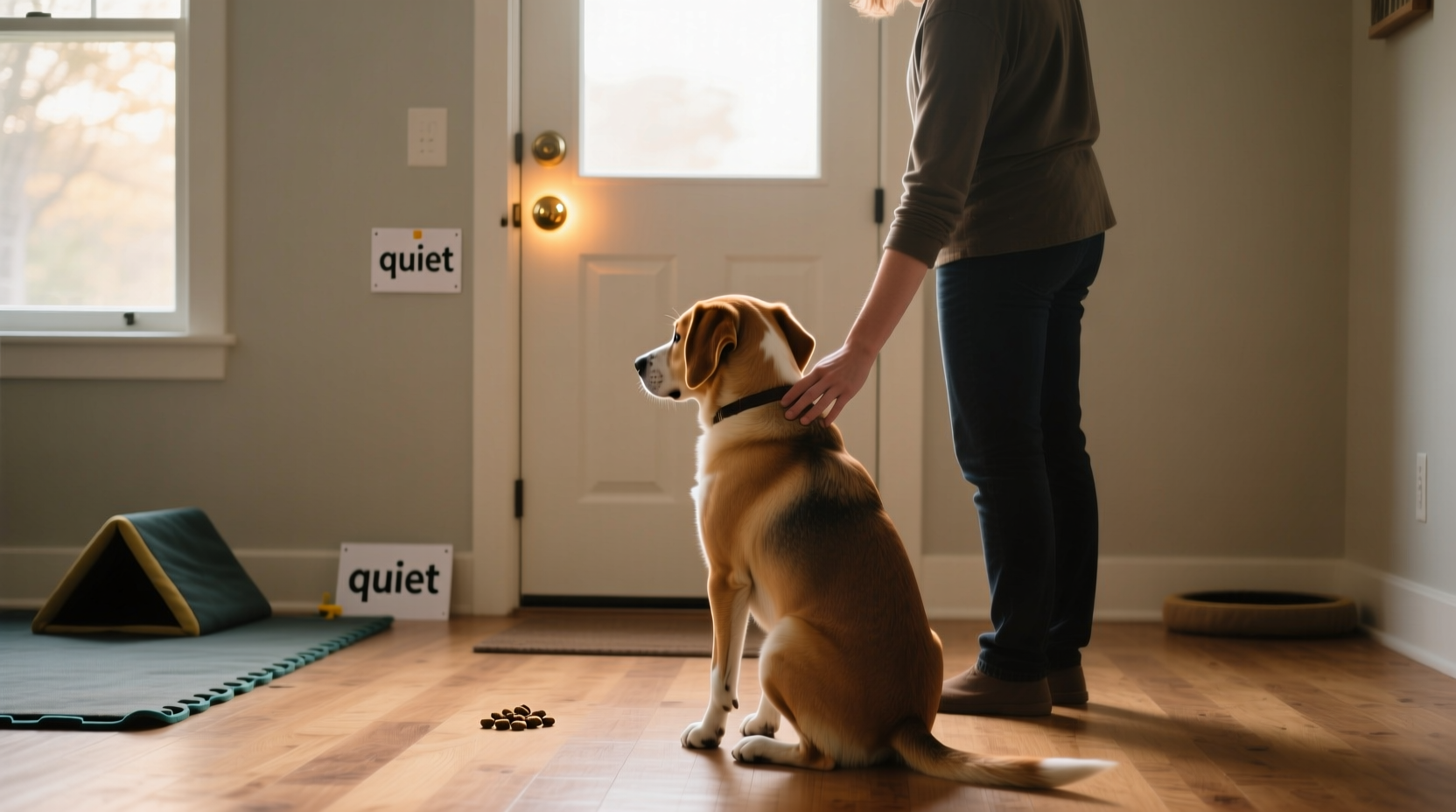
Dog barking isn’t misbehavior—it’s communication. The doorbell is an artificial stimulus most dogs weren’t evolved to process. When it rings, your dog may perceive it as:
- A threat to their territory (protective barking)
- An exciting signal that someone is arriving (attention-seeking or greeting barking)
- A startling noise they haven’t learned to ignore (reactive barking)
Yelling at your dog in response only amplifies the emotional intensity of the moment. To them, your raised voice may sound like you’re joining the alarm rather than calming them down. Over time, this can reinforce the barking instead of reducing it.
“Dogs mirror our emotional state. If you respond to barking with frustration, you’re teaching your dog that the doorbell is worth getting worked up about.” — Dr. Sophia Yin, Veterinarian and Animal Behavior Specialist
Step-by-Step Training Plan to Reduce Doorbell Barking
Changing your dog’s reaction to the doorbell requires reconditioning their association with the sound. Follow this structured plan over several weeks for best results.
- Desensitize to the doorbell sound. Start by playing a recording of a doorbell at a very low volume. Use your phone or a smart speaker. Play it briefly while your dog is relaxed. Reward calm behavior with treats or praise. Repeat multiple times a day, gradually increasing the volume only when your dog shows no reaction.
- Introduce the “quiet” command. When your dog begins to bark during playback, wait for a pause—even a half-second—and say “quiet” in a calm, firm tone. Immediately reward silence with a treat. Never reward barking. Repeat until your dog starts to associate silence after the cue with positive outcomes.
- Add distance and distraction. Have a family member or friend ring the real doorbell while you practice. Keep your dog on a leash initially if needed. When the bell rings, redirect attention with a known command like “sit” or “come.” Reward compliance instantly.
- Practice with real visitors. Once your dog responds reliably indoors, begin incorporating real-life scenarios. Ask guests to wait outside for 30 seconds after ringing. Use that time to reinforce calm behavior before allowing interaction.
- Maintain consistency. Everyone in the household must follow the same rules. Inconsistent responses confuse dogs and slow progress.
Effective Alternatives to Yelling
Yelling damages trust and increases anxiety. Instead, use these science-based alternatives to manage and modify behavior:
- Redirection: Teach your dog an incompatible behavior, such as going to a designated mat or bed when the bell rings. Practice this daily so it becomes automatic.
- Positive interruption: Use a neutral sound like a clicker or kissy noise to interrupt barking gently, then redirect to a command.
- Management tools: Consider using a white noise machine near the door or a doorbell with adjustable volume to reduce auditory triggers.
- Background enrichment: Provide puzzle toys or long-lasting chews to keep your dog mentally occupied when visitors are expected.
The goal isn’t to eliminate barking entirely—your dog has a right to communicate—but to teach self-control and appropriate responses.
Do’s and Don’ts When Training Your Dog
| Do’s | Don’ts |
|---|---|
| Use high-value treats (e.g., chicken, cheese) during training sessions | Scold or shout when your dog barks |
| Keep training sessions short (5–10 minutes) and frequent | Expect immediate results—behavior change takes time |
| Practice daily, even when no visitors are expected | Allow inconsistent reactions from different family members |
| Gradually increase difficulty (volume, real doorbell, visitors) | Punish mid-bark—this often escalates excitement |
| End sessions on a positive note with success | Neglect underlying anxiety—if barking is extreme, consult a professional |
Real-Life Example: Training Max, the Reactive Terrier
Max, a 3-year-old Jack Russell Terrier, would bark uncontrollably every time the doorbell rang—even during delivery drops. His owner, Lisa, tried shouting “No!” and even covering his crate, which only made him more agitated.
She began a desensitization program using a doorbell app. For two weeks, she played the sound at low volume while giving Max boiled liver treats whenever he stayed quiet. She taught him to go to his “spot”—a mat in the living room—and reinforced it with playtime after successful trials.
After three weeks, Max ran to his mat when the real doorbell rang. Within six weeks, he remained seated calmly as guests entered. Lisa never yelled again, and their home became significantly quieter and less stressful.
This case illustrates that even high-energy, alert breeds can learn calm responses with consistent, reward-based training.
Checklist: How to Successfully Train Your Dog
Use this checklist to stay on track during your training journey:
- ☑ Identify your dog’s trigger level (does any chime set them off?)
- ☑ Choose a quiet command word (“quiet,” “enough,” “settle”)
- ☑ Gather high-value treats reserved only for training
- ☑ Set up a controlled environment for initial practice
- ☑ Practice daily with recorded sounds at low volume
- ☑ Gradually increase realism: volume, location, real doorbell
- ☑ Train the “go to spot” behavior as a default response
- ☑ Involve all household members in consistent training
- ☑ Monitor progress weekly and adjust pace as needed
- ☑ Celebrate small wins—each calm moment builds confidence
When to Seek Professional Help
Some dogs have deep-seated anxiety or fear related to strangers or loud noises. Signs that your dog may need professional intervention include:
- Aggressive posturing (lunging, growling) at the door
- Inability to settle even after prolonged training
- Excessive panting, trembling, or pacing when the bell rings
- Barking that escalates over time despite consistent effort
In such cases, consult a certified dog trainer or veterinary behaviorist. They can assess whether underlying issues like noise phobia or territorial anxiety require specialized protocols, including environmental modification or, in rare cases, medication support.
“Behavioral change isn’t about dominance—it’s about clarity. Dogs thrive when they understand what’s expected and are rewarded for getting it right.” — Jean Donaldson, Founder of The Academy for Dog Trainers
Frequently Asked Questions
How long does it take to stop a dog from barking at the doorbell?
Most dogs show improvement within 2–4 weeks of consistent daily training. Full reliability may take 6–8 weeks, depending on the dog’s temperament, age, and prior experiences. Older dogs or those with strong habits may require additional time.
Can I use a shock collar or anti-bark device instead?
No. Devices that deliver aversive stimuli (shock, citronella spray, ultrasonic noise) suppress barking without addressing the root cause. They can increase fear and damage your relationship with your dog. Positive reinforcement is safer, more ethical, and leads to longer-lasting results.
What if my apartment has a shared doorbell I can’t control?
Focus on building a strong “go to mat” or “settle” behavior. Practice regularly with recordings so your dog learns the routine regardless of context. Carry treats when common-area bells ring and reward calmness immediately. Over time, your dog will generalize the behavior to uncontrolled environments.
Conclusion: Build Calmness, Not Fear
Stopping your dog from barking at the doorbell isn’t about silencing them—it’s about guiding them toward better choices. By replacing fear or excitement with calm, rewarded behavior, you strengthen your bond and create a more peaceful home. The key is consistency, patience, and avoiding counterproductive reactions like yelling. Every quiet moment your dog offers is a chance to reinforce progress.
💬 Have a success story or challenge with doorbell barking? Share your experience in the comments below—your insight could help another dog owner find peace at the front door.








