Cats are naturally fastidious animals, so when one begins urinating in its water bowl, it’s a clear sign something is wrong. This behavior isn’t just unsanitary—it can indicate stress, medical issues, or environmental dissatisfaction. Ignoring the problem risks both your cat’s health and household harmony. The good news: with careful observation and targeted interventions, this habit can be corrected. Understanding why cats do this—and responding appropriately—is the first step toward a lasting solution.
Why Cats Pee in Their Water Bowls
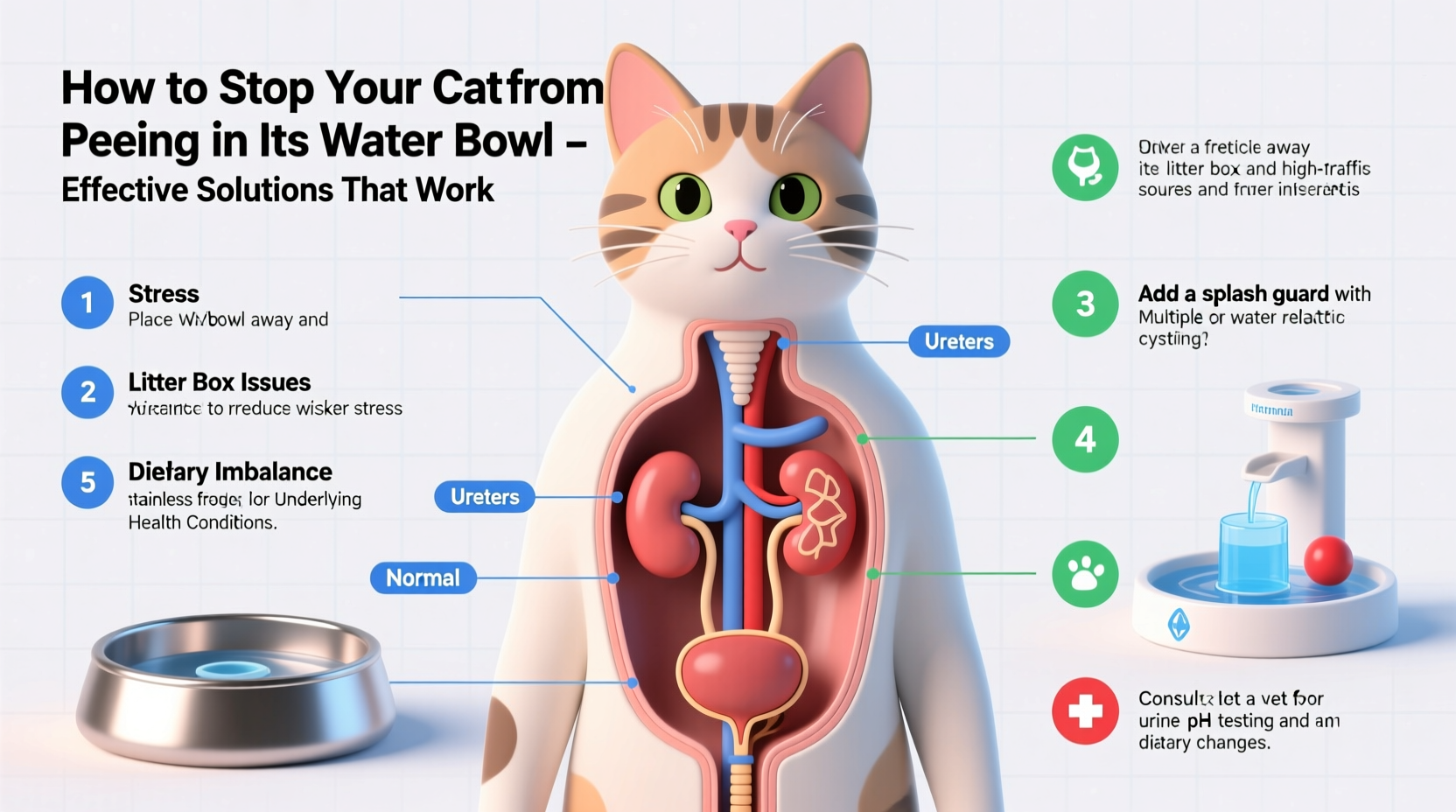
Cats don’t typically urinate in their water bowls out of spite or laziness. Instead, this behavior usually stems from instinctual or psychological triggers. Some of the most common reasons include:
- Stress or anxiety: Changes in environment, new pets, loud noises, or household disruptions can cause territorial marking.
- Medical conditions: Urinary tract infections (UTIs), bladder stones, or kidney disease may lead to inappropriate elimination.
- Competition between cats: In multi-cat homes, dominant cats may mark near resources like food and water to assert control.
- Poor litter box conditions: If the litter box is dirty, inaccessible, or located in a high-traffic area, cats may seek alternative spots.
- Instinctual marking: Even indoor cats retain territorial instincts; peeing near vital resources signals ownership.
It's crucial to rule out medical causes first. A sudden change in elimination habits warrants a veterinary visit.
“Any shift in litter box behavior should be evaluated by a veterinarian. Conditions like feline lower urinary tract disease (FLUTD) are painful and potentially life-threatening.” — Dr. Lena Torres, DVM, Feline Behavior Specialist
Step-by-Step Guide to Stop the Behavior
Resolving this issue requires patience and a structured approach. Follow these steps methodically to identify and eliminate the root cause.
- Schedule a veterinary check-up: Rule out infections, diabetes, or kidney problems through urine analysis and physical examination.
- Separate water and food zones from litter areas: Cats instinctively avoid eliminating near eating and drinking spaces. Ensure at least 6–8 feet between the litter box and water bowl.
- Add additional water stations: Place clean water bowls in different rooms. Use wide, shallow bowls to prevent whisker stress.
- Introduce multiple litter boxes: Follow the “n+1” rule—one box per cat, plus one extra. Position them in quiet, low-traffic areas.
- Deep-clean affected areas: Use enzymatic cleaners to remove urine odor from the water bowl and surrounding surfaces. Avoid ammonia-based products, which mimic urine scent.
- Monitor interactions in multi-cat households: Observe for signs of bullying or resource guarding. Separate cats temporarily if needed.
- Reduce stressors: Maintain routine, provide hiding spots, and use pheromone diffusers like Feliway to calm anxious cats.
Do’s and Don’ts: What to Avoid When Addressing the Issue
| Do’s | Don’ts |
|---|---|
| ✔ Clean the water bowl daily with hot, soapy water | ✘ Punish or scold your cat—this increases stress and worsens marking |
| ✔ Provide fresh, flowing water with a pet fountain | ✘ Move the litter box too frequently—cats need consistency |
| ✔ Use unscented, clumping litter preferred by your cat | ✘ Use bleach or strong-smelling cleaners near litter or water areas |
| ✔ Rotate litter box locations gradually if needed | ✘ Assume the cat is being “spiteful”—behavior has a cause |
Real Example: Solving the Problem in a Multi-Cat Home
Sarah, a cat owner in Portland, noticed her youngest cat, Milo, began urinating in the kitchen water bowl. She initially thought it was a behavioral quirk, but after two weeks and no improvement, she consulted her vet. Tests revealed no medical issues. Observing closely, Sarah realized her older cat, Luna, had started blocking access to one of the litter boxes, cornering it near the laundry room where Milo felt exposed.
Following her vet’s advice, Sarah added a second litter box on the main floor, away from high noise. She also installed a cat water fountain in the living room, far from any litter area. Within ten days, Milo stopped using the water bowl for urination. The key was addressing social hierarchy and providing secure alternatives.
Effective Tips to Prevent Recurrence
Once the immediate issue is resolved, long-term prevention ensures peace of mind. Consider these proven strategies:
- Use automatic water dispensers: These keep water fresh and reduce the chance of contamination, making the bowl less appealing for other uses.
- Install litter box enclosures: For homes with limited space, covered or furniture-style boxes offer privacy without sacrificing accessibility.
- Rotate cleaning schedules: Clean litter boxes daily, replace litter weekly, and deep-wash boxes monthly.
- Observe drinking habits: If your cat avoids the water bowl entirely, consider underlying aversions such as reflections, depth, or nearby appliances.
FAQ: Common Questions About Cats Peeing in Water Bowls
Is my cat doing this on purpose?
No. Cats don’t act out of revenge. Inappropriate urination is a symptom of discomfort, fear, or illness. Labeling it as “bad behavior” delays effective treatment.
How long does it take to fix this problem?
With correct diagnosis and consistent intervention, most cases improve within 2–4 weeks. Chronic stress or unresolved medical issues may extend the timeline.
Should I confine my cat to one room temporarily?
In some cases, yes. Temporary confinement with all essentials—litter box, food, water, toys—in one calm space can help retrain habits. Gradually reintroduce access to other areas once behavior stabilizes.
Final Checklist: Action Plan for Cat Owners
- ✅ Schedule a vet visit to rule out medical causes
- ✅ Separate water and litter zones by at least 6 feet
- ✅ Add one extra litter box (follow n+1 rule)
- ✅ Clean water bowls daily with non-toxic soap
- ✅ Use enzymatic cleaner on previously soiled areas
- ✅ Monitor cat interactions and reduce household stress
- ✅ Consider a cat water fountain to encourage proper hydration
- ✅ Reassess litter type, location, and cleanliness weekly
Conclusion: Take Action with Confidence
Stopping your cat from peeing in its water bowl isn’t about punishment—it’s about understanding. Whether the cause is medical, environmental, or social, solutions exist. By approaching the issue with empathy and consistency, you restore not only hygiene but also trust between you and your pet. Start with a vet visit, implement strategic changes, and remain observant. Your cat relies on you to create a safe, predictable world. With the right steps, this problem can become a thing of the past.
💬 Have you successfully resolved this issue? Share your story in the comments—your experience could help another cat owner regain peace at home.








