Cats are naturally curious, agile, and intelligent animals. Their instinct to explore, manipulate objects, and test their environment often leads to behaviors that frustrate owners—especially when prized vases, photo frames, or coffee mugs end up shattered on the floor. While it’s tempting to scold or punish a cat for knocking items off shelves, such reactions rarely work and can damage the human-animal bond. Instead, understanding the root causes through the lens of behavior science offers more effective, lasting solutions.
This article explores the psychological and environmental drivers behind this common feline habit and provides practical, evidence-based strategies to redirect the behavior. By applying principles of operant conditioning, environmental enrichment, and species-appropriate stimulation, you can create a home where your cat feels fulfilled—without the collateral damage.
Why Cats Knock Things Off Shelves: The Science Behind the Behavior
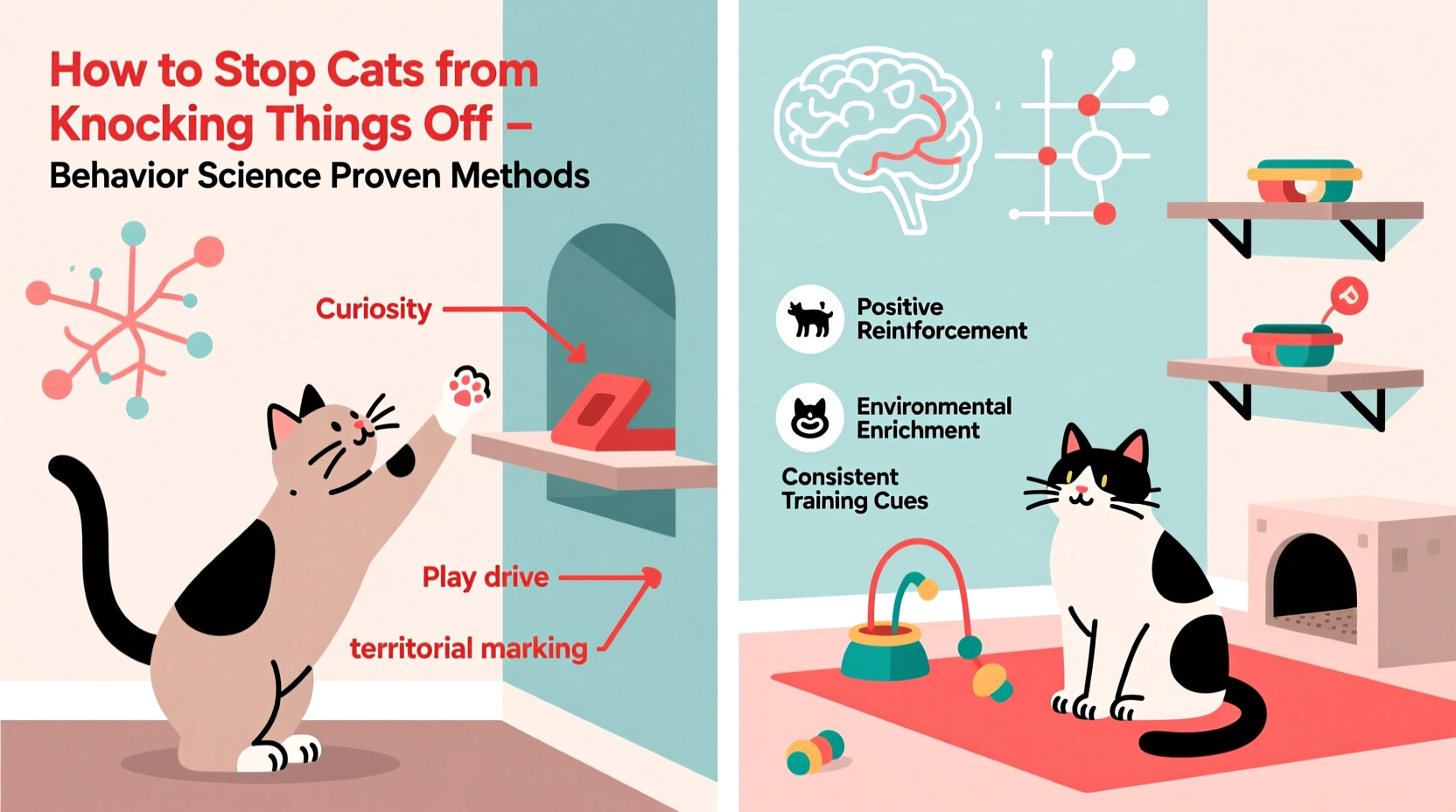
The act of swatting objects off elevated surfaces is not random mischief. It stems from deeply ingrained instincts and cognitive patterns. In the wild, cats use their paws to investigate, hunt, and manipulate prey. When a domestic cat bats at a pen or nudges a candle off a shelf, it’s engaging in what ethologists call “investigative play”—a way to assess movement, texture, and consequence.
Behavioral studies show that cats are highly sensitive to cause-and-effect relationships. A falling object produces sound, motion, and often human reaction—all of which can reinforce the behavior. Even negative attention (like yelling) can serve as a reward if it satisfies the cat’s need for interaction.
Dr. Karen Overall, a leading veterinary behaviorist, explains:
“Cats don’t knock things over to annoy us. They do it because the outcome is interesting. Our response—any response—can unintentionally teach them that this is a successful way to get attention or stimulation.” — Dr. Karen Overall, DACVB, Veterinary Behavioral Medicine Specialist
Other contributing factors include boredom, lack of predatory outlets, and under-stimulating environments. Indoor cats, in particular, may resort to shelf-knocking as a form of self-entertainment when natural hunting behaviors go unmet.
Step-by-Step Guide to Reducing Shelf-Knocking Behavior
Changing feline behavior requires consistency, patience, and an understanding of reinforcement dynamics. Follow this six-step approach grounded in applied behavior analysis:
- Assess the Environment: Identify high-risk zones—shelves, counters, window sills—with tempting objects. Note when and where incidents occur most frequently.
- Remove Reinforcement: Stop reacting emotionally. Avoid yelling, chasing, or even making eye contact immediately after the behavior. Neutral responses prevent accidental reward.
- Modify the Space: Secure loose items. Use museum putty, non-slip mats, or anchored displays to stabilize objects. Rearrange shelves to reduce temptation.
- Provide Alternative Outlets: Introduce puzzle feeders, interactive toys, and scheduled play sessions that mimic hunting sequences (stalk, chase, pounce, kill).
- Reinforce Desired Behaviors: Reward your cat with treats or affection when they engage with appropriate toys or stay calm near shelves.
- Monitor and Adjust: Track progress weekly. If the behavior persists, reassess triggers and consider underlying stressors like anxiety or territorial competition.
Environmental Enrichment: Meeting Your Cat’s Natural Needs
A well-enriched environment reduces problem behaviors by satisfying a cat’s biological drives. According to the American Association of Feline Practitioners, indoor cats require daily opportunities for hunting, climbing, scratching, and observing their surroundings.
Consider these enrichment strategies:
- Hunting Simulations: Use wand toys with feathers or faux fur to mimic prey movement. Engage in 10–15 minute sessions twice daily.
- Vertical Space: Install cat shelves, perches, or cat trees near windows. Elevation satisfies territorial instincts and reduces ground-level mischief.
- Scent Rotation: Introduce new scents (cat-safe herbs like silver vine or valerian root) to stimulate curiosity away from household objects.
- Food Puzzles: Replace meals with foraging toys that require manipulation. This redirects paw-swiping toward productive tasks.
- Novel Objects: Rotate toys weekly to maintain interest. Simple items like crumpled paper balls or cardboard tubes can be highly engaging.
Enrichment isn’t just about distraction—it’s about replacing unwanted behaviors with species-appropriate alternatives that fulfill the same psychological function.
Do’s and Don’ts: A Practical Comparison Table
| Do’s | Don’ts |
|---|---|
| Use double-sided tape or aluminum foil on shelves to deter stepping | Yell at or chase your cat after knocking something down |
| Anchor valuable items with adhesive putty or secure stands | Leave tempting objects (bottles, pens, ornaments) within paw reach |
| Engage in structured play before peak activity times (dawn/dusk) | Rely solely on punishment or aversive tools like air sprays |
| Clicker-train your cat to target or sit near shelves | Ignore signs of stress or overstimulation (flattened ears, tail flicking) |
| Offer vertical escape routes and hiding spots | Assume the behavior will “grow out” without intervention |
Real Example: How One Household Reduced Shelf-Knocking by 90%
Sarah, a pet owner in Portland, struggled with her two-year-old tabby, Milo, who consistently knocked over candles, books, and even a small lamp. After breaking three decorative items in one month, she consulted a certified animal behavior consultant.
The assessment revealed key issues: Milo had no scheduled playtime, his food was always in a bowl, and he spent hours alone while Sarah worked. His shelf-knocking occurred mostly in the evening—coinciding with peak feline activity.
The consultant recommended:
- Daily 15-minute wand toy sessions before dinner
- Replacing free-feeding with three meal-based puzzle toys
- Installing a wall-mounted cat walk above the living room shelves
- Removing all breakable items from ledges
Within four weeks, shelf-knocking incidents dropped from nearly daily to once every two weeks. By week eight, they stopped entirely. Sarah reported that Milo seemed more relaxed and engaged during family time.
This case illustrates how addressing underlying motivational needs—not just managing symptoms—leads to sustainable change.
Checklist: Action Plan to Prevent Shelf-Knocking
Use this checklist to systematically address and prevent unwanted behavior:
- ✅ Remove or secure breakable and tempting items from shelves and counters
- ✅ Introduce at least one interactive play session per day using a wand toy
- ✅ Replace at least one meal with a food puzzle or hide kibble around the house
- ✅ Install cat shelves, perches, or climbing structures to redirect jumping behavior
- ✅ Practice neutral responses when accidents occur—no yelling or dramatic reactions
- ✅ Use deterrents like double-sided tape or aluminum foil on restricted surfaces (temporary measure)
- ✅ Monitor behavior weekly and adjust enrichment as needed
- ✅ Consult a veterinary behaviorist if the behavior escalates or appears compulsive
Frequently Asked Questions
Is my cat doing this to get attention?
Possibly. Even negative attention—such as shouting or rushing to clean up—can reinforce the behavior. Cats learn quickly that knocking things down produces a reaction. To counter this, practice calm disengagement and instead offer attention during quiet, positive interactions.
Can I train my cat not to jump on shelves?
You can’t eliminate jumping—it’s a natural feline behavior—but you can redirect it. Provide acceptable alternatives (e.g., cat trees, wall shelves) and make restricted areas less appealing using temporary deterrents. Training should focus on reinforcing desired choices, not suppressing natural movement.
Will neutering or spaying stop this behavior?
While spaying or neutering can reduce general hyperactivity and roaming, it won’t directly stop shelf-knocking unless the behavior is linked to hormonal-driven restlessness. Most cases are related to environmental and behavioral factors, not reproductive status.
Conclusion: Building a Harmonious Home Through Understanding
Stopping your cat from knocking things off shelves isn’t about dominance or discipline—it’s about empathy and strategy. When we view this behavior through the lens of feline psychology, we shift from frustration to problem-solving. Cats aren’t trying to destroy our homes; they’re trying to survive and thrive in environments that often fail to meet their evolutionary needs.
By applying behavior science—removing unintended rewards, enriching the environment, and providing appropriate outlets—you create a home where both you and your cat can coexist peacefully. The goal isn’t perfection but progress: fewer broken items, reduced stress, and a deeper bond built on mutual understanding.
💬 Have a success story or challenge with shelf-knocking? Share your experience in the comments—your insight could help another cat owner find a solution.








