
Dogs barking at delivery personnel is one of the most common household challenges for pet owners. While it's natural for dogs to alert their families to strangers approaching the home, excessive or aggressive barking can create tension, disturb neighbors, and even escalate into behavioral issues. Many owners turn to traditional training techniques that rely on correction or repetition, but these often increase anxiety in sensitive dogs. The good news? You don’t need to resort to stressful training to achieve results. By understanding canine behavior and using environmental management, subtle conditioning, and proactive strategies, you can significantly reduce or eliminate unwanted barking—all while keeping your dog calm and confident.
Understanding Why Dogs Bark at Delivery People
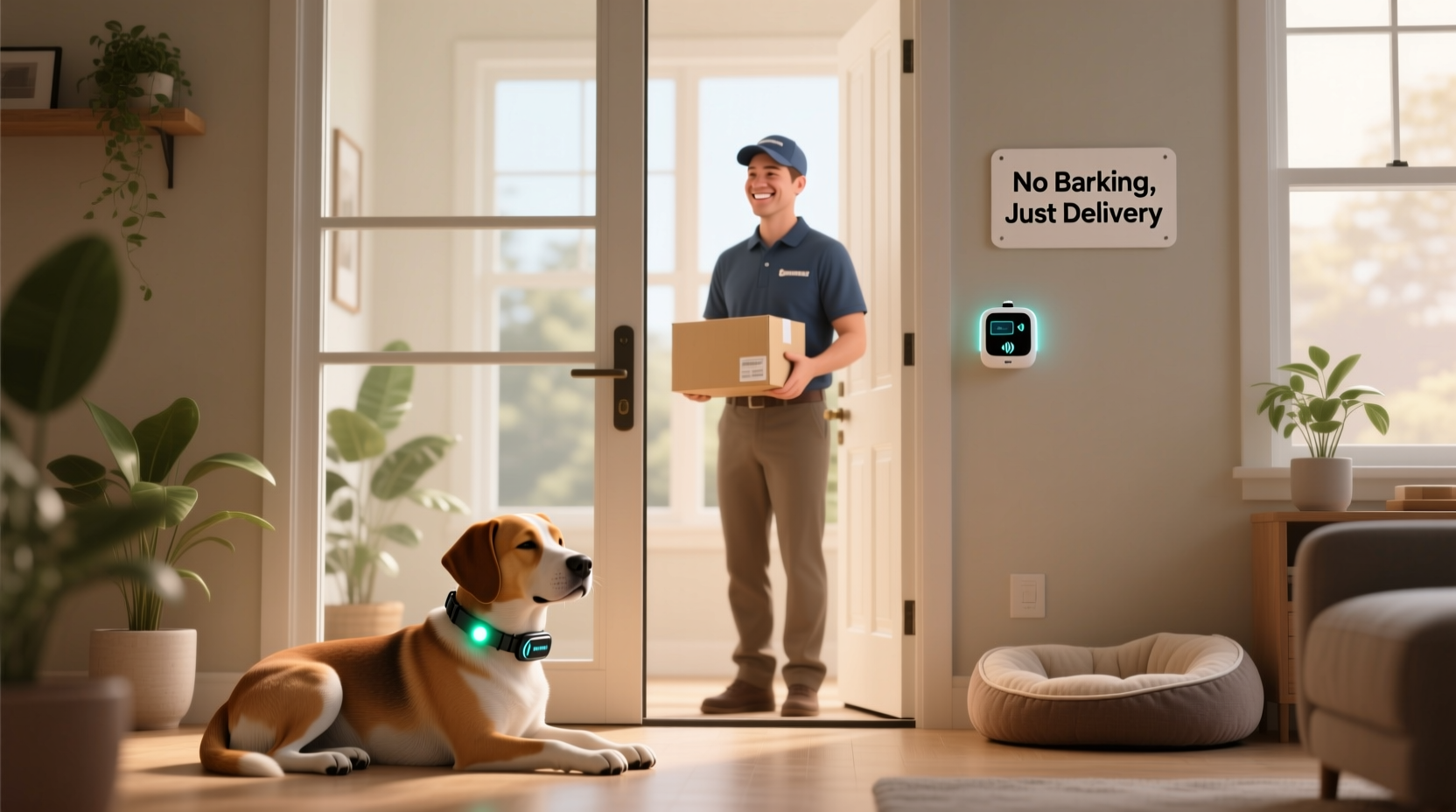
Barking at delivery drivers isn't defiance—it's communication. Dogs are territorial by instinct. When someone approaches the front door or walks near property boundaries, your dog interprets this as a potential threat to their space or family. This triggers an alert response: barking. In many cases, the behavior is reinforced unintentionally. Every time the person leaves after the dog barks, the dog perceives the barking as successful in \"chasing away\" the intruder. Over time, this becomes a learned pattern.
Additionally, the predictability of deliveries—especially during certain times of day—can condition dogs to expect and react to these events. Unlike visitors who enter the home, delivery people leave quickly, reinforcing the idea that barking works. This cycle doesn’t require “aggression” to persist; even friendly, excitable dogs may bark out of arousal rather than fear.
“Dogs aren’t trying to be difficult—they’re responding to what they perceive as a duty. The key is not to suppress the behavior through force, but to change the context so the dog no longer feels the need to act.” — Dr. Lena Patel, Certified Applied Animal Behaviorist
Environmental Adjustments to Reduce Triggers
One of the most effective—and least stressful—ways to prevent barking is to minimize exposure to the trigger. Since you can’t control when deliveries arrive, managing your dog’s environment is essential.
Block Visual Access
Dogs often begin barking the moment they see movement outside. Curtains, blinds, or opaque window film applied to lower sections of windows can prevent your dog from seeing passersby while still allowing light inside. For sliding glass doors or large picture windows, consider installing temporary barriers like room dividers or baby gates in front of the view.
Tip: Use frosted vinyl window decals to block sightlines at dog-eye level without darkening the entire room.Create a Quiet Zone
Designate a calm area of the house where your dog can retreat during high-traffic times. This space should be comfortable, familiar, and free from external stimuli. Equip it with a bed, water, chew toys, and perhaps a piece of clothing with your scent. When deliveries are expected, gently guide your dog to this zone before the person arrives.
This isn’t confinement—it’s redirection. Think of it as giving your dog a peaceful alternative instead of placing them in a situation where they feel compelled to react.
Use Background Noise
White noise machines, fans, or soft music can help mask outdoor sounds. A study published in *Applied Animal Behaviour Science* found that ambient sound reduced reactivity in dogs exposed to street noise by up to 40%. Play calming playlists designed for dogs during typical delivery hours (usually 10 a.m. to 3 p.m.) to create a buffer between your pet and the outside world.
Non-Training Behavioral Conditioning Techniques
You don’t need formal obedience drills to shift your dog’s emotional response. Subtle, consistent routines can reshape how your dog experiences deliveries—without commands or corrections.
The Treat Association Method
This technique leverages classical conditioning: pairing the arrival of a delivery person with something positive, like a treat or toy. Here’s how it works:
- When you hear a delivery vehicle pull up, quietly offer your dog a high-value treat (e.g., freeze-dried liver, cheese, or peanut butter on a spoon).
- Continue offering treats throughout the delivery, even if your dog is barking initially.
- Stop the treat session once the person leaves.
Repeat consistently. Over time, your dog begins to associate the presence of delivery people with rewards—not threats. The emotional shift reduces arousal and, consequently, barking.
Tip: Use soft, fast-to-consume treats to keep the association tight. Avoid kibble or dry biscuits that take too long to eat.Redirect with Engaging Activities
Instead of focusing on stopping the bark, redirect your dog’s energy toward a competing behavior. Long-lasting chews like bully sticks, stuffed Kongs, or snuffle mats placed during delivery hours give your dog a constructive outlet. A dog focused on licking or chewing is far less likely to bark.
This method works especially well for high-energy breeds or dogs prone to boredom. Rotate puzzle toys weekly to maintain interest and prevent habituation.
Practical Solutions: Tools and Technology
Modern tools can support your efforts without causing distress to your pet. These aren’t substitutes for behavioral care—but when used wisely, they enhance effectiveness.
| Solution | How It Helps | Considerations |
|---|---|---|
| Smart Doorbell Cameras | Alert you in advance so you can redirect your dog before the knock | Requires Wi-Fi and app setup |
| Automatic Treat Dispensers | Release treats remotely when delivery arrives | Best paired with supervision initially |
| Ultrasonic Deterrents (non-shocking) | Emits high-frequency sound to interrupt barking | Use sparingly; not a long-term fix |
| Indoor Privacy Film | Blocks line of sight without blocking light | Inexpensive and removable |
Pairing technology with behavioral strategies creates a layered defense. For example, use a doorbell camera to anticipate arrivals, then activate a treat dispenser while guiding your dog to a distraction toy. Over weeks, this routine becomes self-reinforcing.
Mini Case Study: Reducing Barking in a Reactive Beagle
Sarah, a homeowner in Portland, struggled with her beagle, Milo, who would bark intensely every time a package arrived. The noise disturbed her neighbors, and Milo became visibly agitated—panting, pacing, and refusing treats during episodes. Concerned about worsening anxiety, Sarah avoided traditional bark collars or scolding.
She implemented a three-step approach:
- Installed frosted window film on her front door sidelights.
- Set up a smart doorbell to receive phone alerts 30 seconds before anyone rang.
- Prepared a “delivery kit”: a frozen peanut butter-stuffed Kong and a quiet back bedroom with a fan for white noise.
Each time a delivery came, she calmly led Milo to the back room and gave him the Kong. At first, he whined and tried to return to the front, but within two weeks, he began anticipating the treat-filled toy. After four weeks, barking dropped by over 90%. Today, Milo goes to his room voluntarily when he hears the doorbell chime—even without prompting.
No formal training was used. Instead, Sarah changed the context, removed the visual trigger, and replaced the barking impulse with a rewarding alternative.
Action Checklist: Stop Barking Without Stress
Follow this practical checklist to implement a low-stress solution in your home:
- ✅ Install window coverings or films to block views of the driveway or porch.
- ✅ Identify a quiet, secure area in your home as a “calm zone” for your dog.
- ✅ Stock high-value treats and long-lasting chews for delivery-time distractions.
- ✅ Set up a smart doorbell or delivery notification system to get advance warning.
- ✅ Begin the treat association method: reward calmness or curiosity when deliveries occur.
- ✅ Use background noise (fan, music, white noise) during peak delivery hours.
- ✅ Rotate enrichment toys weekly to maintain engagement.
- ✅ Monitor progress and adjust tactics if needed—consistency is key.
Common Mistakes to Avoid
Even with good intentions, some actions can worsen the problem:
- Yelling at your dog to stop barking: This increases household tension and may teach your dog that loud noises = more excitement.
- Using shock or spray collars: These cause fear and can damage trust. They suppress symptoms without addressing the root cause.
- Leaving your dog unsupervised at the front window: Repeated exposure without intervention strengthens the barking habit.
- Expecting immediate results: Behavioral shifts take time. Aim for gradual improvement, not perfection.
Remember: your dog isn’t misbehaving. They’re doing what comes naturally. Your role is to guide them toward a calmer response—not punish them for being a dog.
Frequently Asked Questions
Can I stop my dog from barking without any training at all?
Yes. While formal training can help, many dogs respond well to environmental changes and positive associations. Blocking sightlines, using distractions, and creating quiet zones can significantly reduce or eliminate barking without a single command.
What if my dog is already barking when I notice the delivery person?
Stay calm. Avoid yelling. Instead, call your dog in a cheerful tone and immediately offer a treat or toy. Redirect their focus rather than confronting the bark. Over time, this builds a new habit: hearing the door means fun things happen.
Are bark-deterrent devices safe to use?
Some are safer than others. Devices that emit ultrasonic sounds or vibrations are generally non-invasive and don’t cause pain. However, they should be used as a supplement—not a primary solution—and only after trying gentler methods. Avoid shock collars entirely, as they can lead to fear-based aggression.
Conclusion: Peaceful Coexistence Is Possible
Stopping your dog from barking at delivery people doesn’t require strict discipline or hours of repetitive training. By understanding your dog’s instincts and adjusting their environment, you can create lasting change without stress. Focus on prevention, redirection, and positive reinforcement. Small, consistent actions—like blocking a window or offering a treat during a delivery—add up to big improvements over time.
Your goal isn’t silence—it’s harmony. A dog who feels secure and engaged won’t feel the need to guard constantly. With patience and empathy, you can protect your peace, respect your dog’s nature, and maintain good relations with delivery workers and neighbors alike.
💬 Have a success story or tip for reducing dog barking? Share your experience in the comments—your insight could help another pet owner find calm.








