
Allowing your dog to roam freely in designated public spaces is a privilege that comes with responsibility. Off-leash permits are designed to ensure that only well-behaved, trained dogs enjoy the freedom of open spaces without compromising public safety or disturbing others. Securing one requires preparation, proof of obedience, and adherence to local regulations. This guide walks you through every stage of obtaining an off-leash dog permit, offering practical advice for responsible pet owners who want to make the process smooth and successful.
Understand What an Off-Leash Permit Is and Why It Matters
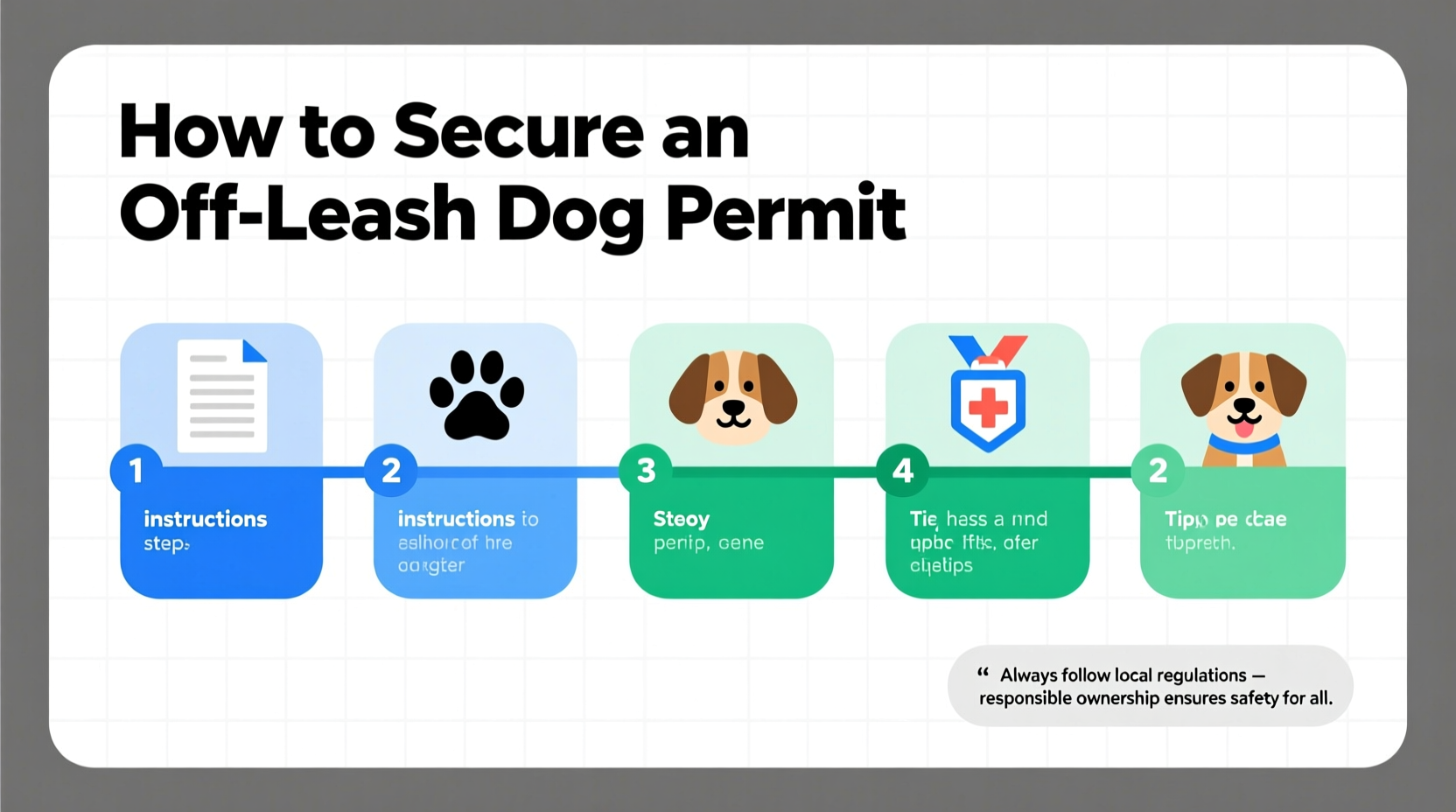
An off-leash permit grants your dog permission to be off the leash in specific public areas such as city parks, nature trails, or designated dog zones. Unlike general park access, these permits are not automatic—they require verification that your dog is under reliable voice control and poses no threat to people, animals, or the environment.
Municipalities issue these permits to balance animal freedom with community safety. Without proper regulation, off-leash dogs can chase wildlife, intimidate other pets, or create hazards for children and pedestrians. A permit signals that you, as a pet owner, have taken the necessary steps to ensure your dog behaves responsibly in shared outdoor environments.
“Off-leash doesn’t mean uncontrolled. A truly obedient dog responds to commands even in distracting environments.” — Dr. Lena Torres, Certified Canine Behaviorist
Step-by-Step Guide to Securing Your Permit
The process varies slightly depending on your city or county, but most jurisdictions follow a similar framework. Here’s a universal 7-step approach:
- Research Local Regulations: Visit your city or county parks department website. Search for “off-leash dog permit” or “dog park rules.” Note application deadlines, required documentation, and any fees.
- Verify Eligibility Requirements: Most programs require your dog to be spayed/neutered, vaccinated (including rabies), microchipped, and licensed. Some exclude aggressive breeds or dogs under six months old.
- Enroll in Obedience Training: Even if your dog listens at home, urban distractions test reliability. Enroll in a certified basic or advanced obedience course focusing on recall, sit-stay, and leave-it commands.
- Practice Real-World Skills: Take training into public spaces on-leash first. Practice calling your dog away from squirrels, cyclists, or other dogs. Build consistency over several weeks.
- Schedule a Behavioral Evaluation: Many cities require a temperament test conducted by a certified trainer or animal control officer. The assessment checks responsiveness, aggression, and social behavior.
- Submit Application and Documentation: Complete the official form, attach proof of vaccinations, license, and training completion certificate. Pay any applicable fee—typically between $20 and $50 annually.
- Await Approval and Receive Permit: Processing takes 1–3 weeks. Once approved, you’ll receive a tag or card to carry when visiting off-leash zones.
Essential Training Checklist Before Applying
Passing the behavioral evaluation hinges on consistent performance. Use this checklist to assess your dog’s readiness:
- ✅ Responds reliably to “come” even with distractions (e.g., birds, other dogs)
- ✅ Stays in “sit” or “down” until released, even when approached by strangers
- ✅ Walks calmly beside you without pulling toward other animals
- ✅ Leaves food, toys, or objects on command (“leave it”)
- ✅ Shows no signs of fear, aggression, or over-excitement around unfamiliar dogs
- ✅ Returns immediately when called during outdoor practice sessions
- ✅ Wears ID tags and is visibly identifiable at all times
If your dog struggles with more than one item, consider additional training before applying. Rushing the process risks rejection and could set back your dog’s confidence.
Common Requirements Across U.S. Cities – Comparison Table
| City/County | Vaccination Proof | Spay/Neuter Required | Obedience Certificate | Evaluation Test | Annual Fee |
|---|---|---|---|---|---|
| Denver, CO | Yes | Yes | Recommended | Yes | $38 |
| Portland, OR | Yes | Yes | Required | Yes | $25 |
| Austin, TX | Yes | No | Not required | Yes | $40 |
| Seattle, WA | Yes | Yes | Required | Yes | $32 |
| Chattanooga, TN | Yes | No | Recommended | No | $20 |
Note: Always verify current requirements directly with your local authority. Policies change, and some rural counties may not offer permits at all.
Real Example: How Sarah Successfully Obtained Her Permit
Sarah, a dog owner in Portland, spent three months preparing her two-year-old Border Collie, Luna, for the off-leash permit process. Though Luna was intelligent and energetic, she would chase squirrels and ignore recall near other dogs.
Sarah enrolled in an eight-week advanced obedience class focused on off-leash reliability. She practiced daily in low-distraction areas, gradually increasing complexity. By week six, Luna responded consistently to voice commands in busy parks.
She submitted her application with proof of Luna’s rabies and distemper vaccines, city dog license, and a certificate from the training program. After passing a 20-minute field evaluation—where Luna ignored passing cyclists and returned instantly on command—Sarah received her permit within ten days.
Today, Luna enjoys off-leash time at Mount Tabor Dog Park, and Sarah feels confident knowing her preparation paid off in safety and community trust.
Frequently Asked Questions
Can I apply for a permit if my dog isn’t spayed or neutered?
In many cities, spaying or neutering is mandatory for off-leash permits. Exceptions are rare and typically limited to medical reasons with veterinary documentation. Check your local ordinance—unfixed dogs may be restricted to fenced areas only.
What happens if my dog fails the behavioral evaluation?
You’re usually allowed to retest after 30–60 days. Use the feedback from evaluators to focus training on weak areas. Some cities offer remedial workshops to help owners improve their dog’s performance.
Do I need to carry the permit while walking my dog?
Yes. Most jurisdictions require you to carry your permit or have the tag visible on your dog’s collar. Park rangers or animal control officers may ask to see it during patrols. Failure to present it can result in fines or suspension of privileges.
Final Steps and Responsibilities After Approval
Earning the permit is just the beginning. Responsible off-leash use means adhering to ongoing expectations:
- Always clean up after your dog—carry waste bags at all times.
- Yield to leashed dogs and give them space.
- End play sessions if your dog shows signs of fatigue or overstimulation.
- Leave the area immediately if another dog or person feels uncomfortable.
- Renew your permit annually with updated vaccination records.
Remember, your actions reflect on all off-leash dog owners. One incident involving a poorly behaved dog can lead to stricter rules or closures of beloved dog parks.
Take Action Today: Be Part of the Solution
Securing an off-leash dog permit isn’t just about convenience—it’s a commitment to being a model pet owner. With thoughtful preparation, consistent training, and respect for community guidelines, you can enjoy the freedom of open spaces while keeping parks safe and welcoming for everyone.
Start by checking your city’s parks department website today. Download the application, schedule a training session, and begin building the skills that will make both you and your dog proud. The path to off-leash freedom begins with responsibility—and you’re already on it.
💬 Have questions about your local permit process? Share your experience or ask for advice in the comments—help fellow dog owners navigate the system with confidence.








