Bringing a new kitten into a home with established adult cats can be both exciting and delicate. While kittens are often seen as playful and adaptable, older cats may view them as intruders disrupting their territory and routine. A rushed or poorly managed introduction can lead to lasting tension, fear-based aggression, or even physical fights. However, with patience, structure, and attention to feline behavior, most households can achieve peaceful coexistence — and sometimes, genuine companionship — between cats of different ages.
Cats are territorial animals by nature. Their sense of safety depends heavily on familiarity: the smell of their space, control over resources, and predictable social dynamics. Introducing a new kitten threatens these foundations. The key is not to rush integration but to rebuild trust gradually, allowing all cats to adjust at their own pace. This process isn’t just about preventing conflict — it’s about creating long-term harmony.
Understanding Feline Social Dynamics
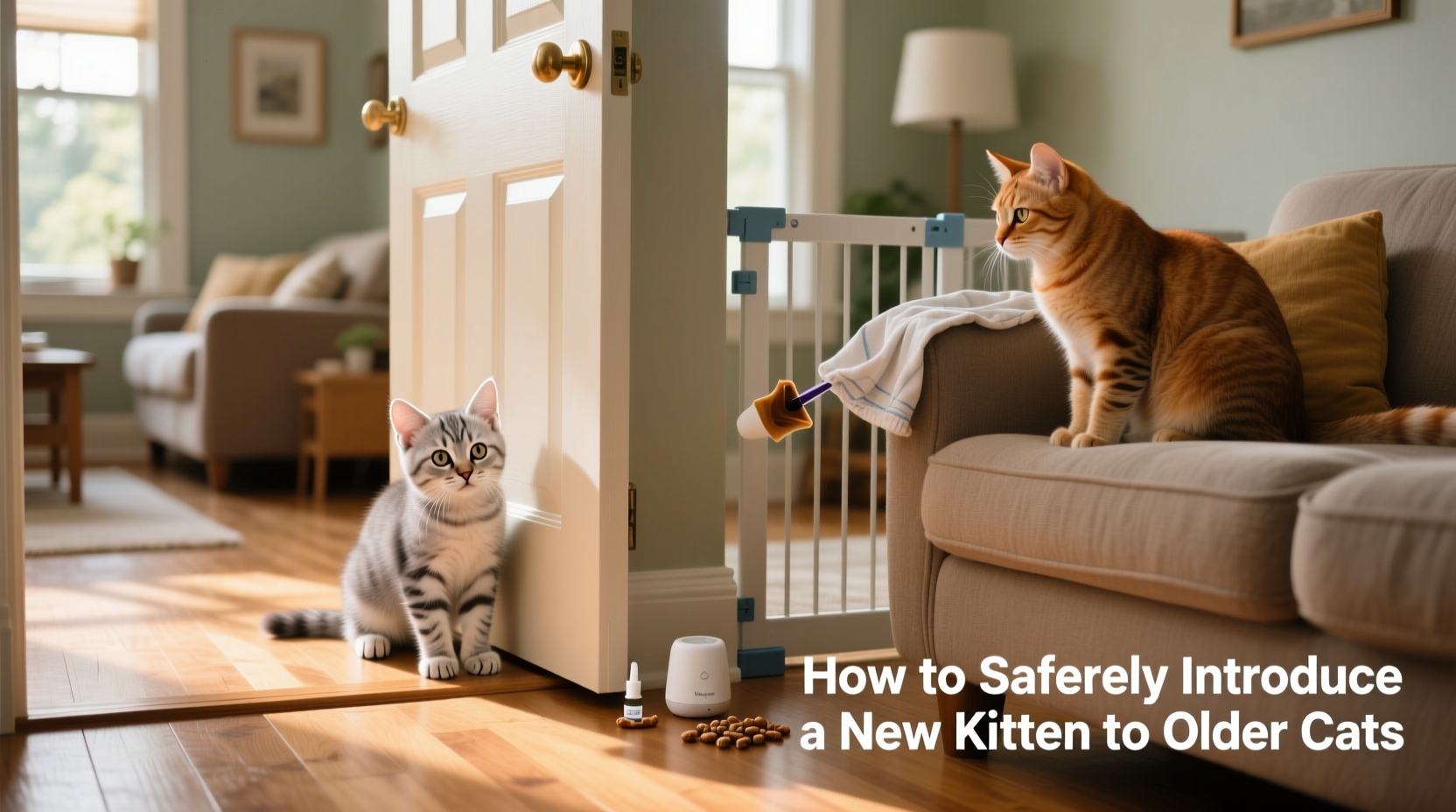
Cats don’t form social groups the way dogs do. In the wild, adult cats are largely solitary, only coming together for mating or raising young. Even in multi-cat homes, relationships are based on tolerance rather than affection. When a kitten arrives, older cats may react based on instinct: some tolerate youthful energy, while others perceive it as a threat to their status or comfort.
Stress manifests in various ways — hiding, overgrooming, urinating outside the litter box, or vocalizing aggressively. These behaviors aren’t “bad” — they’re signals that the cat feels unsafe. Ignoring them can prolong adjustment or create permanent rifts.
Successful integration hinges on recognizing that each cat has a unique personality. Some older cats adapt quickly; others need weeks or even months. Factors like past experiences, age, health, and whether the resident cat was previously an only pet all influence how smoothly the transition goes.
“Cats communicate primarily through scent and body language. A forced face-to-face meeting bypasses their natural communication system and almost guarantees stress.” — Dr. Sarah Thompson, Veterinary Behaviorist
Step-by-Step Introduction Timeline
A structured timeline reduces anxiety for all cats involved. Rushing this process is the most common reason for failed introductions. Follow this phased approach:
- Preparation (Days 1–3): Set up a separate room for the kitten with food, water, litter box, toys, and bedding. This becomes their safe zone.
- Scent Exchange (Days 4–7): Swap bedding between the kitten and resident cat. Rub a soft cloth on one cat and place it near the other’s eating area. Do not allow visual contact yet.
- Controlled Visual Access (Days 8–14): Use a baby gate or cracked door so cats can see each other without direct contact. Offer treats during these sessions to create positive associations.
- Supervised Interactions (Week 3+): Allow short, leashed or confined meetings in a neutral space. End sessions before tension arises — typically 5–10 minutes at first.
- Gradual Freedom (Week 4+): If interactions remain calm, allow increasing unsupervised time. Always ensure escape routes and elevated spaces for retreat.
The entire process can take anywhere from two weeks to several months. Signs of progress include relaxed body posture, mutual grooming, or sleeping near each other. Backsliding is normal after setbacks — return to earlier steps if needed.
Tip: Feed cats on opposite sides of a closed door during early stages. The positive experience of eating helps associate the other cat’s scent with something good.Essential Supplies and Environmental Setup
Creating a low-stress environment requires more than patience — it demands proper logistics. Cats need autonomy, security, and access to essential resources without competition.
Follow the “n+1” rule: provide one more litter box, food station, and water source than the number of cats. Place them in separate locations to prevent guarding behavior. For example, in a two-cat household, have three litter boxes — one in the kitten’s room, one in a quiet corner, and one upstairs.
Vertical space is critical. Cats feel safer when they can observe from above. Install cat shelves, window perches, or sturdy scratching posts to give each cat a personal vantage point. Avoid placing resources directly under or beside each other — this forces proximity and increases tension.
| Resource | Recommended Placement | Common Mistake |
|---|---|---|
| Litter Boxes | Quiet, low-traffic areas; multiple floors if applicable | Putting both boxes side-by-side in a laundry room |
| Food Bowls | At least 6 feet apart; not back-to-wall | Feeding next to each other on a kitchen counter |
| Resting Spots | Elevated or enclosed (cat caves, covered beds) | Only providing floor-level beds in open areas |
| Toys | Different types in separate zones (e.g., wand toys upstairs, puzzle feeders downstairs) | One shared toy basket in the living room |
Use pheromone diffusers like Feliway MultiCat in common areas to help reduce stress-related behaviors. These mimic calming facial pheromones cats produce when they rub their cheeks on objects — signaling safety.
Common Pitfalls and How to Avoid Them
Even well-meaning owners make mistakes that sabotage the introduction process. Awareness of these pitfalls improves success rates significantly.
- Forcing interaction: Holding a cat down to “get used” to the other causes fear and distrust.
- Ignoring body language: Flattened ears, tail flicking, or staring are warnings. Overlooking them leads to escalation.
- Letting the kitten roam freely too soon: Unsupervised exploration can result in ambushes or resource guarding.
- Punishing aggression: Yelling or spraying water increases anxiety and damages your bond with the cat.
- Assuming youth equals adaptability: While kittens are generally more flexible, trauma early in life can cause lasting sensitivity.
Instead of intervening during minor posturing, redirect with toys or calmly separate cats by making a noise (like clapping) from a distance. Never physically insert yourself between fighting cats.
Tip: Use interactive toys like feather wands during supervised meetings to focus energy positively and build shared play routines.Real-Life Example: Introducing Luna to Max and Bella
Sarah adopted a 10-week-old kitten named Luna while living with two adult cats: Max, a 7-year-old tabby, and Bella, a 5-year-old shy tortoiseshell. On day one, she set up Luna in a spare bedroom with her own supplies. For the first week, she swapped blankets daily and fed the cats on opposite sides of the closed door.
By day 10, she introduced visual access using a baby gate. Max showed curiosity, sniffing under the gate, while Bella avoided the area entirely. Sarah responded by feeding Bella her favorite treats near the gate, helping her associate the new scent with rewards.
At week three, she began 5-minute supervised sessions in the living room. She used a wand toy to engage both Max and Luna in gentle play, avoiding direct contact. Bella watched from the top of a cat tree but didn’t approach.
After five weeks, Luna was allowed short periods of freedom when Sarah was home. She ensured Bella had an escape route to the bedroom via a cat door. One evening, Sarah found all three cats sleeping in a loose circle on the living room rug — a milestone achieved through patience and consistency.
It took ten weeks before Sarah felt confident leaving them alone together overnight. Today, Max tolerates Luna’s antics, Bella occasionally grooms her, and Luna has learned to respect boundaries.
Checklist: Preparing for a Successful Introduction
Before bringing your kitten home, complete these steps to set the stage for a smooth transition:
- Designate a quiet room for the kitten’s initial quarantine (minimum 7 days).
- Stock up on separate food bowls, litter boxes, toys, and bedding.
- Install baby gates or use retractable barriers for controlled access.
- Purchase a pheromone diffuser for shared spaces.
- Schedule veterinary checkups for all cats to rule out underlying health issues affecting behavior.
- Prepare high-value treats (e.g., chicken puree, freeze-dried salmon) for positive reinforcement.
- Block direct line-of-sight between rooms initially (use furniture or screens).
- Plan time off work or reduce commitments during the first few weeks.
Frequently Asked Questions
How long does it usually take for cats to get along?
There’s no fixed timeline. Some cats show tolerance within a few weeks; others take several months. Full friendship isn’t guaranteed — peaceful coexistence is a realistic and valuable goal.
What if my older cat hisses or swats at the kitten?
Some hissing and swatting during early encounters is normal. It’s a warning, not necessarily aggression. As long as it doesn’t escalate to prolonged chasing or injury, continue the gradual process. Separate them immediately if claws are drawn or fur is lost.
Can I speed up the process if they seem curious?
No. Even positive curiosity should be managed slowly. Excitement can turn to overstimulation quickly, especially with older cats who value routine. Let the cats dictate the pace, not your hopes for quick bonding.
Conclusion: Patience Builds Peace
Introducing a new kitten to older cats isn’t a one-time event — it’s a relationship-building process rooted in empathy and observation. Success isn’t measured by how fast cats cuddle, but by how consistently they coexist without stress or conflict. Every small step forward — a shared glance without tension, a nap in the same room, a mutual sniff — is progress worth celebrating.
By respecting feline instincts, managing the environment, and responding thoughtfully to behavior, you create a home where every cat feels secure. That security is the foundation of harmony. Whether your cats become friends or simply tolerant housemates, you’ve given them the gift of peace.
💬 Have you introduced a kitten to older cats? Share your story or advice in the comments — your experience could help another cat guardian navigate this journey.








