Potty training a puppy is one of the most challenging yet essential aspects of early dog ownership. When dealing with a stubborn puppy—one who ignores cues, has frequent accidents, or seems indifferent to correction—traditional methods often fall short. The solution lies not in repetition alone, but in structure: combining crate training with a precise daily schedule creates a powerful synergy that accelerates learning and reinforces good habits.
Dogs are den animals by nature. They instinctively avoid soiling their sleeping space. By leveraging this instinct through proper crate use—and pairing it with a predictable routine—you create an environment where your puppy learns not because they’re forced, but because it makes sense to them. This article outlines how to implement this dual approach effectively, even with the most resistant pups.
The Science Behind Crate and Schedule Synergy
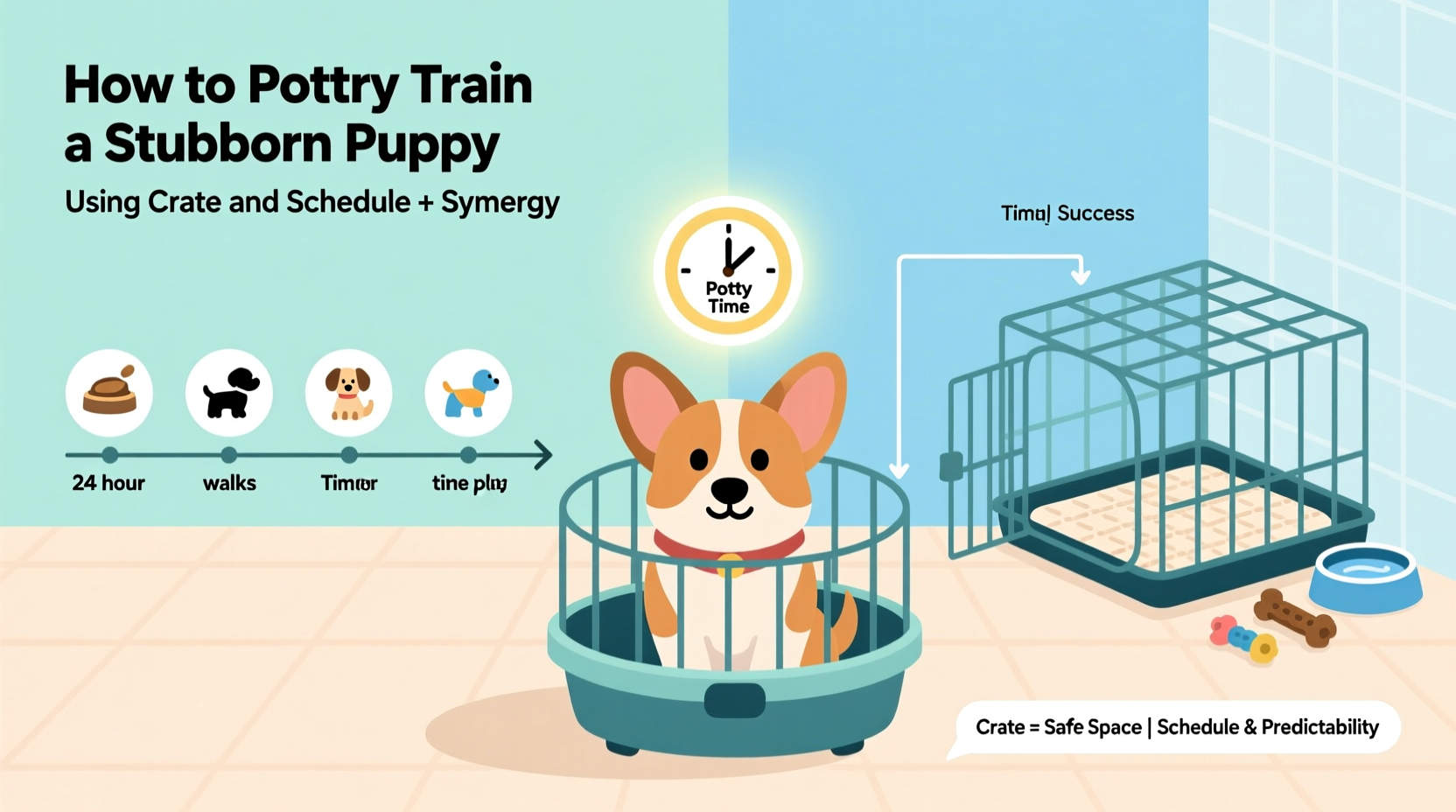
Crate training works because it taps into a dog’s natural preference for clean dens. A properly sized crate becomes a safe haven, not a punishment zone. When used correctly, the crate encourages bladder and bowel control by limiting freedom just enough to promote awareness without causing distress.
But the crate alone isn’t enough. Timing is everything. Puppies have small bladders and limited muscle control. A 10-week-old pup can typically hold their bladder for about one hour per month of age—meaning they need to go out every 2–3 hours during the day. Without a consistent schedule, even a well-crate-trained puppy will have accidents simply due to confusion or missed signals.
When you synchronize the crate with a strict feeding, play, sleep, and elimination schedule, you establish clear cause-and-effect patterns for your puppy:
- Eat → Digest → Eliminate (within 15–30 minutes)
- Sleep or rest in crate → Wake up → Immediate potty break
- Playtime → Potential accident risk → Return to crate or supervised area
This rhythm reduces anxiety, builds predictability, and turns potty training from a battle into a learned behavior.
“Consistency is the cornerstone of canine learning. Dogs thrive on routine, and when you align their environment with their biology, progress follows.” — Dr. Karen Becker, DVM, Integrative Veterinarian
Step-by-Step Guide to Implementing Crate & Schedule Training
Success depends on precision and patience. Follow this timeline-based plan for the first two weeks, which are critical in shaping long-term habits.
- Choose the Right Crate: Use a wire or plastic crate large enough for your puppy to stand, turn, and lie down—but not much more. If the crate is too big, they may eliminate in one end and sleep in the other. Use a divider if needed.
- Set Fixed Meal Times: Feed your puppy twice daily at the same times (e.g., 7:00 AM and 5:00 PM). Remove food after 20 minutes to regulate digestion.
- Establish a Bathroom Break Schedule: Take your puppy outside immediately upon waking, after meals, after play, and before bedtime. Key times include:
- First thing in the morning
- Every 1–2 hours during the day
- After naps (even short ones)
- After eating or drinking
- Before crating
- Last thing at night
- Use a Designated Potty Spot: Always take your puppy to the same area. Scent markers help them recognize it as the appropriate place to go.
- Practice Crate Transitions: After a successful potty break, return your puppy to the crate with a treat and calm praise. Never use the crate as punishment.
- Nighttime Routine: Place the crate near your bed so you hear whimpers. Most puppies can sleep 4–6 hours by 12 weeks. Take them out quietly if they wake; no play or interaction.
Overcoming Stubborn Behavior: Realistic Expectations and Adjustments
Some puppies resist training despite perfect conditions. Before labeling your pup “stubborn,” consider whether external factors are interfering:
- Medical issues: Urinary tract infections or parasites can cause frequent accidents.
- Inconsistent reinforcement: If family members let the puppy roam unsupervised, progress stalls.
- Overstimulation: Too much play or noise can delay focus on potty cues.
A truly stubborn puppy may test boundaries repeatedly. In such cases, tighten the schedule rather than loosen it. Reduce free-roam time. Increase crate supervision. Respond to indoor accidents with neutral cleanup (no yelling) and immediate return to the crate for 10–15 minutes, then try again outside.
Mini Case Study: Max, the 14-Week-Old Border Collie Mix
Max was adopted at 10 weeks and had zero interest in outdoor potty breaks. His owners reported five accidents daily despite frequent trips outside. He would sometimes go, then immediately eliminate indoors upon re-entry.
After consulting a trainer, they implemented a strict 2-hour daytime schedule with crate confinement between outings. Feeding was moved to 7:00 AM and 5:30 PM. All indoor accidents were cleaned with enzymatic cleaner, and Max was placed back in the crate for 15 minutes after each incident.
Within 72 hours, Max began signaling at the door. By day 10, he went 12 hours overnight without needing a break. At three weeks, he was 95% reliable. The turning point was consistency—not discipline.
Do’s and Don’ts: Table of Common Mistakes
| Do’s | Don’ts |
|---|---|
| Use a consistent command like “Go potty” when outside | Yell or punish after an indoor accident |
| Confine the puppy when unsupervised (crate or pen) | Allow free roaming of the house before training is complete |
| Reward immediately after outdoor elimination | Use ammonia-based cleaners (they smell like urine to dogs) |
| Stick to the same exit and potty spot | Let the puppy play immediately after going inside |
| Gradually increase freedom as reliability improves | Assume one week of success means training is over |
Essential Checklist for Success
Follow this checklist daily during the first month of training:
- ☑ Feed at the same two times every day
- ☑ Take puppy out within 5 minutes of waking
- ☑ Take puppy out within 15 minutes of eating
- ☑ Use the same door and potty spot consistently
- ☑ Supervise or crate between scheduled breaks
- ☑ Clean accidents with enzymatic cleaner
- ☑ Limit water access 2 hours before bedtime
- ☑ Record each successful outdoor elimination
- ☑ Avoid off-leash play until potty training is solid
- ☑ Gradually extend time between breaks as puppy matures
When Progress Stalls: Troubleshooting Tips
Even with perfect execution, setbacks happen. Here’s how to respond:
- If accidents increase suddenly: Rule out medical causes first. Then review recent changes—new people, travel, or altered schedules—that may have disrupted routine.
- If puppy refuses to go outside: Stay patient. Wait up to 10 minutes. If nothing happens, return inside and crate for 20 minutes, then try again.
- If puppy goes outside but eliminates indoors minutes later: You may be bringing them back in too quickly. Let them explore the potty area briefly after eliminating to reduce post-poop urgency.
- If nighttime accidents persist beyond 16 weeks: Consider adjusting dinner time earlier and reducing evening water intake. Some breeds mature slower—small breeds often take longer to gain full control.
“The key to training a stubborn puppy isn’t stronger corrections—it’s clearer communication. Structure speaks louder than voice.” — Sarah Wilson, Certified Professional Dog Trainer (CPDT-KA)
Frequently Asked Questions
How long does it take to potty train a stubborn puppy?
Most puppies show significant improvement within 2–3 weeks of consistent crate and schedule training. Full reliability typically takes 4–6 months. Stubborn cases may require up to 8 months, especially in smaller breeds with tiny bladders.
Can I use pee pads if I work full-time?
Pee pads can create confusion—they teach the puppy it’s okay to eliminate indoors. If you must use them, place them adjacent to the door and gradually move them outside. Better alternatives include hiring a midday dog walker or using a doggy door to a secure yard.
Should I punish my puppy for going inside?
No. Punishment damages trust and delays learning. Instead, interrupt the act calmly (“Oops!”), carry them outside, and reward if they finish there. Focus on prevention through supervision and scheduling.
Maintaining Gains and Transitioning to Freedom
Once your puppy has gone 7–10 days without accidents, begin phasing in increased freedom. Start by opening one additional room while keeping the crate nearby. Monitor closely. If accidents occur, revert to stricter confinement for another week.
Gradual freedom teaches your puppy that reliability earns privileges. By 6 months, most dogs can handle several hours of supervised liberty. Continue using the crate for sleep and when unattended until at least 1 year of age.
Remember: potty training isn’t finished when the puppy stops having accidents. It’s complete when they reliably signal their need to go, even in new environments. That level of communication comes only from sustained consistency.
Conclusion: Turn Resistance into Results
Potty training a stubborn puppy doesn’t require special tools or advanced techniques—it requires unwavering consistency. The synergy between crate training and a rigid daily schedule transforms resistance into routine. What looks like defiance is often just confusion. Your puppy isn’t being difficult; they’re waiting for you to provide clarity.
By creating a predictable world where actions lead to expected outcomes, you build not just a housebroken pet, but a confident, communicative companion. Stick to the plan, track progress, and trust the process. Within weeks, you’ll find that your once-stubborn pup is not only trained—but eager to please.
💬 Have a stubborn puppy story or tip? Share your experience below—your journey could help another frustrated pet parent find hope and success.








