
Red lipstick is iconic. It commands attention, exudes confidence, and has been a symbol of power and elegance across generations. Yet, despite its universal appeal, many people hesitate to wear it—not because they don’t want to, but because they’ve tried shades that made them look washed out, sallow, or simply “off.” The issue isn’t the color itself; it’s the mismatch between the lipstick and their unique skin tone.
The key to wearing red lipstick flawlessly lies in understanding your skin’s undertone. Once you know whether your skin leans warm, cool, or neutral, selecting the perfect red becomes less about trial and error and more about informed choice. This guide breaks down the science and art of matching red lipstick to your complexion, complete with actionable tips, real-world examples, and expert insights to help you make the right decision—every time.
Understanding Skin Undertones: The Foundation of Color Matching
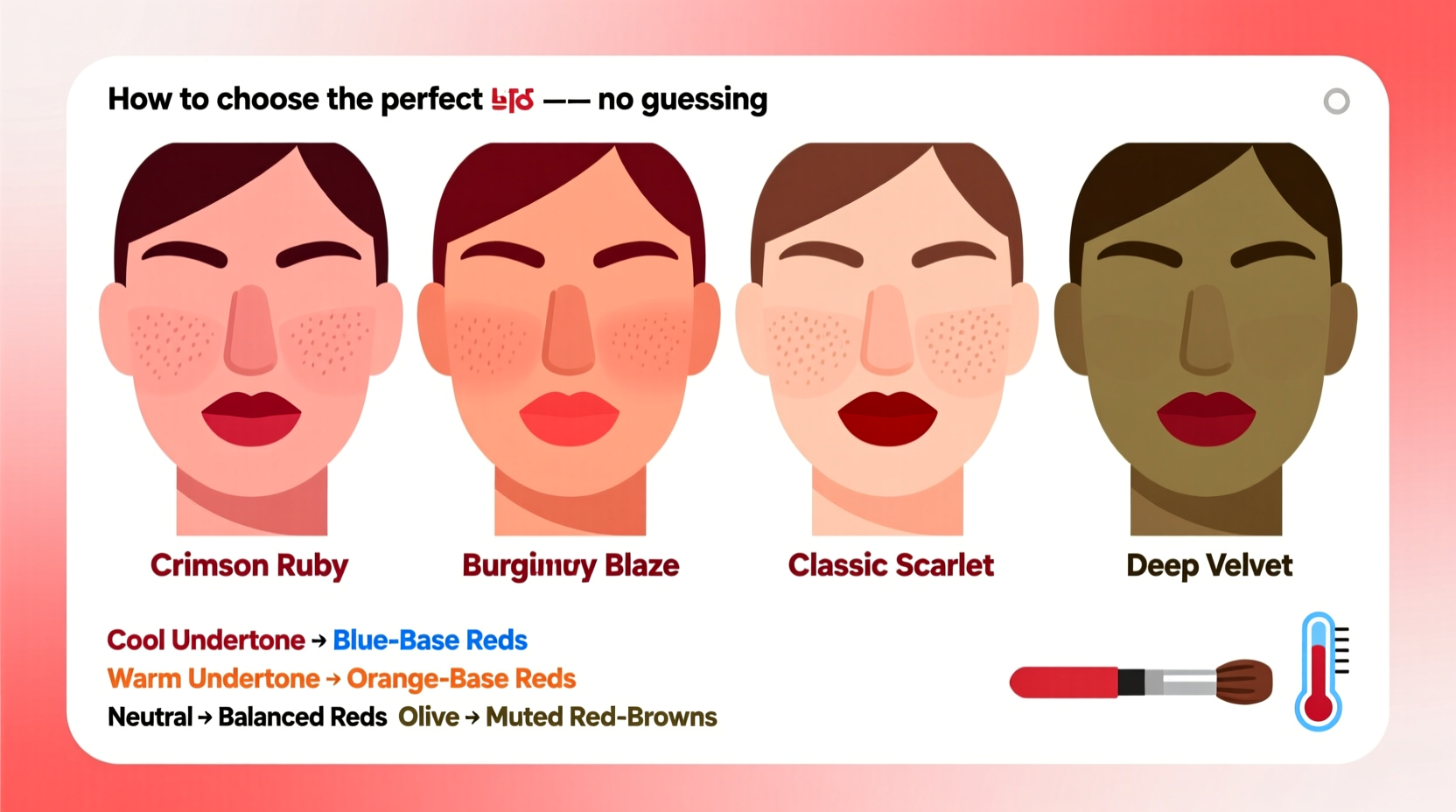
Your skin’s undertone is the subtle hue beneath the surface that influences how colors appear against your skin. Unlike your surface tone (which can change with sun exposure), your undertone remains consistent throughout your life. There are three primary undertones: warm, cool, and neutral.
To identify yours, consider these reliable methods:
- Vein Test: Look at the veins on your inner wrist under natural light. If they appear greenish, you likely have warm undertones. If they look bluish or purple, you have cool undertones. If it's hard to tell, you may be neutral.
- Jewelry Preference: Do gold or silver accessories complement your skin better? Gold flatters warm tones; silver enhances cool tones. If both work, you’re likely neutral.
- White vs. Off-White Test: Hold a pure white fabric and an off-white or cream one next to your face. If white brightens your complexion, you're cool-toned. If cream looks better, you're warm-toned.
Once you’ve identified your undertone, you can begin aligning it with the right family of reds. Not all reds are created equal—some have blue bases, others orange, and some sit perfectly in the middle. Choosing the wrong base can clash with your undertone and dull your overall appearance.
Matching Red Lipstick Shades to Your Undertone
The secret to a flattering red lipstick is harmony. When the lipstick’s undertone complements your skin’s undertone, the result is radiant, balanced, and polished. Here’s how to pair them correctly:
Cool Undertones: Go for Blue-Based Reds
If your skin has pink, red, or bluish undertones, you’ll look best in blue-based reds—also known as “true red” or “cherry red.” These shades have a cooler pigment that mirrors the natural flush in your cheeks, creating cohesion across your face.
Look for descriptors like “raspberry,” “vinyl red,” “plum-red,” or “blue-red.” Classic examples include:
- MAC Ruby Woo (iconic matte blue-red)
- Chanel Pirate (deep berry-red)
- NARS Dragon Girl (vibrant cherry red)
“Cool undertones thrive with blue-based reds—they create contrast without competing. It’s the difference between looking vibrant versus drained.” — Lena Torres, Celebrity Makeup Artist
Warm Undertones: Choose Orange-Based Reds
Golden, peachy, or olive undertones pair beautifully with orange-based reds—often called “tomato red,” “fire engine red,” or “brick red.” These shades echo the warmth in your skin and prevent the lipstick from appearing too harsh or ashy.
Avoid overly cool reds, which can make warm complexions look jaundiced. Instead, opt for names like “candy apple,” “coral-red,” or “autumn red.” Recommended shades:
- Revlon Super Lustrous Classic Red (a timeless warm red)
- Fenty Beauty Stunna Lip Paint in “Uncensored” (universal warm-leaning red)
- Maybelline Color Sensational in “Classic Red” (affordable and vibrant)
Neutral Undertones: You Have the Most Flexibility
If your skin doesn’t strongly lean warm or cool, you’re in luck—you can pull off a wide range of reds. However, even within neutrality, there’s often a slight bias. Pay attention to which jewelry works better or when your skin looks most even.
Start with balanced reds—those without extreme blue or orange bases. Think “classic Hollywood red” or “medium crimson.” These are versatile and rarely go wrong. Try:
- Dior 999 (legendary universal red)
- YSL Rouge Pur Couture in “Le Rouge”
- Charlotte Tilbury Matte Revolution in “Walk of Shame”
Lipstick Finish and Formula: How Texture Affects the Final Look
Undertone is the foundation, but finish plays a crucial role in how the color interacts with your skin. A matte red can look dramatically different from a glossy or satin version—even if the base color is identical.
| Finish Type | Best For | Considerations |
|---|---|---|
| Matte | Cool and neutral tones; formal settings | Can emphasize dryness; use lip balm first |
| Satin | All skin tones; everyday wear | Balanced shine and pigment; forgiving on texture |
| Glossy | Warm tones; youthful, fresh look | Reflects light; may require frequent reapplication |
| Sheer | Subtle enhancement; sensitive skin | Less intense; good for testing new reds |
For mature skin, satin or sheer finishes are often more flattering than full matte, which can settle into fine lines. Younger skin may handle bold matte finishes well, especially in cooler environments where humidity keeps lips hydrated.
Tip: Swatch lipstick on your lips, not your hand. The skin tone on your arm differs significantly from your face, leading to misleading results.Step-by-Step Guide: Finding Your Perfect Red Lipstick
Follow this proven process to eliminate guesswork and confidently choose a red lipstick tailored to you:
- Determine your undertone using the vein, jewelry, or white fabric test in natural light.
- Identify your dominant red family: Cool → blue-based; Warm → orange-based; Neutral → balanced reds.
- Test 2–3 shades from your recommended category. Use in-store testers or order samples online.
- Apply under natural light and observe how the color affects your teeth, eyes, and overall brightness.
- Evaluate longevity and comfort. Does it feather? Dry out your lips? Feel heavy?
- Wear it for a few hours to see how it ages and interacts with your daily routine.
- Finalize your match based on both aesthetics and wearability.
Mini Case Study: Sarah’s Search for the Right Red
Sarah, a 34-year-old teacher with olive skin and golden undertones, had always avoided red lipstick. She tried MAC Ruby Woo once and felt it turned her face gray. “I thought red just wasn’t for me,” she said. After learning about undertones, she realized her warm base was clashing with the cool blue-red.
She switched to Revlon’s Classic Red—a warm orange-based formula—and instantly noticed the difference. “My skin looked brighter, my eyes popped, and I didn’t feel like I was wearing a costume,” she shared. Now, it’s her go-to for parent-teacher conferences and date nights alike.
Common Mistakes to Avoid
Even with the right undertone knowledge, small errors can derail your red lipstick experience. Watch out for these pitfalls:
- Testing in poor lighting: Fluorescent or yellow bulbs distort color. Always check in daylight.
- Ignoring lip prep: Dry, flaky lips ruin even the most expensive application. Exfoliate gently and moisturize before swatching.
- Overlining too aggressively: While subtle overlining can enhance shape, going too far creates an unnatural look, especially with bold reds.
- Skipping the blot: Blotting after application removes excess product and prevents transfer while maintaining intensity.
- Pairing with conflicting makeup: Avoid warm-toned eyeshadows with cool reds, or vice versa. Keep your overall palette harmonious.
FAQ: Your Red Lipstick Questions Answered
Can I wear red lipstick if I have dark skin?
Absolutely. Deep skin tones can carry rich, saturated reds beautifully. Look for deeper blue-based reds (like burgundy-red) or warm brick reds with depth. Brands like Fenty Beauty, Pat McGrath Labs, and Black Opal offer inclusive ranges that celebrate darker complexions.
What if my skin tone changes with the seasons?
While your undertone stays constant, your surface tone may darken in summer. Consider having two reds: a slightly brighter version for summer and a richer one for winter. The undertone should remain consistent—only adjust saturation and depth.
How do I stop red lipstick from bleeding?
Use a lip liner one shade darker or matching your lipstick to define the edges. Apply a small amount of concealer around the border for a crisp line. Setting with a tissue and light powder also helps lock it in place.
Checklist: Your Red Lipstick Selection Toolkit
Before purchasing or applying, run through this quick checklist:
- ✅ Identified my skin’s undertone (warm, cool, neutral)
- ✅ Chosen a red with a complementary base (blue for cool, orange for warm)
- ✅ Tested the shade on my lips in natural light
- ✅ Evaluated the finish (matte, satin, glossy) for my needs
- ✅ Prepped my lips (exfoliated and moisturized)
- ✅ Checked for feathering or discomfort during wear
- ✅ Confirmed it enhances my overall look (brightens eyes, evens skin tone)
Conclusion: Own Your Red with Confidence
Picking the right red lipstick shouldn’t be a game of chance. With a clear understanding of your skin’s undertone, the right tools, and a methodical approach, you can find a red that doesn’t just sit on your lips—it elevates your entire presence. Whether you're drawn to vintage glamour, modern boldness, or understated sophistication, the perfect red exists for you. Stop guessing. Start choosing with confidence.
💬 Found your perfect red? Share your go-to shade and undertone in the comments—your insight could help someone else finally fall in love with red lipstick too.








