Matching lip liner to lipstick is one of the most overlooked yet essential skills in makeup artistry. When done correctly, it defines the lips, prevents feathering, and creates a polished finish. But what happens when your lipstick has no label? Or when you inherit a palette from a friend, buy secondhand, or simply lose track of which liner pairs with which hue? The good news: you don’t need product names or packaging to get it right. With a few foundational principles of color theory, observation techniques, and practice, you can confidently pair any lip liner to any lipstick—blindfolded, if necessary.
Understanding Lip Liner’s Role in Makeup
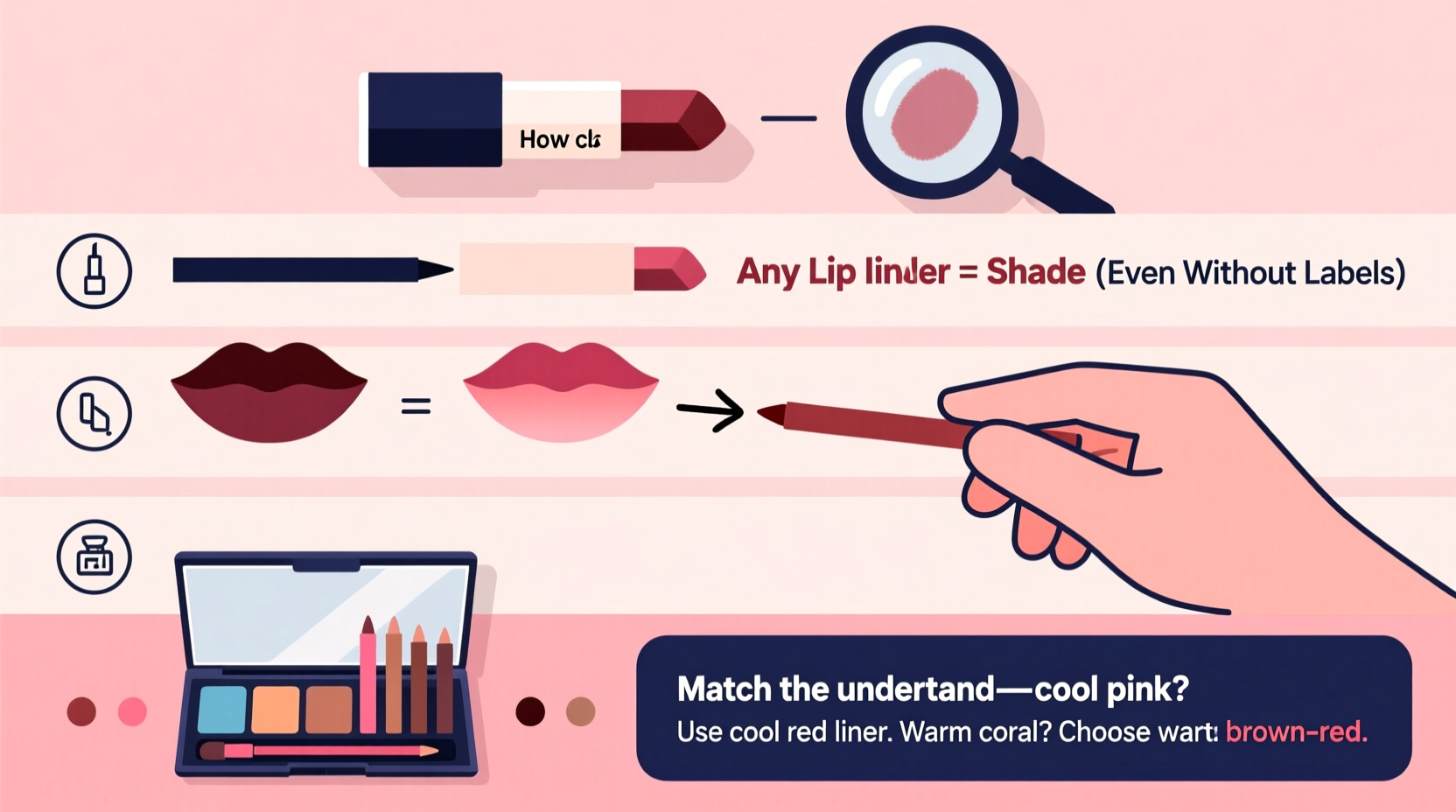
Lip liner isn't just for preventing smudging—it's a structural tool. It shapes the lips, enhances volume, corrects asymmetry, and acts as a base that extends lipstick wear. Unlike eyeshadow or blush, lip products are applied close to the facial center, making mismatched tones instantly noticeable. A poorly matched liner can create harsh lines, discoloration, or an unnatural gradient that undermines the entire look.
The goal isn’t always to find an identical match. In fact, professional artists often use slightly darker or more neutral liners to add dimension. What matters is harmony—ensuring the liner complements the lipstick’s depth, hue, and undertone without clashing or creating a visible border.
Tip: Always test lip liner and lipstick together under natural light. Artificial lighting can distort color perception, especially with warm-toned bulbs.Decoding Color Without Labels: A Step-by-Step Guide
When faced with unlabeled products, rely on sensory and visual analysis. Follow this process to identify compatible pairs:
- Assess the lipstick’s dominant hue: Place a small dot on the back of your hand. Is it red, pink, berry, nude, plum, or orange-based? Ignore shimmer or texture—focus only on color.
- Determine the undertone: Look closely. Does the lipstick lean cool (blue or purple base), warm (yellow or orange base), or neutral? Cool tones appear crisp; warm tones feel earthy.
- Check the intensity and value: How deep or sheer is it? Is it a pastel, medium, or deep shade? Compare it to known references—e.g., “This is similar to a rose quartz” or “It’s almost burgundy.”
- Test potential liners side by side: Draw short lines next to the lipstick swatch. The best match will blend seamlessly, not create a stark line or grayish halo.
- Apply and evaluate: Use the liner across your cupid’s bow and bottom lip, then fill in with the lipstick. There should be no visible demarcation.
This method works regardless of brand or age of the product. Over time, you’ll develop an intuitive sense of compatibility.
Mastering Undertones: The Key to Seamless Blending
Undertones make or break a match. Two shades may appear similar but clash because one leans blue and the other yellow. For example, a coral lipstick with orange undertones paired with a berry-toned liner will result in muddy edges.
Here’s how to analyze undertones effectively:
- Cool undertones: Found in pinks, berries, and blue-based reds. These suit silver jewelry wearers and often flatter fair to medium skin tones.
- Warm undertones: Present in corals, brick reds, and terracottas. They complement gold jewelry and enhance deeper or olive complexions.
- Neutral undertones: A balance between cool and warm. These are versatile and work across skin tones, like mauves or rosy browns.
A mismatch in undertones causes the liner to appear ashen or overly dark. If your lipstick swatch looks slightly gray around the edges when lined, the liner is likely too cool or too warm.
“Color matching isn’t about precision—it’s about perception. The eye forgives slight variations if the undertone sings the same song.” — Lila Chen, Celebrity Makeup Artist
Do’s and Don’ts: Common Mistakes and How to Avoid Them
| Do | Don't |
|---|---|
| Use a liner one shade deeper than your lipstick for subtle definition | Choose a liner that’s drastically darker—it creates an outdated, drawn-in look |
| Blend the liner outward slightly for a diffused, modern effect | Apply liner only inside the lip line, leaving a sharp edge |
| Sharpen pencils regularly for clean application | Use a broken or dull liner that tugs on delicate lip skin |
| Layer a neutral liner under sheer lipsticks to boost opacity | Pair a warm liner with a cool-toned sheer lipstick—it mutes the true color |
| Wipe the tip of the liner with alcohol occasionally to prevent bacteria buildup | Share lip liners without sanitizing—they can transfer infections |
Real-World Example: The Mystery Palette Makeover
Sophie, a freelance stylist, inherited a vintage makeup case from her grandmother. Inside were six unlabeled lipsticks and three lip liners—all from the 1970s, still usable but unidentifiable. She wanted to use them for a retro-themed shoot but had no idea which liner went with which lipstick.
She began by swatching each product on her hand under daylight. She grouped them by family: two pinks, three reds, one brown-nude. Then, she tested each liner against the swatches. One pink lipstick had a strong blue undertone; only one liner—a cool mauve—blended cleanly with it. The brick-red lipstick required a warm, cinnamon-toned liner, which she found after testing two options.
By the end, she’d successfully paired all products and used them in a magazine editorial. The key was patience and systematic comparison—not guesswork.
Expert Matching Techniques for Advanced Blending
Top artists rarely use exact matches. Instead, they employ strategic layering to sculpt the lips. Here are professional tricks you can adapt:
- The Gradient Effect: Use a liner that’s slightly deeper than your lipstick, then blur the edge with a brush or fingertip. This adds dimension and mimics natural shadow.
- Overlining with Neutrals: To safely overline, choose a liner no more than one shade deeper and neutral in tone. Apply just outside your natural lip line, then blend inward before adding lipstick.
- Corrective Lining: If your lipstick is too bright or uneven, use a skin-toned or beige liner to mute the outer corners, creating a stained effect.
- Multi-Liner Layering: For ombré lips, use two liners—one for the inner lip, another for the outer edge—then blend with a clean brush before applying gloss or lipstick.
These techniques require confidence in color pairing. Start with neutral tones before experimenting with bold contrasts.
Quick Checklist: How to Match Any Lip Liner to Any Lipstick
✅ Your Action Plan:- Swatch the lipstick on the back of your hand
- Identify its dominant hue (pink, red, nude, etc.)
- Determine its undertone (cool, warm, or neutral)
- Select a liner with the same undertone
- Test the liner next to the lipstick swatch
- Apply both to your lips and check for harsh lines
- If needed, soften the edge with a lip brush
- Sanitize and store properly after use
Frequently Asked Questions
Can I use the same lip liner for multiple lipstick shades?
Yes—if the liner is neutral and matches your natural lip tone. A well-chosen nude liner can work under pinks, reds, and even plums, provided the undertones align. However, bold lipsticks (like orange or fuchsia) usually require a dedicated liner for optimal blending.
What if I don’t have a matching liner at all?
You have options. First, try using the lipstick itself as a liner with a flat brush—it ensures perfect color unity. Alternatively, use a concealer-dipped brush to sharpen the edges after applying lipstick. For longevity, set the outline with a translucent powder before reapplying color.
Does skin tone affect how lip liner and lipstick interact?
Indirectly. While the match between liner and lipstick is primarily about their relationship to each other, your skin tone influences how the final look appears. For instance, a cool-toned red may look vibrant on fair skin but intense on deeper tones. Always consider the full context, but prioritize color harmony between the two products first.
Final Thoughts: Confidence Over Labels
The absence of a label doesn’t mean the end of a flawless lip look. In fact, mastering color matching without relying on branding makes you a more adaptable and skilled user of makeup. You begin to see products not as isolated items but as elements in a broader color story. Whether you're organizing a cluttered vanity, reviving vintage finds, or improvising on set, this skill pays dividends.
Remember: consistency comes with practice. Keep a notebook where you record successful pairings—especially for unlabeled items. Note undertones, depth, and effects. Over time, you’ll build a mental library that eliminates guesswork.
💬 Ready to master your makeup collection? Start today by testing one unlabeled lipstick with three different liners. Observe the results, take notes, and share your findings with others building their own color intuition.








