Cats are naturally curious, agile, and instinctively drawn to high places. While it’s endearing to see them perch on bookshelves or peer down from a cabinet, their playful swats can quickly turn into costly accidents. A favorite vase, photo frame, or electronic device might not survive the fall. The good news is that you don’t need to rehome every decorative object or restrict your cat’s movement entirely. With a few thoughtful adjustments and consistent deterrents, you can protect your belongings while still supporting your cat’s need to explore.
The key lies in understanding why cats engage in this behavior. It’s rarely out of spite or mischief. Instead, it stems from natural hunting instincts, curiosity, boredom, or a desire for attention. By addressing the root cause and implementing practical, humane deterrents, you can create a safer, more harmonious home environment—for both you and your feline companion.
Why Cats Knock Things Off Shelves
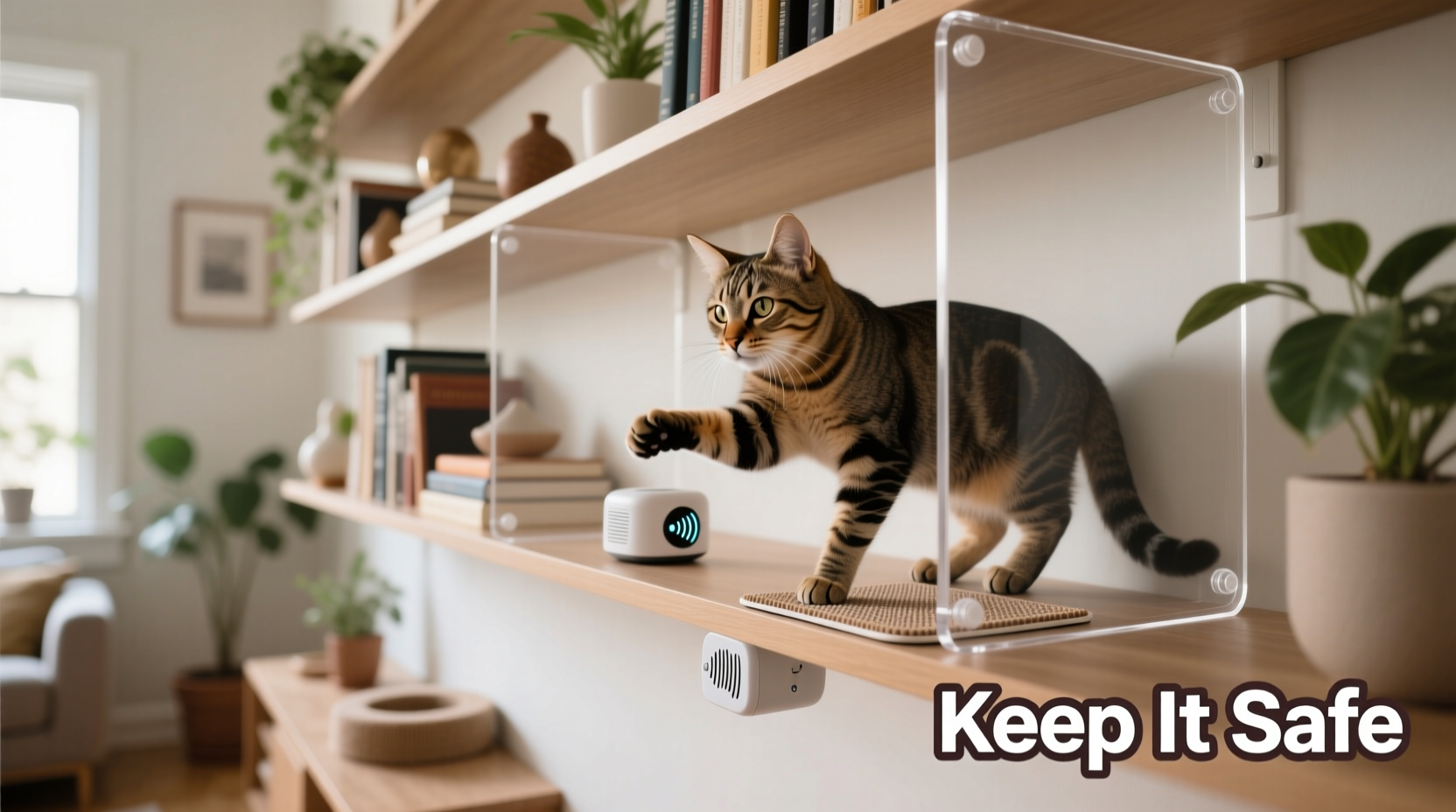
Before applying solutions, it’s important to recognize the motivations behind the behavior. Cats are predators by nature. Their paws are highly sensitive, and they use them to investigate objects through touch. When something dangles, wobbles, or reflects light, it triggers their prey drive. A flick of the paw sets the object in motion—providing instant feedback that feels like a successful \"hunt.\"
Boredom also plays a major role. Indoor cats without sufficient mental stimulation may resort to shelf-swatting as entertainment. Similarly, if knocking something down consistently earns a reaction—whether it's a gasp, a laugh, or even a scolding—the cat learns that the action gets attention, reinforcing the habit.
Understanding these underlying reasons helps shift the approach from punishment to prevention. Rather than trying to suppress natural instincts, the goal is to redirect them appropriately.
Tip: Never punish your cat for knocking things over—it can damage trust and increase anxiety, potentially worsening the behavior.Effective Physical Deterrents
One of the most immediate ways to prevent accidents is to make shelves less appealing or accessible. These physical deterrents work by altering the environment without causing harm.
- Secure loose items: Use museum putty or adhesive strips to anchor lightweight decor, picture frames, or electronics to shelves. This prevents tipping with minimal visual impact.
- Install shelf dividers: Small barriers made of acrylic or wood can be placed along the front edge of shelves to block access while maintaining visibility.
- Use double-sided tape: Cats dislike sticky textures under their paws. Applying double-sided tape (like Sticky Paws) along shelf edges discourages stepping or pawing.
- Apply aluminum foil or plastic carpet runners: These materials have unappealing textures and sounds when touched. Place them temporarily on problem shelves until the cat loses interest.
- Elevate valuable items: Move fragile or irreplaceable objects to higher cabinets with doors or glass enclosures where cats cannot reach.
These methods are non-invasive and allow you to maintain your home’s aesthetic while protecting belongings. Over time, the cat learns that certain areas yield no rewarding outcomes and begins to ignore them.
Environmental Enrichment: Redirecting Natural Behavior
A well-stimulated cat is less likely to seek out destructive entertainment. Providing appropriate outlets for climbing, batting, and hunting reduces the appeal of household objects.
- Install cat shelves or perches: Wall-mounted steps or ledges give cats designated high ground, satisfying their urge to survey from above.
- Add interactive toys: Motion-activated toys, puzzle feeders, or treat-dispensing balls keep cats mentally engaged and physically active.
- Rotate toys regularly: Introduce new toys every few days to maintain novelty. Store unused ones out of sight to preserve interest.
- Provide scratching posts with platforms: Multi-level cat trees encourage climbing and lounging in safe zones away from your decor.
- Engage in daily play sessions: Use wand toys to simulate prey movement for 10–15 minutes twice a day. This burns energy and strengthens your bond.
Enrichment doesn’t require expensive gear. Simple DIY options—like crumpled paper balls, cardboard boxes with holes, or dangling ribbons—can be just as stimulating when used creatively.
“Cats aren’t being ‘naughty’ when they knock things over—they’re expressing normal behaviors in an environment that doesn’t fully meet their needs.” — Dr. Sarah Ellis, Feline Behavior Scientist, University of Lincoln
Step-by-Step Guide to Reducing Shelf Knocking
Follow this timeline to systematically address and reduce unwanted shelf interactions:
- Week 1: Assess and Secure
Walk through each room and identify high-risk shelves. Remove or secure fragile items. Apply temporary deterrents like double-sided tape or foil on edges. - Week 2: Introduce Alternatives
Set up at least one cat tree or wall shelf in a common area. Place a few toys nearby and encourage use with treats or catnip. - Week 3: Establish Play Routines
Begin two daily play sessions using wand toys. End each session with a treat to simulate a “kill and eat” sequence, which satisfies predatory instincts. - Week 4: Monitor and Adjust
Observe your cat’s behavior. If shelf-swapping decreases, gradually remove temporary deterrents. If not, reassess enrichment levels or consult a vet or behaviorist.
Consistency is critical. Most cats begin to adapt within three to four weeks, especially when rewarded for using designated spaces.
Deterrent Comparison: What Works Best?
| Deterrent | Effectiveness | Duration | Best For |
|---|---|---|---|
| Double-sided tape | High | Short-term | Wood or laminate shelves |
| Aluminum foil | Medium-High | Short-term | Cats sensitive to sound/texture |
| Museum putty | Very High | Long-term | Securing small decor |
| Shelf dividers | Very High | Permanent | Bookshelves, display units |
| Plastic carpet runner (nubby side up) | Medium | Short to mid-term | Temporary training phase |
This table summarizes common deterrents based on real-world effectiveness and usability. Combining multiple methods often yields the best long-term results.
Mini Case Study: From Chaos to Calm in a Brooklyn Apartment
Jamie, a graphic designer in Brooklyn, adopted a young rescue cat named Miso. Within days, Miso developed a habit of swatting pens, mugs, and framed art off Jamie’s workspace shelves. After replacing a broken lamp and losing several notebooks, Jamie sought solutions.
Following a consultation with a veterinary behaviorist, Jamie implemented a three-pronged strategy: securing items with museum putty, installing a vertical cat shelf next to the desk, and scheduling two 10-minute play sessions daily with a feather wand. Double-sided tape was applied to the desk edge for the first two weeks.
Within 10 days, Miso stopped targeting the desk. By week four, the tape was removed, and Miso had claimed the cat shelf as her favorite lookout spot. Jamie reported not only fewer accidents but also a calmer, more affectionate cat.
This case illustrates how combining environmental modification with behavioral reinforcement leads to sustainable change.
Tip: Always reward desired behavior immediately. When your cat uses a cat tree instead of a bookshelf, offer praise or a treat to reinforce the choice.Frequently Asked Questions
Will my cat eventually grow out of knocking things over?
Some kittens may decrease the behavior as they mature, but adult cats often continue if the behavior is reinforced by attention or sensory feedback. Proactive management is usually necessary for lasting results.
Are there sprays that can deter cats from shelves?
Yes, commercial sprays containing citrus or bitter scents can act as repellents. However, results vary, and some cats may ignore them after initial exposure. Always test on a small area first and avoid spraying near food or water bowls.
Is it okay to let my cat on shelves if I supervise?
Supervised access is fine, especially if the space is cleared of breakables. It allows your cat to explore safely while you monitor behavior. Over time, you can condition them to distinguish between acceptable and off-limits zones.
Checklist: Cat-Proof Your Shelves in 7 Steps
- ✅ Identify shelves frequently targeted by your cat
- ✅ Remove or secure fragile and valuable items
- ✅ Apply temporary deterrents (tape, foil, carpet runner)
- ✅ Install designated cat perches or shelves nearby
- ✅ Introduce interactive toys and rotate weekly
- ✅ Schedule two daily play sessions with wand toys
- ✅ Reinforce good behavior with treats or affection
Use this checklist as a starting point. Revisit it monthly to assess progress and adjust strategies as needed.
Conclusion: Coexisting Peacefully with Your Curious Cat
Preventing your cat from knocking things off shelves isn’t about restricting their nature—it’s about guiding it constructively. Simple deterrents, when combined with environmental enrichment and consistent routines, create a home where both your possessions and your pet thrive. The goal isn’t perfection but progress: fewer accidents, reduced stress, and a deeper understanding of your cat’s needs.
Start today by securing one high-risk shelf and introducing a new toy. Small changes add up. Over time, you’ll notice fewer crashes and more moments of quiet observation—your cat curled up in their own designated spot, content and engaged.
💬 Have a tip that worked for your cat? Share your experience in the comments and help fellow cat owners find smarter, kinder solutions!








