Fruit bowls are a staple in many kitchens, offering both function and visual appeal. They encourage healthy snacking and add a splash of color to countertops. But as soon as ripe bananas, peaches, or berries appear, so do the uninvited guests: fruit flies. These tiny pests aren’t just annoying—they can carry bacteria and contaminate food. While chemical sprays and traps exist, many people prefer solutions that are safe, subtle, and blend seamlessly into daily life. The good news is that keeping flies away from your fruit doesn’t require harsh chemicals or unsightly contraptions. With a few thoughtful strategies, you can protect your fruit while maintaining a clean, natural kitchen environment.
Understanding Why Flies Are Drawn to Fruit Bowls
Fruit flies, particularly *Drosophila melanogaster*, are highly attracted to fermenting sugars. As fruits ripen, they emit ethanol and other volatile compounds that act as powerful olfactory signals to these insects. Even small punctures in the skin or slight overripeness can begin fermentation, making your fruit bowl an irresistible target. Flies can detect these scents from several feet away and reproduce rapidly—females can lay hundreds of eggs on or near fermenting material.
The problem isn’t limited to open windows or poor hygiene. Even spotless kitchens can fall victim if ripe produce is left exposed. This makes prevention—not just reaction—the key to long-term success. Instead of waiting for an infestation, implementing proactive, natural deterrents ensures your fruit stays fly-free from day one.
Tip: Replace overly ripe fruit daily—even slightly mushy pieces can trigger a fly swarm within hours.Natural Barriers That Work Without Altering Your Kitchen Aesthetic
One of the biggest concerns with fly control is maintaining a pleasant, clutter-free kitchen. Many commercial traps use sticky surfaces or bright colors that clash with modern decor. Natural solutions, however, can be both effective and visually unobtrusive.
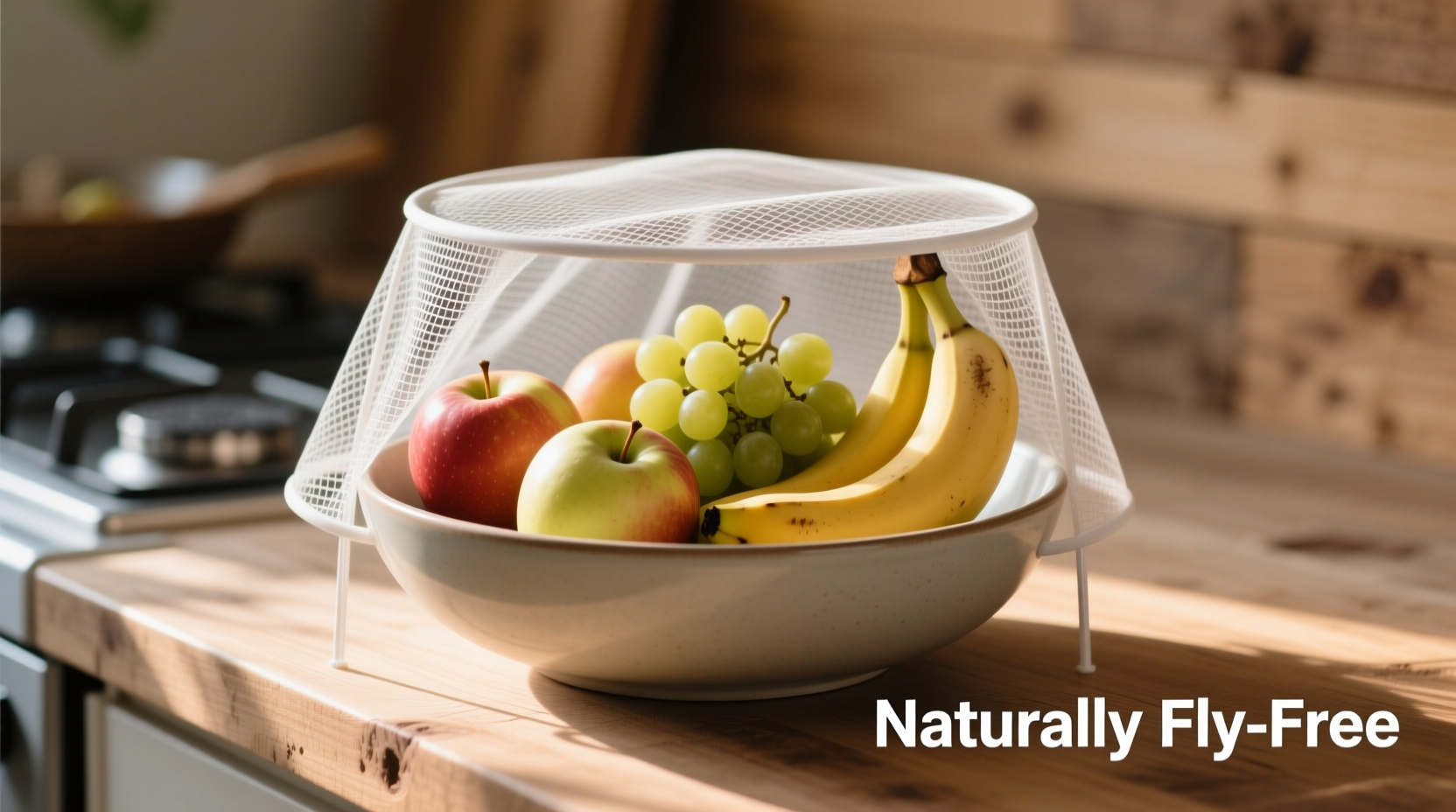
Covering with breathable fabric is one of the simplest yet most overlooked methods. Instead of plastic wrap or sealed containers (which trap moisture and accelerate spoilage), use a small bamboo or wire mesh dome covered with fine cotton gauze. This allows airflow while blocking flies. Linen tea cloths also work well and come in neutral tones that complement farmhouse or minimalist styles.
Another elegant option is repurposing a glass cloche—often used for decorative displays—with a perforated base or lifted edge for ventilation. Place it over the bowl and tuck a bay leaf or two underneath; the scent deters flies without being overpowering.
For those who prefer complete invisibility, consider storing fruit in a designated cabinet or pantry during peak daylight hours when flies are most active, then bringing it out for meals. This rotational system keeps fruit accessible but minimizes exposure.
Step-by-Step Guide: Creating a Fly-Resistant Fruit Display
Preventing flies isn’t about one single fix—it’s a layered approach. Follow this timeline to build a sustainable, attractive system.
- Day 1: Audit Your Current Setup
Remove all fruit and inspect for soft spots, punctures, or signs of fermentation. Wash the bowl with warm, soapy water and dry thoroughly. Check nearby drains and garbage bins, as these often harbor breeding flies. - Day 2: Choose the Right Location
Move the fruit bowl away from windowsills, stovetops, and sinks. Heat and humidity speed ripening and increase odor dispersion. A cool, shaded countertop, ideally near a frequently opened door with a draft, reduces fly attraction. - Day 3: Introduce Natural Repellents
Place fresh herbs like basil, mint, or rosemary around the base of the bowl. These emit essential oils that mask fruit odors and repel flies. Alternatively, set a small terra-cotta dish nearby with a few drops of clove or lemongrass oil absorbed into lava stones—discreet and long-lasting. - Day 4: Install a Physical Barrier
Use a breathable cover such as a linen napkin secured with a decorative band or a handcrafted wire mesh lid. Ensure there’s at least half an inch of space between the cover and the fruit to prevent condensation. - Ongoing: Rotate and Refresh
Every morning, remove any fruit beginning to soften. Replace with fresh stock from cold storage. Wipe the bowl weekly with vinegar to eliminate residual sugars that attract insects.
Do’s and Don’ts: Best Practices for Fly-Free Fruit
| Do | Don’t |
|---|---|
| Use shallow bowls to reduce overcrowding and improve airflow | Stack fruit deeply—this traps heat and accelerates spoilage |
| Wash fruit only when ready to eat—moisture speeds decay | Rinse berries or grapes before placing them in the bowl |
| Place a slice of cucumber nearby—its natural compounds repel flies | Use citrus peels openly—they attract certain pests despite common myths |
| Store ethylene-producing fruits (bananas, apples) separately if possible | Mix highly aromatic fruits without monitoring ripeness daily |
| Refresh herbal repellents every 2–3 days for maximum effect | Forget to replace dried-out mint or basil stems |
Real Example: How a Small Change Transformed a Busy Household Kitchen
Sarah, a mother of two in Portland, struggled with persistent fruit flies every summer. Her open-concept kitchen featured a large ceramic fruit bowl at the island’s center—beautiful, but a magnet for pests. She tried vinegar traps and store-bought stickers, but found them messy and ineffective. After reading about airflow and scent masking, she made three changes: switched to a wide, low-profile bowl; added a small bundle of fresh thyme tied with twine (replaced weekly); and began covering the bowl each evening with a vintage linen cloth.
Within a week, fly sightings dropped by 90%. “I was skeptical,” she said, “but the thyme gives off a subtle garden smell, and the cloth looks intentional, not like I’m hiding something. My kids still grab apples easily, but we’re not swatting bugs anymore.”
“Physical barriers combined with aromatic disruption are far more effective than killing adult flies. You’re stopping the cycle before it starts.” — Dr. Lena Torres, Entomologist & Urban Pest Management Specialist
Checklist: Daily & Weekly Maintenance for a Fly-Free Bowl
- ✅ Inspect fruit each morning for overripeness or damage
- ✅ Remove any soft or leaking pieces immediately
- ✅ Wipe the bowl surface with a vinegar-dampened cloth once a week
- ✅ Replace herbs or essential oil diffusers every 3 days
- ✅ Rotate fruit stock—older items should be eaten first
- ✅ Keep the surrounding area free of spilled juice or crumbs
- ✅ Ensure nearby compost bins are sealed and emptied regularly
Frequently Asked Questions
Can I use apple cider vinegar to prevent flies without attracting them?
Yes—but not directly in the open. While raw apple cider vinegar attracts flies when exposed, incorporating it into cleaning routines helps eliminate residue that draws them. Wipe down countertops and fruit bowls with a 1:1 water-vinegar solution weekly to remove invisible sugar films. Never leave a vinegar bowl near your fruit unless it’s part of a covered trap placed elsewhere.
Are certain fruits less likely to attract flies?
All ripe fruit emits attractants, but some are slower to ferment. Apples, oranges, and pears tend to stay firm longer and release fewer volatile compounds initially. Berries, stone fruits, and bananas are high-risk. To minimize issues, keep high-risk fruits refrigerated until the day you plan to eat them, then place them in the bowl for short-term display.
Will a fan really help keep flies away?
A gentle breeze disrupts fly navigation and makes landing difficult. A small, low-speed oscillating fan directed near (not at) the fruit bowl creates enough air movement to deter flies without drying out the fruit. Choose a quiet model to avoid disrupting kitchen ambiance. This method is especially useful in humid climates where natural ventilation is limited.
Conclusion: Simple Habits, Lasting Results
Keeping flies out of your fruit bowl doesn’t require drastic measures or chemical interventions. By understanding what attracts fruit flies and applying subtle, natural deterrents, you can enjoy fresh produce in plain sight—without the buzz. Strategic placement, breathable covers, aromatic herbs, and consistent maintenance form a quiet defense system that works behind the scenes. These habits integrate smoothly into daily routines, preserving both hygiene and aesthetic harmony in your kitchen.
The goal isn’t perfection but progress: reducing exposure, interrupting attraction cues, and staying ahead of spoilage. Over time, these small actions compound into a noticeably cleaner, more enjoyable space. Start today with one change—swap in fresh herbs, cover the bowl, or relocate it to a cooler spot. Observe the difference. Soon, a fly-free fruit display will become second nature.
💬 Have a natural fly deterrent that works in your home? Share your tip in the comments and help others maintain a fresh, pest-free kitchen with style.








