Ants invading your pet’s food bowl is more than just a nuisance—it’s a hygiene concern and a sign that your feeding area may be attracting pests. While chemical ant killers are readily available, they pose risks to pets and indoor air quality. Fortunately, nature offers several safe, effective, and accessible solutions to deter ants without endangering your furry companions. This guide explores proven natural repellents, preventive strategies, and practical routines that help keep ants away from pet food bowls—naturally and sustainably.
Why Ants Are Drawn to Pet Food Bowls
Ants have an extraordinary sense of smell and can detect food particles from several feet away. Pet food, especially dry kibble, emits strong odors due to fats, proteins, and preservatives. Even microscopic crumbs left around the bowl or on the floor become signals for scout ants to recruit their colony.
Once a trail is established, dozens of ants can appear within minutes. Common species like Argentine ants, odorous house ants, and pavement ants thrive indoors during warmer months and are particularly attracted to protein- and sugar-rich foods. The problem worsens if pet bowls are placed near windows, doors, or baseboards where ants already travel.
Tip: Wipe down the area around your pet’s bowl daily with vinegar to disrupt scent trails ants use to navigate.Natural Repellents That Work Against Ants
The key to natural ant control lies in substances that mask food scents, block pheromone trails, or create barriers ants refuse to cross. Unlike pesticides, these methods are safe for homes with children and pets when used correctly.
Cinnamon
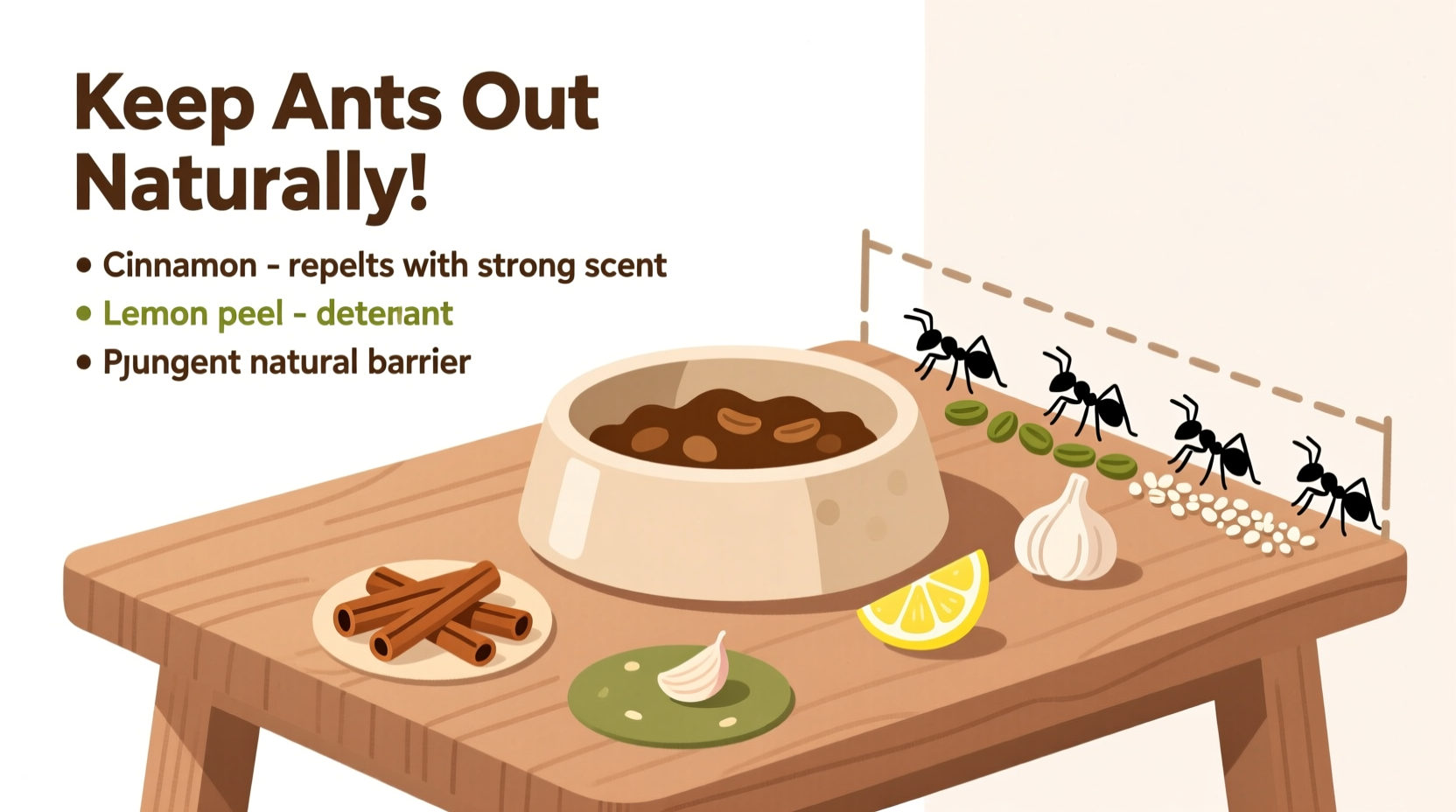
Cinnamon has a strong aroma that interferes with ants’ olfactory receptors. Ground cinnamon sprinkled in a ring around the feeding zone acts as a deterrent. Essential cinnamon oil is even more potent—one drop diluted in water and sprayed lightly around the base of the feeding station can last for hours.
Vinegar
White vinegar disrupts ant pheromone trails. A 50/50 mix of vinegar and water sprayed along entry points, baseboards, and under the feeding mat prevents ants from relocating the food source. Reapply every few days or after cleaning.
Lemon Juice and Citrus Peels
The citric acid in lemon juice confuses ants and breaks down scent markers. Placing fresh citrus peels (lemon, orange, or grapefruit) near the feeding area repels ants temporarily. For longer protection, wipe surfaces with lemon juice or spray a citrus-infused solution.
Food-Grade Diatomaceous Earth (DE)
Diatomaceous earth is a fine powder made from fossilized algae. It dehydrates ants on contact but is non-toxic to pets when food-grade and used sparingly. Lightly dust a ring around the feeding area—avoid direct contact with food. Reapply after spills or moisture exposure.
Coffee Grounds
Used coffee grounds not only absorb odors but also repel ants due to their strong smell and slight acidity. Sprinkle dried grounds in a circle around the bowl. Bonus: they’re compostable and eco-friendly.
“Natural repellents like vinegar and essential oils offer a safer alternative to chemical sprays, especially in homes with pets.” — Dr. Lena Torres, Urban Entomologist, University of California Cooperative Extension
Step-by-Step Guide to Ant-Proof Your Pet Feeding Area
Effective ant prevention requires consistency and multiple layers of defense. Follow this step-by-step routine to eliminate current infestations and prevent future ones.
- Clear and Clean the Area: Remove the pet bowl and clean the surrounding floor with soapy water or vinegar solution. Pay attention to corners and crevices where crumbs accumulate.
- Dry Thoroughly: Moisture attracts ants. Ensure the surface is completely dry before proceeding.
- Create a Moat Using a Tray: Place the pet bowl inside a shallow tray or plate filled with water. Ants cannot cross water, making this a physical barrier. This method is highly effective and widely recommended by pet owners.
- Add Natural Repellent to the Water: Enhance the moat by adding a few drops of dish soap or tea tree oil to the water. This reduces surface tension and deters ants further.
- Apply Dry Barriers: Sprinkle a thin ring of diatomaceous earth or ground cinnamon around the outside of the tray. Replenish as needed.
- Elevate the Setup: If possible, place the tray on a stand with legs submerged in small containers of water. This creates a double barrier.
- Monitor and Maintain Daily: Check for spilled food, refill water in the moat, and reapply repellents every 1–2 days.
Do’s and Don’ts of Natural Ant Control Around Pets
| Do’s | Don’ts |
|---|---|
| Use food-grade diatomaceous earth in dry, controlled amounts | Use garden or pool-grade DE—it contains harmful crystalline silica |
| Wipe feeding areas with vinegar weekly | Over-spray essential oils directly into pet zones—some oils are toxic to cats and dogs |
| Store pet food in airtight glass or metal containers | Leave open bags of pet food on the floor or near feeding areas |
| Feed pets in designated, easy-to-clean spaces | Allow pets to eat in carpeted or cluttered areas where crumbs hide |
| Refresh natural barriers every 24–48 hours | Rely solely on one method—combine tactics for best results |
Real-World Example: How One Household Eliminated Ants in 72 Hours
Sarah M., a dog owner in Austin, Texas, struggled with persistent ant invasions in her kitchen every summer. Her Labrador, Max, often ate alongside a trail of tiny black ants. Concerned about using pesticides near her pet, she tried several natural methods simultaneously.
She started by cleaning the entire feeding corner with vinegar and warm water. She then placed Max’s stainless steel bowl inside a large plastic tray and filled the tray with an inch of water mixed with a few drops of lemon-scented dish soap. Around the tray, she drew a thick line of food-grade diatomaceous earth. She also stored the dog food in a sealed metal bin.
Within two days, ant activity dropped significantly. By day three, no ants were seen near the bowl. Sarah continues this routine year-round and reports zero ant issues for over eight months. “It takes five extra minutes a week,” she says, “but it’s worth it to know my dog isn’t eating bugs.”
Preventive Habits for Long-Term Success
While immediate repellents work well, lasting ant control depends on consistent habits. Integrate these practices into your pet care routine:
- Feed in Controlled Sessions: Instead of leaving food out all day, offer meals at set times and remove uneaten food after 20–30 minutes. This reduces exposure and minimizes spillage.
- Elevate Storage: Keep pet food off the floor. Store it in sealed containers on shelves at least 12 inches above ground level.
- Seal Entry Points: Inspect baseboards, windows, and door frames for cracks. Use caulk to seal gaps where ants might enter.
- Rotate Natural Treatments: Ants can adapt to single repellents. Alternate between cinnamon, vinegar, and citrus sprays weekly to maintain effectiveness.
- Deep-Clean Weekly: Once a week, move the feeding station and clean the floor beneath with a steam cleaner or disinfectant-safe for pets.
Frequently Asked Questions
Is diatomaceous earth safe for pets?
Yes, food-grade diatomaceous earth is safe when used externally and not inhaled in large quantities. Avoid creating dust clouds when applying. Keep it away from your pet’s nose and food bowl. Consult your vet if your pet has respiratory conditions.
Can I use essential oils around my cat?
Many essential oils—including tea tree, eucalyptus, and citrus—are toxic to cats, even in small amounts. Avoid spraying oils near cat feeding areas. Stick to safer options like vinegar or physical barriers if you have felines.
How often should I reapply natural repellents?
Vinegar and citrus sprays should be reapplied every 1–2 days or after cleaning. Dry powders like cinnamon or DE need refreshing after spills, foot traffic, or humidity exposure. Consistency is key to breaking ant trails.
Checklist: Ant-Proof Your Pet Feeding Zone
Use this checklist weekly to ensure your pet’s eating area remains ant-free:
- ✅ Clean floor and bowl with vinegar solution
- ✅ Place bowl in a water-filled tray (moat method)
- ✅ Add a few drops of dish soap or lemon juice to the water
- ✅ Sprinkle diatomaceous earth or cinnamon around the tray
- ✅ Store pet food in airtight, elevated container
- ✅ Remove uneaten food after 30 minutes
- ✅ Inspect for new ant trails or entry points
- ✅ Replace natural barriers as needed
Final Thoughts and Call to Action
Keeping ants out of pet food bowls doesn’t require harsh chemicals or expensive gadgets. With a combination of natural repellents, smart feeding practices, and simple physical barriers, you can protect your pet’s mealtime from uninvited guests. The most effective approach is layered: disrupt scent trails, block access, and maintain cleanliness. These steps not only solve the immediate problem but also contribute to a healthier, more hygienic home environment.
Nature provides powerful tools—we just need to use them wisely. Start today by setting up a water moat around your pet’s bowl and wiping the area with vinegar. Small changes lead to big results. Share your own natural ant solutions in the comments and help other pet owners keep their furry friends safe and their kitchens pest-free.
💬 Have a natural ant remedy that works for your pet? Share your experience below and inspire others to go chemical-free!








