
Bringing a new kitten into a home with an older cat can be both exciting and delicate. While kittens are naturally playful and energetic, older cats often prefer routine, familiarity, and quiet. A rushed or poorly managed introduction can lead to fear, aggression, and long-term tension between the two. However, with patience, planning, and the right approach, you can foster a harmonious relationship that benefits both animals. This guide provides a comprehensive, humane strategy to ensure a smooth transition—minimizing stress and maximizing acceptance.
Understanding Feline Behavior During Introductions
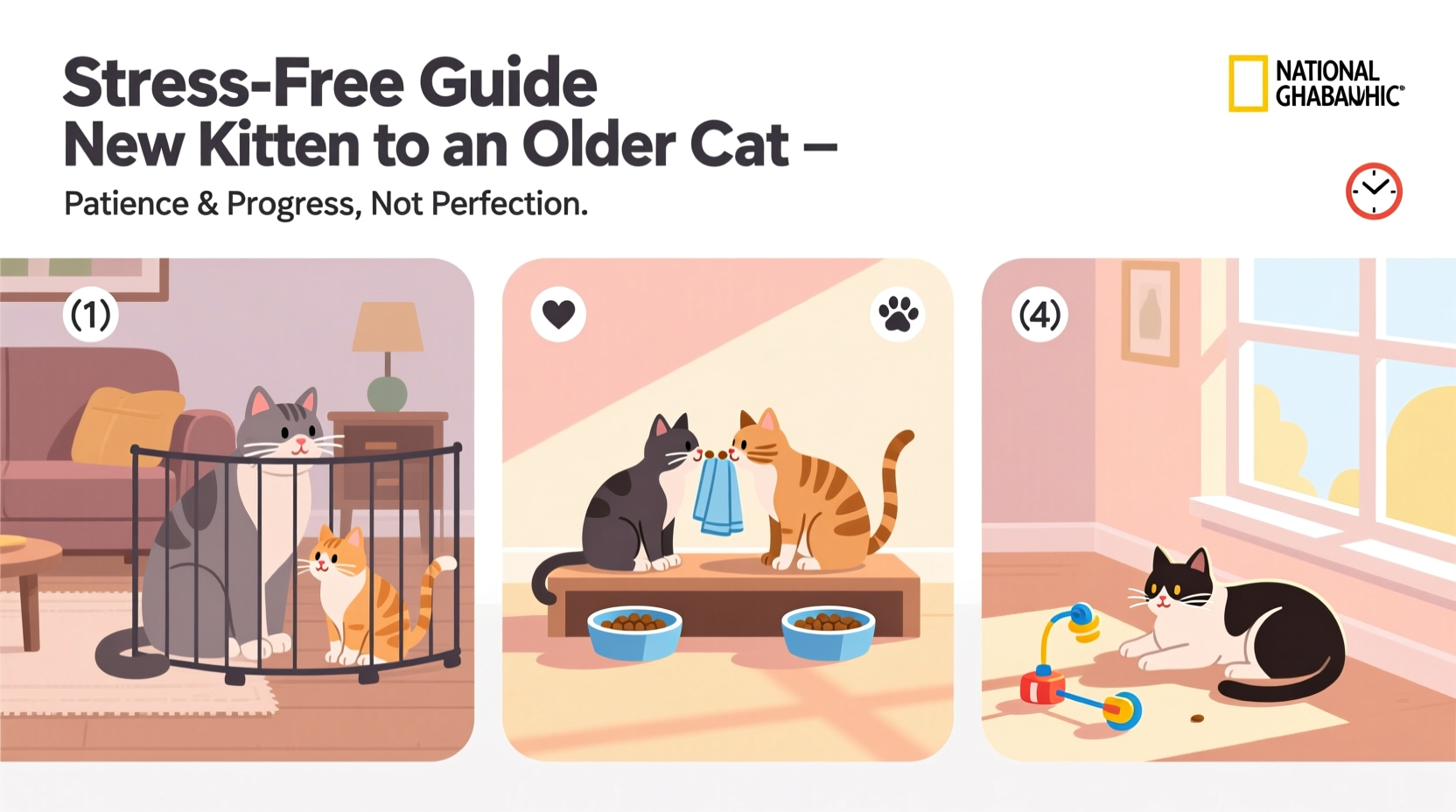
Cats are territorial by nature. Unlike dogs, they don’t instinctively welcome newcomers into their space. An older cat may perceive a kitten as an intruder threatening its safety, resources, and social order. Even seemingly friendly gestures from a kitten—like pouncing or chasing—can be interpreted as threats by a more reserved adult cat.
Stress in cats manifests in various ways: hiding, over-grooming, refusing to eat, urinating outside the litter box, or vocalizing excessively. Recognizing these signs early is crucial. The goal isn’t just coexistence—it’s creating an environment where both cats feel secure and respected.
“Cats don’t do well with sudden changes. Their sense of territory is deeply tied to scent and routine. A gradual, scent-based introduction process respects their natural instincts.” — Dr. Lena Patel, Feline Behavior Specialist
A Step-by-Step Timeline for a Stress-Free Introduction
Rushing the process is the most common mistake. A successful introduction typically takes **7 to 14 days**, though some pairings may require several weeks. Follow this structured timeline to build trust gradually.
- Day 1–2: Separate but Connected
Keep the new kitten in a separate room with its own food, water, litter box, bed, and toys. Allow the older cat to sniff items that have the kitten’s scent (e.g., a blanket or towel used by the kitten). Swap bedding between the cats daily so each becomes familiar with the other’s smell. - Day 3–4: Scent and Sound Exposure
Open the door slightly while both cats are occupied (e.g., during feeding). Use baby gates or cracked doors to allow visual contact without physical interaction. Play calming music or white noise to reduce tension. Continue swapping scents daily. - Day 5–7: Supervised Visual Contact
Allow short, supervised face-to-face meetings (5–10 minutes) in a neutral area. Use treats or interactive toys to create positive associations. End sessions before any signs of stress appear. Never force interaction. - Day 8–10: Controlled Interaction
Increase meeting duration gradually. Use a leash or harness on the kitten if it’s overly exuberant. Reward calm behavior from both cats with treats and praise. Watch for body language cues like flattened ears, hissing, or tail flicking. - Day 11+: Full Integration
Once both cats remain relaxed during extended interactions, allow them to share spaces unsupervised—but only after consistent success over several days. Monitor closely for any regression.
Essential Do’s and Don’ts When Introducing Cats
Small mistakes can derail progress. Refer to this table to avoid common pitfalls and reinforce best practices.
| Do’s | Don’ts |
|---|---|
| Use pheromone diffusers (e.g., Feliway) to reduce anxiety | Force the cats to interact or hold them together |
| Provide multiple litter boxes (one per cat + one extra) | Scold or punish either cat for hissing or growling |
| Offer high perches and hiding spots for the older cat | Allow the kitten unrestricted access too soon |
| Maintain routines for feeding, play, and sleep | Ignore signs of prolonged stress or aggression |
| Praise and reward calm behavior immediately | Leave valuable items (e.g., favorite blankets) unattended during early stages |
Creating a Safe and Balanced Environment
Resource competition is a leading cause of conflict. Even after a successful introduction, tensions can flare if cats feel they must fight for essentials. Prevent this by following the “Rule of Threes”:
- Three litter boxes: Place them in separate locations, never side by side.
- Three feeding stations: Keep food bowls far apart to prevent guarding.
- Three resting zones: Include elevated shelves, window perches, and enclosed beds.
Older cats especially benefit from quiet retreats away from the kitten’s energy. Consider using cat trees with top-level hideaways or placing a cozy bed in a rarely used bedroom. Rotate toys regularly to keep both cats mentally stimulated without direct competition.
Tip: Use puzzle feeders and treat-dispensing toys to engage the kitten during times when the older cat wants peace.Real-Life Example: Introducing Milo to Luna
Luna, a 9-year-old Persian, had lived alone for seven years when her owner adopted Milo, a 10-week-old tabby. Initially, Luna hid under the bed and refused to eat when she smelled the kitten. The owner followed a strict 14-day protocol:
- Milo stayed in the guest bathroom with a piece of Luna’s blanket.
- The owner rubbed a cloth on Luna and placed it near Milo’s bed each morning.
- On day five, they began feeding near opposite sides of the bathroom door.
- By day ten, Luna watched Milo through a baby gate while receiving tuna treats.
- After two weeks, they allowed brief play sessions with wand toys to redirect energy.
Within three weeks, Milo and Luna were napping in the same room—Luna on the sofa, Milo curled at her feet. The key was respecting Luna’s pace and never skipping steps.
Checklist: Preparing for a Successful Introduction
Before bringing your kitten home, ensure you’re fully prepared. Use this checklist to set the stage for a calm transition.
- ✅ Designate a separate room for the kitten (with door that closes)
- ✅ Stock up on supplies: litter boxes, food bowls, toys, scratching posts
- ✅ Install a pheromone diffuser in both the main living area and kitten room
- ✅ Schedule vet visits to confirm both cats are healthy and parasite-free
- ✅ Purchase a baby gate or mesh barrier for controlled viewing
- ✅ Prepare scent-swapping tools: soft cloths, towels, brushes
- ✅ Plan a low-stress week post-adoption (avoid guests or travel)
- ✅ Identify safe hiding spots and vertical spaces for the older cat
Frequently Asked Questions
What if my older cat hisses or swats at the kitten?
Hissing and swatting are normal during early introductions. These are warning signals, not necessarily signs of lasting aggression. As long as no actual fighting occurs (biting, sustained chasing), allow the older cat to express boundaries. Interrupt only if escalation is imminent. Over time, these reactions usually decrease as familiarity grows.
How long should I keep the cats separated?
Full separation should last at least 3–5 days, depending on the older cat’s temperament. Some cautious cats need up to two weeks of gradual exposure before comfortable cohabitation. Always let the older cat dictate the pace—rushing leads to setbacks.
Can I ever leave them alone together unsupervised?
Yes, but only after consistent, calm interactions over several days. Begin with short absences (e.g., 30 minutes) and return to check for disturbances. Gradually increase duration. If either cat shows renewed stress, revert to supervised visits and extend the adjustment period.
When to Seek Professional Help
While most cats adapt within a few weeks, some pairings face persistent challenges. Consult a veterinarian or certified feline behaviorist if you observe:
- Aggressive attacks (biting, drawing blood)
- One cat preventing the other from accessing food, water, or litter
- Symptoms of chronic stress (excessive grooming, weight loss, inappropriate elimination)
- No improvement after 4–6 weeks of careful introduction
In some cases, medication or advanced behavioral therapy may be recommended. Early intervention prevents long-term animosity.
Conclusion: Patience Builds Lasting Harmony
Introducing a new kitten to an older cat isn’t about forcing friendship—it’s about fostering mutual respect through structure, empathy, and time. Every cat has a unique personality, and honoring those differences is the foundation of a peaceful household. By following a slow, scent-based introduction, providing ample resources, and staying attentive to emotional cues, you create a home where both cats can thrive.
💬 Have you successfully introduced a kitten to an older cat? Share your story or tips in the comments—your experience could help another pet owner navigate this journey with confidence.








