
Every day, millions of calls and texts are sent from unknown numbers. Whether it’s a missed call from an unfamiliar digit string or a suspicious text message, knowing who owns a number—and what kind of line it uses—can help protect your privacy, avoid scams, and improve communication efficiency. Identifying the carrier (like Verizon, T-Mobile, or AT&T) and line type (mobile, landline, VoIP) is simpler than most people think, especially with modern digital tools and publicly available data.
While full subscriber details remain protected for privacy reasons, you can still determine key information such as the service provider, geographic origin, and whether the number is tied to a physical SIM card or a virtual calling app. This guide walks through proven methods, reliable tools, and practical strategies to uncover these details accurately and ethically.
Understanding Mobile Number Structure
In North America, phone numbers follow the North American Numbering Plan (NANP), which organizes digits into three distinct parts: the country code (+1), the area code (3 digits), the central office or exchange code (3 digits), and the line number (4 digits). For example, in (555) 123-4567:
- 555 – Area Code (geographic region)
- 123 – Exchange Code (specific carrier assignment)
- 4567 – Subscriber Number
The exchange code is crucial because carriers are assigned blocks of numbers within specific exchanges. By analyzing this segment, databases can often pinpoint the original service provider—even if the number has since been ported to another network.
“Carrier identification relies on historical number allocations and real-time porting records. While not 100% foolproof, accuracy exceeds 95% for unported numbers.” — David Lin, Telecommunications Data Analyst
Step-by-Step Guide to Identify Carrier and Line Type
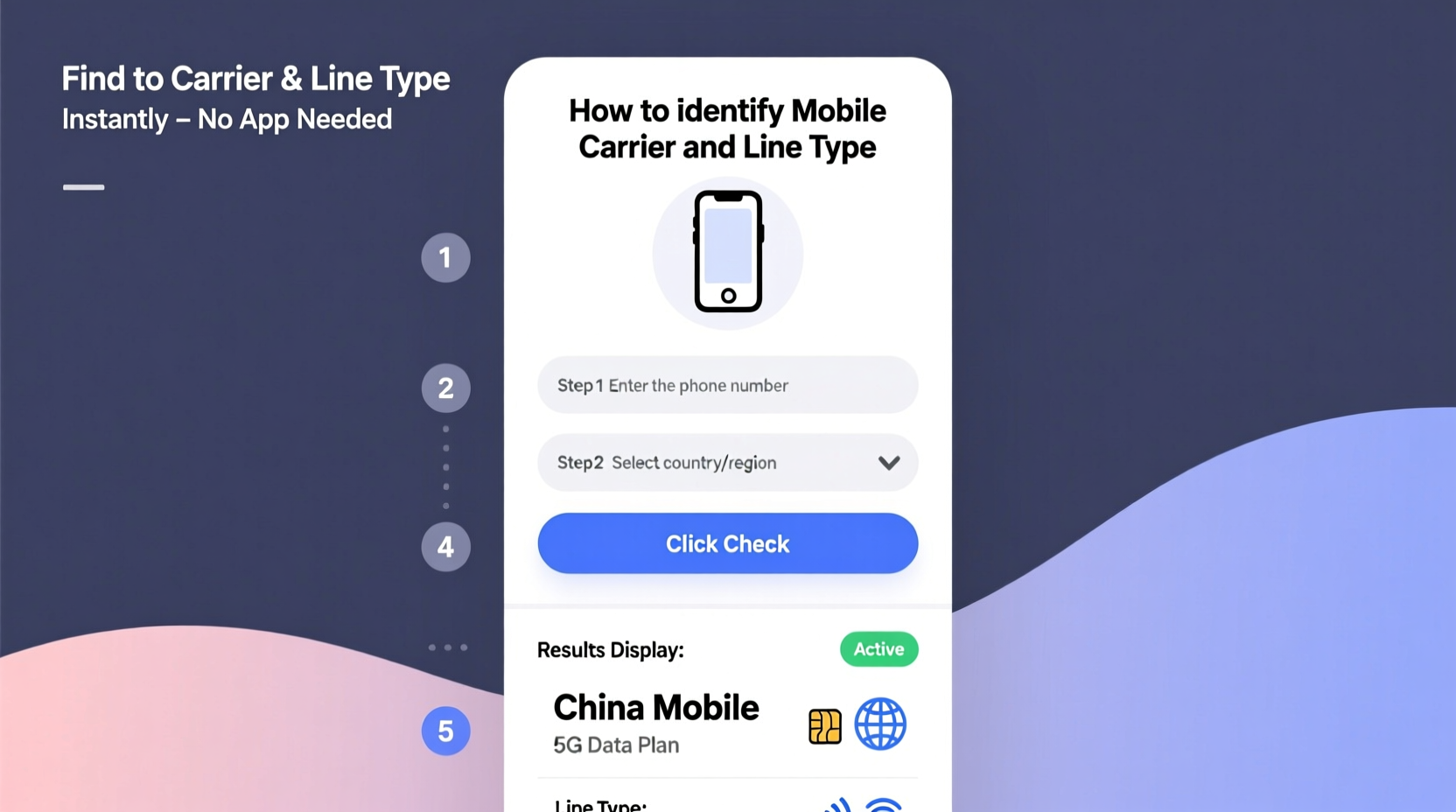
Follow this logical sequence to determine both the carrier and line type of any U.S. or Canadian mobile number:
- Verify the Number Format: Ensure the number follows NANP standards (10-digit, no special characters).
- Use a Reputable Reverse Phone Lookup Tool: Enter the full number into services like Truecaller, Whitepages, or NumberGuru.
- Analyze Results for Carrier Name: Most tools display the current or original carrier next to the result.
- Check Line Type Indicators: Look for labels such as “Mobile,” “Landline,” “VoIP,” or “Toll-Free.”
- Cross-Reference with Porting Databases: If available, use NPAC (Number Portability Administration Center) powered tools to confirm if the number was ported.
- Review Geographic Consistency: Match the area code to its expected location; mismatches may indicate VoIP or scam activity.
Top Free Tools and Their Strengths
Several online tools offer fast, no-cost access to carrier and line type data. Here's a comparison of leading options:
| Tool | Carrier Info | Line Type Detection | Porting Support | User Reviews |
|---|---|---|---|---|
| Truecaller | Yes | Yes | Limited | ★★★★☆ |
| Whitepages | Yes | Yes | Yes (Premium) | ★★★★★ |
| NumberGuru | Yes | Yes | No | ★★★★☆ |
| OpenCelliD | No | No | No | ★★★☆☆ |
| NPA-NXX.com | Yes (by prefix) | Basic | No | ★★★★☆ |
For best results, start with Truecaller for instant mobile insights, then verify findings via Whitepages for deeper background checks. NPA-NXX.com is excellent for technical users who want to research exchange codes directly.
Recognizing VoIP and Scam Risks
Not all numbers come from traditional carriers. Voice over Internet Protocol (VoIP) lines—used by apps like Google Voice, TextNow, and Skype—are increasingly common. These numbers are harder to trace and often exploited by scammers due to their low cost and anonymity.
Red flags indicating a VoIP or potentially fraudulent number include:
- Sudden appearance of new area codes unrelated to your contacts
- Repeated calls that disconnect immediately (common in robocall testing)
- Caller ID showing \"Spam Risk\" or \"Scam Likely\"
- Text messages with suspicious links or urgent financial demands
“Over 40% of spam calls originate from VoIP systems. Identifying them early reduces exposure to phishing and identity theft.” — FTC Consumer Protection Report, 2023Tip: Enable built-in spam protection on your smartphone. Android and iOS now flag high-risk numbers automatically based on crowd-sourced data.
Mini Case Study: Tracking a Suspicious Delivery Notification
Sarah received a text claiming her package was delayed, with a link to “reschedule delivery.” The sender number was (213) 555-0198—a Los Angeles area code she didn’t recognize. Before clicking, she pasted the number into Truecaller. The result showed:
- Carrier: Google Voice (VoIP)
- Line Type: Virtual
- User Tags: “Scam,” “Phishing Attempt”
She searched the same number on the Federal Trade Commission’s complaint database and found 12 similar reports involving fake UPS alerts. Sarah deleted the message and reported it. Her caution prevented a potential malware download.
Checklist: How to Verify a Number Safely
Before returning a call or sharing personal information, complete this verification checklist:
- ✅ Confirm the number is 10 digits and properly formatted
- ✅ Run a reverse lookup using at least two trusted tools
- ✅ Check for user-reported tags like “scam” or “telemarketer”
- ✅ Note the line type—be cautious with VoIP numbers
- ✅ Avoid clicking links or providing info until verified
- ✅ Report confirmed spam numbers to the FCC or FTC
Frequently Asked Questions
Can I find out who owns a phone number?
Not fully without legal authority. While you can identify the carrier and line type, personal ownership details (name, address) are protected under privacy laws. Only law enforcement or authorized entities can access subscriber records via court order.
What if the number has been ported to another carrier?
Some tools show only the original carrier. However, services connected to the Number Portability Administration Center (NPAC) can detect current carriers even after porting. Paid versions of Whitepages and enterprise APIs provide updated routing data.
Do these methods work internationally?
Limitedly. This guide applies primarily to U.S. and Canadian numbers under NANP. Other countries have different numbering systems and varying levels of public data access. European numbers, for instance, may require local directory inquiries or national telecom databases.
Conclusion
Identifying the carrier and line type of a mobile number doesn’t require advanced skills—just the right tools and a methodical approach. With free resources like Truecaller and Whitepages, anyone can uncover whether a number belongs to a major wireless provider, a home landline, or a disposable VoIP service. This knowledge empowers smarter decisions about which calls to answer, which messages to trust, and when to report abuse.
As phone-based threats evolve, staying informed becomes a form of digital self-defense. Take control of your communication security today by verifying unknown numbers before engaging.
💬 Have a number you're trying to trace? Share your experience or tips in the comments below—help others stay safe and informed!








