
Every season brings the same challenge: a closet overflowing with clothes you don’t wear, mixed in with a few favorites you reach for daily. The frustration isn't just visual—it's functional. When your wardrobe is disorganized, getting dressed becomes a chore, not a choice. The reverse hanger method offers a simple yet powerful solution. Unlike one-time purges that lead to quick relapse, this system builds awareness over time, helping you make data-driven decisions about what stays and what goes. More than just a trick, it’s a behavioral tool that transforms how you relate to your clothing.
The method works by flipping all your hangers backward at the start of a period—say, six months. As you wear an item, you return it to the closet with the hanger facing forward. At the end of the period, any garment still on a reversed hanger hasn’t been worn. These become prime candidates for donation, resale, or storage. But like any habit-based system, its success depends on consistency and structure. Without thoughtful implementation, even the best methods fail. This guide walks you through how to use the reverse hanger method effectively—and more importantly, how to make it stick for good.
Why Most Decluttering Efforts Fail (And How This Method Fixes It)
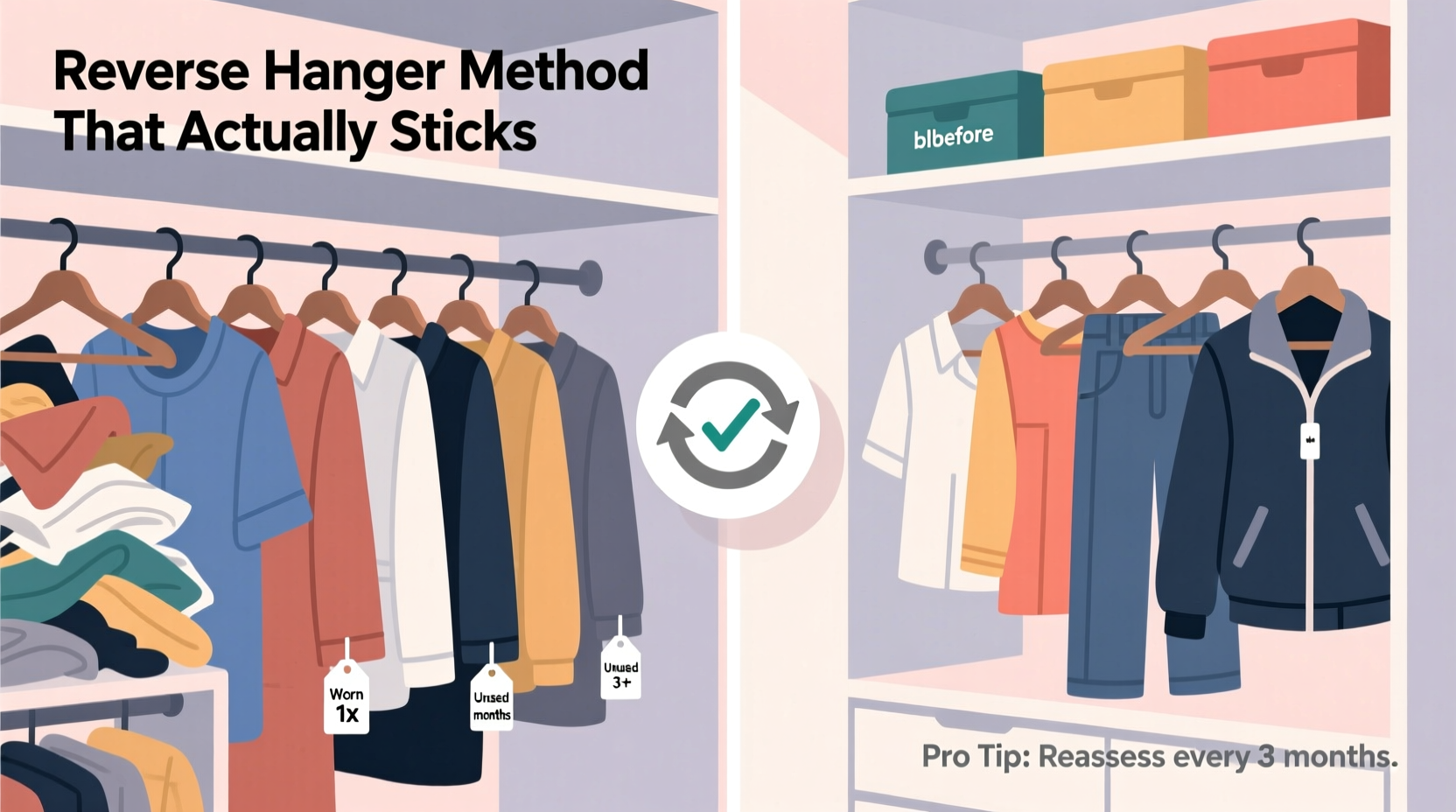
Traditional closet cleanouts often rely on emotion or intuition. You pull everything out, sort into “keep,” “donate,” and “maybe” piles, and hope the result lasts. But within weeks, clutter creeps back. Why? Because these efforts don’t address the root cause: unclear usage patterns. You’re making decisions without data. Did you really not wear that navy blazer because you dislike it—or because it was buried under sweaters?
The reverse hanger method replaces guesswork with observation. It doesn’t ask you to decide upfront what you love or hate. Instead, it collects real-world evidence over time. This subtle shift—from assumption to insight—is what makes the method resilient. As Marie Kondo says:
“Keep only those things that speak to your heart. But sometimes, your heart needs time to speak.” — Marie Kondo, Organizing Consultant
By tracking actual usage, the reverse hanger method gives your instincts time to reveal themselves. It also reduces decision fatigue. You're not pressured to make judgment calls during the initial purge. You simply set up the system and let it run. When the review period ends, the choices become obvious.
A Step-by-Step Guide to Implementing the Reverse Hanger Method
This isn’t a weekend fix. It’s a six-month process designed to reflect real-life habits. Follow these steps carefully to ensure accuracy and sustainability.
- Empty and assess your closet. Remove every hanged item. Fold knits and lay them aside if they don’t require hanging. Focus only on garments on hangers: shirts, dresses, jackets, blouses, suits.
- Sort by category. Group similar items together—workwear, casual tops, formal dresses, outerwear. This prevents confusion later and helps you spot imbalances in your wardrobe.
- Clean and repair as needed. Before rehanging, check for stains, missing buttons, or loose hems. Repair what you can. If something needs tailoring but has been ignored for months, consider whether it’s worth saving.
- Use uniform hangers. Swap mismatched or flimsy hangers for consistent, sturdy ones (velvet, wood, or slim plastic). Uniformity improves visibility and prevents shoulder bumps that stretch fabrics.
- Flip all hangers backward. Rehang every item with the hook facing the opposite direction—usually, this means the hook points toward the closet rod’s left instead of right. Be consistent.
- Wear and rotate normally. For the next six months, live as usual. When you wear an item, hang it back with the hanger facing forward—the standard way.
- Do not adjust hangers mid-cycle. Resist the urge to flip a rarely worn piece forward “just because.” The integrity of the data depends on honesty.
- Review after six months. Items still on reversed hangers haven’t been worn. Evaluate each one: Is it outdated? Ill-fitting? Seasonally irrelevant? Let go with confidence.
What to Do With Clothes That Never Got Worn
Finding 30+ items untouched after six months can feel overwhelming. But this is where clarity turns into action. Not every unworn piece should be discarded immediately. Use this framework to decide:
- Donate: Gently used items that no longer fit your style, size, or lifestyle.
- Sell: High-quality, brand-name, or designer pieces in excellent condition. Try platforms like Poshmark, ThredUp, or Vestiaire Collective.
- Repurpose: Fabric from stained or damaged clothes can become cleaning rags, patchwork material, or craft supplies.
- Store seasonally: If an item is strictly seasonal (e.g., a winter coat in summer), move it to off-season storage—but track usage when it returns.
- Re-evaluate fit: Some clothes may need tailoring. If you love the piece but it doesn’t fit, schedule a tailor visit within two weeks or let it go.
One common pitfall is holding onto “sentimental” items that serve no practical purpose. A concert T-shirt or old uniform might spark memory, but if it’s not displayed or worn, it’s occupying valuable space. Consider photographing it or framing a small swatch before releasing it.
Real Example: Sarah’s Closet Transformation
Sarah, a 34-year-old project manager, spent years rotating the same five blouses despite owning over 25. She tried KonMari folding, color-coding, and seasonal swaps—but nothing stuck. After learning about the reverse hanger method, she committed to the six-month cycle. She started in January, flipping 68 hangers.
By July, 29 items remained on reversed hangers. Among them: three silk blouses she bought for a job she didn’t get, a cocktail dress worn once two years prior, and a leather jacket that pinched her shoulders. She donated 22 pieces, sold seven online, and stored one winter coat. The result? Her morning routine shortened by 7 minutes, and she felt more confident in her daily outfits. “Seeing the evidence made it easy to let go,” she said. “I wasn’t judging myself—I was just reading the data.”
Maximizing Long-Term Success: Habits That Make It Stick
The reverse hanger method is only as strong as the habits supporting it. Many people complete one cycle but revert to clutter because they don’t integrate maintenance practices. Here’s how to sustain progress:
Create a One-In, One-Out Rule
For every new clothing item you bring in, remove one. This prevents gradual accumulation and forces mindful consumption. Keep a donation bin in your closet and drop an item in whenever you add something new.
Seasonal Mini-Audits
Every three months, do a quick scan. Are there items still on backward hangers from last cycle? Are new purchases being worn? Adjust categories or storage if needed.
Track Emotional Triggers
Notice patterns in unworn clothes. Are they all work-related? Maybe your job changed. Are they all tight-fitting? Perhaps your body or comfort preferences evolved. Use insights to refine future shopping choices.
Upgrade Your Hangers Strategically
Poor hangers contribute to clutter. Wire hangers bend, slide, and damage shoulders. Invest in non-slip, contoured hangers that preserve shape and prevent crowding.
Tip: Label hangers with purchase date or cost (optional). Over time, this reveals cost-per-wear value—helping you shop smarter.Checklist: Your Reverse Hanger Method Roadmap
Follow this checklist to ensure full implementation and lasting results:
- ☐ Remove all hanged clothing from the closet
- ☐ Sort items by type (tops, dresses, jackets, etc.)
- ☐ Clean, mend, or retire damaged pieces
- ☐ Replace flimsy hangers with uniform, durable ones
- ☐ Rehang all items with hangers reversed (hook backward)
- ☐ Set a 6-month reminder on your phone or calendar
- ☐ Wear clothes as normal—no interference with hangers
- ☐ After six months, identify all items still on reversed hangers
- ☐ Sort unworn items into donate, sell, store, or tailor piles
- ☐ Apply one-in, one-out rule moving forward
- ☐ Schedule quarterly mini-audits to maintain order
Do’s and Don’ts of the Reverse Hanger Method
| Do | Don’t |
|---|---|
| Use identical hangers for consistency and space efficiency | Mix different hanger types that create uneven spacing |
| Include only garments you actively choose to wear | Apply the method to stored-off items like holiday costumes |
| Wait the full six months before reviewing | Check progress weekly and lose motivation prematurely |
| Be honest—don’t flip hangers forward after wearing once | Manipulate results to justify keeping unworn clothes |
| Pair the method with a capsule wardrobe approach post-purge | Immediately refill the space with new impulse buys |
“The reverse hanger method works because it removes guilt from decluttering. You’re not failing your clothes—you’re learning from them.” — David Chen, Sustainable Fashion Advocate
Frequently Asked Questions
Can I use this method for shoes or accessories?
While the reverse hanger method is designed for hanged clothing, you can adapt it. For shoes, place sticky notes in unworn pairs and check after six months. For bags or scarves, rotate their position in storage—back row means unused. The principle remains: track usage passively, then act.
What if I travel frequently or work remotely?
Lifestyle changes affect wear patterns. If you worked from home during the test period, some professional clothes may show as “unused” not due to dislike but context. In such cases, reassess based on intent: Will you return to an office? If not, downsize formalwear. If yes, reintroduce gradually and retest.
Is six months too long? Can I shorten it?
Six months captures full seasonal rotation. Three months may miss winter coats or holiday outfits. However, if you're highly motivated, try a 90-day version—but extend it if key seasons are missed. Consistency matters more than speed.
Conclusion: Turn Clutter Into Clarity—Starting Today
The reverse hanger method isn’t magic. It’s mindfulness disguised as a simple hack. By aligning your wardrobe with actual behavior, you stop managing clutter and start designing a closet that serves you. The clothes you keep earn their space; the ones you release make room for better choices. And unlike drastic purges that leave you regretting or overwhelmed, this method builds self-awareness gradually—so the results last.
Start tonight. Empty your closet, flip the hangers, and set your reminder. In six months, you won’t just have fewer clothes. You’ll have freedom, clarity, and a deeper understanding of your personal style. That’s not just organization—it’s transformation.
💬 Ready to reclaim your closet? Begin the reverse hanger method today and share your progress in the comments. What surprised you most about what you didn’t wear?








