Service dogs play a vital role in the lives of individuals with disabilities, offering independence, emotional support, and physical assistance. As working animals, they must be easily identifiable—not only to ensure public access rights but also for their own safety. A well-designed, personalized ID tag is a crucial component of responsible service dog ownership. However, not all tags are created equal. To be effective, a service dog ID tag must balance legal compliance, visibility, durability, and essential information—all while respecting privacy.
This guide walks through the process of creating a personalized service dog ID tag that adheres to both legal expectations and real-world practicality, ensuring your dog remains recognized, protected, and professional in public settings.
Understanding Legal Standards for Service Dog Identification
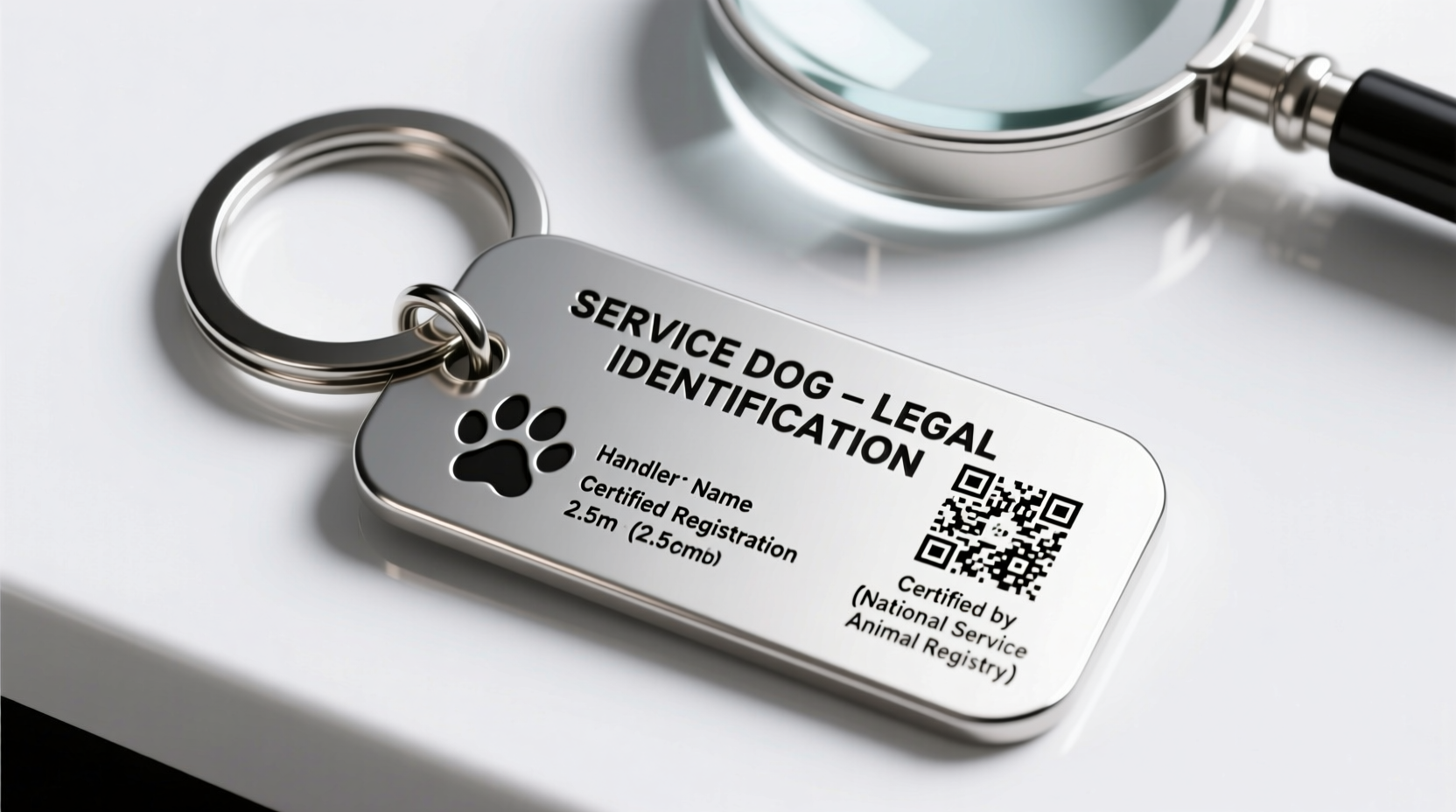
In the United States, the Americans with Disabilities Act (ADA) does not require service dogs to wear identifying tags or vests. However, many handlers choose to use visible markers—like ID tags—to prevent confrontations, facilitate smoother public access, and promote transparency. While no federal law mandates specific design elements on a tag, certain states and municipalities may have guidelines or recommendations for service animal identification, particularly in housing or transportation contexts.
The Department of Justice emphasizes that businesses cannot demand documentation or certification for entry, but they may ask two permitted questions: (1) Is the dog a service animal required because of a disability? and (2) What work or task has the dog been trained to perform? A visible ID tag can preempt these interactions by signaling the dog’s working status at a glance.
“While not legally required, consistent visual identification helps reduce misunderstandings and protects both the handler and the public.” — Dr. Karen London, Certified Applied Animal Behaviorist
It's important to note that fraudulent service dog identification is becoming a growing concern. Some states, including California and Florida, have laws penalizing the misrepresentation of pets as service animals. Therefore, any ID tag should reflect truthful, accurate information without implying official certification unless issued by a legitimate training program.
Essential Elements of a Practical Service Dog ID Tag
A functional ID tag goes beyond aesthetics—it serves as a communication tool. When designing your tag, prioritize clarity, legibility, and usefulness. The following components should be considered:
- Dog’s Name: Helps staff or bystanders interact appropriately.
- Handler’s Emergency Contact: Critical if the dog becomes separated or the handler is incapacitated.
- \"Service Dog\" Designation: Clearly labels the dog’s working status.
- Medical Alert Information (optional): E.g., “Do Not Pet – Working” or “Allergy Alert – Handler Has Severe Allergies.”
- QR Code or Microchip Link: For digital access to medical records or verification (if used responsibly).
Step-by-Step Guide to Creating Your Custom ID Tag
- Determine the Purpose: Decide whether the tag is primarily for identification, legal protection, or emergency response.
- Select Durable Materials: Choose stainless steel, aluminum, or engraved polymer tags that resist weather, chewing, and fading.
- Choose a Legible Font: Sans-serif fonts like Arial or Helvetica offer maximum readability.
- Laser Engrave or Etch Information: This ensures longevity compared to printed stickers or paint.
- Add a Quiet Attachment: Use a rubber silencer or coated split ring to prevent jingling, which can distract working dogs.
- Test Visibility: Hold the tag at arm’s length—can you read it clearly?
- Register (Optional): Pair the tag with a national registry like Assistance Dogs International (ADI) for added legitimacy.
Do’s and Don’ts: Best Practices for Service Dog Tags
| Do’s | Don’ts |
|---|---|
| Include an emergency contact number | Put the handler’s full name or address |
| Use reflective material for night visibility | Claim false certifications (e.g., “Federally Certified”) |
| Indicate the dog’s working status clearly | Include unnecessary personal details |
| Pair with a matching collar or vest | Use noisy charms or bells |
| Update info if contact details change | Use flimsy plastic tags prone to cracking |
Real-World Example: Sarah and Max’s Tag Success Story
Sarah, a veteran with PTSD, relies on her service dog Max during grocery shopping and transit commutes. Initially, she avoided using an ID tag, believing it wasn’t necessary under ADA rules. However, after being questioned multiple times at stores and once denied boarding a bus, she decided to create a custom tag.
She opted for a brushed aluminum tag with three lines: “Max – Service Dog,” “Emergency Contact: (555) 123-4567,” and “Trained Task: Anxiety Interruption.” She paired it with a quiet clasp and a subtle blue service vest. Within weeks, public interactions improved significantly. Staff acknowledged Max respectfully, and one store manager even thanked her for the clear identification during a busy holiday rush.
Sarah’s experience illustrates how a simple, well-thought-out tag can enhance dignity, reduce friction, and affirm legitimacy—without compromising legal rights.
Frequently Asked Questions
Do service dogs need ID tags by law?
No federal law requires service dogs to wear ID tags. However, many handlers use them voluntarily to ease public access and provide emergency contact information. Some states recommend or recognize ID systems for housing or travel purposes, but they cannot override ADA protections based on documentation.
Can I put my service dog’s certification on the tag?
If your dog was trained through a certified program (e.g., ADI-accredited), you may reference the organization, but avoid phrases like “officially certified” or “government approved,” which are misleading. The ADA does not recognize certification as a requirement, so such claims may raise skepticism.
Should I include a QR code linking to medical records?
QR codes can be useful but must be used carefully. Only link to non-sensitive information such as emergency contacts or training verification. Never expose private health data. Ensure the URL is secure and regularly tested.
Final Recommendations and Action Steps
Creating a personalized service dog ID tag is more than a customization project—it’s an act of responsibility. A well-crafted tag supports your dog’s role, safeguards your rights, and promotes public understanding. Start by gathering your essential information and selecting durable, readable materials. Focus on clarity over decoration, and always align your messaging with truth and ADA principles.
Tip: Keep a spare engraved tag on file in case the original is lost or damaged.Consider pairing the tag with a matching vest or harness for consistent visibility. Regularly inspect the tag for wear, especially if your dog is active outdoors or swims frequently. If your contact information changes, update the tag immediately—this small step could make a critical difference in an emergency.
Conclusion: Take Pride in Professional Presentation
Your service dog is a skilled partner deserving of recognition and respect. By investing time in a thoughtful, compliant ID tag, you reinforce professionalism, enhance safety, and contribute to a culture of understanding around service animals. Whether you're navigating a crowded airport or walking through your neighborhood, a well-designed tag speaks volumes—quietly, clearly, and confidently.
💬 Have experience designing service dog tags? Share your insights or tag designs in the comments to help others create effective, respectful identification.








