Outdoor entertaining has evolved far beyond folding chairs and a cooler. Today’s backyard bars are stylish, functional, and often central to home life—especially in warmer months. But if you share your space with a dog, aesthetics and convenience shouldn’t come at the cost of their well-being. A poorly planned bar zone can expose pets to toxic substances, overheating risks, sharp objects, or stress-inducing chaos. The good news? You don’t need to choose between hospitality and responsibility. With intentional design, thoughtful material choices, and proactive behavior management, you can build a backyard bar that welcomes both human guests and canine companions—safely, comfortably, and joyfully.
1. Prioritize Safety Zones: Separate, Not Isolate
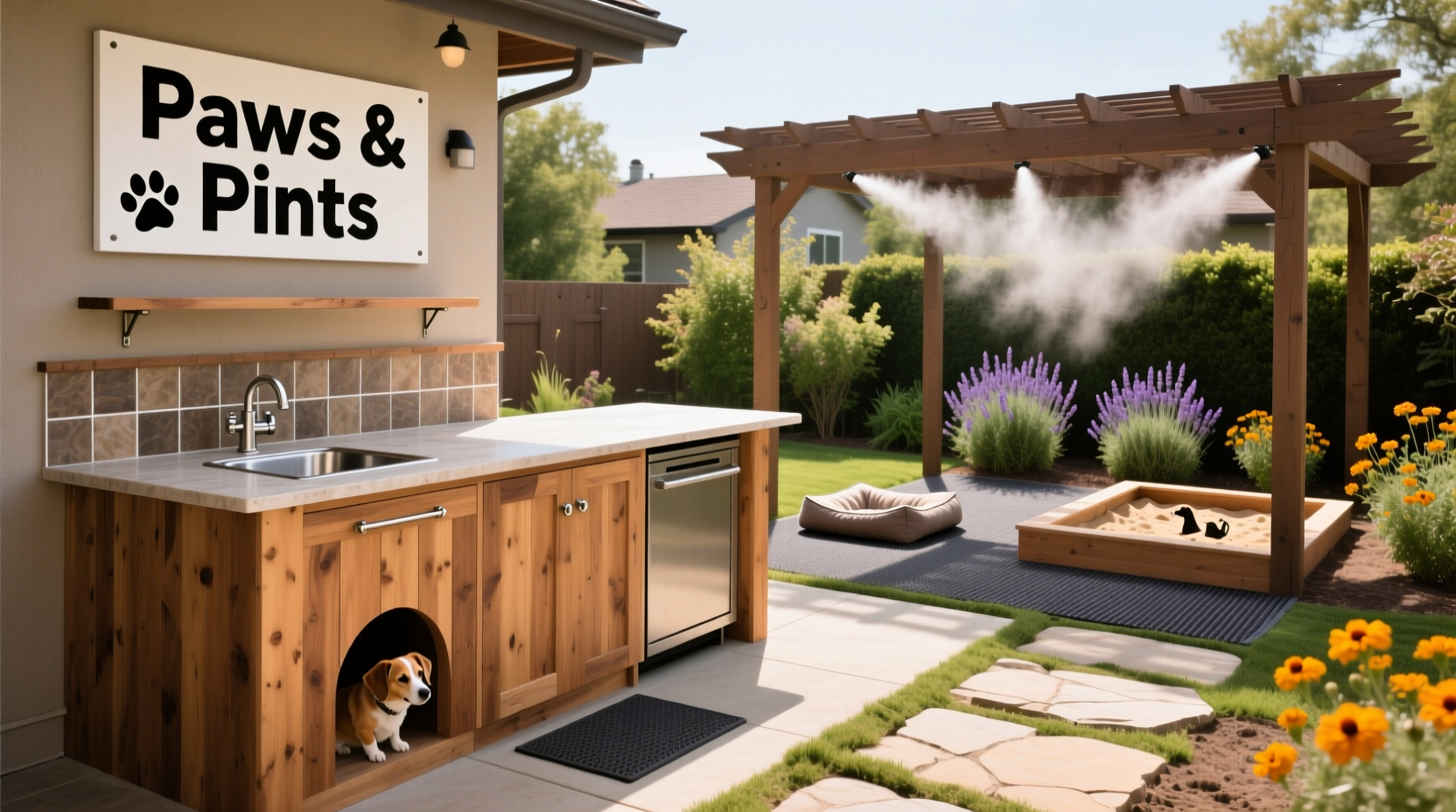
A dog-friendly backyard bar begins not with furniture selection, but with spatial intelligence. Dogs thrive on predictability and autonomy. Crowded, high-traffic bar areas—especially near grills, glassware stations, or foot traffic corridors—can trigger anxiety, resource guarding, or accidental injury. Instead of relegating your dog to a crate or distant corner, design designated zones that serve dual purposes: safety *and* inclusion.
Start by mapping your yard into three overlapping but distinct activity rings:
- The Core Bar Zone: Where drinks are mixed, served, and consumed (typically 6–8 ft radius around the bar structure).
- The Canine Comfort Ring: A shaded, quiet area within earshot but outside direct foot traffic—ideally 10–15 feet from the bar, with access to water, shade, and a familiar bed or mat.
- The Play & Relief Buffer: A separate, fenced or clearly defined section for off-leash movement, sniffing, or potty breaks—away from spilled alcohol, food scraps, or dropped ice.
This layered approach respects your dog’s need for rest while keeping them part of the atmosphere—not as an afterthought, but as a valued member of the gathering.
Tip: Use low-profile, non-toxic ground cover like decomposed granite or rubber mulch in the Canine Comfort Ring—it stays cool underfoot, drains well, and won’t cling to paws like wood chips or gravel.2. Material Matters: What to Choose (and Avoid)
Every surface in your backyard bar setup carries risk—or reward—for your dog. Toxicity, temperature retention, slipperiness, and chew potential all demand scrutiny. Below is a concise comparison of common materials used in outdoor bar builds and their impact on canine safety:
| Material | Safety Pros | Risks to Avoid |
|---|---|---|
| Stainless steel countertops | Non-porous, easy to sanitize, doesn’t retain heat as intensely as stone, resistant to chewing damage | Can become uncomfortably hot in full sun; avoid uncoated edges that may nick paws |
| Concrete (sealed with pet-safe acrylic sealer) | Durable, cool to the touch when shaded, customizable, non-toxic once fully cured (72+ hours) | Unsealed concrete leaches lime (alkaline), which irritates paws and skin; avoid epoxy sealers containing VOCs or biocides |
| Cedar or redwood bar framing | Naturally insect-repellent, low splinter risk, moderate thermal mass (stays cooler than metal) | Never use pressure-treated lumber (contains arsenic or copper compounds); avoid cedar oil-based stains—dogs lick paws and absorb toxins transdermally |
| Woven polypropylene rugs (indoor/outdoor) | Non-toxic, UV-stable, machine washable, provides traction on smooth surfaces | Avoid nylon or polyester rugs treated with flame retardants or stain guards (e.g., PFAS chemicals)—these bioaccumulate and harm liver/kidney function over time |
Remember: “Pet-safe” isn’t just about ingestion. Dogs absorb chemicals through their paw pads and skin—and they inhale volatile compounds from drying sealants, adhesives, and finishes. Always verify product safety data sheets (SDS) for terms like “non-toxic to mammals,” “no heavy metals,” and “low-VOC (<50 g/L).” When in doubt, contact the manufacturer directly and ask, “Is this safe for unsupervised, long-term contact with dogs?”
3. The Hidden Hazards: Alcohol, Ice, and Everyday Items
Even the most thoughtfully built bar can become hazardous when everyday items enter the picture. Dogs don’t distinguish between a cocktail shaker and a chew toy—or between a dropped olive and a poison. Here’s what requires vigilant management:
- Alcohol: Ethanol is rapidly absorbed in dogs—even small amounts cause vomiting, disorientation, respiratory depression, and coma. A single spilled margarita contains enough ethanol to endanger a 25-lb dog.
- Hops (in beer): Not just alcohol—raw or spent hops cause malignant hyperthermia in dogs, spiking body temperature above 106°F within minutes. This is life-threatening and requires immediate veterinary care.
- Ice cubes: Often overlooked, but large or jagged ice can fracture teeth—especially in enthusiastic chewers. Also, rapid consumption of cold water post-exertion increases bloat risk in deep-chested breeds.
- Glass and broken ceramics: Lacerations from shattered drinkware are common in active yards. Opt for shatterproof polycarbonate glasses and avoid ceramic mugs or stemware outdoors.
- String lights and extension cords: Chewing exposes wires and creates electrocution risk. Bury cords in conduit or use cord covers rated for outdoor, chew-resistant use (e.g., those with Kevlar-reinforced jackets).
“Owners often assume ‘a little sip won’t hurt.’ In reality, dogs metabolize alcohol at less than half the rate of humans—and their smaller body mass means toxicity thresholds are dramatically lower. There is no safe amount.” — Dr. Lena Torres, DVM, Veterinary Toxicology Specialist, ASPCA Animal Poison Control Center
4. Step-by-Step: Building Your Dog-Safe Bar in 7 Days
You don’t need to overhaul your entire yard to make meaningful improvements. Follow this realistic, weeklong implementation plan—designed for homeowners with basic DIY skills and limited weekend time:
- Day 1 – Assess & Map: Walk your yard at peak party time (e.g., 6–8 PM on a warm Saturday). Note where your dog naturally rests, where guests congregate, and where hazards cluster (e.g., grill proximity, open cooler, hanging string lights).
- Day 2 – Secure Storage: Install latched, elevated cabinets beneath your bar for alcohol, cleaning supplies, and sharp tools. Use childproof locks rated for >20 lbs pull force—many dogs learn to operate basic cabinet latches in under a week.
- Day 3 – Hydration Infrastructure: Add a second, dedicated water station: stainless steel bowl on a non-tip base, filled with fresh, cool water (change every 2 hours), placed in the Canine Comfort Ring—not near the bar faucet where it could be accidentally knocked over.
- Day 4 – Surface Audit: Replace one high-risk item: swap out a glass-top side table for a solid teak version; replace a decorative gravel border with smooth river rock; install rubber-backed outdoor rug under bar stools.
- Day 5 – Barrier Strategy: Use low, removable planters (filled with non-toxic lavender or lamb’s ear) or a 12-inch-tall cedar log to gently define the Canine Comfort Ring—visible to guests, imperceptible to dogs, and fully portable.
- Day 6 – Guest Briefing Kit: Print two laminated cards: one for guests (“Please keep drinks in hand—our pup loves exploring!”) and one for yourself (“Check: water full? Cord covered? Alcohol secured? Ice size appropriate?”).
- Day 7 – Dry Run: Host a 90-minute “test gathering” with two trusted friends and your dog present. Observe where he goes, what he investigates, and where gaps remain. Adjust before your first full-scale event.
5. Real-World Example: The Henderson Backyard Bar Transformation
In Austin, Texas, the Henderson family installed a sleek, L-shaped cedar bar in their backyard in spring 2023—complete with a built-in kegerator, pendant lighting, and a quartz countertop. Within weeks, their 4-year-old Australian Shepherd, Rio, began showing signs of stress during gatherings: pacing, lip-licking, and retreating under the deck. A veterinary behaviorist observed Rio wasn’t fearful—he was overwhelmed by constant motion near his resting spot (a worn patch of grass directly behind the bar stool line).
They made three targeted changes:
- Moved Rio’s bed 12 feet east—into dappled shade beneath a live oak, with a view of the yard but outside the primary traffic lane.
- Installed a shallow, recirculating fountain (with pump secured inside a locked cedar box) 6 feet from his new bed—providing white noise to mask clinking glasses and sudden laughter.
- Replaced all cocktail garnishes with dog-safe alternatives: frozen blueberries instead of olives, mint sprigs (not pennyroyal), and cucumber ribbons—none of which Rio showed interest in, but which eliminated the temptation to investigate discarded scraps.
Within two gatherings, Rio settled into his new spot, occasionally greeting guests—but no longer exhibiting stress signals. His owners report that guests now comment more on how “calm and grounded” the space feels—proof that dog-centered design elevates human experience, too.
6. FAQ: Addressing Common Concerns
Can I use citronella torches or candles near my dog?
No. Citronella oil is toxic if ingested or inhaled in concentrated form—and many dogs will investigate or even lick the residue off their fur after brushing against a torch. Safer alternatives include fans with essential oil diffusers (using only dog-safe oils like lavender or chamomile, diluted to <0.5% concentration) or mosquito-repelling plants like lemon balm or catnip (which repels mosquitoes but is safe for dogs in moderate exposure).
What’s the safest way to handle dog waste during parties?
Preempt rather than react. Before guests arrive, walk your dog thoroughly���and bring biodegradable, unscented waste bags (avoid green “eco” bags with cornstarch blends; these can attract dogs to chew). Place a discreet, lidded waste station (with foot pedal) in the Relief Buffer zone—not near the bar or seating. Never leave bags lying on the ground: they’re choking hazards and contain bacteria that attract wildlife.
My dog loves being near people—can I let him mingle at the bar?
Yes—if he’s reliably responsive to recall, doesn’t guard food or space, and shows zero signs of stress (yawning, whale eye, flattened ears, tucked tail). Even then, enforce gentle boundaries: no begging (use a “place” command on his designated mat), no jumping onto bar stools, and no access to the counter unless invited for a specific, safe interaction (e.g., a lick of plain yogurt from a spoon). If your dog has any history of resource guarding, anxiety, or reactivity, keep mingling low-key and supervised—never forced.
Conclusion
A dog-friendly backyard bar isn’t about sacrifice—it’s about refinement. It’s choosing stainless over stone not just for durability, but because it won’t scald a curious nose. It’s installing a latched cabinet not to hide alcohol, but to honor your dog’s instinct to explore. It’s placing a water bowl with intention—not as an afterthought, but as a statement that comfort and safety belong at the center of your hospitality.
You don’t need marble countertops or smart lighting to get this right. You need observation, consistency, and the quiet confidence that loving your dog deeply means designing for their world—not just fitting them into yours. Start with one change this weekend: secure that liquor cabinet, lay down that non-slip rug, or simply move your dog’s bed five feet farther from the bar stool line. Small shifts compound. And soon, your backyard won’t just host great parties—it will hold space for joy, connection, and peace—for everyone who calls it home.
💬 Your turn: Which change will you make first? Share your dog-safe bar upgrade in the comments—we’ll feature real reader solutions in our next seasonal guide.








