Reptiles may not express anxiety like mammals do, but signs of stress—such as refusal to eat, excessive hiding, glass surfing, or rapid breathing—are common in captive species. Unlike dogs or cats, reptiles rely heavily on environmental cues to feel safe. A poorly designed enclosure can trigger chronic stress, weakening their immune system and shortening their lifespan. Creating a calming environment isn’t about comfort in the human sense; it’s about replicating natural conditions that promote security, predictability, and behavioral freedom. This guide breaks down the essential elements of a low-stress habitat, from enclosure design to daily routines, so your reptile can thrive both physically and behaviorally.
Understanding Reptile Stress Triggers
Before building a calming environment, it’s crucial to recognize what causes stress in reptiles. Unlike social animals, reptiles are primarily solitary and territorial. Their survival instincts make them hyper-aware of changes in light, temperature, movement, and noise. Common stressors include:
- Inconsistent temperatures: Fluctuations outside the preferred thermal range disrupt digestion and metabolism.
- Lack of hiding spots: Without secure retreats, reptiles remain exposed and vigilant.
- Excessive handling: Frequent interaction can overwhelm species that are naturally reclusive.
- Vibrations and loud noises: Footsteps, slamming doors, or nearby appliances can cause chronic anxiety.
- Poor lighting cycles: Incorrect photoperiods confuse circadian rhythms and hormonal balance.
- Visual exposure: Being in high-traffic areas or near predator species (like cats or birds) increases alertness.
“Stress in reptiles is often silent until it manifests as illness. The key is prevention through environmental stability.” — Dr. Rebecca Tran, Exotic Veterinarian & Herpetological Consultant
Designing a Secure and Predictable Enclosure
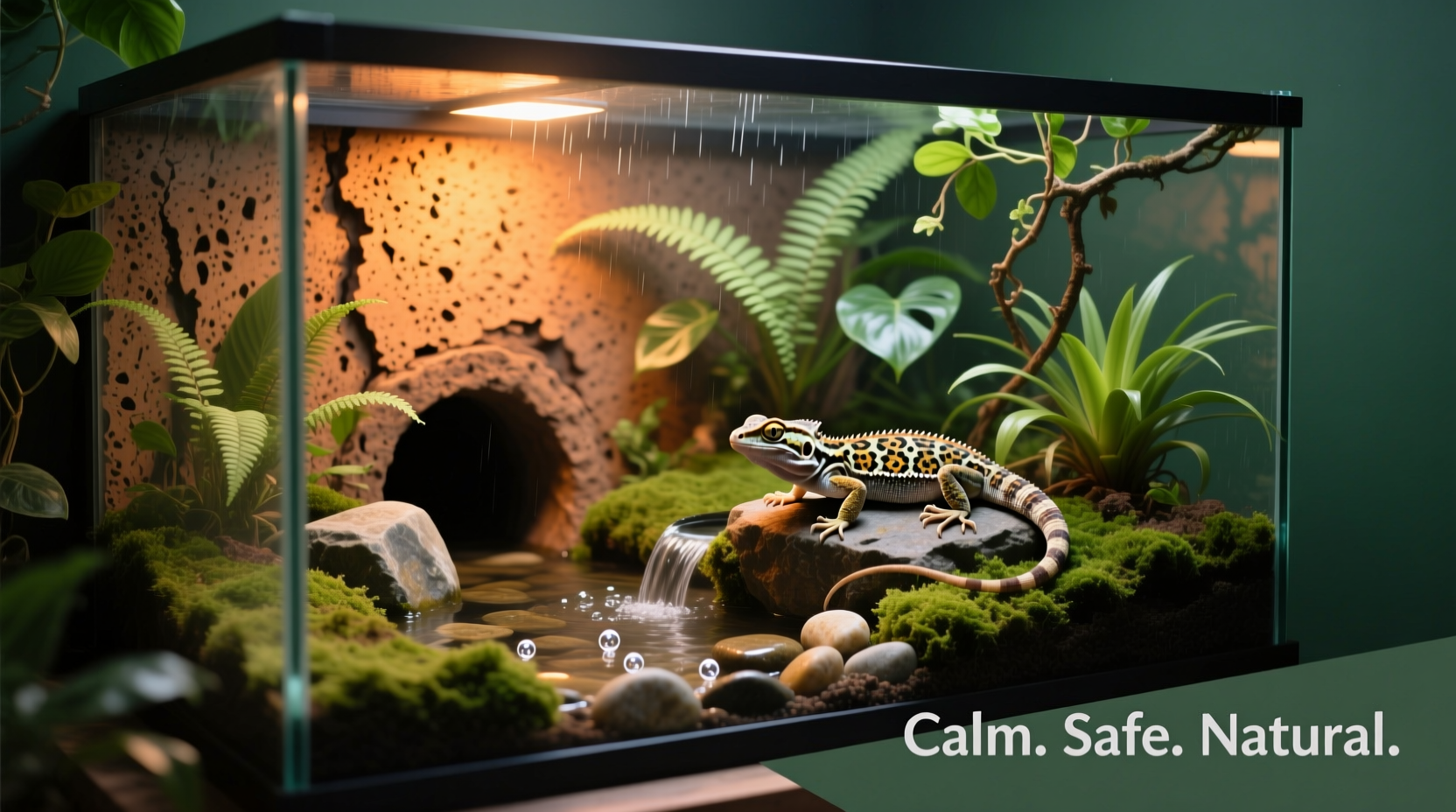
The foundation of a calming habitat lies in thoughtful enclosure design. Reptiles don’t seek stimulation—they seek safety. A well-designed space mimics the microhabitats they’d use in the wild: shaded burrows, rocky crevices, or dense foliage. Start by selecting the right size. While larger enclosures allow more exploration, they must also offer proportional hiding options. An open 4x2-foot terrarium with only one small hide will leave a bearded dragon feeling vulnerable.
Include multiple hiding zones—one on the warm side, one on the cool side, and ideally, an elevated or underground option depending on species. Arboreal species like green iguanas benefit from canopy-level shelters made of broad leaves or artificial foliage. Burrowing species such as leopard geckos need deep substrate and enclosed tunnels. Use materials like cork bark, half-log hides, or ceramic caves that retain heat and provide tactile security.
Tip: Place hides so the entrance faces a wall or corner—this reduces visibility from all sides and increases perceived safety.Substrate choice also plays a role in mental well-being. Naturalistic substrates like coconut fiber, cypress mulch, or bioactive mixes encourage natural behaviors such as digging and scent marking. Avoid reflective surfaces like glass walls without background coverage. Apply non-reflective vinyl wraps or place the enclosure against a solid wall to minimize visual disturbances.
Optimizing Temperature, Humidity, and Lighting
Thermal regulation is central to reptile health—and peace of mind. A reptile unable to reach its preferred body temperature becomes lethargic and stressed. Create a thermal gradient with distinct warm and cool zones. For example, a ball python should have a basking spot of 88–90°F (31–32°C) and a cool end around 75°F (24°C). Use thermostats and digital probes for accuracy—rely on data, not guesswork.
Humidity needs vary widely. Desert species like uromastyx require dry air (20–30% RH), while tropical chameleons need 60–80%. Sudden drops or spikes in humidity can lead to respiratory issues and psychological distress. Maintain consistency with automated misting systems, hygrometers, and proper ventilation. Over-misting leads to mold; under-misting causes dehydration and shedding problems—all stress factors.
Lighting is equally critical. UVB exposure supports vitamin D synthesis and regulates mood-related hormones. However, lights should follow a consistent 10–14 hour cycle depending on species and season. Use timers to automate on/off schedules. Avoid bright white lights at night—opt for ceramic heat emitters or low-wattage red bulbs if supplemental heat is needed after dark.
| Species | Day Temp (°F) | Night Temp (°F) | Humidity (%) | UVB Required? |
|---|---|---|---|---|
| Leopard Gecko | 85–90 | 70–75 | 30–40 | No |
| Bearded Dragon | 95–110 | 75–80 | 30–40 | Yes |
| Green Iguana | 85–95 | 75–80 | 65–80 | Yes |
| Ball Python | 88–92 | 75–80 | 50–60 | Optional |
Minimizing External Disturbances
A reptile’s environment extends beyond the glass or mesh walls. Household activity, pets, and even window views can contribute to anxiety. Place enclosures in quiet, low-traffic rooms away from televisions, foot traffic, or barking dogs. Avoid positioning tanks near windows where outdoor predators (birds, squirrels) pass by frequently—this triggers instinctual alertness.
If relocation isn’t possible, use opaque backdrop panels on three sides of the enclosure, leaving only one viewing side accessible. This reduces sensory overload while still allowing observation. For homes with children or other pets, establish clear boundaries: no tapping on glass, sudden movements, or forced handling.
Tip: Test your reptile’s reaction by observing behavior before and after reducing ambient noise. If pacing or tongue-flicking decreases, the change is likely beneficial.Even routine care can be stressful if done unpredictably. Feed at the same time each day. Clean the enclosure during low-activity hours—typically early morning or late evening. When maintenance is required, approach slowly and avoid direct eye contact, which some species interpret as predatory.
Step-by-Step Guide to Calming an Anxious Reptile
When you notice signs of stress, take immediate, structured action. Follow this five-step timeline to restore equilibrium:
- Assess the Environment (Day 1): Check temperatures, humidity, lighting schedule, and hiding availability. Correct any deviations from species-specific requirements.
- Reduce Stimuli (Day 1–3): Move the enclosure to a quieter room if possible. Add additional hides and cover sides with non-reflective backgrounds.
- Limit Interaction (Days 1–7): Suspend handling completely. Observe feeding and defecation remotely to monitor health without intrusion.
- Introduce Enrichment (Day 5 onward): Add novel but non-threatening items—new climbing branches, rearranged decor, or live plants (if safe). Change one element at a time to avoid overwhelming.
- Resume Gentle Handling (After Day 7): Only if the reptile is eating regularly and showing relaxed posture (e.g., slow movement, open eyes). Begin with 5-minute sessions near the enclosure, gradually increasing duration.
“Recovery from stress isn’t measured by activity—it’s measured by stillness. A calm reptile is one that feels safe enough to rest.” — Carlos Mendez, Reptile Behavior Specialist, San Diego Herpetological Society
Real-Life Example: Calming a Stressed Crested Gecko
Sarah adopted a crested gecko from a rescue center. The animal refused food, spent all day pressed against the glass, and exhibited tail-twitching—a sign of agitation. After consulting a herp vet, she reviewed her setup: a 20-gallon tank with only one plastic cave, a mesh top exposed to kitchen light, and inconsistent misting.
She implemented changes over ten days: added two cork bark hides, installed a timer-controlled LED plant light with a 12-hour cycle, applied a forest-themed backdrop, and began misting twice daily using a handheld sprayer to simulate gentle rain. She stopped handling entirely for two weeks. By day 14, the gecko was hunting crickets at night, using all three hides, and resting openly on vertical vines. Within a month, weight gain and regular shedding confirmed reduced stress levels.
This case illustrates how targeted environmental adjustments—not medication or force—can resolve anxiety when rooted in species-appropriate care.
Essential Do’s and Don’ts for a Calm Reptile
| Do | Don't |
|---|---|
| Provide multiple hides in different temperature zones | Use only one hide or none at all |
| Maintain consistent light and temperature schedules | Allow fluctuations due to unregulated heaters |
| Observe behavior without interfering | Tap on glass or shine bright lights at night |
| Use naturalistic, non-reflective backgrounds | Leave bare glass or mirrored surfaces exposed |
| Gradually introduce new elements | Rearrange the entire enclosure overnight |
Frequently Asked Questions
How do I know if my reptile is stressed and not just shy?
Shyness is temporary and situational—your reptile may hide initially but emerges to eat and explore when undisturbed. Chronic stress shows in physical symptoms: weight loss, retained shed, gaping mouth, or repetitive behaviors like glass surfing. If these persist beyond a few days post-acclimation, environmental stress is likely.
Can music or white noise help calm reptiles?
There’s no evidence that reptiles respond positively to music. In fact, low-frequency sounds may mimic predator vibrations. White noise machines are generally safe if placed away from the enclosure, but silence or natural ambient room sound is preferable.
Is it okay to keep reptiles in bedrooms?
Yes, if the room is quiet, temperature-stable, and free from drafts or sudden light changes. Avoid placing enclosures directly next to beds or alarm clocks. Ensure nighttime heating doesn’t rely on light-emitting sources unless shielded.
Final Checklist for a Calming Habitat
- ✅ Multiple hides on warm and cool ends
- ✅ Accurate thermometers and hygrometers installed
- ✅ Consistent day/night lighting cycle (with timer)
- ✅ Non-reflective background on at least three sides
- ✅ Minimal foot traffic and household noise
- ✅ Species-appropriate substrate and enrichment
- ✅ No sudden changes in layout or routine
- ✅ Handling limited to necessary health checks initially
Conclusion
Creating a calming environment for an anxious reptile isn’t about luxury—it’s about respecting their evolutionary needs. These animals thrive on predictability, security, and autonomy. By refining enclosure design, stabilizing climate conditions, and minimizing disruptions, you give your reptile the chance to transition from survival mode to true well-being. Small, consistent improvements often yield dramatic results in behavior and health. Start today by auditing one aspect of your setup—whether it’s adding a second hide or installing a light timer. Your reptile may never cuddle or vocalize gratitude, but a relaxed posture, steady appetite, and natural behaviors are the clearest signs of trust.
🚀 Take action tonight: Spend 15 minutes observing your reptile’s behavior in silence. Note any signs of stress—and commit to one change that addresses it. Share your progress in the comments and inspire others to build safer, calmer homes for their scaly companions.








