Selecting a red lipstick should be empowering, not overwhelming. Yet, many people with cool undertones hesitate at the makeup counter, fearing that bold reds will wash them out or clash with their natural coloring. The truth is, when you understand your skin’s undertone and how pigments interact with it, choosing the perfect red becomes intuitive. Cool undertones—characterized by pink, red, or blue hues beneath the surface—thrive with specific reds that enhance rather than compete with their natural balance. This guide eliminates guesswork by offering a structured approach to identifying ideal red lipsticks based on undertone, finish, occasion, and personal style.
Understanding Cool Undertones: The Foundation of Color Matching
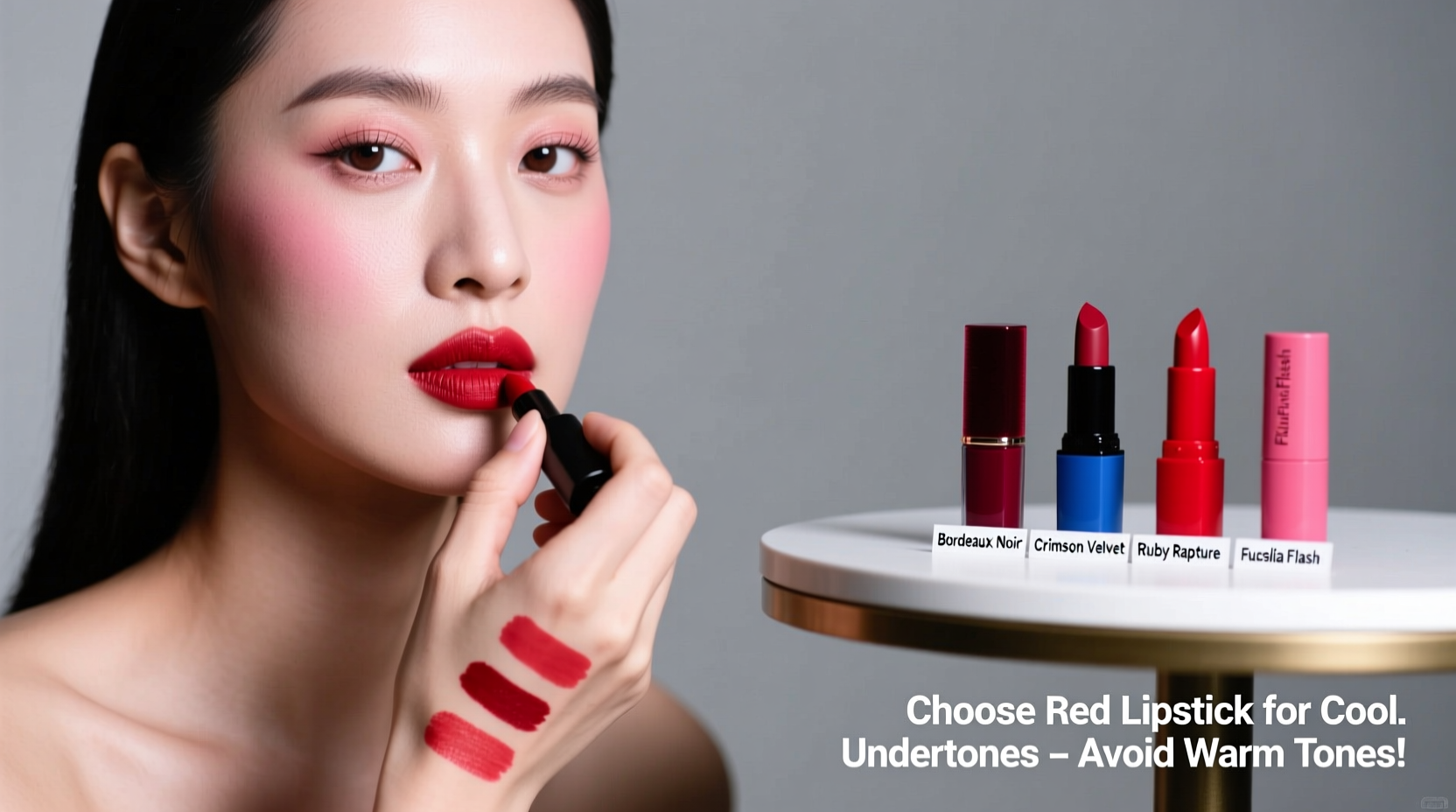
Cool undertones are often misidentified because surface-level observations like \"I look good in silver jewelry\" don’t always tell the full story. True undertone analysis goes beyond accessories. It involves assessing the color of your veins, how your skin reacts to sun exposure, and which clothing colors make you appear vibrant versus drained.
People with cool undertones typically have:
- Blue or purple veins visible under natural light
- Skin that burns easily in the sun (rather than tanning)
- A preference for jewel tones like emerald, sapphire, and ruby over earthy shades
- Neutral-to-pink blush tones that blend seamlessly into the skin
The key to selecting a flattering red lipstick lies in aligning the pigment’s base tone with your own. Reds with blue or pink bases—often labeled “blue-red,” “berry-red,” or “cherry-red”—harmonize beautifully with cool undertones. In contrast, orange-based reds can create a jarring contrast, making the skin appear sallow or ashy.
“Matching lipstick to undertone isn’t about trends—it’s about chemistry. A blue-based red on cool skin creates a luminous effect because it reflects light in harmony with the skin’s natural undertone.” — Dr. Lena Torres, Cosmetic Chemist & Color Theory Specialist
The Red Lipstick Spectrum: Decoding Labels and Marketing Claims
Brand descriptions like “classic red” or “vampy crimson” can be misleading. One brand’s “true red” may lean orange, while another’s leans plum. To cut through the noise, focus on objective descriptors and ingredient cues rather than poetic names.
Look for keywords such as:
- Blue-based: Indicates a cooler pigment, ideal for cool undertones
- Berry-infused: Often implies anthocyanin pigments that shift toward violet-red
- Cherry or raspberry: Suggests a bright, slightly pink-leaning red
- Ruby: Typically denotes a balanced cool-warm red, but check swatches
Avoid terms like “coral red,” “tomato red,” or “brick,” which signal orange or brown modifiers that can dull cool complexions. When in doubt, examine the product’s ingredient list. Iron oxides (CI 77491, CI 77492) often add warmth, while carmine (CI 75470) and D&C Red No. 34 provide cooler, truer reds.
Tip: Test red lipsticks under natural daylight near a window. Artificial lighting, especially yellow-toned bulbs, distorts color perception.Step-by-Step Guide: Finding Your Perfect Red Without Swatching Endlessly
Follow this five-step process to narrow down the best red lipstick for your cool undertone efficiently and confidently.
- Determine your exact undertone subtype: Not all cool undertones are identical. Some lean icy (very pale with pink flush), others rosy (medium with strong pink), and some are deep cool (richer skin with blue-black hair). Icy types suit sheerer cherry reds; rosy types shine in opaque blue-reds; deep cools can carry wine-infused reds.
- Use the white paper test: Hold a clean sheet of white paper next to your face in natural light. If your skin appears pink or bluish against the paper, you’re confirmed cool. If it looks yellow or olive, you may be warm or neutral.
- Check digital swatches strategically: Search for swatches on fair to medium-cool models with similar skin depth. Avoid relying solely on influencer reviews unless their undertone matches yours.
- Filter by formula first: Matte finishes tend to emphasize dryness but offer intense pigment. Creamy formulas are forgiving but may require blotting. For cool undertones, satin or semi-matte finishes often strike the best balance between vibrancy and wearability.
- Purchase sample sizes or decants: Many brands offer travel sizes or testers. Apply the lipstick after moisturizing lips and observe how it oxidizes over 10 minutes. Does it deepen? Mute? Shift orange? These reactions reveal compatibility.
Top Red Lipstick Shades for Cool Undertones: A Comparison Table
| Shade Name | Brand | Base Tone | Best For | Finish |
|---|---|---|---|---|
| Ruby Woo | MAC Cosmetics | Blue-red | All cool subtypes, especially fair to medium | Matte |
| Cherry Lush | Fenty Beauty | Bright cherry | Icy and rosy cool tones | Satin |
| 999 Matte | Dior | Classic blue-based red | Medium to deep cool undertones | Matte |
| Velvet Teddy | Charlotte Tilbury | Muted berry-red | Subtle everyday wear, deeper cool skin | Velvet |
| Angelina | NARS | True blue-red | High-impact evening wear | Creme |
Note: While Ruby Woo is iconic, its extreme matte texture can emphasize lip lines. Pair it with a hydrating primer if you have dry lips. Cherry Lush offers a modern alternative with more moisture and less feathering.
Real Example: How Sarah Found Her Signature Red
Sarah, a 34-year-old librarian with porcelain skin and cool pink undertones, avoided red lipstick for years. She tried a popular “universal red” from a luxury brand, only to find it turned orange on her lips and made her complexion look translucent. Discouraged, she consulted a makeup artist at a department store who guided her through the vein test and natural light assessment.
The artist recommended MAC’s Russian Red—a deeper blue-based shade—and applied it with a lip liner one shade darker. The transformation was immediate: Sarah’s eyes appeared brighter, and her skin looked more even. She later purchased a mini size of Cherry Lush for daytime use. Now, she rotates between two cool-toned reds depending on the occasion, confident that she no longer needs to rely on trial and error.
Do’s and Don’ts: Common Pitfalls When Choosing Red Lipstick
| Do | Don't |
|---|---|
| Test lipstick on your lower lip, not your hand or arm | Swatch on your wrist—skin tone there differs significantly from facial skin |
| Use a lip liner that matches your chosen red to prevent bleeding | Choose a liner that’s too dark, creating a harsh outline |
| Exfoliate lips gently before application for smooth results | Apply matte red over dry, flaky lips |
| Blot and layer for long-lasting color | Reapply thickly without removing old layers, causing caking |
| Match your lipstick intensity to your eye makeup—bold lips pair well with soft eyes | Wear heavy eyeliner with bold red lips unless intentionally going for drama |
Essential Checklist: Your Cool-Toned Red Lipstick Selection Process
Before purchasing any red lipstick, run through this checklist:
- ✅ I’ve confirmed my undertone using the vein and paper tests
- ✅ I’ve ruled out orange or coral-based reds
- ✅ I’ve checked swatches on someone with a similar skin tone
- ✅ I’ve considered the finish (matte, satin, gloss) for my lip texture and lifestyle
- ✅ I’m testing in natural light, not under store fluorescents
- ✅ I’m willing to try a sample before committing to full size
- ✅ I have a matching or slightly deeper lip liner ready
FAQ: Your Questions About Cool-Toned Red Lipsticks, Answered
Can people with cool undertones wear burgundy or wine-colored reds?
Absolutely. Deep wine and blackberry-red shades work exceptionally well for medium to deep cool undertones. These shades contain blue-violet pigments that harmonize with cool skin. Fair cool tones should opt for brighter cherry-reds instead, as deep wines may overwhelm delicate features.
What if my favorite red lipstick oxidizes to an orange tone after application?
Oxidation occurs when lipstick reacts with your skin’s pH and oils. If your red shifts warm, it likely contains iron oxides or warm-toned dyes. Switch to formulas labeled “non-oxidizing” or those with carmine-based pigments, which are more stable on cool skin. Applying a thin layer of silicone-based primer can also create a barrier that prevents unwanted shifts.
Is it true that cool undertones should always avoid orange lipsticks?
As a general rule, yes. Orange-based reds introduce warmth that competes with cool undertones, potentially causing discoloration or fatigue in the complexion. However, in controlled doses—such as a sheer orange-red balm for a “my-lips-but-better” effect—it can work. For bold color, stick to blue-based reds for the most flattering result.
Final Thoughts: Own Your Red with Confidence
Choosing the right red lipstick for cool undertones doesn’t require innate fashion sense or a makeup artist on speed dial. It requires awareness—of your skin, the pigment, and how they interact. Once you know what to look for, the world of red opens up in ways that enhance your natural radiance rather than mask it. The perfect red isn’t just a color; it’s a reflection of your confidence, curated through informed choices.
💬 Found your dream red? Share your go-to shade and tips in the comments below—your insight could help someone finally stop guessing.








