Bringing a new puppy home is an exciting milestone, but it also comes with important responsibilities—one of which is selecting the right collar. A collar isn’t just for holding an ID tag; it’s a vital piece of gear that affects your puppy’s comfort, safety, and training. Puppies grow rapidly, sometimes doubling in size within a few months, making collar selection more complex than simply picking one size fits all. Choosing incorrectly can lead to discomfort, skin irritation, or even escape risks. The right collar supports healthy development while adapting to your pup’s changing needs.
Understanding Puppy Growth Patterns
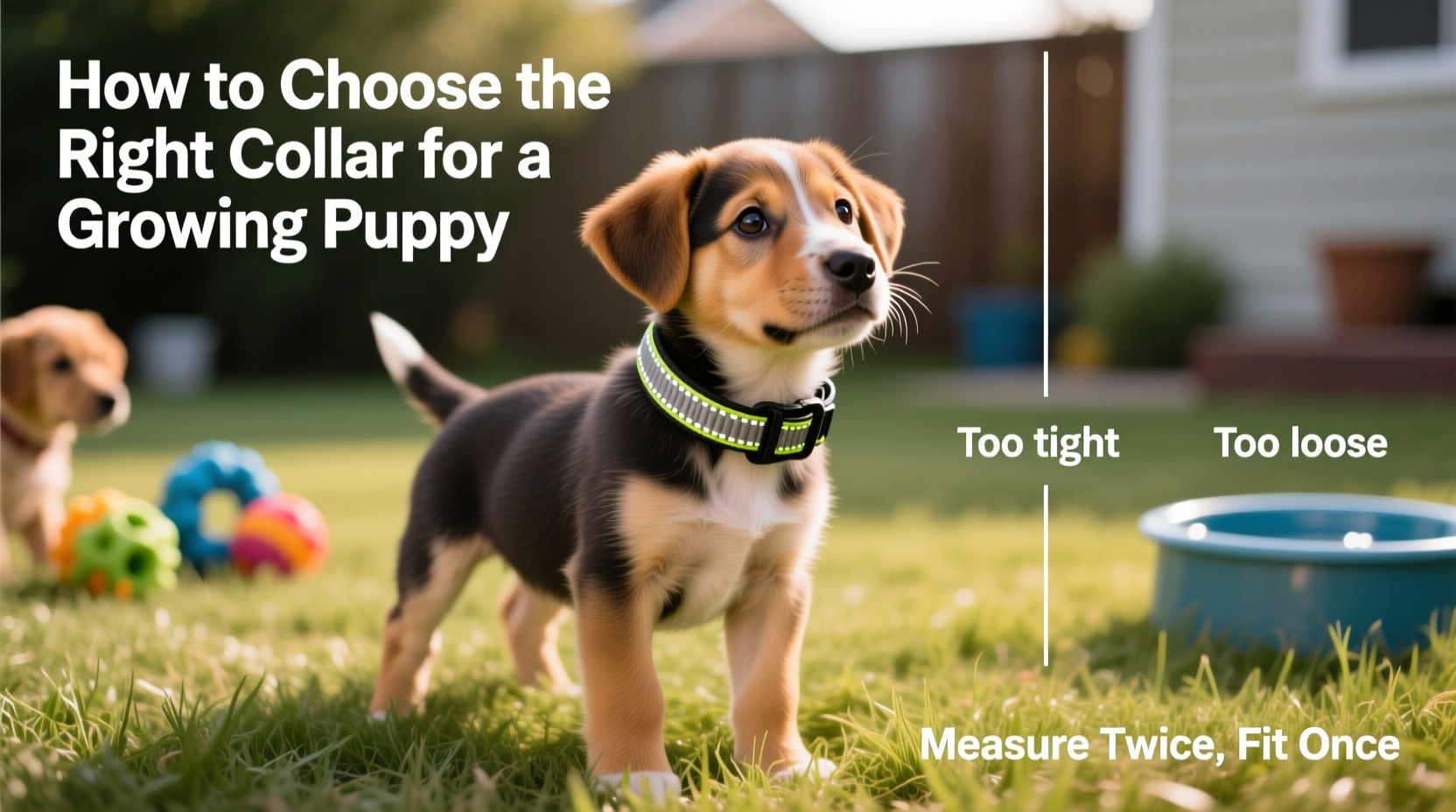
Puppies experience rapid physical changes in their first year, especially during the first six months. Small breeds may reach adult size by 6–8 months, while large and giant breeds can continue growing until 18–24 months. Neck girth increases significantly during this time—sometimes by several inches. A collar that fits snugly at eight weeks may become dangerously tight by twelve weeks if not monitored.
Because growth rates vary widely across breeds, generalizations aren’t enough. For example, a Labrador Retriever puppy gains about 2 pounds per week early on, while a Chihuahua might gain only a few ounces weekly. This means collar choices must be flexible and frequently reassessed.
“Puppy collars should be checked weekly for fit. Even a slight tightness can restrict blood flow and damage developing tracheal cartilage.” — Dr. Rebecca Langford, DVM, Canine Development Specialist
Key Factors When Selecting a Collar
Choosing the right collar involves more than aesthetics. It requires balancing safety, comfort, adjustability, and durability. Here are the most critical factors to consider:
Material: Safety and Comfort First
The material determines how well the collar holds up to chewing, weather, and daily wear, as well as how gentle it is on delicate puppy skin.
- Nylon: Lightweight, affordable, and water-resistant. Ideal for young puppies due to its soft texture and wide range of sizes. However, lower-quality nylon can fray or cause chafing if not properly padded.
- Polyester webbing: Similar to nylon but often stronger and less prone to stretching when wet. Frequently used in high-end training collars.
- Leather: Durable and stylish, but not ideal for very young puppies. Real leather doesn’t stretch much and may not accommodate rapid neck growth. Also heavier, which could be uncomfortable for small breeds.
- Neoprene or padded fabric: Excellent for sensitive skin or short-haired breeds prone to irritation. Often used in harnesses but available in collars too.
Adjustability: Matching Growth Spurts
An adjustable collar is essential. Look for models with multiple buckle holes—ideally spaced no more than half an inch apart—to allow fine-tuning as your puppy grows. Some collars offer sliding buckles or Velcro backups for added security.
Measure your puppy’s neck every two weeks during peak growth phases. Add about half an inch to the measurement to ensure room for two fingers to fit comfortably beneath the collar. Too loose, and the puppy might slip out; too tight, and it can impair breathing or circulation.
Safety Features: Preventing Accidents
Puppies are curious and energetic, often getting their collars caught on fences, furniture, or toys. Breakaway collars are designed to release under pressure, reducing strangulation risk. These are especially recommended for unsupervised indoor time.
However, breakaway collars should never be used during walks or training with a leash. The force from pulling could cause accidental release, leading to escape. Use a standard secure collar for outdoor activities.
Types of Collars: Pros and Cons
Different collar types serve different purposes. For growing puppies, some are better suited than others.
| Type | Best For | Pros | Cons |
|---|---|---|---|
| Flat Buckle Collar | Most puppies, everyday wear | Simple, adjustable, comfortable, affordable | Limited control; not ideal for strong pullers |
| Quick-Release Plastic Buckle | Very young or small breed puppies | Lightweight, easy to adjust, safe for indoor use | Less durable; may not last through teething phase |
| Breakaway Collar | Indoor wear, solo playtime | Reduces choking risk if snagged | Not safe for leashed walks or training |
| Personalized Name Collar | ID display, identification | Helps lost puppy return home quickly | Engraving limits resizing; may need replacement as puppy grows |
| Training Collar (e.g., martingale) | Slip-prone breeds like Greyhounds or Whippets | Prevents slipping without choking when used correctly | Should only be used under supervision; not for constant wear |
Step-by-Step Guide to Fitting a Puppy Collar
Proper fit ensures safety and comfort. Follow this timeline-based approach during your puppy’s first six months:
- Week 1 (Adoption): Measure neck circumference behind the ears and just above the shoulders. Choose a collar with adjustment range covering current size plus 2–3 inches of expected growth.
- Fit Test: Slide two fingers under the collar. If only one fits, it’s too tight. If three or more fit easily, it’s too loose.
- Check Daily: Inspect for redness, hair loss, or swelling at contact points. Clean the collar weekly with mild soap and water.
- Biweekly Re-measurement: Track neck growth using a soft tape measure. Record measurements in a puppy journal or app.
- Monthly Replacement Check: If the collar is at its maximum extension or shows signs of wear (fraying, cracked plastic), replace it immediately.
- Transition Plan: By 6 months, evaluate whether your puppy still needs frequent collar changes. Larger breeds may stabilize enough to move to a sturdier, long-term collar.
Real-Life Example: Max the Australian Shepherd
Max, a male Australian Shepherd puppy, was adopted at 9 weeks old with a neck circumference of 10 inches. His owners chose a high-quality nylon flat collar adjustable from 9 to 13 inches. Within four weeks, Max had grown to 12 inches around the neck. At 16 weeks, he reached 14.5 inches—beyond the collar’s capacity.
Because his owners were tracking growth biweekly, they noticed the fit was becoming tight. They upgraded to a larger collar with a 13–17 inch range before any discomfort occurred. They kept the old collar as a backup with updated tags for a week while ensuring the new one stayed secure during off-leash play.
By 8 months, Max’s neck stabilized at 16.5 inches. His owners transitioned to a durable leather collar engraved with his name and phone number—a long-term solution that reflected his maturity and stable size.
This proactive approach prevented skin irritation, ensured visibility of ID, and supported consistent training with reliable equipment.
Essential Checklist for Puppy Collar Selection
Use this checklist each time you select or reassess a collar:
- ✅ Measured puppy’s neck within the last two weeks
- ✅ Two fingers fit comfortably under the collar
- ✅ Material is soft, non-abrasive, and appropriate for breed/skin type
- ✅ Buckle is secure and easy to fasten
- ✅ Has proper ID tags with current contact information
- ✅ No sharp edges, loose threads, or broken stitching
- ✅ Suitable for intended use (e.g., breakaway for indoors, sturdy for walks)
- ✅ Reflective striping or bright color for visibility in low light
- ✅ Easy to clean and resistant to moisture
- ✅ Backup collar available in case of loss or sudden growth
Frequently Asked Questions
When should I start using a collar on my puppy?
You can introduce a lightweight collar as early as 8 weeks old. Begin with short sessions (15–30 minutes) to help your puppy get used to wearing it. Gradually increase duration over a few days. Never leave a collar on an unattended puppy during the first few days unless it’s a breakaway type.
Can I use a harness instead of a collar?
Absolutely—and many trainers recommend starting with a harness for walks. Harnesses distribute pressure evenly across the chest, reducing strain on the developing neck and trachea. However, a collar is still needed for ID tags and licensing. Most experts advise using both: a harness for walking and a lightweight collar for daily tag wear.
How often should I replace my puppy’s collar?
There’s no fixed schedule—it depends on growth rate and wear. Small breeds may need new collars every 4–6 weeks during peak growth. Larger breeds might go 6–8 weeks between changes. Replace immediately if the collar becomes too tight, damaged, or causes irritation. Always monitor fit and condition weekly.
Final Considerations: Balancing Function and Responsibility
Selecting the right collar for a growing puppy is an ongoing process, not a one-time decision. It reflects your commitment to your pet’s health, safety, and well-being. Beyond basic fit, consider how the collar integrates into broader care practices—training, identification, and emergency preparedness.
Never underestimate the importance of ID tags. According to the American Veterinary Medical Foundation, less than 20% of lost dogs without tags are reunited with owners. A properly fitted collar with up-to-date contact info dramatically increases recovery chances.
Also, remember that collars interact with other gear. Ensure compatibility with leashes, crates, and grooming tools. Avoid overcrowding the collar with too many tags, which can cause noise stress or snag hazards.
Conclusion: Build a Habit of Careful Monitoring
Choosing the right collar for a growing puppy demands attention, consistency, and a willingness to adapt. By understanding growth patterns, prioritizing safety, and regularly assessing fit, you create a foundation for responsible pet ownership. Start simple, track progress, and upgrade thoughtfully as your puppy matures.
💬 Your puppy’s comfort and safety start with the details. Share your collar tips or ask questions in the comments—help fellow pet parents raise happy, healthy pups!








