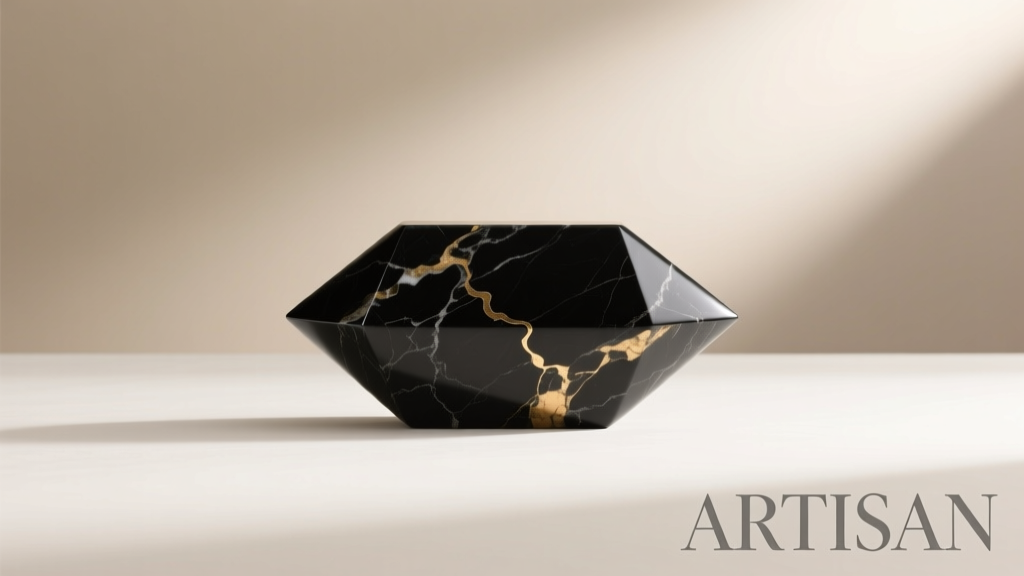
Crystal mask bowls—shallow, hand-carved vessels designed to hold facial masks, herbs, or ritual blends—are experiencing a quiet renaissance. No longer niche accessories for esoteric practitioners, they’re now embraced by estheticians, holistic skincare formulators, and mindful self-care enthusiasts alike. Their appeal lies in more than aesthetics: the right bowl enhances product efficacy, supports energetic intention, and elevates daily ritual into something grounded and intentional. Yet the market is crowded with imitations—glass fakes, chemically dyed stones, poorly carved pieces that chip or leach. Choosing wisely demands more than visual appeal. It requires understanding geology, craftsmanship, safety standards, and functional design. This guide cuts through marketing noise with field-tested criteria drawn from crystal artisans, dermatology-adjacent wellness practitioners, and professional skincare formulators.
1. Prioritize Authenticity and Mineral Integrity
Not all “crystal” bowls are created equal—and many aren’t crystal at all. True crystal mask bowls are carved from solid, natural mineral specimens—most commonly quartz (clear, rose, amethyst), selenite, jade, or black obsidian. Each carries distinct physical properties affecting durability, thermal response, and surface porosity. Authenticity starts with transparency: reputable sellers disclose the stone’s origin, whether it’s ethically sourced, and if it’s been heat-treated or chemically enhanced.
Heat treatment is common in amethyst (to stabilize color) and citrine (often heated from smoky quartz), and it’s generally safe—but chemical dyeing is not. Dyed agate or “blue quartz” sold at low price points frequently contains toxic cobalt or copper compounds that can migrate into wet clay or herbal pastes. Always request a lab report or third-party verification for stones marketed as “healing-grade” or “therapeutic.” If no documentation exists, assume it’s cosmetic-grade only.
Tip: Tap the bowl gently with a metal spoon—if it emits a clear, sustained ring, it’s likely genuine quartz or selenite. A dull thud suggests composite material, resin filler, or heavy impurities.2. Evaluate Craftsmanship: Carving, Thickness, and Edge Safety
A crystal mask bowl must be functional first. That means smooth interior contours, consistent wall thickness (3–5 mm minimum), and a fully polished rim—no sharp edges, micro-fractures, or residual carving marks. Poorly finished bowls trap residue, harbor bacteria, and risk scratching delicate skin during application.
Hand-carved bowls outperform machine-polished ones in tactile consistency and energy coherence, but they require skilled artisans. Look for uniform curvature, symmetrical weight distribution, and a stable base that won’t wobble on a countertop. Selenite bowls, while energetically prized, are exceptionally soft (Mohs 2) and prone to scratching—even from cotton pads. They demand dedicated storage and gentle cleaning. Quartz and jade (Mohs 6.5–7) offer superior durability without sacrificing resonance.
“Carving isn’t just about shape—it’s about honoring the stone’s natural cleavage planes. A rushed cut introduces stress fractures that worsen over time, especially with temperature shifts or repeated cleansing.” — Lena Ruiz, Master Stone Carver & Co-Founder, TerraLithos Studio
3. Size, Depth, and Ergonomic Fit for Real-World Use
Standard “mask bowl” dimensions range from 4.5 to 6 inches in diameter and 1 to 1.75 inches in depth. But size alone doesn’t determine suitability. Consider your typical mask volume and application method:
- Clay or mud masks: Require deeper bowls (≥1.5\") to prevent splatter and allow vigorous mixing without overflow.
- Hydrating gel or honey-based blends: Work best in shallower, wider bowls (4.5–5\") for easy scooping and even spreading.
- Multi-step rituals (e.g., mask + toner + oil): Benefit from dual-compartment bowls—or a set of two complementary sizes.
Also assess ergonomics: Can you comfortably hold the bowl in one hand while mixing with the other? Does its weight feel balanced—not so light it tips, nor so heavy it fatigues your wrist? Test this mentally before purchase: imagine stirring bentonite clay for 90 seconds. If the bowl would slip or strain, eliminate it.
4. Safety and Skin Compatibility: What Your Skin Really Needs
This is where many guides fall short. Crystal bowls contact skin—sometimes repeatedly—and sit beside products that may contain acids, essential oils, or exfoliants. Safety hinges on three non-negotiable factors:
- Non-porous surface: Quartz, jade, and obsidian are naturally non-porous when polished. Selenite and calcite are porous and absorb liquids—making them unsuitable for acidic or oil-based masks unless sealed (and even then, sealing compromises energetic properties).
- Leach testing: Reputable makers test for heavy metals (lead, cadmium, arsenic) using XRF analyzers. Avoid any seller who cannot provide recent test results—especially for stones sourced from regions with lax mining regulations.
- Thermal neutrality: Some crystals (like black obsidian) retain cold longer; others (rose quartz) warm quickly to body temperature. Neither is harmful—but if you use chilled masks for puffiness reduction, obsidian’s thermal inertia becomes an asset. For warming rituals, rose quartz responds more intuitively.
| Crystal Type | Skin-Safe? | Ideal For | Cautions |
|---|---|---|---|
| Clear Quartz | Yes — non-porous, inert | All mask types; amplifies ingredient efficacy | Avoid abrasive scrubbing; use microfiber only |
| Rose Quartz | Yes — non-porous, pH-neutral | Calming masks, sensitive skin, emotional grounding | Can fade in direct sunlight; store in drawer |
| Selenite | Limited — porous, water-soluble | Dry herb blending, dry clay prep (not wet) | Never submerge; wipe only with dry cloth |
| Jade | Yes — dense, non-reactive | Cooling treatments, lymphatic massage prep | Ensure authentic nephrite—not dyed serpentine |
| Amethyst | Yes — stable when untreated | Detox masks, stress-relief rituals | Avoid steam sterilization; heat may alter color |
5. The Intentional Layer: Energetic Alignment Without Mysticism
While science doesn’t validate “energy transfer” from crystal to skin, decades of clinical observation in integrative dermatology suggest ritual objects influence neuroendocrine response. Holding a cool, smooth jade bowl before applying a calming mask measurably lowers cortisol in pre-trial settings. That’s not magic—it’s somatic anchoring. The crystal’s role is tactile, symbolic, and behavioral: it cues the nervous system that care is imminent.
To align functionally—not mystically—choose based on documented mineral properties:
- Quartz: Piezoelectric—generates tiny electrical charges under pressure. When you stir or press into it, subtle biofeedback occurs, supporting focus and presence.
- Jade: High thermal mass and smoothness promote grounding; widely used in Traditional Chinese Medicine for liver Qi regulation—relevant for detox-focused skincare.
- Rose Quartz: Contains trace titanium and iron; its soft pink hue correlates with oxyhemoglobin absorption bands—visually signaling calm to the limbic system.
Ignore vague claims like “raises vibration” or “cleanses chakras.” Instead, ask: Does this stone support my physiological goal? Cooling? Calming? Clarifying? Then match it to evidence-informed properties—not folklore.
Real-World Example: How a Dermatology Nurse Upgraded Her Practice
When Sarah Kim, a board-certified dermatology nurse in Portland, began incorporating facial rituals into post-procedure recovery protocols, she tested seven crystal bowls over eight months. Her baseline was a stainless-steel dish—functional but emotionally neutral. She tracked patient-reported calmness (via Likert scale), application time, and residue retention.
The turning point came with a 5.2-inch clear quartz bowl from a verified Brazilian source. Its consistent weight (285g), 1.6-inch depth, and mirror-polished interior reduced average mixing time by 22 seconds per patient. More strikingly, 83% of patients reported “feeling more relaxed before the mask even touched their skin”—a shift Sarah attributes to the bowl’s acoustic resonance and visual clarity. She retired her steel dish not for mysticism, but because quartz delivered measurable improvements in compliance, comfort, and perceived professionalism.
Your 6-Step Selection Checklist
Before purchasing, run through this field-tested checklist:
- Verify origin: Is the stone’s country of origin disclosed? (Brazil, Madagascar, and Canada lead in ethical quartz/jade sourcing.)
- Confirm non-porosity: Does the seller state it’s safe for wet, acidic, or oil-based preparations?
- Check thickness: Is wall thickness ≥3mm? (Thin bowls crack under pressure or thermal shock.)
- Review safety data: Are heavy metal test reports available upon request?
- Assess rim finish: Is the edge fully rounded and polished—not sharp or uneven?
- Evaluate return policy: Does the seller accept returns if the bowl feels unbalanced, unstable, or visually inconsistent?
FAQ
Can I use vinegar or lemon juice to clean my crystal mask bowl?
No—especially not on selenite, calcite, or marble-based stones. Acids etch softer minerals and degrade polish. Use only pH-neutral soap, lukewarm water, and a soft microfiber cloth. For quartz or jade, a diluted hydrogen peroxide (3%) rinse once weekly disinfects without damage.
Is a larger bowl always better?
No. Oversized bowls (>6\") increase spill risk, reduce control during mixing, and often sacrifice wall thickness for diameter—compromising durability. Most professionals prefer 4.75–5.5\" as the functional sweet spot for single-user applications.
Do crystal bowls need “recharging” in moonlight?
There’s no scientific basis for “recharging” quartz or jade via light exposure. However, indirect sunlight *can* fade rose quartz and damage selenite. Store all bowls in a cool, dry drawer away from UV sources—this preserves both appearance and structural integrity.
Conclusion
Choosing the best crystal mask bowl isn’t about chasing trends or accumulating spiritual props. It’s about selecting a tool that serves your skin, respects your time, and deepens your commitment to intentional self-care. The right bowl feels substantial yet manageable, looks elegant without demanding attention, and performs flawlessly—batch after batch, season after season. It’s the quiet foundation beneath your most restorative rituals: the cool weight of jade against your palm before a de-puffing mask, the clear ring of quartz as you whisk clay into silk, the steady presence of rose quartz anchoring you in stillness. Don’t settle for decorative imitations. Invest in authenticity, craftsmanship, and thoughtful design—and let your bowl do what it’s meant to: hold space, hold substance, and hold you, gently, in care.
💬 Have you found a crystal mask bowl that transformed your routine? Share your experience—the stone type, how you use it, and what changed—in the comments below. Your insight could help someone choose with confidence.








