Wine spills are inevitable in homes where hospitality meets everyday life—especially when shared with curious, fastidious feline companions. But what feels like a simple cleanup can become a silent hazard: many mainstream cleaners contain ethanol, hydrogen peroxide, phenols, or synthetic fragrances that are not just irritating but potentially life-threatening to cats. Unlike dogs or humans, cats lack the liver enzyme glucuronyl transferase, making them exceptionally vulnerable to even trace amounts of common cleaning agents. When combined with the urgency of removing red wine’s tannins and anthocyanins before they set into carpets, upholstery, or hardwood, the pressure to “just grab something strong” can override safety instincts. This isn’t about choosing between cleanliness and compassion—it’s about selecting solutions that deliver both, grounded in feline physiology, stain chemistry, and real-world home dynamics.
Why Wine Spills + Cats Demand Extra Caution
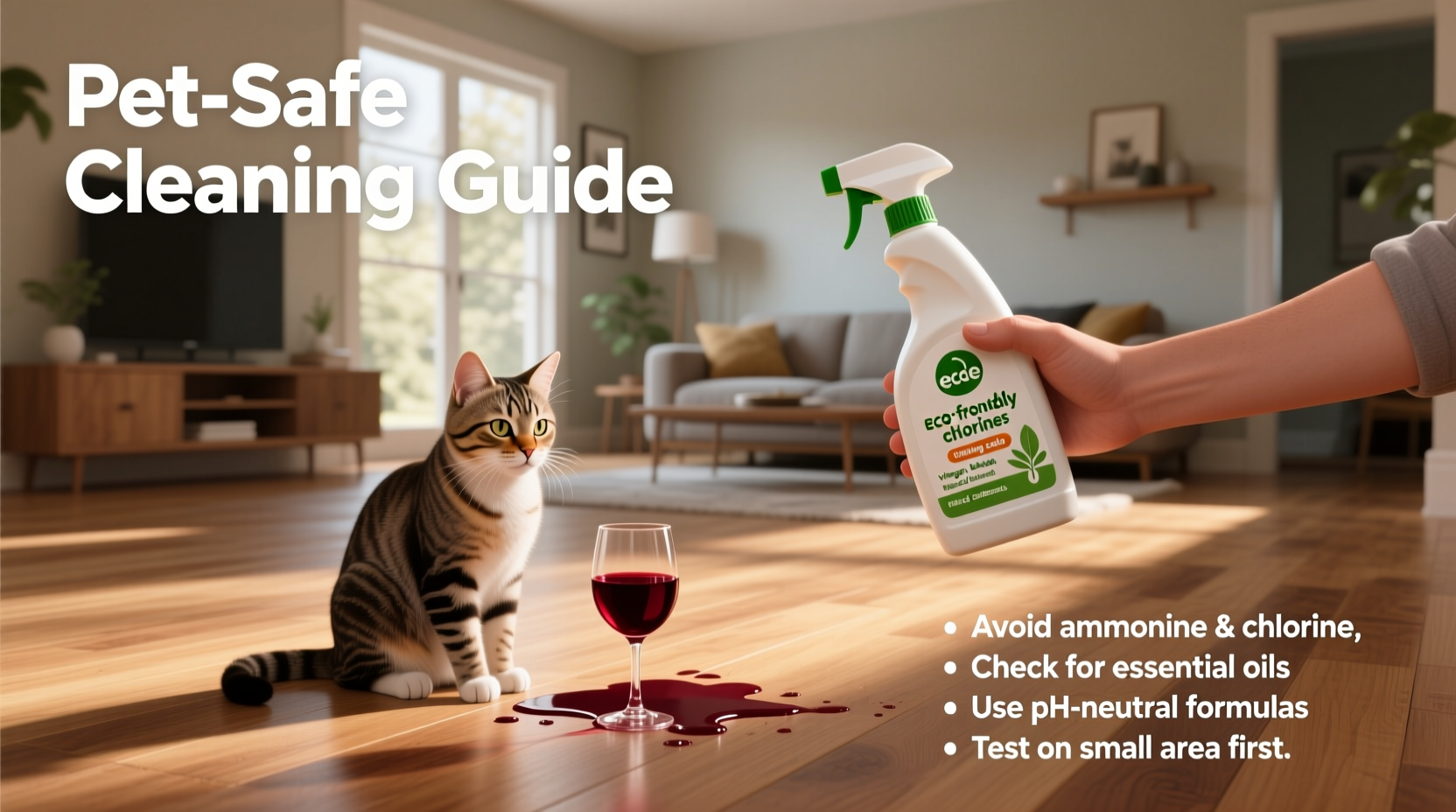
Red wine is more than pigment and alcohol—it’s a complex matrix of organic acids (tartaric, malic), polyphenols, sugars, and ethanol. On porous surfaces, it penetrates quickly, binding to fibers and oxidizing into stubborn brownish stains. Meanwhile, cats interact with their environment orally: they groom paws that walk across freshly cleaned floors, lick fur exposed to airborne residues, and investigate damp spots with nose and tongue. A single 5-ounce glass of wine contains ~14g of ethanol—enough to cause intoxication in a 10-pound cat at doses as low as 0.5g/kg. But the danger extends beyond alcohol: many “natural” vinegar-based cleaners rely on high-acid concentrations that disrupt skin pH and irritate mucous membranes; enzymatic cleaners may contain proteases that trigger allergic airway responses in sensitive cats; and “fragrance-free” labels often mask undisclosed volatile organic compounds (VOCs) known to exacerbate feline asthma.
“Cats metabolize toxins differently—and much more slowly—than other mammals. What clears from a dog’s system in hours can linger in a cat’s liver for days. That means residual cleaner on a floor isn’t ‘dry’ to a cat—it’s an ongoing exposure event.” — Dr. Sarah Lin, DVM, Board-Certified Veterinary Toxicologist, ASPCA Animal Poison Control Center
7 Non-Negotiable Criteria for Pet-Safe Wine Stain Removers
Not all “pet-safe” labels are created equal. Regulatory oversight for household cleaners is minimal: the EPA doesn’t require pre-market safety testing for most consumer cleaning products, and “non-toxic” claims aren’t standardized or enforced. Instead, rely on these evidence-based criteria—verified against veterinary toxicology databases and ingredient transparency standards:
- pH neutrality (6.5–7.5): Acidic or alkaline cleaners corrode oral mucosa and disrupt gut microbiota during grooming.
- No ethanol, isopropyl alcohol, or methanol: These solvents cause central nervous system depression, metabolic acidosis, and liver damage—even in minute surface residues.
- No phenol derivatives (e.g., thymol, eugenol, carvacrol): Common in “thyme oil” or “oregano oil” cleaners; highly hepatotoxic to cats at ppm-level exposure.
- No synthetic fragrances or dyes: Linked to respiratory irritation and dermatologic reactions; avoid anything listing “parfum,” “fragrance,” or CI numbers (e.g., CI 19140).
- Enzyme-based formulas must use only plant-derived carbohydrases & amylases: Avoid proteases (break down proteins—including feline skin cells) and lipases (may trigger pancreatitis in predisposed cats).
- Third-party certification: Look for Leaping Bunny (cruelty-free), EWG Verified™, or Safe Paw® certification—not just “pet-friendly” marketing copy.
- Residue-free evaporation: The product should leave zero film, stickiness, or scent after 30 minutes of air-drying—verified by independent lab testing for volatile residue.
What Works (and What Doesn’t): A Practical Comparison Table
| Cleaning Approach | Effectiveness on Fresh Wine Stains | Safety for Cats | Key Limitations |
|---|---|---|---|
| Cold water + microfiber blotting | Moderate (best within 2 minutes) | Excellent (zero risk) | Ineffective on dried or set-in stains; requires immediate response |
| Baking soda paste (unscented) | Good for surface absorption (pre-treatment) | Excellent (non-toxic, non-irritating) | Does not break down tannins; must be fully vacuumed—avoid if cat has asthma or dust sensitivities |
| Food-grade hydrogen peroxide (3%) | High for light-colored fabrics | Poor (causes oral ulceration, vomiting, gastric erosion) | Never safe for cats—even diluted; banned by AAHA guidelines |
| Vinegar-water (1:3) spray | Fair on hard surfaces; poor on carpet/upholstery | Fair (low pH may irritate eyes/respiratory tract) | Acetic acid vapors trigger bronchoconstriction; avoid near litter boxes or sleeping areas |
| Plant-based enzymatic cleaner (certified cat-safe) | High on organic stains when used correctly | Excellent (if formulated without proteases/lipases) | Requires 12–24 hour dwell time; ineffective on synthetic fibers unless combined with surfactant |
| Commercial “wine stain remover” sprays | High (often contain sulfites or sodium metabisulfite) | Dangerous (sulfites cause acute anaphylactoid reactions in cats) | Zero cat-safety testing; frequently mislabeled as “natural” |
A Real-World Scenario: How Maya Saved Her Persian and Her Rug
Maya hosts weekly wine tastings in her sunlit Brooklyn apartment—a ritual she shares with Luna, her 9-year-old Persian. One evening, a full Cabernet Sauvignon glass tipped onto her ivory wool rug. Instinctively, Maya reached for her go-to “eco-friendly” stain spray—only to notice Luna licking her paw moments later. Within an hour, Luna developed hypersalivation and lethargy. A frantic call to her vet revealed the spray contained eugenol (clove oil), a phenol derivative. Luna recovered after IV fluids and activated charcoal—but the scare reshaped Maya’s entire approach.
She switched to a two-phase method: First, immediate cold-water blotting with undyed cotton cloths (never rubbing). Second, a 10-minute application of a certified cat-safe enzymatic cleaner (BioKleen Bac-Out, EWG Verified™), followed by thorough air-drying behind a baby gate. She also installed a small, quiet HEPA air purifier near the living room to reduce airborne enzyme particles. Six months later, her rug remains stain-free—and Luna naps peacefully on it daily. “I learned the hard way that ‘natural’ isn’t synonymous with ‘safe,’” Maya shared. “Now I read every ingredient, cross-check with the ASPCA list, and never sacrifice Luna’s health for convenience.”
Step-by-Step: The 5-Minute Emergency Response + 24-Hour Deep Clean Protocol
When wine hits, act decisively—but calmly. Follow this sequence to maximize stain removal while eliminating exposure pathways for cats:
- Minute 0–2: Isolate & Blot
Remove pets from the area. Gently blot (don’t rub) with chilled, undyed microfiber cloth. Use upward pressure to lift liquid—not drive it deeper. Discard cloth immediately; never reuse. - Minute 2–5: Cold Water Rinse
Apply cold (not ice-cold) filtered water with a clean cloth. Repeat until runoff is clear. Avoid soaking—excess moisture invites mold, which itself is toxic to cats. - Minute 5–10: Baking Soda Pre-Treatment (for carpets/upholstery)
Sprinkle unscented baking soda generously. Let sit 15 minutes—then vacuum *thoroughly* using a HEPA-filter vacuum. Keep cats out of the room during and for 30 minutes after vacuuming. - Hour 1: Apply Certified Cat-Safe Enzymatic Cleaner
Spray liberally, saturating only the stained area. Do not wipe. Cover lightly with wax paper (not plastic) to retain moisture. Place a baby gate around the zone. - Hour 12–24: Final Dry & Verify Safety
Remove wax paper. Allow full air-drying (minimum 12 hours). Before re-entry, press a white paper towel onto the area—if any color transfers, reapply cleaner. Once dry, hold your hand 6 inches above the surface—if you smell *anything*, ventilate longer. Only then reintroduce your cat.
FAQ: Addressing Common Concerns
Can I use club soda for wine spills around my cat?
Yes—but with strict limits. Club soda’s mild carbonation helps lift surface wine, and its sodium bicarbonate content is non-toxic. However, avoid brands with added citric acid, sodium benzoate, or artificial sweeteners (xylitol is fatal to cats). Use only plain, unflavored club soda, blot immediately, and wipe the area with cold water afterward to remove mineral residue.
Are “green” or “organic” cleaners automatically safe for cats?
No. “Organic” refers to carbon-based sourcing—not safety. Many organic essential oils (tea tree, citrus, peppermint) are neurotoxic to cats at concentrations as low as 0.1%. Similarly, “plant-based” doesn’t guarantee absence of saponins or alkaloids harmful to felines. Always verify ingredients against the ASPCA’s Toxic Plant & Chemical Database—not marketing claims.
How do I clean wine off my cat’s fur if they step in it?
Do not bathe your cat. Instead, carefully trim stained fur with blunt-tip scissors (avoid skin), then gently wipe surrounding areas with a damp, lukewarm cotton ball. Monitor for drooling, hiding, or loss of appetite—these signal ingestion or dermal absorption. Contact your vet immediately if symptoms appear; do not induce vomiting.
Conclusion: Safety Is a Daily Practice, Not a One-Time Choice
Choosing pet-safe cleaning products for wine spills isn’t about perfection—it’s about building habits rooted in respect for your cat’s unique biology and your shared home. Every bottle you select, every label you scrutinize, every minute you take to blot instead of scrub, reinforces a commitment that goes beyond aesthetics: it affirms that your cat’s well-being is inseparable from your domestic rhythm. You don’t need expensive gadgets or obscure ingredients. You need clarity, consistency, and the courage to question “what’s in this?” before spraying it near paws, noses, or nap spots. Start today—not with a full pantry overhaul, but with one change: replace your current wine stain spray with a certified cat-safe enzymatic formula. Test it on your next spill. Watch how your cat moves through that space afterward—not with avoidance, but with ease. That quiet return to normalcy? That’s the sound of true safety.
💬 Your experience matters. Have you found a cleaner that works beautifully for both wine stains and feline health? Share your brand, method, and results in the comments—we’ll compile top-tested solutions for our community resource list.








