Choosing the right lipstick finish isn’t just about following trends or matching your outfit—it’s about understanding your natural lip texture and working with it, not against it. Matte and glossy finishes offer distinct aesthetics and wear experiences, but their performance can vary dramatically depending on whether your lips are naturally smooth, dry, plump, or thin. The wrong choice can emphasize fine lines, cause cracking, or make application uneven. The right one enhances your features, lasts longer, and feels comfortable all day. This guide breaks down how your lip texture should influence your decision between matte and glossy formulas, backed by dermatological insights, makeup artist techniques, and real-world application tips.
Understanding Lip Texture: What It Reveals About Your Finish Choice
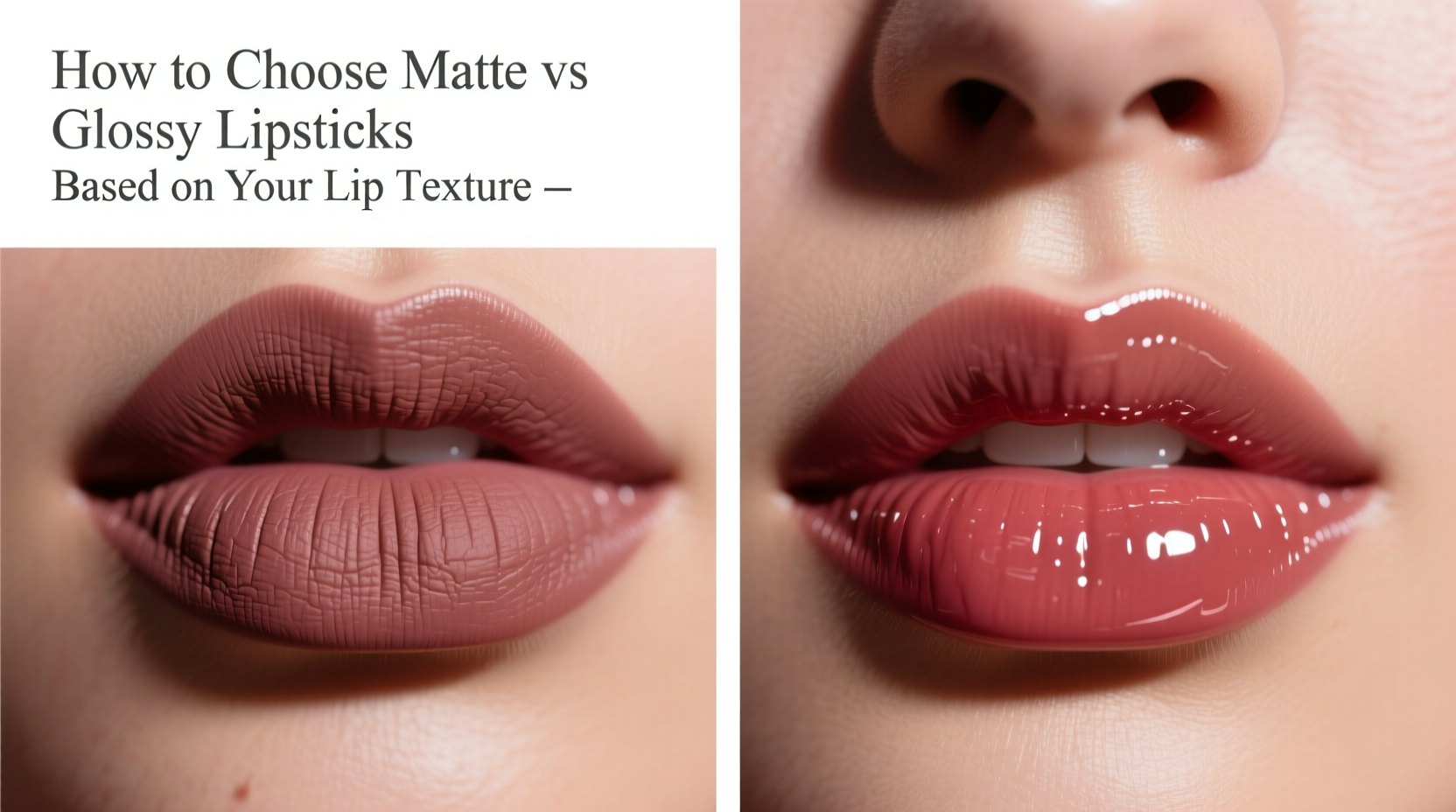
Lip texture refers to the surface condition and physical structure of your lips. It includes factors like hydration levels, presence of fine lines, natural volume, and tendency to flake or crack. Unlike skin tone or face shape, lip texture is often overlooked when selecting lipstick—but it shouldn’t be. A high-shine gloss can magnify dry patches, while a flat matte may cling to creases if not prepped properly.
There are four primary lip textures commonly seen:
- Smooth and hydrated: Lips with even surface, minimal lines, and consistent moisture.
- Dry or flaky: Lips prone to peeling, tightness, or visible cracks—often due to weather, dehydration, or overuse of exfoliants.
- Fine-lined or mature: Lips showing signs of aging with vertical lines (perioral rhytids) that deepen with movement.
- Plump or full: Naturally voluminous lips with less definition in the Cupid’s bow or border.
Your texture determines how light interacts with your lips and how well a formula adheres. Glossy finishes reflect light, drawing attention and amplifying texture. Matte finishes absorb light, creating a more uniform appearance but demanding a smoother base.
Tip: Examine your lips under natural light before choosing a finish. Artificial lighting can mask dryness or fine lines.Matte vs. Glossy: Performance Based on Texture Type
The core difference between matte and glossy lipsticks lies in their pigment concentration, emollient content, and light-reflection properties. Matte lipsticks typically contain higher pigment load and less oil, resulting in a velvety, opaque finish. Glossy lipsticks rely on oils, silicones, and polymers to create shine and hydration but often have lower color payoff.
Here's how each performs across different lip textures:
| Lip Texture | Best Finish | Why It Works | Risks of Wrong Choice |
|---|---|---|---|
| Smooth & Hydrated | Either Matte or Glossy | Even surface allows both finishes to apply seamlessly; no texture to exaggerate. | None significant—both perform well with proper prep. |
| Dry or Flaky | Glossy (with hydrating base) | Shine masks flakes; oils provide moisture and smoothing effect. | Matte can settle into cracks, emphasizing dryness and causing patchiness. |
| Fine-Lined or Mature | Mattes (satin-matte hybrids ideal) | Flat finish diffuses light, minimizing line visibility. | Gloss highlights every groove, making lines appear deeper. |
| Plump or Full | Mattes or Satin Finishes | Reduces excessive shine that can overwhelm proportions. | High-gloss can make lips look overly large or wet. |
“Many clients come in frustrated with their lipstick ‘not lasting’ or ‘looking cracked,’ only to realize they’re using a matte formula on dehydrated lips. Texture compatibility is half the battle.” — Lena Torres, Celebrity Makeup Artist & Beauty Educator
Step-by-Step Guide: Choosing Your Finish Based on Texture
Selecting the right lipstick isn’t guesswork. Follow this five-step process to match your lip texture with the optimal finish:
- Assess your current lip condition. Wash your face, remove any product, and observe your lips in natural light. Look for flakiness, tightness, or visible lines. Run a fingertip gently over your lips—does it catch? That indicates texture issues.
- Determine your dominant texture. Are your lips consistently dry despite balm use? Do fine lines appear when you smile? Use the categories above to classify your lips.
- Prep accordingly. Exfoliate gently once weekly if dry; hydrate daily with non-comedogenic balms. For mature lips, use peptide-infused treatments overnight.
- Test finishes strategically. Apply a small amount of matte and glossy lipstick to one side of your lips. Wait five minutes. Compare comfort, evenness, and appearance in daylight.
- Adjust based on occasion. Daytime wear favors comfortable, low-maintenance finishes. Evening events may allow bolder choices with touch-up plans.
Real Example: Sarah’s Switch from Gloss to Matte
Sarah, 47, had always worn high-shine lip glosses, believing they made her lips look fuller. Over time, she noticed her lipstick looked “beaded” around the edges and emphasized the lines above her upper lip. After consulting a dermatologist, she learned her skin’s natural collagen loss was being amplified by the reflective nature of gloss. She switched to a satin-matte formula with hyaluronic acid infusion. Within days, her lipstick applied more evenly, lasted longer, and gave a polished look without drawing attention to texture. “I didn’t realize the shine was working against me,” she said. “Now I get compliments on how ‘clean’ my lip color looks.”
Expert Tips for Maximizing Wear and Comfort
No finish works perfectly without proper preparation and technique. These tips help bridge the gap between formula limitations and real-life wear.
Tip: Always apply a hydrating lip primer or balm 5–10 minutes before matte lipstick, then blot excess before swiping on color.For Dry Lips Using Matte
- Exfoliate 1–2 times per week with a soft sugar scrub or damp washcloth.
- Use a humectant-rich balm (look for squalane, ceramides, or shea butter) nightly.
- Opt for “comfort matte” or “soft matte” formulas—they retain pigment while including moisturizing agents.
- Avoid long-wear mattes unless you’re prepared for frequent reapplication and hydration breaks.
For Mature Lips Avoiding Gloss
- Choose lip liners that match your natural lip shade to define borders without harsh lines.
- Apply matte lipstick with a brush for precision, avoiding feathering into lines.
- Set with a tissue and light powder press to reduce transfer without adding dryness.
- Use a tiny amount of clear gloss only in the center of the lower lip for subtle dimension—never along the entire border.
For Plump Lips Balancing Shine
- Matte finishes enhance definition and sophistication.
- If using gloss, apply only to the center third of the lower lip to avoid an overly exaggerated “duck lips” effect.
- Pair bold colors with low-shine finishes to maintain balance.
Checklist: How to Choose Your Finish Today
Use this quick-reference checklist before purchasing or applying lipstick:
- ☐ I’ve observed my lips in natural light for dryness or lines.
- ☐ I’ve exfoliated and hydrated if needed in the past 24 hours.
- ☐ I know whether I tend toward dry, smooth, mature, or plump texture.
- ☐ For dry/mature lips: I’m leaning toward matte or satin finishes.
- ☐ For smooth/plump lips: I’m open to both but will avoid excessive shine if desired.
- ☐ I’ve tested the formula on my actual lips, not just the back of my hand.
- ☐ I have a lip liner and balm ready to support my chosen finish.
Frequently Asked Questions
Can I wear glossy lipstick if I have dry lips?
Yes, but with precautions. Use a hydrating lip balm 10 minutes before application and blot excess. Choose glosses with nourishing ingredients like jojoba oil or vitamin E. Avoid glitter-infused or thick-tube glosses, which can trap flakes. For best results, layer a tinted balm first, then add gloss for shine without compromising texture.
Do matte lipsticks age your lips?
Not inherently—but poorly formulated or incorrectly applied matte lipsticks can emphasize fine lines, giving an aged appearance. Long-wear mattes that dry down completely may also dehydrate lips over time. To prevent this, opt for modern matte formulas enriched with conditioning agents and avoid sleeping in them. Regular exfoliation and hydration mitigate most risks.
How do I transition from glossy to matte without looking flat?
Start with a satin or demi-matte finish instead of ultra-matte. These offer color depth with a hint of sheen. Use a lip liner to add dimension and slightly overline if appropriate for your facial structure. Apply a tiny dot of clear gloss to the center of your lower lip after the matte dries for a “liquid matte with glow” effect.
Final Thoughts: Match Formula to Function
The debate between matte and glossy isn’t about which is better—it’s about which works better for you. Your lip texture is as unique as your fingerprint, and respecting it leads to more confident, comfortable wear. Matte finishes offer precision, longevity, and elegance, especially for mature or full lips. Glossy finishes deliver hydration, youthfulness, and dimension, ideal for smooth or dry lips when used wisely. The key is alignment: let your lip’s natural state guide your choice, not the latest Instagram trend.
💬 Ready to rethink your lipstick routine? Reassess your lip texture today and try one new finish based on your needs. Share your experience or ask questions in the comments—your insight could help someone else find their perfect match.








