Dog toys with squeakers are a favorite among canines—offering auditory stimulation that mimics prey-like sounds and triggers natural hunting instincts. But while the joy of a squeaky toy is undeniable, not all squeakers are created equal. Hidden dangers lurk inside poorly constructed toys: small parts that become choking hazards, toxic materials, or easily ruptured plastic capsules that dogs can ingest. For responsible pet owners, understanding how to choose and identify safe squeakers isn’t just about durability—it’s a critical component of protecting your dog’s long-term health.
Why Squeaker Safety Matters for Your Dog
The appeal of a squeaky toy lies in its ability to engage a dog’s senses. The high-pitched noise activates curiosity and encourages play, often leading to prolonged chewing and shaking. However, this same behavior increases the risk of the toy being torn apart. Once compromised, the internal squeaker—a typically small plastic or rubber disc housed in a chamber—can be exposed and swallowed.
Ingested squeakers pose serious health risks. They are rarely digestible and can cause intestinal blockages, requiring emergency surgery. In some cases, sharp edges from broken plastic components may damage the gastrointestinal tract. Additionally, low-quality materials may contain phthalates, BPA, or lead—chemicals linked to hormonal disruption and organ damage over time.
“Many dog owners don’t realize that the most dangerous part of a chew toy isn’t the fabric or stuffing—it’s what’s inside. A ruptured squeaker can silently endanger a dog’s digestive system.” — Dr. Lena Torres, DVM, Veterinary Preventive Care Specialist
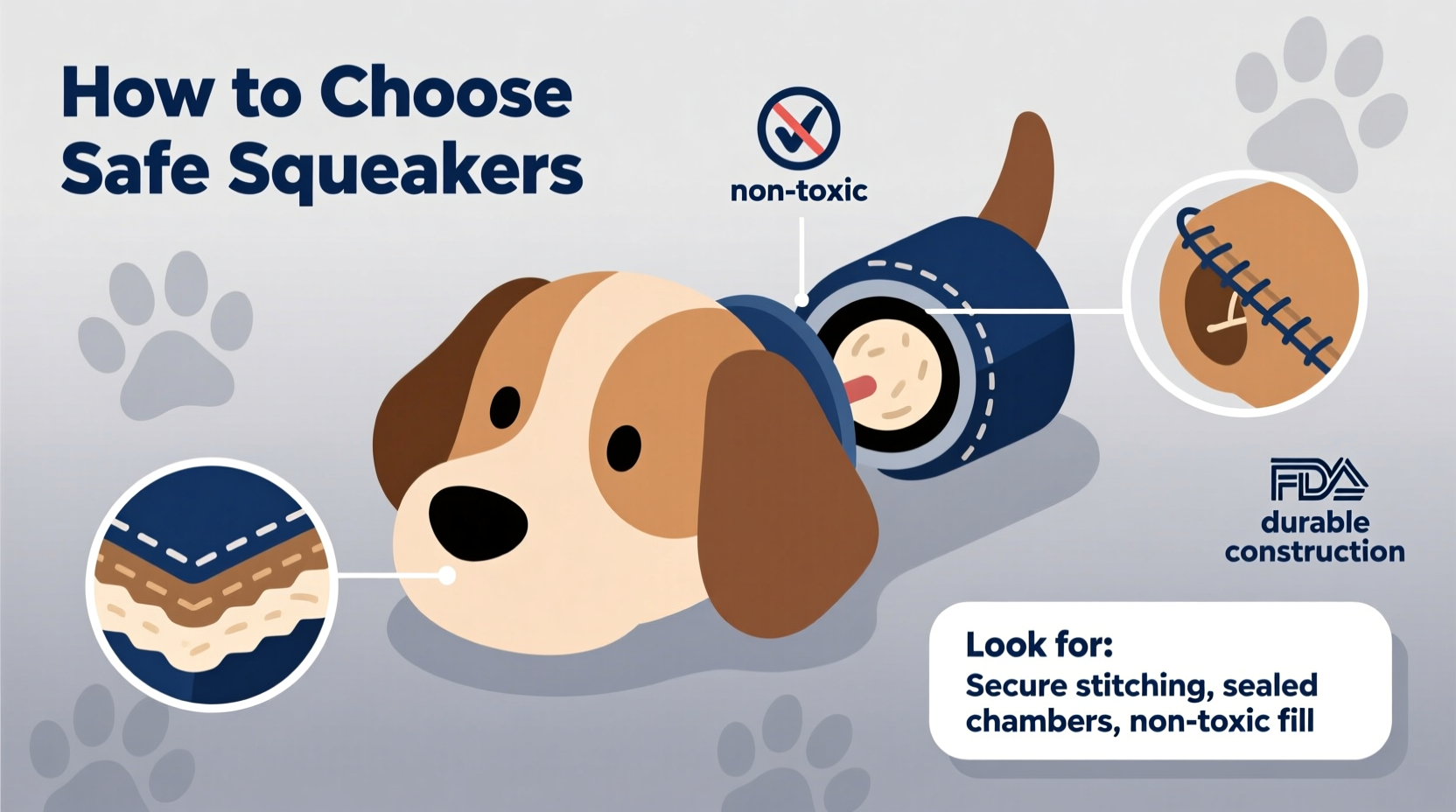
How to Identify Safe Squeakers: Key Features to Look For
Not all squeakers are hazardous, but discerning which ones are safe requires attention to construction, materials, and design. Here’s what to inspect before purchasing or allowing your dog to play with a squeaky toy:
- Encapsulation: The squeaker should be fully enclosed within multiple layers of durable fabric or reinforced material. Avoid toys where the squeaker is near the surface or accessible through thin stitching.
- Size and Shape: Larger, flat squeakers are less likely to be swallowed than small, round ones. Look for elongated designs that are harder to pass through the esophagus.
- Material Quality: Choose squeakers made from non-toxic, food-grade plastics or rubber. These are less likely to leach harmful chemicals if briefly chewed.
- Secure Housing: The best toys feature double-stitched or heat-sealed chambers that isolate the squeaker from direct contact with teeth.
- Brand Transparency: Reputable manufacturers often list material safety certifications (e.g., FDA-compliant, BPA-free) on packaging or websites.
Step-by-Step Guide to Evaluating a Squeaky Toy’s Safety
Before introducing any new squeaky toy into your home, follow this evaluation process to minimize health risks:
- Inspect the Exterior: Check for tight, double-layered seams and reinforced stitching. Avoid toys with loose threads or flimsy fabric.
- Test the Squeaker Depth: Press firmly around different areas of the toy. If the squeaker feels close to the surface or moves freely under pressure, it may be exposed quickly during play.
- Review Manufacturer Claims: Visit the brand’s website or contact customer service to confirm if the squeaker is BPA-free, phthalate-free, and non-toxic.
- Monitor Initial Play: Supervise your dog’s first 10–15 minutes with the toy. Watch for aggressive chewing or attempts to rip open seams.
- Remove When Damaged: At the first sign of tearing, deflation, or exposed internals, discard the toy immediately—even if it still squeaks.
Do’s and Don’ts of Squeaky Toy Selection
| Action | Recommendation | Reason |
|---|---|---|
| Choose multi-sensory toys | ✓ Do | Toys with crinkle layers + hidden squeakers extend engagement without over-relying on sound. |
| Buy ultra-cheap squeaky toys | ✗ Don’t | Budget toys often use thinner materials and lower-grade plastics. |
| Select size-appropriate toys | ✓ Do | A large dog needs a larger toy; small toys are choking hazards regardless of squeaker safety. |
| Allow unsupervised play with new toys | ✗ Don’t | Early destruction patterns are hard to predict without observation. |
| Wash toys regularly | ✓ Do | Removes bacteria and helps detect wear like fraying or soft spots. |
Real Example: Bella the Border Collie’s Close Call
Bella, a 3-year-old Border Collie known for her intense play style, received a plush squirrel toy with a loud squeaker as a birthday gift. Within two days, she had ripped off the tail and extracted the squeaker—a small, pea-sized plastic ball. Her owner, unaware of the ingestion, noticed Bella was lethargic and refusing food by day three. An X-ray revealed the squeaker lodged in her small intestine. Emergency surgery removed the object, and Bella recovered—but the vet bill exceeded $2,800.
Afterward, Bella’s owner switched to only high-integrity brands with encapsulated, flat-disc squeakers and began supervising all playtime. “I assumed ‘pet store brand’ meant safe,” she said. “Now I read labels like they’re medication inserts.”
Checklist: Is This Squeaky Toy Safe for My Dog?
- ☐ The squeaker is not palpable through the outer fabric
- ☐ The toy is made from non-toxic, BPA-free materials
- ☐ Seams are double-stitched or welded
- ☐ The toy is appropriately sized for my dog’s breed and chewing strength
- ☐ I’ve observed my dog playing with it for at least 10 minutes without damage
- ☐ I will discard it at the first sign of tearing or exposed internals
Frequently Asked Questions
Can squeakers be toxic if swallowed?
While most squeakers aren’t acutely poisonous, they are made of rigid plastic that doesn’t break down. If ingested, they can cause obstructions. Some older or imported toys may contain regulated chemicals like phthalates, which are harmful in large quantities over time.
Are there safer alternatives to traditional squeakers?
Yes. Some brands use sewn-in crinkle paper, textured fabrics, or even electronic sound modules encased in rigid, indestructible shells designed to withstand heavy chewing. Others offer “squeak-free” interactive toys that stimulate through texture and movement instead.
Should I avoid squeaky toys altogether?
No—squeaky toys have real behavioral benefits when used safely. The key is selecting high-quality versions, supervising play, and retiring toys early. For power chewers, consider limiting squeaky toy access to short, monitored sessions rather than leaving them unattended.
Protecting Your Pet Starts With Smarter Choices
Choosing safe squeakers isn’t about eliminating fun—it’s about preserving your dog’s well-being while letting them enjoy instinct-driven play. The right toy combines durability, non-toxic materials, and intelligent design to reduce risks without sacrificing engagement. By learning to spot warning signs, reading labels critically, and staying vigilant during play, you create a safer environment for your pet to thrive.
Remember: no toy is indestructible, but informed choices dramatically reduce the odds of an emergency. Start evaluating every squeaky toy not just by how it sounds, but by how it’s built.
💬 Have a story about a toy that failed—or one that’s stood the test of time? Share your experience to help other pet owners make smarter, safer choices for their furry companions.








