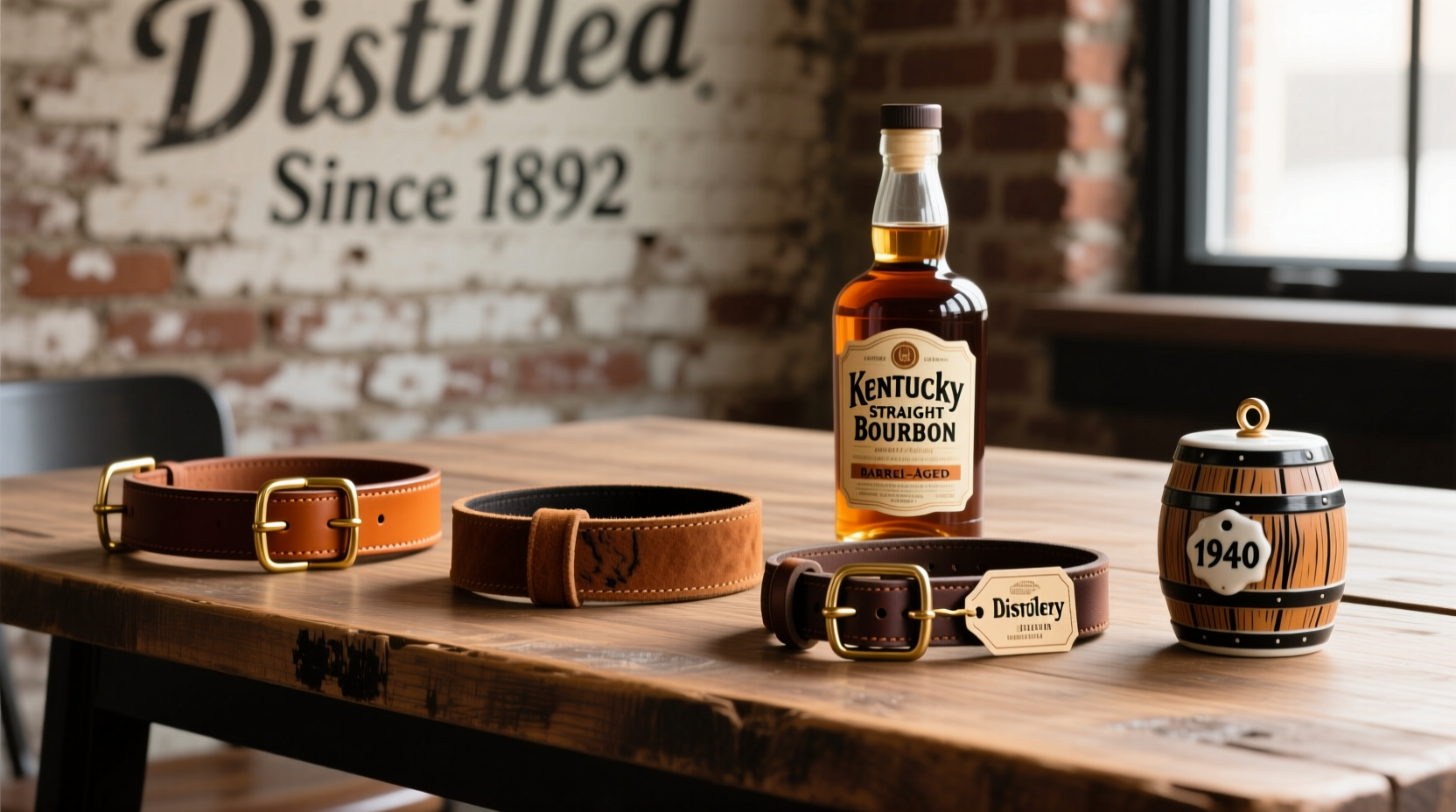
At first glance, bourbon and dog collars seem worlds apart—one rooted in centuries-old distillation traditions, the other in everyday pet care. But both are deeply expressive of identity: what we choose to sip says something about our appreciation for terroir, patience, and integrity; what we choose to fasten around our dog’s neck says something about our values as stewards, companions, and curators of daily life. This isn’t about superficial branding or aesthetic mimicry. It’s about recognizing shared principles—craftsmanship over convenience, intentionality over impulse, durability over disposability—and letting those principles guide a practical purchase. A well-chosen dog collar doesn’t just secure your dog; it quietly communicates your ethos. And if you reach for a small-batch Kentucky rye before a mass-market blended whiskey, your collar choice should resonate with that same discernment.
The Philosophy Behind the Pairing
Bourbon preferences rarely exist in a vacuum. They reflect patterns of attention: the way you notice the subtle char on a barrel-aged finish, the weight of a hand-blown glass tumbler, the quiet pride in supporting a family-owned distillery that still uses open fermentation tanks. These aren’t just consumption habits—they’re value signals. Likewise, a dog collar is more than nylon and a D-ring. It’s the first point of contact between your dog’s body and the world—a tactile interface that must balance safety, comfort, and expression. When you select a collar aligned with your bourbon sensibility, you’re not matching labels—you’re honoring consistency across domains: respect for material honesty, reverence for provenance, and commitment to longevity.
Consider this: a bourbon aged 12 years in new charred oak barrels demands time, climate-aware storage, and hands-on monitoring. A collar built from full-grain vegetable-tanned leather, stitched with marine-grade thread, and finished with solid brass hardware follows parallel logic—it ages gracefully, improves with wear, and resists shortcuts. Neither is “better” in an absolute sense, but both reflect a shared orientation toward depth, not speed.
Tip: Before browsing collars, revisit your last three bourbon purchases. Note the distillery size (micro vs. macro), aging statements, grain bill details, and packaging ethos. These clues reveal your unconscious criteria—apply them to collar materials, construction, and maker transparency.Decoding Your Bourbon Profile: A Practical Framework
To translate taste into selection, start by mapping your bourbon habits onto four foundational dimensions. Each corresponds directly to collar attributes:
- Provenance Preference: Do you seek out Kentucky Straight Bourbon exclusively—or do you champion Tennessee whiskeys, New York ryes, or Texas single-barrel experiments? This signals whether you value regional tradition or innovative reinterpretation.
- Process Priority: Are you drawn to wheated bourbons for their softness, high-rye expressions for bold spice, or experimental finishes (sherry casks, port barrels)? This reflects your tolerance for complexity versus clarity—and how much nuance you want in everyday objects.
- Production Scale: Do you consistently choose craft distilleries with under-500-gallon stills, or do you appreciate the consistency of larger operations like Buffalo Trace or Four Roses? This reveals your stance on artisanal labor versus engineered reliability.
- Aging Intuition: Do you gravitate toward younger, vibrant bourbons (4–6 years) or older, contemplative releases (10+ years)? This indicates your relationship with time—whether you value immediacy or invest in slow transformation.
These dimensions form the backbone of intentional collar selection—not as rigid rules, but as diagnostic tools. A person who selects Michter’s US*1 Small Batch for its meticulous small-batch process and copper-distilled purity will likely prioritize collars with traceable hides, hand-cut edges, and minimal chemical finishing. Someone who loves the approachable warmth of Maker’s Mark—consistent, accessible, community-rooted—may prefer collars made by U.S.-based small workshops using domestically sourced webbing and recycled hardware.
Collar Materials Through the Bourbon Lens
Just as bourbon’s flavor begins with grain, water, and wood, a collar’s integrity starts with its base material. Below is a comparative framework linking common collar materials to bourbon production analogues:
| Bourbon Characteristic | Corresponding Collar Material | Why the Alignment Works |
|---|---|---|
| Small-batch, hand-selected barrels | Full-grain vegetable-tanned leather | Each hide bears unique grain patterns and natural markings—like barrel variation—aged without synthetic dyes or plastic coatings. Develops a rich patina over time, much like a well-aged bourbon deepens in complexity. |
| High-rye, spicy profile (e.g., Bulleit Rye) | Woven nylon with reflective threading & tactical hardware | Sharp visual contrast, functional precision, and energetic durability—ideal for active dogs and owners who value structure and assertive design. |
| Wheated, smooth finish (e.g., W.L. Weller Special Reserve) | Soft, buttery latigo leather with rounded edges | Exceptionally supple, gentle on fur and skin, with a mellow, refined hand-feel—prioritizes comfort and subtlety over flash. |
| Experimental cask finish (e.g., Angel’s Envy Port Finish) | Upcycled denim or hemp canvas with custom-dyed accents | Reimagines familiar materials through artisanal processes—small-batch dye lots, hand-stitching, limited runs—celebrating innovation within tradition. |
| Heritage-focused, uncut & unfiltered (e.g., Booker’s) | Rugged 1.5-inch biothane with engraved solid-brass hardware | No dilution, no compromise: maximum strength, zero stretch, weatherproof resilience. Built for uncompromising performance and authenticity. |
Note: “Matching” doesn’t mean literal color coordination—no need to find a collar the exact shade of Blanton’s gold wax seal. It means selecting a material whose origin story, manufacturing ethics, and long-term behavior echo your bourbon values. A leather collar from a tannery that uses bark extracts instead of chromium aligns with someone who chooses organic, non-GMO bourbons. A collar made with recycled ocean plastics resonates with drinkers who support distilleries investing in regenerative agriculture for their corn.
Real-World Alignment: A Mini Case Study
Meet Lena, a 34-year-old archivist in Louisville who rotates between three bourbons: Old Forester 1920 Expression (for its historic continuity and precise 115-proof intensity), Rabbit Hole Dareringer (for its innovative double-barrel finishing), and a private barrel pick from a local micro-distillery called Blue Heron Spirits. She describes her taste as “tradition with a question mark”—respectful of legacy but allergic to dogma.
When her rescue hound, Juno, needed a new collar after outgrowing her puppy gear, Lena rejected both mass-market nylon options and overly rustic leather collars that looked like costume pieces. Instead, she commissioned a piece from a Lexington-based leatherworker who sources hides from Amish farms in Ohio, uses only natural walnut and sumac tannins, and hand-burnishes each edge. The collar features a subtle, laser-etched motif inspired by Old Forester’s historic label typography—but rendered in minimalist line art, not literal reproduction. Hardware is solid brass, deliberately left unlacquered to develop a warm, living patina.
“It feels like holding a bottle of Dareringer,” Lena explains. “You recognize the lineage—the bourbon still tastes unmistakably like Kentucky rye—but there’s a layer of surprise, a texture that rewards closer attention. The collar isn’t shouting ‘bourbon!’ It’s whispering the same values: care, curiosity, and quiet confidence.”
“Material choices are moral choices. When you choose leather tanned without heavy metals, or hardware forged without conflict minerals, you’re extending the same ethics that lead you to seek out transparent distilleries.” — Dr. Aris Thorne, Ethical Materials Researcher, University of Kentucky College of Agriculture
Your Action Plan: A 5-Step Selection Timeline
Follow this sequence to move from abstract preference to concrete collar choice—without overwhelm or guesswork:
- Inventory Your Last Six Bourbon Purchases (15 minutes): List distillery, age statement, proof, grain bill, and where you bought it (local shop vs. online retailer). Highlight recurring themes—e.g., “all from KY distilleries,” “all bottled-in-bond,” “all with tasting notes referencing oak or caramel.”
- Define Your Non-Negotiables (10 minutes): Based on your inventory, identify 2–3 core criteria. Examples: “Must be made in the USA,” “No synthetic dyes,” “Hardware must be corrosion-resistant,” or “Maker must publish tanning method.”
- Research Three Makers Who Mirror Your Values (30 minutes): Search for dog collar artisans or small brands whose websites disclose sourcing, labor practices, and material origins. Cross-reference with bourbon-aligned traits—e.g., a tannery that also supplies leather for distillery-bound barrel staves, or a workshop located within 100 miles of a bourbon trail stop.
- Request Material Samples & Production Details (5 minutes per maker): Email makers asking for swatches (many send free leather or fabric samples) and specifics: “Is your brass nickel-plated or solid?” “What’s the tensile strength rating of your webbing?” “Do you use vegetable or chrome tanning?”
- Test Fit & Time-Observe (7–10 days): Once received, wear the collar yourself for a day (yes—feel the weight, flex, and clasp action), then fit it on your dog. Observe how it behaves during walks, naps, and play. Does it soften naturally? Does hardware stay cool? Does stitching hold up to gentle abrasion? True alignment reveals itself in sustained interaction—not first impressions.
Frequently Asked Questions
Can I match my collar to a specific bourbon bottle’s color or label design?
Yes—but with caution. While custom-printed collars exist, they often rely on plastisol inks or vinyl overlays that degrade, peel, or leach chemicals. A more authentic alignment honors the *spirit* of the bourbon—its craftsmanship, not its packaging. A collar dyed with black walnut extract evokes the deep, earthy notes of a 12-year bourbon far more meaningfully than a screen-printed Elijah Craig logo ever could.
What if I enjoy both craft bourbon and mainstream brands—does that mean I can’t choose a meaningful collar?
Not at all. That duality reflects healthy pragmatism—not inconsistency. You might choose a collar made by a mid-sized manufacturer that balances artisanal techniques (e.g., double-stitched seams, custom-molded buckles) with scalable ethics (fair wages, renewable energy in production). Think of it like choosing Four Roses Single Barrel one night and a local distiller’s limited release the next: different expressions of the same core respect for quality and integrity.
My dog has sensitive skin—does ‘bourbon-aligned’ mean sacrificing comfort?
Never. In fact, bourbon-aligned choices often enhance comfort. Vegetable-tanned leather breathes better than synthetic alternatives. Hemp and organic cotton webbing lack the chemical residues found in conventional nylon. Even high-performance biothane—used by many distillery safety teams for equipment straps—is hypoallergenic, non-porous, and easy to sanitize. Prioritize material purity first; aesthetics follow naturally.
Conclusion: Wear Your Values, Not Just Your Whiskey
Your bourbon shelf tells a story—of curiosity, of heritage, of moments shared and savored. Your dog’s collar is part of that same narrative. It’s not about turning your pet into a walking advertisement or forcing symbolic symmetry where none exists. It’s about refusing to compartmentalize your values—refusing to accept that what matters in your glass shouldn’t matter in your dog’s gear. When you choose a collar whose leather was tanned with the same reverence a master distiller applies to his mash bill, when you select hardware forged with the same integrity a cooper brings to a barrel hoop, you’re practicing coherence. You’re saying that care isn’t situational—it’s habitual. That quality isn’t reserved for special occasions—it’s woven into the ordinary.
Start small. Revisit one bourbon you love. Read its back label closely—not just the proof, but the distillery’s sustainability report, the farmer’s name credited for the corn, the year the warehouse was built. Then ask the same questions of your collar maker. Let that inquiry become ritual. Let your choices deepen, not just decorate.
💬 Your palate has a voice. Your dog’s collar can speak the same language. Share your bourbon-collab pairing story in the comments—we’ll feature thoughtful alignments in our monthly roundup.








