
Motivation is fleeting. It surges after a great night’s sleep or an inspiring podcast, then vanishes by midweek when the alarm goes off at 6 a.m. and the rain is pouring outside. If you've ever started a new routine only to abandon it within days, you're not alone—and the fault isn't yours. The real issue? Relying on motivation to sustain change.
Habits that endure aren’t built on inspiration but on structure, environment, and repetition. Research in behavioral psychology shows that consistency—not intensity—drives long-term success. This means designing systems that function regardless of how you feel. By shifting focus from motivation to mechanics, you can create routines that persist through fatigue, stress, and even boredom.
The Myth of Motivation-Driven Change
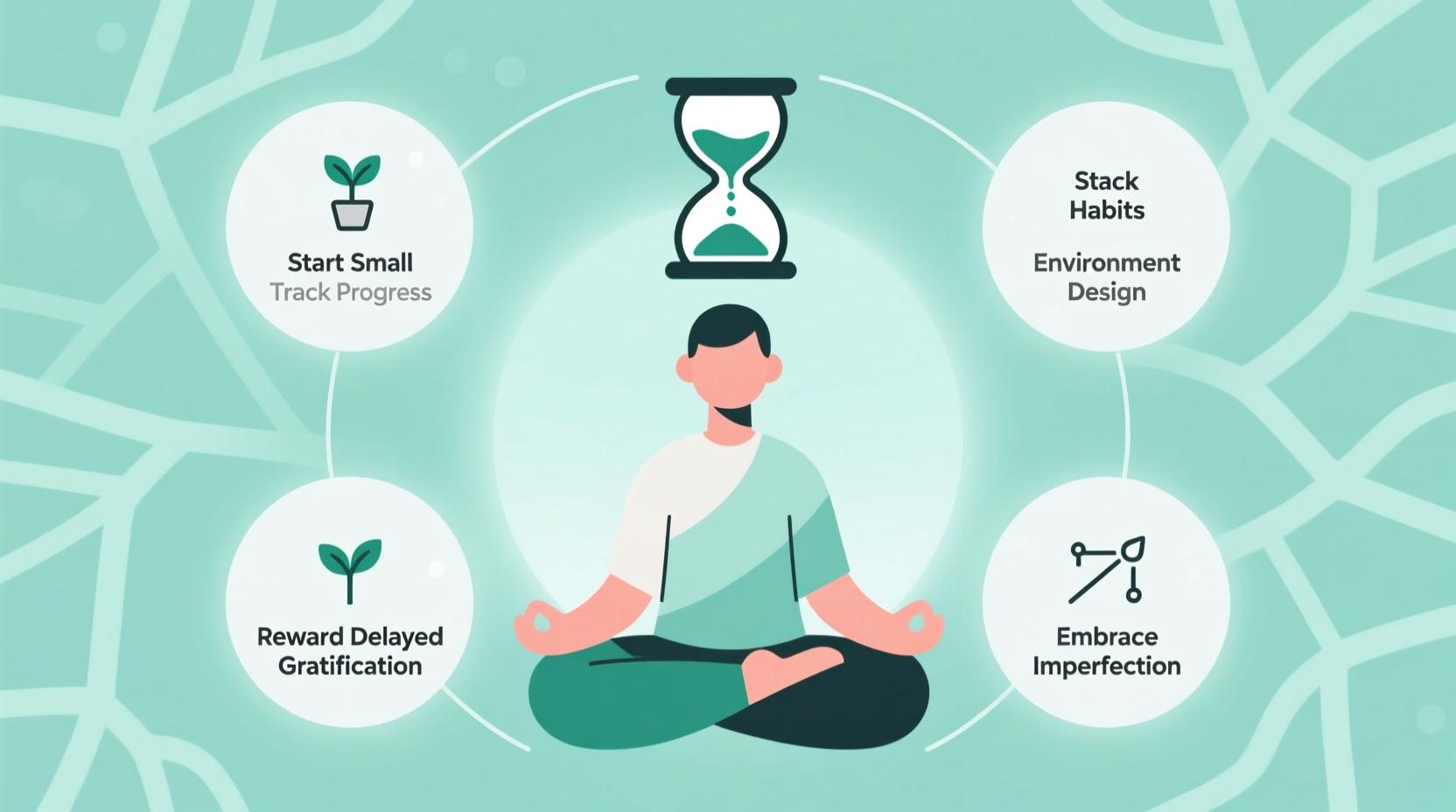
We’re conditioned to believe that transformation begins with a spark: a goal, a resolution, or a burst of willpower. But motivation is reactive. It responds to emotion, energy levels, and immediate rewards. When those fade—as they inevitably do—the habit collapses.
James Clear, author of *Atomic Habits*, puts it clearly: “You do not rise to the level of your goals. You fall to the level of your systems.” In other words, sustainable change comes not from wanting it badly enough, but from setting up processes that make action automatic.
“We are what we repeatedly do. Excellence, then, is not an act, but a habit.” — Aristotle
The most effective habits operate below the level of conscious thought. You don’t debate brushing your teeth each morning—you just do it. That’s the model to emulate: behaviors so ingrained they require no decision-making, no pep talk, no internal negotiation.
Design Your Environment for Automatic Action
Your surroundings shape your behavior far more than your intentions. A cluttered kitchen makes healthy cooking less likely. A phone on your nightstand invites late-night scrolling. Small environmental tweaks reduce friction for good habits and increase it for bad ones.
Consider this: if you want to read more, place a book on your pillow each evening. If you want to exercise first thing, lay out your clothes and shoes the night before. These aren’t trivial gestures—they’re strategic nudges that bypass the need for motivation entirely.
Tip: Make the next action so easy it feels effortless. Success isn’t about effort—it’s about reducing resistance.Stanford researcher BJ Fogg emphasizes the \"Tiny Habits\" method: start with actions so small they’re impossible to fail. Floss one tooth. Do two push-ups. Write one sentence. The goal isn’t immediate impact but identity reinforcement. Each tiny win signals to your brain: I am someone who does this.
The Power of Habit Stacking
One of the most reliable ways to embed a new behavior is to attach it to an existing one—a technique known as habit stacking. The formula is simple:
After [CURRENT HABIT], I will [NEW HABIT].
Examples:
- After I pour my morning coffee, I will meditate for one minute.
- After I take off my shoes, I will place them in the closet.
- After I finish dinner, I will load the dishwasher immediately.
This leverages neural pathways already in place. Your brain doesn’t have to search for when or where to act—the cue is built into your day.
Create a Behavior Timeline: First 30 Days
Building a habit isn’t about perfection—it’s about showing up consistently. Use this timeline to establish momentum without burnout.
- Day 1–3: Define the smallest possible version of your habit. Focus on execution, not results.
- Day 4–7: Anchor it to an existing routine using habit stacking. Track completion daily.
- Day 8–14: Optimize your environment. Remove distractions; add cues (e.g., sticky notes, alarms).
- Day 15–21: Add slight difficulty only if the habit feels automatic. Example: from one push-up to five.
- Day 22–30: Reflect weekly. What’s working? What needs adjustment? Celebrate consistency, not outcomes.
At the end of 30 days, the behavior should feel less like a choice and more like part of your rhythm. That’s the hallmark of a habit that sticks.
Use Rewards to Reinforce Behavior
Our brains are wired to repeat actions that lead to satisfaction. Immediate rewards strengthen habit formation—even if the long-term benefit is distant. The key is to close the feedback loop quickly.
If you run three times a week, reward yourself immediately afterward with something enjoyable: a favorite playlist, a smoothie, or five minutes of guilt-free social media. Over time, your brain associates the effort with pleasure, not sacrifice.
| Habit | Long-Term Benefit | Immediate Reward |
|---|---|---|
| Writing daily | Better clarity, potential income | Check off a tracker, enjoy a cup of tea |
| Walking after dinner | Improved digestion, heart health | Listen to a podcast episode |
| Making your bed | Increased sense of control | Visual satisfaction, photo for progress log |
Rewards don’t need to be extravagant. They simply need to be timely and tied directly to the behavior.
Track Progress Without Obsession
Tracking builds awareness and accountability. A simple calendar with an X for each completed day creates a visual chain. Most people won’t break a streak once it reaches double digits.
But beware of turning tracking into a source of stress. Missing a day isn’t failure—it’s data. The goal is consistency over time, not perfection.
Tip: Use a physical calendar or notebook instead of an app. The tactile act of marking progress strengthens commitment.Avoid Common Pitfalls That Break Habits
Even well-designed systems fail when they ignore human psychology. Here are frequent missteps—and how to avoid them.
- Starting too big: Wanting to work out for an hour daily sets you up for failure. Begin with five minutes.
- Dependence on mood: Waiting until you “feel like it” means waiting indefinitely. Act first, motivation may follow.
- Isolating the habit: If your environment works against you, willpower alone won’t win. Align your space with your goals.
- Ignoring context shifts: Travel, illness, or schedule changes disrupt routines. Plan for flexibility in advance.
Flexibility is not weakness. A rigid system breaks under pressure. A resilient one adapts.
Real-Life Example: From Couch to Consistent Runner
Mark, a 38-year-old project manager, wanted to start running but had failed multiple times. He’d begin enthusiastically, then skip days due to work stress or fatigue. After reading about habit design, he changed his approach.
Instead of aiming for 5K runs, he committed to putting on his running shoes and stepping outside every evening after dinner. That was it. No distance requirement. No timer.
Within a week, stepping outside often led to a short walk, then a jog. By day 14, he was running two miles regularly. The act of suiting up became the trigger. He didn’t wait to feel motivated—he followed the rule.
Today, Mark runs four times a week. Not because he loves it every day, but because the habit is embedded in his routine. The decision was made weeks ago.
Build Your Habit Blueprint: A Step-by-Step Checklist
Follow this checklist to create a habit that functions independently of motivation.
- Choose one specific behavior (e.g., “drink a glass of water upon waking”).
- Make it absurdly easy to start (scale down if needed).
- Attach it to an existing habit using the “after [X], I will [Y]” formula.
- Adjust your environment to support the action (e.g., keep water by your bed).
- Add an immediate, enjoyable reward (e.g., play a song you love).
- Track completion daily for at least 21 days.
- Review weekly: What worked? What slowed you down?
- Only after consistency is established, consider increasing difficulty.
This blueprint removes guesswork. It turns intention into infrastructure.
FAQ: Habits Without Motivation
What if I miss a day? Does the habit fail?
No. Missing one day doesn’t erase progress. What matters is resuming the next day. Think of consistency as a trend line, not a perfect sequence. The goal is long-term adherence, not flawless execution.
How long does it take to form a habit?
Research varies, but a 2009 study published in the European Journal of Social Psychology found it takes an average of 66 days for a behavior to become automatic—though it ranged from 18 to 254 days depending on complexity and individual differences. Focus on repetition, not timelines.
Can I build multiple habits at once?
Possibly, but not recommended for beginners. Each new habit consumes mental bandwidth. Start with one. Once it feels automatic, add another. Stack them gradually to avoid cognitive overload.
Conclusion: Stop Waiting. Start Building.
You don’t need more motivation. You need better design. Lasting habits thrive on simplicity, repetition, and environment—not emotional highs. When you stop relying on how you feel and start trusting your system, change becomes inevitable.
Begin today. Choose one tiny action. Attach it to something you already do. Make it easy. Reward yourself. Repeat. Do this not because you’re inspired, but because you’ve decided who you want to become.
💬 Ready to build a habit that lasts? Pick one small behavior and implement it tomorrow using the steps above. Share your commitment in the comments—accountability starts now.








