
For many homeowners, a thoughtfully designed home bar is more than a luxury—it’s a hub for connection, celebration, and daily ritual. But when you share your space with dogs, that same bar can become an unintentional hazard zone. Ethanol toxicity from even small amounts of spilled whiskey or wine can trigger vomiting, disorientation, or respiratory depression in dogs within 30 minutes. Corks pose choking and intestinal obstruction risks. Glass shards, citrus oils in garnishes, xylitol-sweetened syrups, and open bottles left unattended all compound the danger. The good news? Safety and style aren’t mutually exclusive. With deliberate planning, smart material choices, and behavior-aware layout decisions, you can create a bar that delights guests *and* protects your dog—without turning your living space into a fortress.
Why Pet-Safe Bar Design Is Non-Negotiable (Not Just “Nice to Have”)
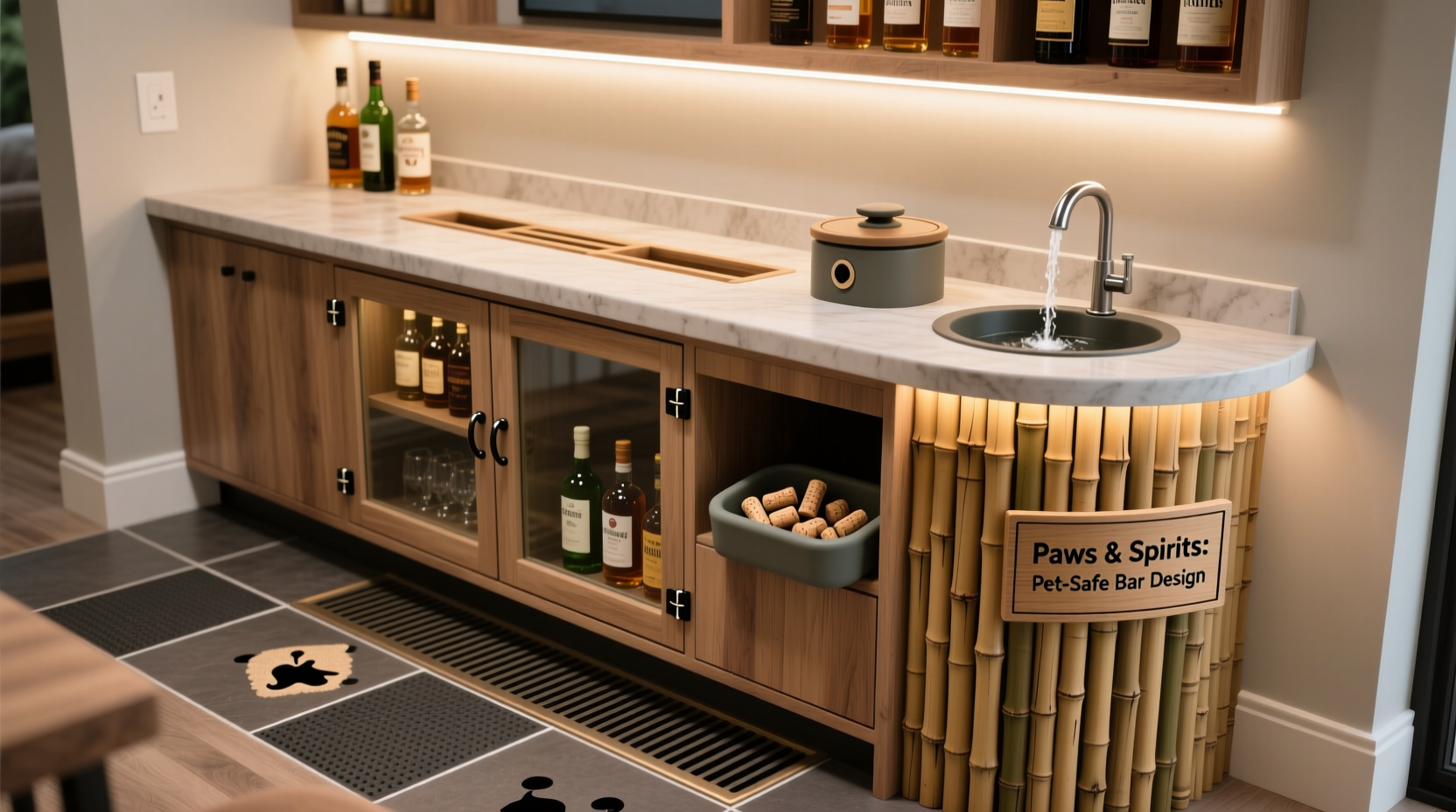
Dogs don’t distinguish between “bar area” and “living area.” Their world operates on scent, accessibility, and instinct—not human concepts of designated zones. A 2023 study published in Veterinary Emergency and Critical Care found that 68% of canine ethanol toxicity cases presenting to emergency clinics involved household spirits—most commonly spilled or unattended glasses of wine, cocktails, or open bottles on low countertops or coffee tables. Cork ingestion ranked third among non-food foreign body obstructions in dogs under 5 years old, according to the American College of Veterinary Surgeons’ national case registry. These aren’t rare edge cases—they’re preventable outcomes rooted in environmental design.
It’s not about restricting your lifestyle; it’s about aligning your space with how dogs actually interact with it. A dog doesn’t “respect boundaries” the way a child might. It sniffs, investigates, licks, and mouths. Your bar must assume that behavior—and accommodate it safely.
Tip: Assume every spill will be licked within 90 seconds—and design your cleanup workflow accordingly. Keep a dedicated microfiber towel and enzymatic cleaner (pet-safe, alcohol-free) within arm’s reach of the bar.The 5-Pillar Framework for a Truly Pet-Safe Bar
Building safety into your bar isn’t about adding locks or cages. It’s about integrating five interlocking design principles—each addressing a specific risk vector while preserving usability and visual appeal.
Pillar 1: Vertical Containment — Elevate Everything That Can Spill or Scatter
Gravity is your first line of defense. Dogs rarely jump onto counters unless trained or highly motivated—but they’ll readily investigate anything at nose or paw level. Install wall-mounted shelving at least 42 inches above the floor for spirits, liqueurs, and glassware. Use deep, recessed ledges or low-profile metal brackets to prevent bottles from being nudged off edges. For frequently used items (like your go-to gin or vermouth), install a pull-down shelf system mounted at 54–60 inches—within easy human reach but safely out of canine range.
Pillar 2: Secure Storage — Lock Away What You Don’t Use Daily
Not everything belongs on display. Reserve locked cabinetry—preferably with magnetic or touch-latch mechanisms (no noisy knobs or handles dogs can nudge)—for high-risk items: bitters (many contain methyl salicylate, toxic to dogs), cordials with artificial sweeteners, cocktail shakers filled with citrus juice (citric acid irritates gastric linings), and unused corks or stoppers. Avoid traditional keyed locks; opt for childproof latches rated for pets (tested against 30+ lbs of sustained pressure).
Pillar 3: Material Intelligence — Choose Surfaces That Repel, Not Invite
Marble and polished granite look elegant—but they’re unforgiving when spirits pool and evaporate, leaving behind sticky, aromatic residues dogs find irresistible. Instead, choose honed quartzite, matte-finish porcelain slabs, or solid surface materials like Corian® with antimicrobial additives. These surfaces resist staining, clean effortlessly with pH-neutral cleaners, and don’t retain volatile organic compounds (VOCs) from alcohol evaporation. For bar fronts and lower cabinets, use textured wood veneers or vertical-grain bamboo—materials dogs are less inclined to mouth due to tactile feedback.
Pillar 4: Behavioral Buffering — Design for Distraction, Not Just Denial
Safety isn’t only about removing hazards—it’s about redirecting attention. Position your dog’s favorite bed or crate just outside the bar’s visual field (e.g., beside a window with bird activity or near a quiet reading nook). Keep a rotating stash of food puzzles or slow-feed toys nearby, activated *before* guests arrive or during prep time. This reduces anticipatory pacing and lowers the chance your dog will hover near the bar seeking stimulation—or scraps.
Pillar 5: Human Habit Engineering — Make Safe Choices the Default
Even the best-designed bar fails if habits undermine it. Train yourself—and your guests—to always return bottles to upright, capped positions immediately after pouring. Never leave a cork resting on the counter; use a dedicated cork holder mounted high on the wall or integrated into a drawer. Serve drinks in weighted, wide-base glasses (like Nick & Nora or coupe styles) that resist tipping. And crucially: never place a drink on the floor, ottoman, or low shelf—even “just for a second.” In dog time, that’s an open invitation.
Step-by-Step: Building Your Pet-Safe Bar in 7 Practical Actions
- Map your dog’s movement patterns: For one full day, note where your dog spends time, where they pause, sniff, or rest near the bar zone. Identify high-traffic approach paths and lingering spots.
- Remove all current bar items: Clear shelves, cabinets, and countertops completely. Sort into three piles: “Daily Use,” “Occasional Use,” and “Rarely Used/High-Risk.”
- Install vertical storage: Mount floating shelves at 42\", 54\", and 66\" heights using wall anchors rated for 100+ lbs. Place “Daily Use” bottles and glassware here.
- Convert lower cabinets to secure storage: Replace standard knobs with magnetic touch latches. Assign “Occasional Use” items here (e.g., amaros, shrubs, specialty bitters).
- Create a spill-response station: Mount a small, labeled wall pocket (or repurpose a shallow apothecary jar) holding: one absorbent microfiber towel, a 4 oz bottle of pet-safe enzymatic cleaner, and a silicone squeegee for quick liquid removal.
- Integrate behavioral buffers: Position your dog’s orthopedic bed 3 feet from the bar’s outer edge, angled toward natural light. Add a treat-dispensing puzzle toy pre-filled and placed beside it.
- Establish a guest protocol: Print a discreet 3×5 card titled “Bar Etiquette” and place it near the ice bucket: “Please cap bottles after pouring • Return corks to wall holder • Place empty glasses in sink, not on counters.”
Do’s and Don’ts: A Quick-Reference Safety Table
| Category | Do | Don’t |
|---|---|---|
| Cork Management | Use a wall-mounted cork holder with deep slots; store corks vertically, pointed-end up | Leave corks loose on counters, in bowls, or tucked under napkin rings |
| Glassware | Choose weighted coupe or Nick & Nora glasses; store upside-down in wall racks | Use tall, narrow flutes or stemless glasses prone to tipping; stack glasses precariously |
| Mixers & Garnishes | Store citrus wedges in covered glass containers; use xylitol-free simple syrup (or make your own with cane sugar) | Leave lime halves on plates; use “sugar-free” syrups containing xylitol (highly toxic to dogs) |
| Cleanup Protocol | Wipe spills immediately with enzymatic cleaner; rinse cloth after each use | Rely on vinegar-water solutions (ineffective on alcohol residue) or delay cleaning beyond 2 minutes |
| Guest Guidance | Offer coasters with non-slip rubber bases; provide a “drop-off” tray for empty glasses | Assume guests know not to place drinks on floors or furniture near dog zones |
Real-World Example: How the Hayes Family Transformed Their Open-Concept Bar
The Hayes live in a renovated 1920s bungalow with an open-plan kitchen and bar area. Their 3-year-old rescue terrier mix, Mochi, had developed a habit of licking spilled gin off their marble island—leading to two vet visits for mild ataxia. After consulting with Dr. Lena Torres, a veterinary behaviorist specializing in home environmental safety, they redesigned over a weekend.
They removed the marble countertop and installed a matte-finish porcelain slab with integrated drain grooves. They added wall-mounted oak shelves at staggered heights (42\", 56\", and 72\") and converted the base cabinets into magnet-latched storage. A custom-built cork holder—mounted at 60\" and shaped like a minimalist oak branch—replaced the decorative bowl on the counter. Most importantly, they shifted Mochi’s primary relaxation zone from the bar’s perimeter to a sunlit corner with a memory-foam bed and a slow-feeder toy filled with frozen bone broth cubes. Within three days, Mochi stopped approaching the bar during prep. Within two weeks, the Hayes reported zero incidents—and guests complimented the bar’s “calm, intentional feel.”
“Dogs don’t need ‘dog-free zones.’ They need environments where safety is built in—not bolted on. When we stop asking dogs to adapt to unsafe spaces, and start designing spaces that honor how they experience the world, everyone thrives.” — Dr. Lena Torres, DVM, DACVB, Founder of HomePaw Safety Consulting
FAQ: Addressing Common Concerns
Can I still serve wine if my dog is present?
Yes—but only if poured into a stemmed glass held securely or placed on a high, stable surface away from edges. Never leave a wine glass unattended on a coffee table, ottoman, or floor. If serving multiple glasses, use a tray with raised edges and carry it confidently. Immediately rinse and store empty glasses—wine residue on rims remains attractive and hazardous for hours.
Are all corks equally dangerous?
No. Natural cork poses the greatest physical risk due to its compressibility and tendency to fragment in the digestive tract. Synthetic corks and screw caps eliminate that hazard entirely—and many premium producers now use them without compromising quality. If you prefer natural cork, commit to immediate, secure storage post-opening. Never allow your dog access to a recently opened bottle, even briefly.
What should I do if my dog licks spilled alcohol?
Act immediately: gently wipe their mouth with a damp cloth, offer fresh water, and monitor closely for 2–3 hours. Signs of concern include lethargy, vomiting, loss of coordination, or labored breathing. If any appear—or if ingestion was more than a few licks—contact your veterinarian or the ASPCA Animal Poison Control Center (888-426-4435) without delay. Do not induce vomiting unless directed by a professional.
Conclusion: Your Bar Should Celebrate Life—Not Endanger It
A pet-safe home bar isn’t a compromise. It’s a refinement—an evolution from “what looks good” to “what works well for everyone who lives here.” It reflects intentionality, empathy, and respect—for your guests’ enjoyment, your dog’s wellbeing, and your own peace of mind. You don’t need to sacrifice craftsmanship, elegance, or conviviality. You simply need to anchor your design in observation, evidence, and everyday reality. Every shelf height chosen, every latch installed, every spill wiped before it dries, is a quiet affirmation: this space is for all of us.
Start small. Pick one pillar—vertical containment, perhaps—and implement it this week. Notice how your dog’s behavior shifts. Watch how much faster cleanup becomes. Feel the subtle lift in your shoulders when guests arrive and you’re not scanning for hazards. That’s the power of design done right.
💬 Your turn: Share one change you’ve made—or plan to make—to your bar for pet safety. Did switching to synthetic corks help? Did a wall-mounted shelf transform your routine? Comment below—your insight could protect another dog tonight.








