In the world of men’s jewelry, few accessories carry as much heritage and personality as rings. Recently, two distinct styles have captured attention: the horse hoof ring and the classic signet ring. While both are steeped in tradition, they represent vastly different aesthetics and cultural narratives. Today, one is experiencing a quiet resurgence among equestrian enthusiasts and alternative fashion circles, while the other remains a timeless symbol of lineage, authority, and modern minimalism. So, which is trending—and more importantly, why?
The answer isn’t just about popularity—it’s about identity, craftsmanship, and evolving tastes in personal adornment.
Origins and Symbolism: Where Each Ring Comes From
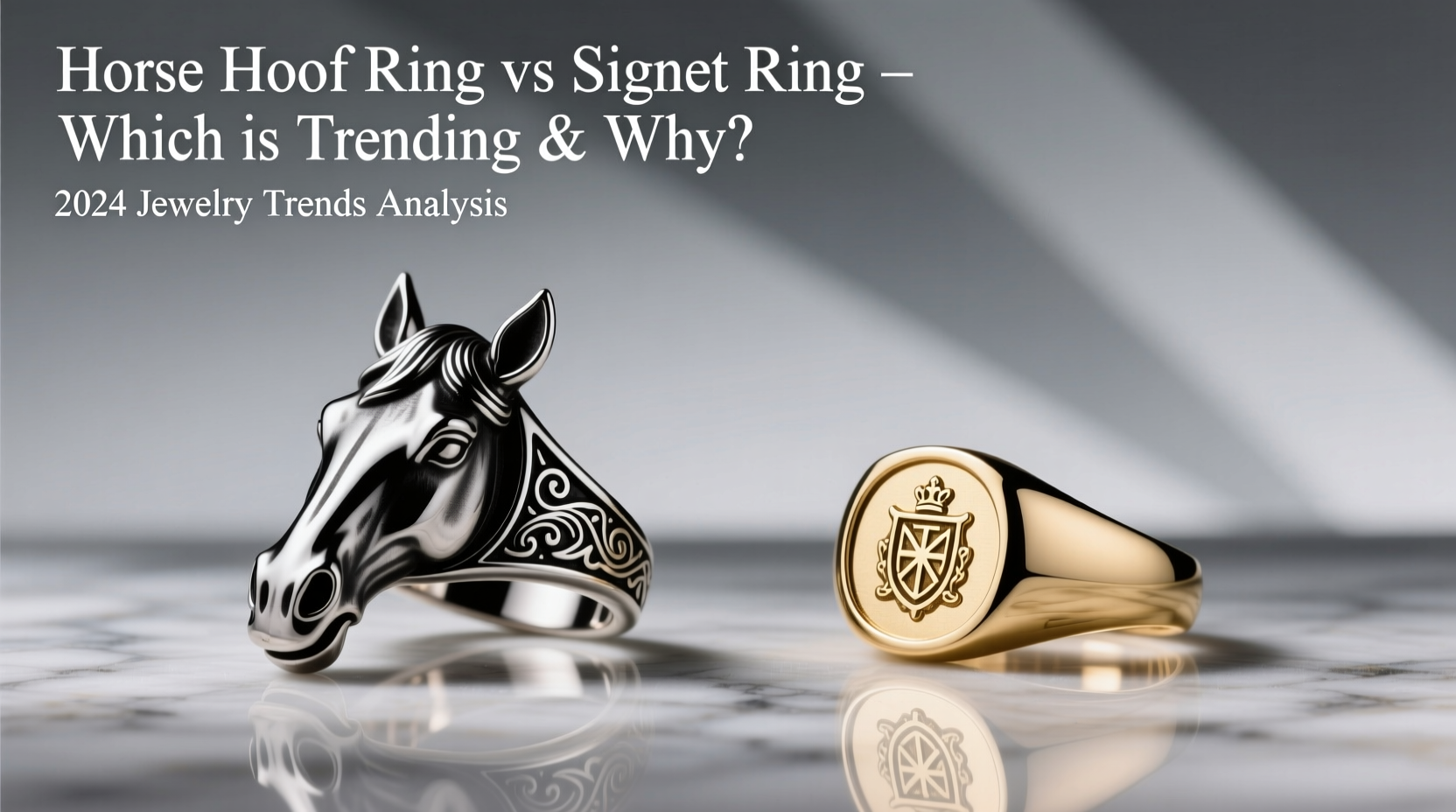
The signet ring dates back thousands of years, with roots in ancient Mesopotamia and Egypt. Traditionally engraved with family crests or initials, it served as a seal for authenticating documents. Over centuries, it became a hallmark of aristocracy, diplomacy, and legacy. In Victorian England, signets were passed down through generations, often worn on the pinky finger by gentlemen of status.
In contrast, the horse hoof ring is a far more niche and symbolic creation. Crafted from the actual hooves of horses—typically those that have passed away—these rings are made using resin encapsulation techniques. They emerged from a blend of equestrian culture, memorial jewelry, and artisanal craftsmanship. Worn by riders, trainers, and animal lovers, the horse hoof ring is less about social rank and more about emotional connection and remembrance.
“Signet rings speak to legacy; horse hoof rings speak to love. One honors ancestry, the other honors companionship.” — Julian Hart, Jewelry Historian & Curator at the British Ornamental Arts Archive
Design and Craftsmanship Compared
At first glance, the visual differences between the two rings couldn’t be starker. The signet ring is typically made from precious metals like gold, silver, or platinum, featuring a flat or domed face ideal for engraving. Designs range from monograms and coats of arms to abstract patterns, depending on personal or familial significance.
Horse hoof rings, on the other hand, are organic in nature. The visible fragment of hoof is suspended in clear resin, often set in a sterling silver or titanium band. Each piece is unique—the grain, color, and texture of the hoof vary based on the animal’s breed, age, and life history. Some artisans incorporate hair, horseshoes, or even GPS coordinates of where the horse lived into the design.
Tip: If you're considering a horse hoof ring, ensure the material comes from ethical sources—many reputable makers only use hooves from horses that died naturally or were humanely euthanized.Material Comparison Table
| Feature | Signet Ring | Horse Hoof Ring |
|---|---|---|
| Primary Material | Gold, Silver, Platinum | Resin + Horse Hoof + Metal Band |
| Customization | Engraved initials, crests, symbols | Natural variation; optional inclusions (hair, tags) |
| Lifespan | Generational (with care) | Decades (resin may yellow over time) |
| Sentimental Value | Familial, professional | Emotional, memorial |
| Wearability | Daily, formal, professional | Casual, ceremonial, niche settings |
Why the Signet Ring Is Still Trending Strong
In recent years, the signet ring has undergone a stylish renaissance. Once reserved for old-money families and diplomats, it’s now embraced by fashion-forward men across creative industries—from musicians to entrepreneurs. Brands like Chrome Hearts, Tom Wood, and Mejuri have reimagined the signet with bold proportions, matte finishes, and gender-neutral designs.
Social media influencers and celebrities—including Harry Styles, Timothée Chalamet, and A$AP Rocky—have been spotted stacking multiple signets, normalizing their presence in everyday wear. This shift reflects a broader trend toward personalized, meaningful jewelry that tells a story without being ostentatious.
Moreover, the minimalist movement has favored the signet for its clean lines and subtle elegance. Unlike flashy gemstone rings, a well-crafted signet conveys confidence through restraint.
Mini Case Study: Luca’s Signet Journey
Luca, a 32-year-old architect in Milan, inherited his grandfather’s gold signet ring after his passing. Rather than keep it boxed, he began wearing it daily—first on formal occasions, then as part of his signature look. Inspired by its weight and history, he commissioned a second, slimmer version in brushed titanium with his own initials. “It’s not about showing off,” he says. “It’s a reminder of where I come from and who I want to be.” His Instagram posts featuring the rings garnered hundreds of comments, sparking conversations about heritage and modern masculinity.
The Niche Rise of the Horse Hoof Ring
While not yet mainstream, the horse hoof ring has seen a steady increase in demand, particularly within equestrian communities and among those seeking deeply personal memorials. Platforms like Etsy and Instagram have amplified visibility, with artisans such as Equine Keepsakes Co. and Solemn Resin Art gaining followings for their ethically sourced, hand-poured pieces.
What drives this trend? Grief, yes—but also celebration. Many owners commission rings after their horses pass, preserving a physical piece of an irreplaceable bond. Others wear them as talismans, believing the spirit of the animal offers protection or strength.
The appeal lies in authenticity. In an age of mass production, the horse hoof ring stands out as something undeniably real, unreplicable, and emotionally charged. It’s not merely jewelry; it’s a wearable memory.
Tip: To preserve clarity, avoid exposing resin-based rings to prolonged UV light or harsh chemicals like chlorine and acetone.Checklist: Choosing the Right Ring for You
- Define your purpose: Is this a family heirloom, a fashion statement, or a memorial?
- Consider longevity: Will you wear it daily, or reserve it for special moments?
- Evaluate comfort: Test band width and weight—especially important for resin-heavy hoof rings.
- Verify sourcing: For horse hoof rings, ask for documentation on origin and processing.
- Match your style: Minimalist? Go signet. Sentimental or alternative? Consider the hoof ring.
FAQ: Common Questions Answered
Are horse hoof rings legal and ethical?
Yes, provided they’re made from hooves collected post-mortem and not obtained through animal cruelty. Reputable makers work directly with farms, stables, or veterinary clinics and provide transparency about sourcing.
Can I resize a signet ring?
Most metal signet rings can be resized by a professional jeweler, though rings with intricate engravings or stone settings may pose challenges. Gold and silver are easier to adjust than platinum.
Do horse hoof rings deteriorate over time?
The resin used in modern encapsulation is highly durable, but prolonged exposure to sunlight may cause slight yellowing. With proper care, these rings can last decades.
Conclusion: Which One Should You Wear?
If trends were measured solely by volume, the signet ring wins decisively. It dominates fashion editorials, red carpets, and urban wardrobes. Its versatility, historical weight, and sleek adaptability make it a staple in contemporary men’s style.
But the horse hoof ring is trending in a different way—one defined not by numbers, but by meaning. It’s growing steadily within communities that value emotional depth, sustainability, and individuality. It may never go viral on TikTok, but for those who wear it, its significance is immeasurable.
In the end, the choice isn’t about what’s popular. It’s about what resonates. A signet ring connects you to a lineage. A horse hoof ring connects you to a moment, a creature, a feeling. Both are powerful. Both are valid. And both remind us that jewelry, at its best, is never just decoration.
🚀 Ready to choose your next meaningful piece? Whether you lean toward heritage or heart, let your ring reflect who you are—not just what’s in style.








