When it comes to stylish footwear that still promises comfort, the debate between high heel wedges and kitten heels often divides opinion. Both offer a lift without the extreme elevation of stilettos, but their design philosophies differ significantly. One prioritizes height with distributed support; the other favors subtlety and balance. So, which truly wins in the comfort stakes? The answer isn’t as straightforward as you might think—it depends on foot anatomy, activity level, and how you define “comfort.”
The Anatomy of Support: How Each Heel Type Works
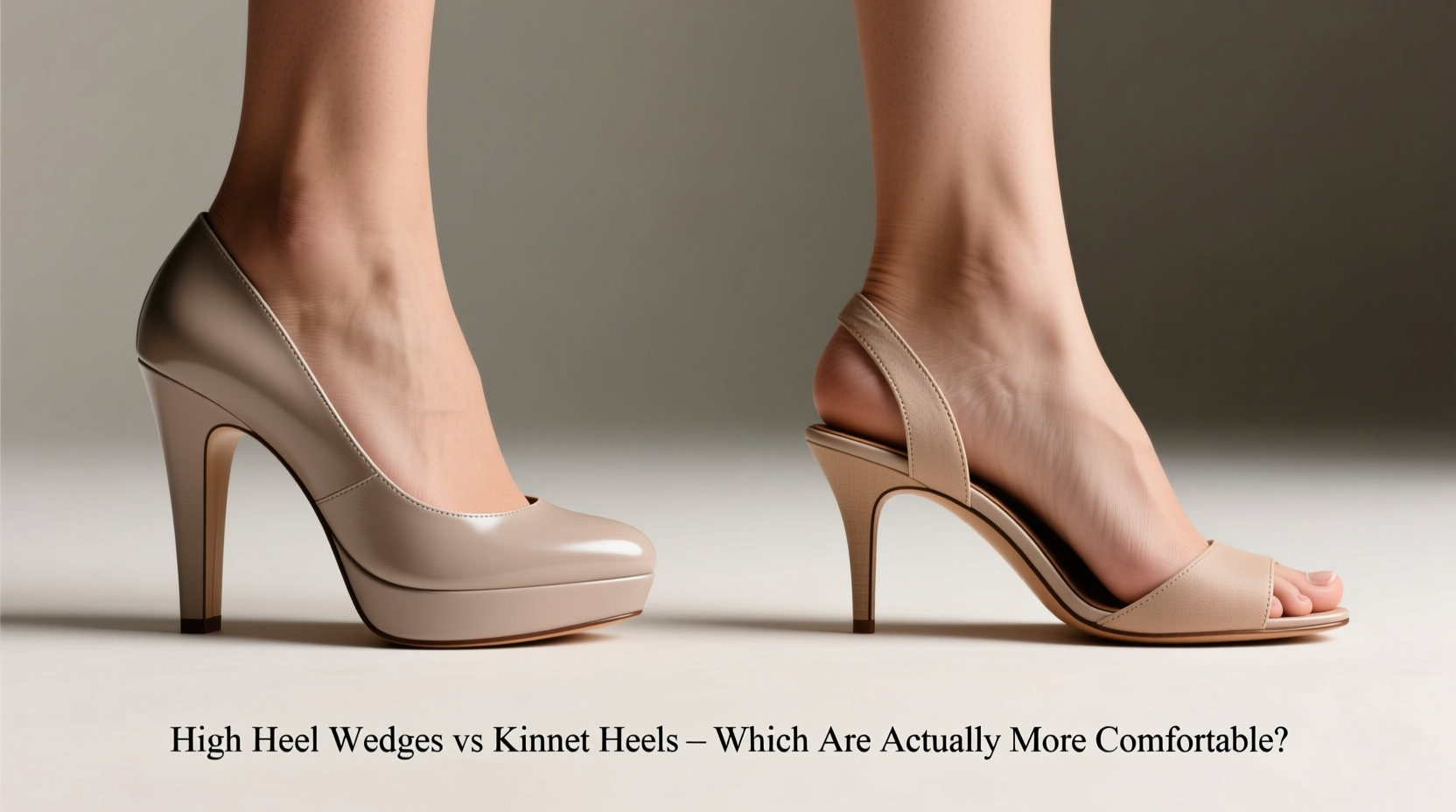
Understanding the structural differences between wedges and kitten heels is key to evaluating comfort. Wedges feature a continuous sole that extends from the heel to partway or all the way under the arch. This design spreads body weight over a larger surface area, reducing pressure on the ball of the foot—a common pain point in traditional heels.
Kitten heels, typically ranging from 1.5 to 2 inches, maintain a slender heel shape but at a modest height. They preserve the elegance of a pointed pump while minimizing strain on the Achilles tendon and calf muscles. Because they don’t drastically alter the foot’s natural angle, many find them easier to walk in immediately.
The wedge’s broader base offers inherent stability, especially on uneven surfaces like cobblestones or grass. In contrast, kitten heels rely on proper fit and alignment—they can wobble if the heel isn’t aligned with your center of gravity.
Tip: If you're standing for long periods, opt for a wedge with an ankle strap—it adds rearfoot stability and reduces fatigue.Comfort Showdown: Key Factors Compared
Comfort isn’t just about cushioning—it’s a combination of support, balance, breathability, and biomechanics. Below is a side-by-side comparison of wedges and kitten heels across critical factors.
| Factor | Wedges | Kitten Heels |
|---|---|---|
| Weight Distribution | Excellent—full sole disperses pressure evenly | Fair—concentrated at heel and forefoot |
| Arch Support | Often built-in due to thick sole | Rare unless specifically designed |
| Stability | High—less likely to tip or sink into soft ground | Moderate—narrow heel requires precise balance |
| Walking Ease | Good on flat terrain; can feel bulky | Excellent—mimics natural gait better |
| All-Day Wear | Better for prolonged standing | Better for walking distances |
| Style Versatility | Casual to semi-formal (esp. espadrilles) | Highly versatile—works with dresses, suits, jeans |
Real-World Use: Who Benefits From Which?
Consider Sarah, a marketing executive who commutes via subway, walks between meetings, and attends evening networking events. She tried both styles over a month. With wedges, she felt stable during outdoor events and appreciated the extra arch lift—but found them tiring after hours of walking due to their heavier construction. Kitten heels, meanwhile, were lighter and allowed smoother transitions from sidewalk to office carpet, though she noticed slight heel slippage during longer treks.
Sarah’s experience reflects a broader trend: professionals favoring mobility tend to lean toward kitten heels, while those prioritizing posture and short-distance elegance may prefer wedges.
“From a podiatrist’s standpoint, the ideal heel minimizes forefoot pressure and maintains a neutral ankle position. Wedges often achieve this mechanically, but only if the slope isn’t too steep. Kitten heels come closer to mimicking barefoot mechanics when well-fitted.” — Dr. Lena Torres, DPM, Foot Biomechanics Specialist
Choosing What Works for You: A Practical Checklist
Instead of declaring a universal winner, focus on matching the shoe to your lifestyle. Use this checklist to guide your decision:
- ✅ Will you be standing still for long periods? → Wedges score higher
- ✅ Do you need to walk more than a mile in them? → Kitten heels are generally better
- ✅ Is the terrain uneven or grassy? → Wedges provide superior grip
- ✅ Are you wearing them with formal attire? → Kitten heels integrate more seamlessly
- ✅ Do you have low arches or plantar fasciitis? → Look for wedges with contoured insoles
- ✅ Prioritizing lightweight feel? → Kitten heels win by design
Expert Tips for Maximizing Comfort in Either Style
No heel is inherently comfortable without smart choices. Whether you go for a sleek kitten pump or a strappy wedge, these strategies help reduce discomfort and prevent long-term foot issues.
- Break them in gradually: Wear new heels around the house for short sessions before full-day use.
- Add gel inserts: Especially helpful in kitten heels, where internal padding is often minimal.
- Check heel counter rigidity: A firm back cup prevents excessive foot movement and blisters.
- Avoid ultra-thin soles: Even in wedges, overly flexible soles compromise support.
- Rotate pairs: Never wear the same heels two days in a row—give feet time to recover.
Frequently Asked Questions
Can wedges cause knee or back pain?
Yes—if the wedge has too steep an incline, it shifts your center of gravity forward, forcing compensatory posture adjustments. Opt for wedges with a gradual slope (under 20 degrees) and avoid heights above 4 inches for daily wear.
Are kitten heels suitable for wide feet?
They can be, but fit is crucial. Look for brands offering wide widths or almond-toe designs that accommodate volume. Avoid pointed styles if you experience lateral pressure.
Which heel type causes fewer blisters?
Kitten heels often cause more heel slippage due to their narrow heel post, leading to friction. Wedges, with their enclosed structure and snug fit, typically reduce blister risk—especially when paired with ankle straps.
Final Verdict: It’s About Function, Not Fashion
If comfort means sustained support during long events or outdoor functions, high heel wedges generally perform better. Their engineering provides a stable, weight-distributed platform that reduces fatigue over time. However, if comfort means effortless walking, agility, and seamless integration into a dynamic day, kitten heels take the lead. They respect natural foot mechanics and transition smoothly across environments.
The truth is, neither is universally “more comfortable.” It depends on what your feet are doing—not just how they look. A wedding guest standing on grass all afternoon will benefit more from a wedge. An entrepreneur rushing between client meetings will likely prefer the responsiveness of a kitten heel.
Ultimately, prioritize construction quality, proper sizing, and personal biomechanics over trends. Try both styles with intent: walk on different surfaces, stand for extended periods, and assess how your feet feel afterward—not just during the first hour.
💬 What’s your go-to heel for all-day wear? Share your experience and help others find their perfect balance of style and comfort.








