Walk into any gift shop, anime store, or online marketplace, and you’ll likely see rows of soft, wide-eyed plush toys bearing the familiar red bow and white face of Hello Kitty. But look closer, and you’ll notice dozens of other characters—My Melody, Kuromi, Cinnamoroll—all under the same Sanrio umbrella. This raises a common question among collectors and casual buyers alike: Is there actually a difference between a Hello Kitty plush and other Sanrio plushes, or is the premium price and popularity of Hello Kitty just marketing hype?
The answer isn’t as simple as yes or no. While all Sanrio plush toys share the same brand heritage, manufacturing standards, and general aesthetic, key distinctions in design, cultural significance, availability, and emotional appeal create tangible differences in how these plushes are perceived—and valued.
The Brand Hierarchy: Hello Kitty as the Flagship Character
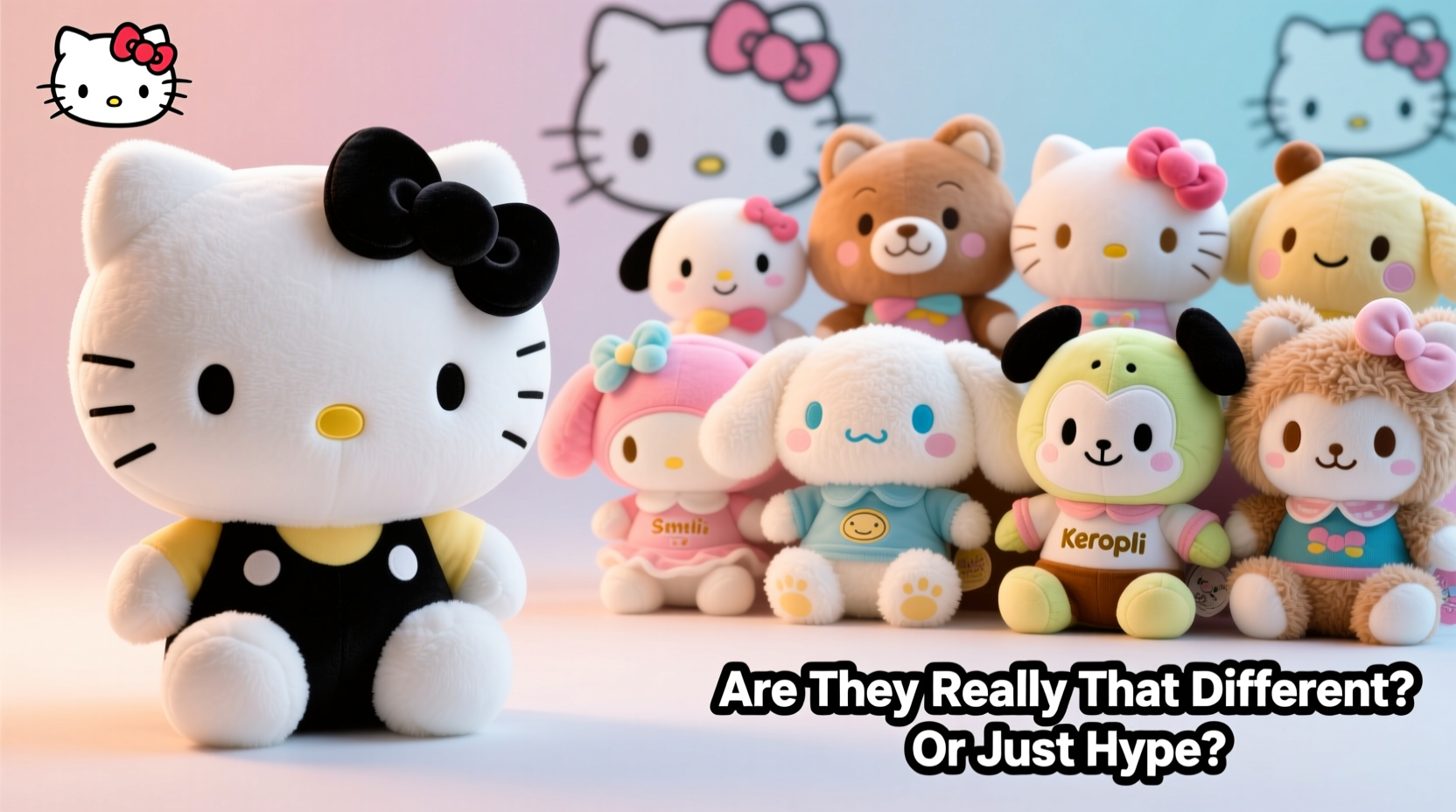
Hello Kitty isn’t just another character in Sanrio’s roster; she’s the crown jewel. Created in 1974 by Yuko Shimizu and later developed by Yuko Yamaguchi, Hello Kitty was designed to embody kawaii (cuteness) culture at its most universal. Over decades, she evolved from a simple greeting card figure into a global icon, generating billions in merchandise revenue annually.
In contrast, other Sanrio characters like Pochacco, Keroppi, or Badtz-Maru have dedicated fanbases but lack Hello Kitty’s cross-generational recognition. This distinction shapes everything from production volume to licensing partnerships. Major retailers prioritize Hello Kitty items because they sell faster and attract broader demographics—from toddlers to adult collectors.
“Hello Kitty is Sanrio’s Mona Lisa—she transcends the brand while representing it perfectly.” — Dr. Naomi Tanaka, Cultural Anthropologist specializing in Japanese pop culture
Because of her flagship status, Hello Kitty plushes often receive special treatment: limited edition collaborations with luxury brands (like Hello Kitty x Coach or Uniqlo), higher-tier fabric selections, and exclusive packaging. These factors elevate her plushes beyond standard offerings, even if the core construction is similar.
Design and Aesthetic Nuances
At first glance, many Sanrio plushes appear nearly identical in size, texture, and style. They typically feature:
- Soft polyester or cotton-poly blends
- Embroidered eyes and facial details
- Minimal seams for durability
- Signature Sanrio tags
However, subtle design choices set Hello Kitty apart. Her iconic red bow with a yellow center is almost always sculpted or stitched with extra precision. In premium editions, the bow may be made from satin or feature metallic thread. Other characters often have simpler accessories—Kuromi’s pink skull headband, for example, rarely receives the same level of detailing.
Additionally, Hello Kitty’s face is consistently symmetrical and minimalistic, reinforcing her “blank slate” persona that allows fans to project emotions onto her. Other characters have more expressive features—Cinnamoroll has floppy ears and a curly tail, My Melody wears a pink hood—which can complicate plush construction and limit poseability.
Tip: When comparing plush quality, check stitch density around facial features—tighter embroidery usually indicates a higher-tier release.Quality Comparison: Manufacturing Tiers Within Sanrio
Sanrio produces plush toys across multiple quality tiers, and placement within these tiers often depends on character demand and collaboration status. Below is a breakdown of typical categories:
| Tier | Characters Included | Fabric Quality | Availability |
|---|---|---|---|
| Premium (Collector’s Edition) | Hello Kitty (limited collabs), Rare variants | Silk-blend, organic cotton, recycled fibers | Japan-exclusive, online lotteries |
| Standard Retail | Hello Kitty, My Melody, Cinnamoroll | High-grade polyester, hypoallergenic fill | Global retail chains, official stores |
| Budget/Mini Series | Lesser-known characters (e.g., Pom Pom Purin variants) | Thinner fabric, simpler stitching | Vending machines, seasonal sets |
As shown, Hello Kitty dominates the premium tier, but not every Hello Kitty plush is superior. Mass-produced keychain-sized versions found in airport gift shops often match the quality of budget-tier Sanrio plushes. The real differentiator isn’t the character alone—it’s the product line.
Collectibility and Market Value Trends
One area where Hello Kitty clearly outpaces other Sanrio plushes is in secondary market value. Limited edition releases, especially those tied to anniversaries or international events (e.g., Hello Kitty 50th Anniversary 2024), regularly resell for 5–10x their original price.
A mini case study illustrates this:
In early 2023, a 12-inch Sanrio \"Crystal Bow\" Hello Kitty plush was released exclusively through the Harajuku store during a spring festival. Priced at ¥4,800 (~$33 USD), it sold out in under two hours. By December, unopened units were listed on Yahoo Japan Auctions for over ¥30,000 ($200+). Meanwhile, a similarly sized My Melody plush from the same event, featuring comparable materials and craftsmanship, peaked at ¥9,000—less than a third of the markup.
This disparity reflects more than quality—it reflects perceived cultural capital. Hello Kitty is collectible not just because she’s cute, but because she symbolizes a specific era, lifestyle, and nostalgia. For many adult collectors, owning a rare Hello Kitty plush is akin to owning a vintage designer handbag: it’s both an aesthetic choice and a status marker.
Are Other Sanrio Plushes Underrated?
While Hello Kitty commands attention, dismissing other Sanrio plushes overlooks their unique appeal. Characters like Aggretsuko (a red panda who vents through death metal karaoke) or Gudetama (the lethargic egg yolk) resonate with niche audiences seeking humor or relatability over pure cuteness.
Moreover, non-Hello Kitty plushes often offer more creative designs. Kuromi’s mischievous smirk and punk-inspired look translate into edgier plush interpretations, sometimes with removable accessories or glow-in-the-dark elements. These innovations suggest Sanrio uses secondary characters as testing grounds for new ideas before applying them to Hello Kitty lines.
From a collector’s standpoint, investing in lesser-known characters now could yield long-term returns. As Gen Z embraces irony and subversion in fashion, characters with personality quirks may gain traction. Already, secondhand markets show rising interest in “vintage” Sanrio lines from the 1990s and early 2000s—many featuring obscure characters once considered minor.
Checklist: How to Choose Between Hello Kitty and Other Sanrio Plushes
- Determine your purpose: Gift, decoration, or investment?
- Check the label: Look for “Limited Edition,” “Artist Collaboration,” or “Made in Japan” markers.
- Inspect stitching and fabric: Premium plushes have dense embroidery and soft-touch exteriors.
- Research resale history: Use platforms like Mercari or Mandarake to compare past sales.
- Consider personal connection: Do you love Hello Kitty, or does another character reflect your personality better?
Frequently Asked Questions
Is every Hello Kitty plush more valuable than other Sanrio plushes?
No. Only limited, anniversary, or collaborative editions tend to appreciate in value. Standard Hello Kitty plushes from chain stores hold little resale power unless kept sealed and rare.
Do Sanrio plushes use the same factory for all characters?
Most are produced in shared manufacturing facilities across China, Vietnam, and Indonesia. However, premium lines may be assembled in smaller batches in Japan with stricter quality control.
Can I wash my Sanrio plush safely?
Yes, but with caution. Hand-wash in cold water with mild detergent and air dry. Avoid machine washing, especially for plushes with glued-on accessories or electronic components (e.g., light-up variants).
Final Thoughts: Beyond the Hype
The difference between Hello Kitty plush and other Sanrio plushes isn’t rooted in inherent superiority, but in layered distinctions—brand positioning, cultural weight, scarcity, and emotional resonance. Hello Kitty benefits from decades of strategic marketing, global visibility, and symbolic meaning that other characters simply haven’t achieved—at least not yet.
That said, reducing the comparison to “hype” undersells the genuine craftsmanship present across the Sanrio line. Many non-Hello Kitty plushes are equally well-made, creatively bold, and emotionally engaging. For casual fans, choosing based on personal preference makes the most sense. For collectors, understanding the ecosystem—where Hello Kitty reigns supreme but others hold hidden potential—is key to building a meaningful collection.
🚀 Ready to start your Sanrio journey? Whether you're drawn to Hello Kitty's timeless charm or the quirky personalities of her friends, begin by exploring official stores, checking edition labels, and connecting with collector communities. The world of kawaii is richer than it looks—dive in with intention.








