Bringing a new puppy home is an exciting time, but it also comes with important responsibilities—especially when it comes to training and safety during walks. One of the most overlooked yet critical decisions is choosing between a harness and a collar. While both serve a purpose, the wrong choice can lead to serious health risks, particularly tracheal collapse in small or young dogs. Understanding the physiological impact, behavioral benefits, and long-term consequences of each option is essential for responsible pet ownership.
Tracheal collapse is a progressive condition where the cartilage rings supporting the windpipe weaken, causing the airway to narrow or close during breathing. It’s especially common in toy and small breeds like Yorkshire Terriers, Pomeranians, and Chihuahuas. Once damaged, the trachea rarely fully recovers. The good news? Much of this damage is preventable—with the right walking gear.
Why Tracheal Collapse Is a Serious Concern in Puppies
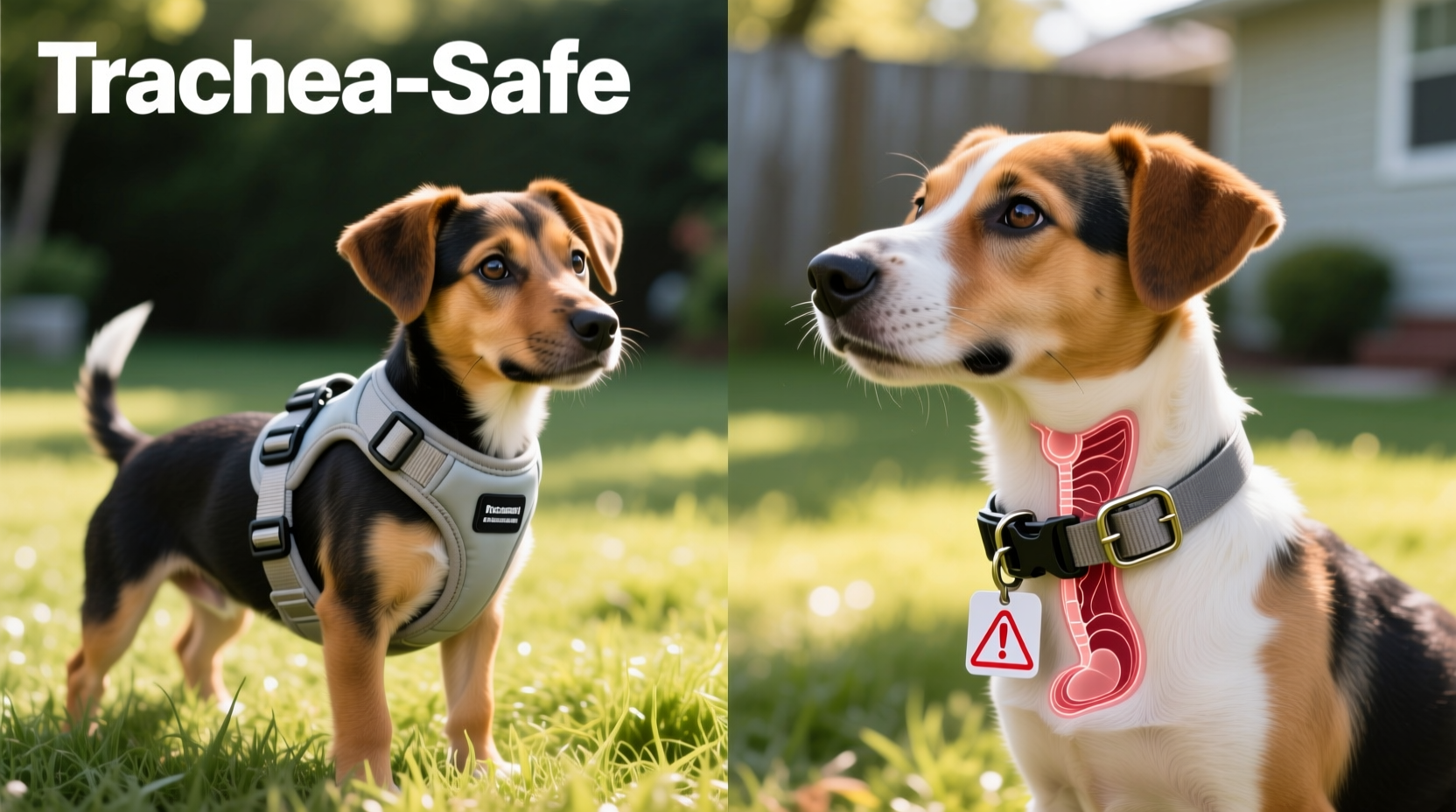
A puppy’s neck anatomy is still developing. The trachea, made of C-shaped cartilage rings connected by soft tissue, is far more fragile than in adult dogs. When pressure is applied—such as from a tight collar during pulling or sudden jerks—it can deform or bruise the delicate structure. Over time, repeated stress leads to inflammation, weakening of cartilage, and eventually collapse.
Symptoms often start subtly: a honking cough after excitement or exercise, gagging while drinking, or labored breathing. Many owners mistake these signs for kennel cough or allergies. But if left unchecked, tracheal collapse can progress to chronic respiratory distress, secondary infections, and even heart strain due to oxygen deprivation.
“Prevention is everything when it comes to tracheal collapse. Once the damage begins, it’s often irreversible. Choosing a front-clip harness over a neck collar is one of the simplest, most effective ways to protect your puppy’s airway.” — Dr. Lena Patel, DVM, Canine Respiratory Specialist
Collar Use: Risks and When It Might Be Acceptable
Neck collars have been traditionally used for identification, licensing, and leash attachment. However, their use during active walking or training poses significant risks:
- Direct pressure on the trachea: Even light tugging compresses the windpipe, especially in excitable puppies who lunge at sights and smells.
- Nerve and spinal injury risk: Sudden pulls can injure cervical nerves or vertebrae, particularly in growing dogs.
- Reinforces pulling behavior: Dogs learn that tension equals forward motion, making leash reactivity worse over time.
That said, collars aren’t entirely obsolete. They remain ideal for holding ID tags, vaccination records, and microchip information. Some trainers recommend a lightweight, well-fitted collar worn alongside a harness—used only for identification, not for walking.
Tip: If you use a collar for ID, ensure it's loose enough to fit two fingers beneath but snug enough to stay in place.Harness Benefits: Safety, Control, and Training Advantages
A properly fitted harness distributes pressure across the dog’s chest and shoulders, bypassing the neck entirely. This makes it the safer choice for puppies, especially during the formative training months.
There are three main types of harnesses:
- Back-clip harness: Leash attaches between the shoulder blades. Offers moderate control and reduces neck strain but doesn’t discourage pulling as effectively.
- Front-clip harness: Leash connects at the chest. When the dog pulls, the design gently turns them back toward the handler—a natural deterrent to lunging.
- No-pull harness (dual-clip): Combines front and back attachments, allowing flexibility in training phases.
Front-clip harnesses are widely recommended by veterinary behaviorists and canine physical therapists for early training. They promote better posture, reduce strain on joints, and support healthy musculoskeletal development.
How a Harness Supports Positive Training Outcomes
Beyond physical safety, harnesses influence behavior. A puppy wearing a front-clip harness learns that moving forward without permission results in redirection—not reward. This builds impulse control and reinforces attention to the handler. In contrast, pulling against a collar often results in forward momentum, reinforcing undesirable habits.
Training tools should guide, not punish. A harness enables communication through gentle feedback, fostering trust and cooperation rather than fear or discomfort.
Comparison: Harness vs Collar for Puppy Walking
| Feature | Harness | Collar |
|---|---|---|
| Tracheal Pressure | Minimal – pressure distributed across chest | High – direct compression on neck |
| Suitability for Small Breeds | Excellent – protects delicate anatomy | Poor – high risk of injury |
| Pulling Prevention | Good (front-clip), Moderate (back-clip) | Poor – encourages forward motion |
| Ease of Training | High – supports positive reinforcement | Low – may reinforce bad habits |
| Comfort During Growth | Adjustable, grows with puppy | Requires frequent resizing |
| ID Tag Attachment | Limited – may require secondary collar | Standard – built-in loop |
Step-by-Step Guide: Transitioning Your Puppy to a Harness
Introducing a harness should be gradual and stress-free. Follow this timeline to ensure a smooth transition:
- Day 1–2: Let Your Puppy Explore
Place the harness nearby, let them sniff it, and reward curiosity with treats. Pair it with positive experiences like feeding or playtime. - Day 3: Touch and Reward
Gently touch the harness to their body while offering praise. Do not fasten it yet. Repeat several times throughout the day. - Day 4: Brief Fitting
Put the harness on for 30 seconds. Fasten all clips, ensure it’s snug but not tight, then remove and reward. Repeat 3–4 times. - Day 5–7: Wear During Indoor Play
Let the puppy wear the harness while playing indoors. Monitor for signs of discomfort or attempts to chew it off. - Day 8: Attach Leash Indoors
Clip the leash and walk around the house. Gently guide with treats. Practice “follow me” cues. - Day 9–10: First Outdoor Walks
Choose a quiet area. Keep walks short (5–10 minutes). Reward calm walking. End on a positive note.
Real-Life Example: Bella the Yorkie and Her Recovery Journey
Bella, a 4-month-old Yorkshire Terrier, was brought to a veterinary clinic with persistent coughing and difficulty breathing after walks. Her owner had been using a standard nylon collar, believing it was sufficient for such a small dog. X-rays revealed early-stage tracheal collapse due to repeated pressure from pulling.
The vet immediately recommended switching to a front-clip harness and prescribed anti-inflammatory medication. Over the next six weeks, Bella wore the harness exclusively. Her coughing subsided within two weeks, and follow-up imaging showed reduced inflammation.
Her owner reported that not only did Bella stop coughing, but she also became calmer on walks. “She used to yank ahead constantly,” the owner said. “Now she walks beside me like she knows what she’s doing.”
Bella’s case highlights how early intervention and proper equipment can halt progression and improve quality of life.
Checklist: Choosing the Right Harness for Your Puppy
- ✅ Opt for a front-clip or dual-clip design for training
- ✅ Ensure adjustable straps at neck, chest, and girth
- ✅ Look for padded shoulder and chest areas
- ✅ Avoid harnesses that restrict leg movement
- ✅ Check for reflective stitching if walking at dawn/dusk
- ✅ Confirm easy-to-clean materials (machine washable preferred)
- ✅ Verify secure buckles that won’t loosen during activity
- ✅ Try it on before buying—or choose retailers with return policies
Frequently Asked Questions
Can I ever use a collar on my puppy?
You can use a lightweight collar for ID tags, but never attach a leash to it during walks. The risk of tracheal injury is too high, especially in small or energetic puppies. Think of the collar as an accessory for identification, not a functional walking tool.
Will a harness stop my puppy from pulling completely?
A front-clip harness significantly reduces pulling by redirecting the dog when they surge forward. However, it’s not a substitute for training. Combine the harness with consistent verbal cues, rewards for attention, and short practice sessions to build good habits.
Are there any downsides to using a harness?
Poorly fitted harnesses can cause chafing, restrict movement, or slip over the dog’s head. Some dogs may initially resist wearing one. Choose a well-designed model, introduce it gradually, and monitor for rubbing or discomfort. Regular fit checks are crucial during growth spurts.
Expert Recommendations and Industry Consensus
Veterinary organizations including the American Veterinary Medical Association (AVMA) and the American College of Veterinary Surgeons (ACVS) emphasize minimizing mechanical stress on a dog’s neck. The consensus among veterinary behaviorists is clear: for puppies and small breeds, harnesses are the standard of care.
Dr. Carlos Mendez, a board-certified veterinary surgeon, explains: “We see too many cases of avoidable tracheal damage in dogs under two years old. In nearly all, the common factor is collar use during leash training. A harness isn’t just a convenience—it’s a preventive medical device.”
Pet insurance data supports this. Claims related to tracheal collapse are 3.2 times higher in dogs walked primarily on collars, according to a 2023 analysis by North American Pet Health Insurance Association (NAPHIA).
Conclusion: Prioritize Long-Term Health Over Tradition
The debate between harness and collar isn’t about preference—it’s about responsibility. Choosing a harness for your puppy isn’t just about easier walks or better control. It’s about protecting their respiratory health, supporting proper development, and building a foundation of trust and cooperation.
Every tug on a collar is a potential injury. Every walk with a well-fitted harness is a step toward a healthier, happier dog. Make the switch early, train with patience, and prioritize function over tradition. Your puppy may not know the difference today—but their lungs will thank you for years to come.
🚀 Take action today: If your puppy is still on a collar for walks, schedule a switch to a front-clip harness within the week. Share this knowledge with fellow pet parents—because every puppy deserves to breathe easy.








